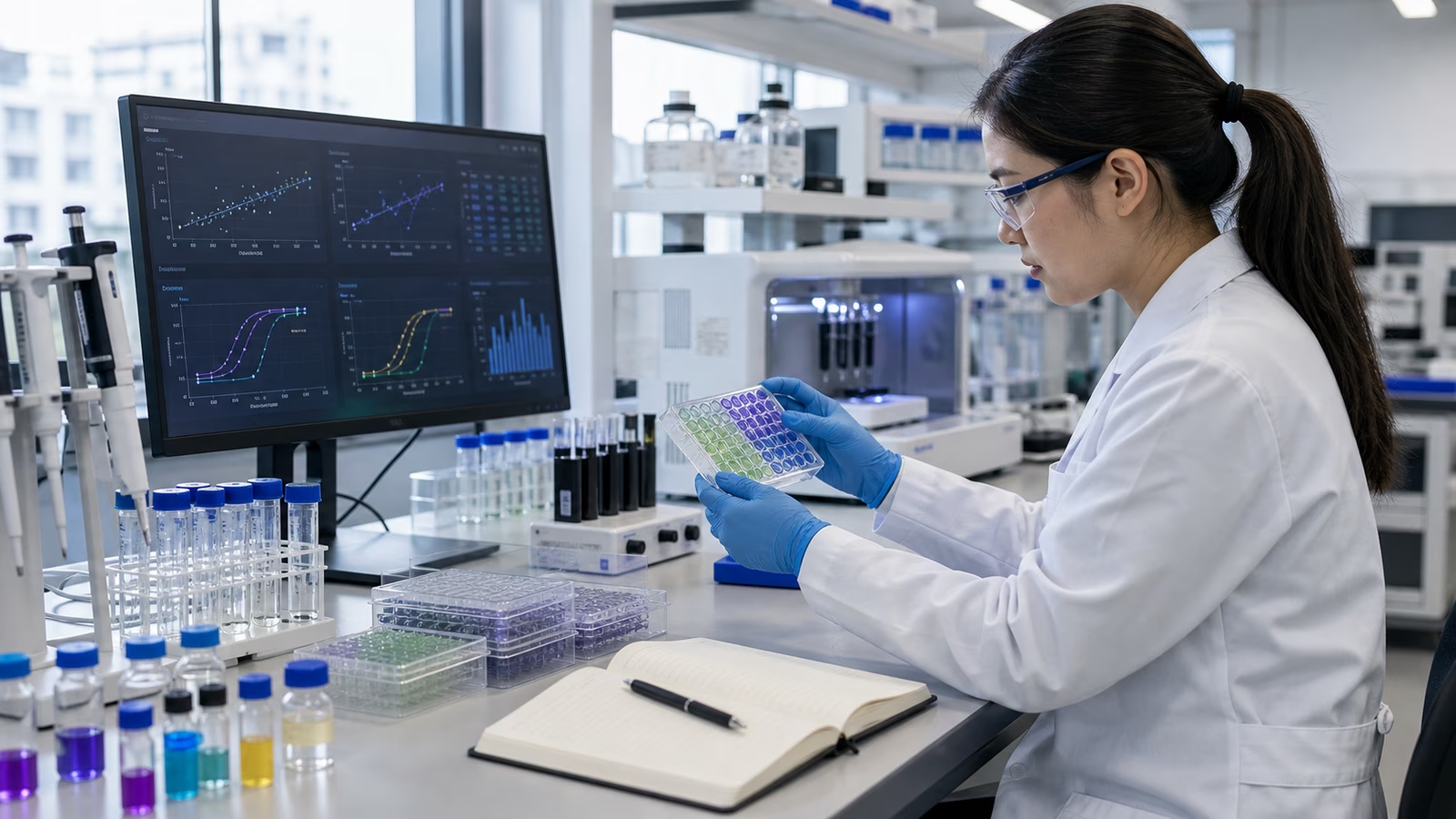
Synthetic biology depends on imagination, but it survives on measurement. A design can be clever, a genetic part can be elegant, a pathway can look beautiful in a diagram, and a model can predict a strong result. None of that is enough until the living system is measured well enough for people to know what actually happened.
Biology is noisy. Cells vary. Conditions drift. Instruments age. Samples get handled differently. A signal that looks strong may be caused by the wrong thing. A weak result may hide a useful pattern. A beautiful graph may reflect a plate edge effect, a calibration issue, contamination, timing, or a missing control rather than the biological idea being tested.
This is why measurement is not a boring afterthought. It is the bridge between design and trust. Synthetic biology wants to treat living systems as things that can be engineered, but engineering depends on knowing whether a change produced the intended effect. Without good measurement, the field becomes a collection of stories that are hard to repeat.
Controls Give a Result Its Meaning
A measurement by itself is often less informative than it looks. A sample glows, grows, changes color, produces a molecule, or triggers a sensor. Is that success? Maybe. The answer depends on what it is compared with.
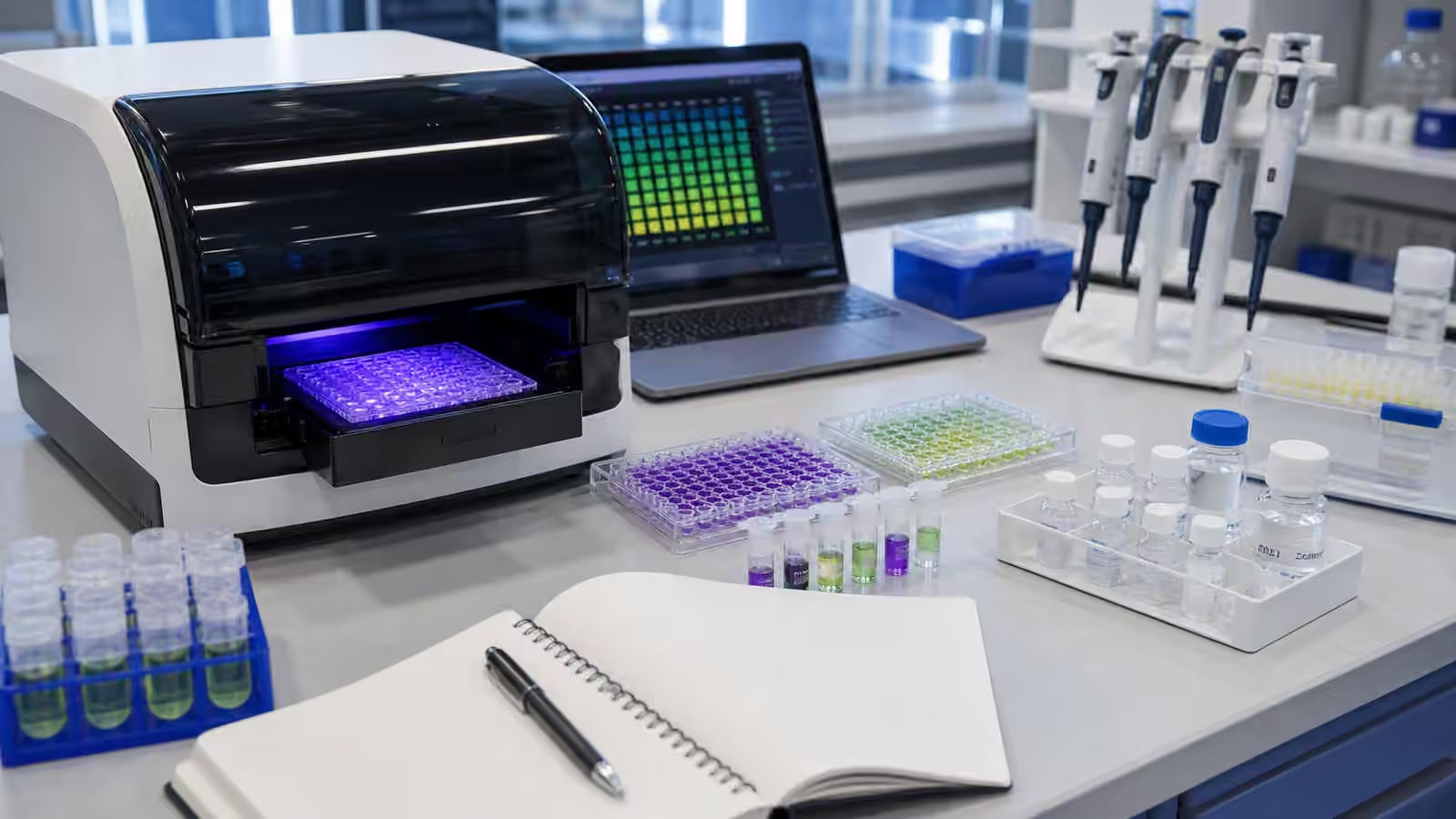
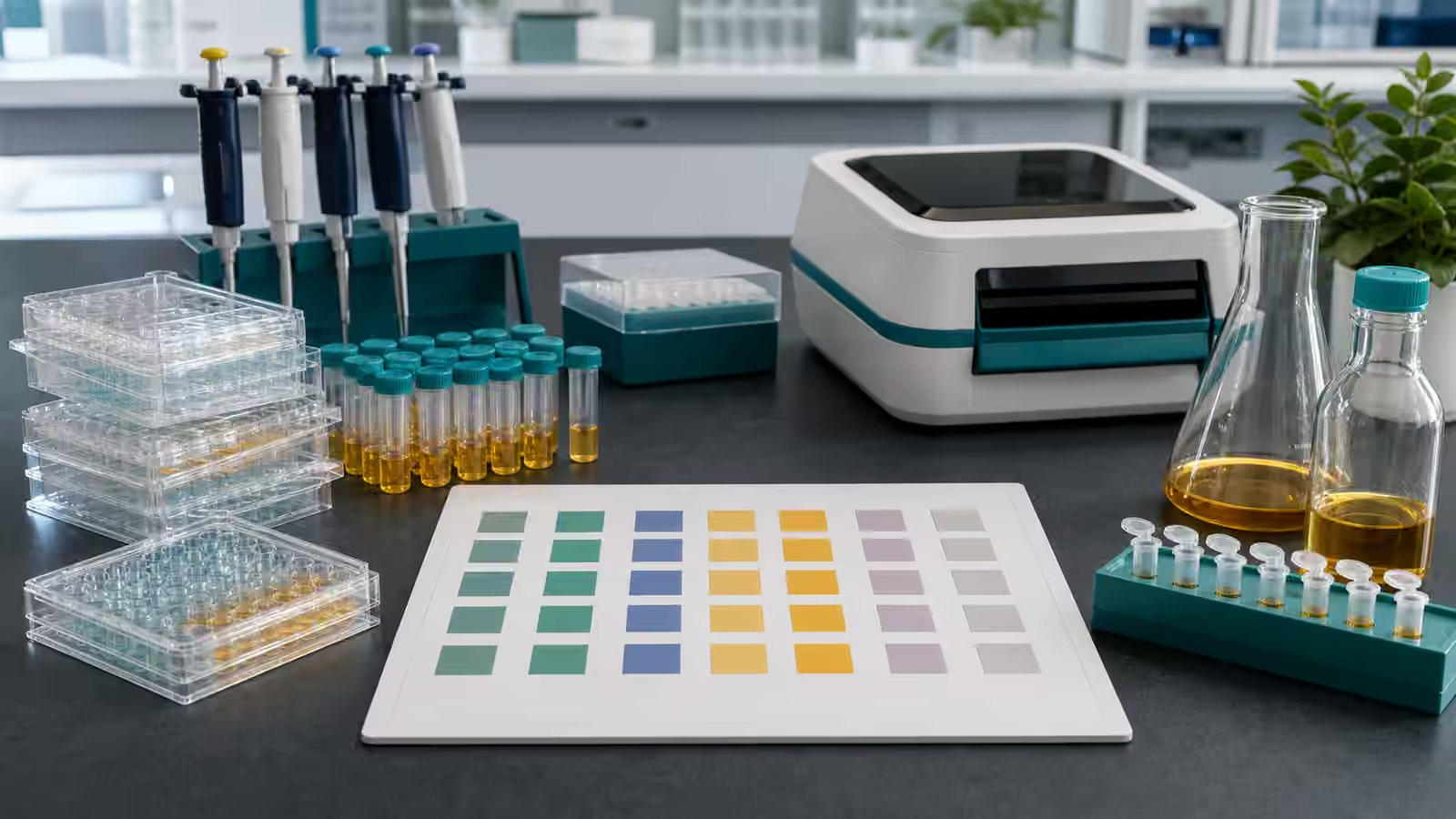
Controls give the comparison. A negative control can show what the system looks like when the expected effect should not be present. A positive control can show whether the assay is capable of detecting the effect at all. A background control can reveal noise from media, instrument settings, or sample handling. A process control can show whether a workflow behaved normally.
The names can sound technical, but the idea is simple. A result needs context. If every sample glows a little, then one glowing sample may not mean much. If the positive control fails, the experiment may not be able to prove what it hoped to prove. If a negative control behaves strangely, the system may be contaminated, mislabeled, or misunderstood.
Good controls are a form of humility. They admit that the experiment can fool the scientist.
Calibration Turns Numbers Into Shared Language
Instruments produce numbers, but numbers are not automatically comparable. A fluorescence reading on one machine, one day, with one setting, may not match another reading elsewhere. A sensor can drift. A plate reader can behave differently from another plate reader. A measurement can look precise while still being hard to compare across runs.
Calibration helps turn instrument output into a more stable language. It gives people a way to connect readings to standards, reference materials, or known relationships. It does not make biology simple, but it makes measurements less isolated.
This matters when work moves from a single lab notebook to a larger workflow. Biofoundries, collaborations, regulatory submissions, manufacturing teams, and external partners all need data that can travel. If a result only makes sense inside one person’s memory of one afternoon, it is not strong enough for synthetic biology at scale.
Calibration also protects against false progress. A team may think a strain improved because the number went up, when the instrument settings changed. A team may think a sensor weakened because the number went down, when the sample was read later or under different conditions. The point is not to distrust every result. It is to build a measurement system strong enough that trust has somewhere to stand.
Repeatability Is Not the Same as Truth, But It Matters
A biological result that happens once can be exciting. A result that happens repeatedly becomes more useful. Repeatability asks whether the observation survives another run, another day, another operator, another batch of materials, or another instrument. It is one of the ways synthetic biology separates signal from accident.
Repeatability does not guarantee that an interpretation is correct. A flawed method can repeat a flawed result. But a non-repeatable result demands caution. It may still point toward something interesting, but it should not carry the weight of a claim that others are expected to build on.
This is where measurement discipline changes culture. Teams under pressure may want to celebrate the best run and move quickly. A more mature team asks whether the run represents the process or only the lucky edge of it. They look at variation. They ask what changed. They preserve enough metadata to understand the difference between noise and pattern.
In biology, the average can matter, but the spread matters too. A production strain that performs brilliantly once and poorly half the time is not the same as a strain that performs steadily. A sensor that triggers strongly in one condition but also triggers in the wrong conditions may not be useful. Measurement has to capture reliability, not only peak performance.
Metadata Is Memory for the Experiment
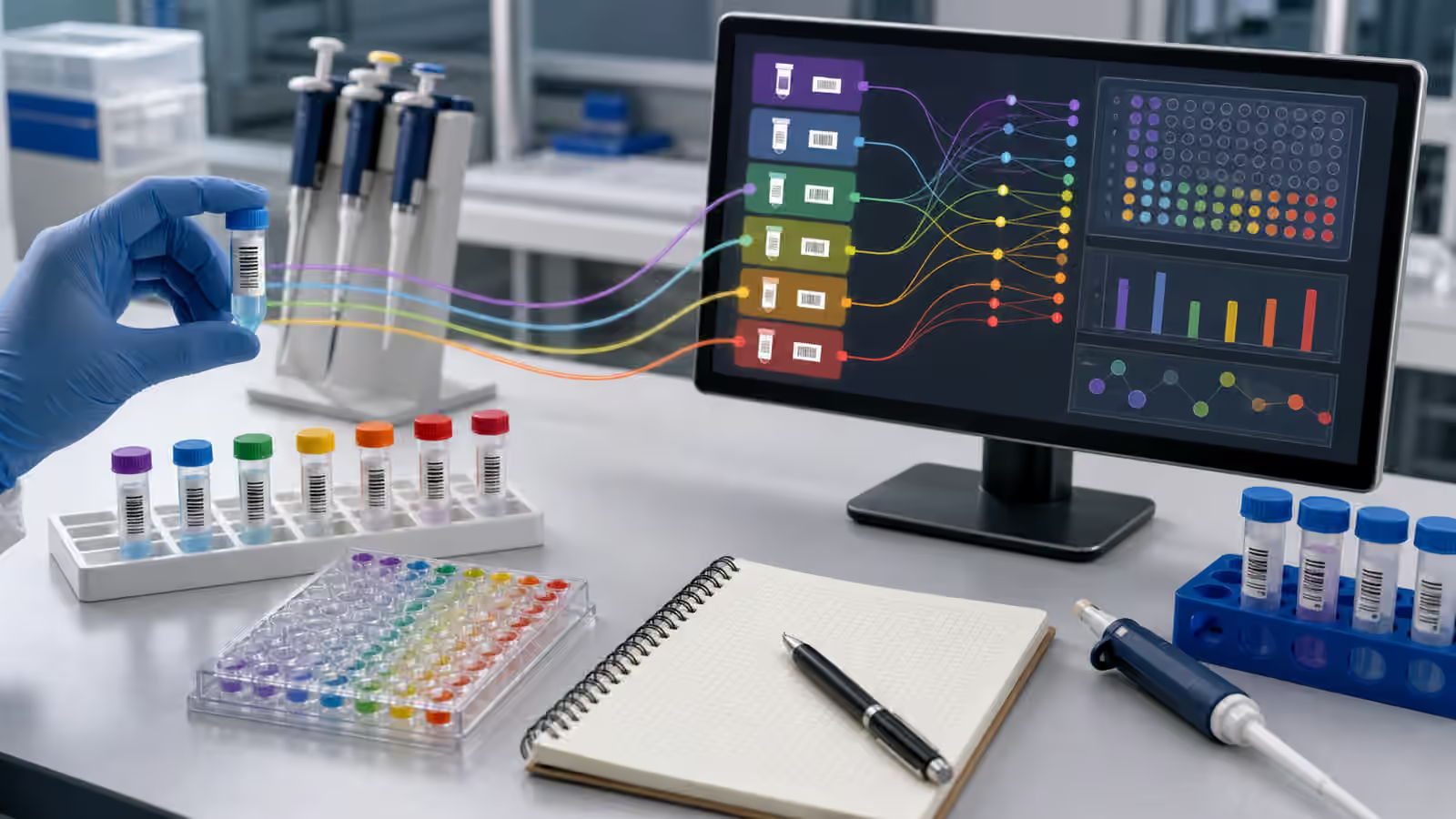
Metadata is the information around the measurement: time, temperature, strain identity, media, instrument settings, plate layout, operator, sample history, reagent lot, incubation time, storage condition, and countless other details that may or may not matter until something goes wrong. It can feel like administrative burden until a result needs explanation.
Without metadata, a strange result becomes a mystery. With metadata, it may become a pattern. The samples near the edge of the plate behaved differently. The older reagent lot drifted. The run after a maintenance event changed. The strain passage number mattered. The late-read samples looked stronger because timing changed. The person who prepared the plate used a different dilution.
Good metadata does not mean recording everything forever with no judgment. It means recording the context needed to interpret the result later. The more a workflow is automated, scaled, or shared, the more important that context becomes.
Synthetic biology often borrows the language of programming, but biological data needs more than code. It needs provenance. People must know where the sample came from, what happened to it, and why the number on the screen deserves attention.
Automation Can Make Measurement Better or Worse
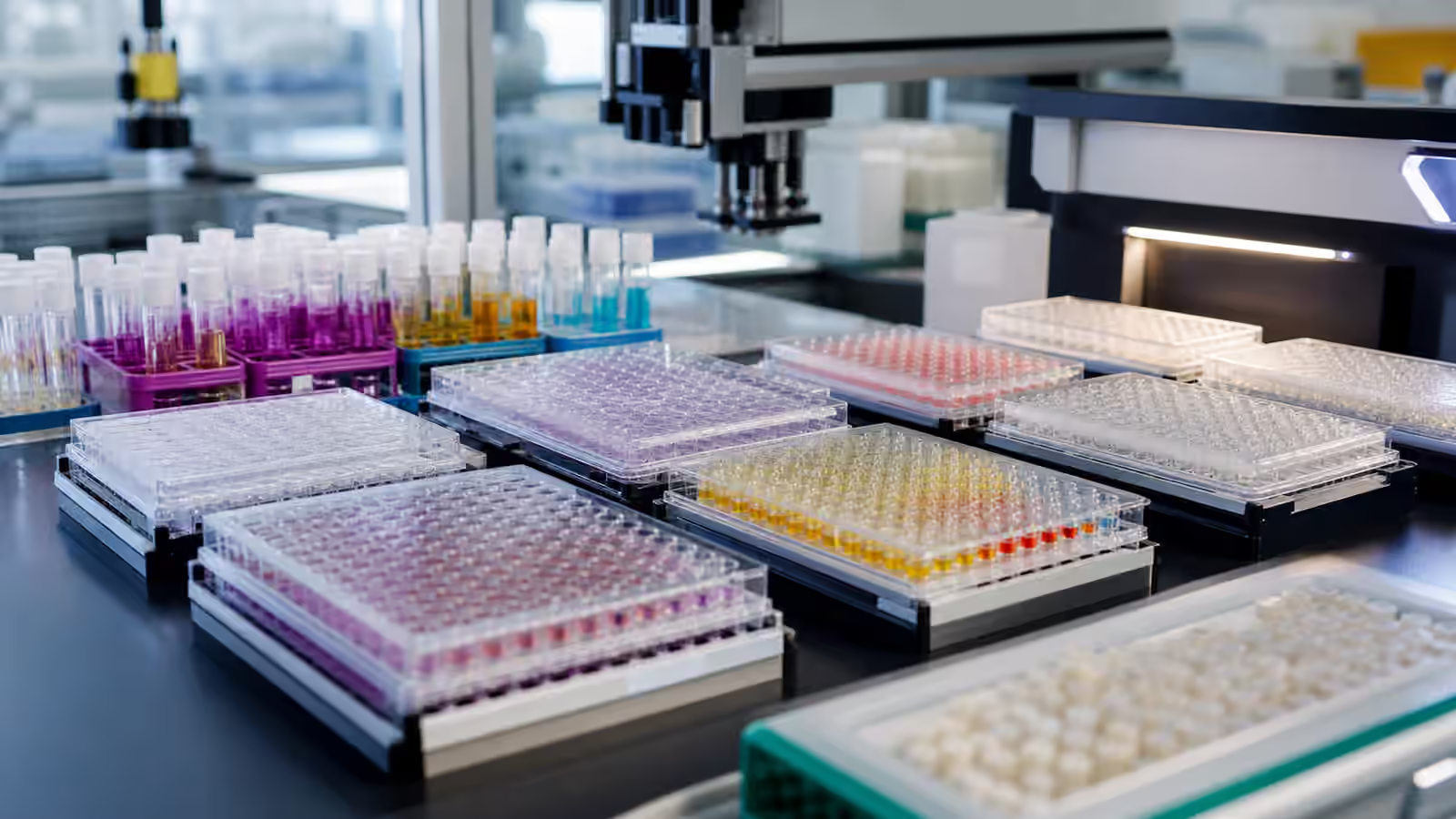
Automation can improve measurement by reducing manual variation, increasing throughput, recording steps, and making workflows more consistent. A robot does not get bored pipetting repetitive samples. A data system can capture instrument files automatically. A biofoundry can test many designs under structured conditions.
But automation can also make mistakes repeat more efficiently. If the plate layout is wrong, the robot may execute the wrong plan perfectly. If the data pipeline mislabels samples, beautiful graphs may be built on false identity. If the workflow omits a control, scale only multiplies uncertainty. Automation is not a substitute for experimental judgment.
The best automated systems make error easier to detect. They preserve traceability, enforce checks, flag unusual patterns, and make it harder for data to become detached from samples. They help people ask better questions rather than hiding the mess behind a clean dashboard.
This is especially important as synthetic biology becomes more connected to machine learning. Models need data, but models trained on weak measurements inherit weakness. A large dataset full of inconsistent context, poor controls, or hidden batch effects can teach confidence without truth. Measurement quality becomes model quality.
Trust Is Built Before the Claim
A synthetic biology claim is only as strong as the measurement behind it. Did the organism produce the target molecule? Did the sensor respond to the right signal? Did the material grow with the expected properties? Did the protein perform better? Did the process scale? Did the safety feature behave as designed? Each question needs evidence, and evidence needs measurement that can be understood, repeated, and challenged.
This is not a call for paralysis. The field advances through experiments, surprises, and imperfect data. But the path from idea to product, medicine, food, material, diagnostic, or environmental tool requires more than promising results. It requires measurement systems that let other people believe the work without knowing the original scientist personally.
That is what controls, calibration, repeatability, metadata, and careful automation provide. They make the living system legible enough to improve. Synthetic biology may be about designing biology, but measurement is how biology gets a vote.
Without measurement, the story is only that something might have worked. With measurement, the story becomes more demanding and more useful: what worked, compared with what, under which conditions, how often, with what uncertainty, and why anyone should trust the answer.