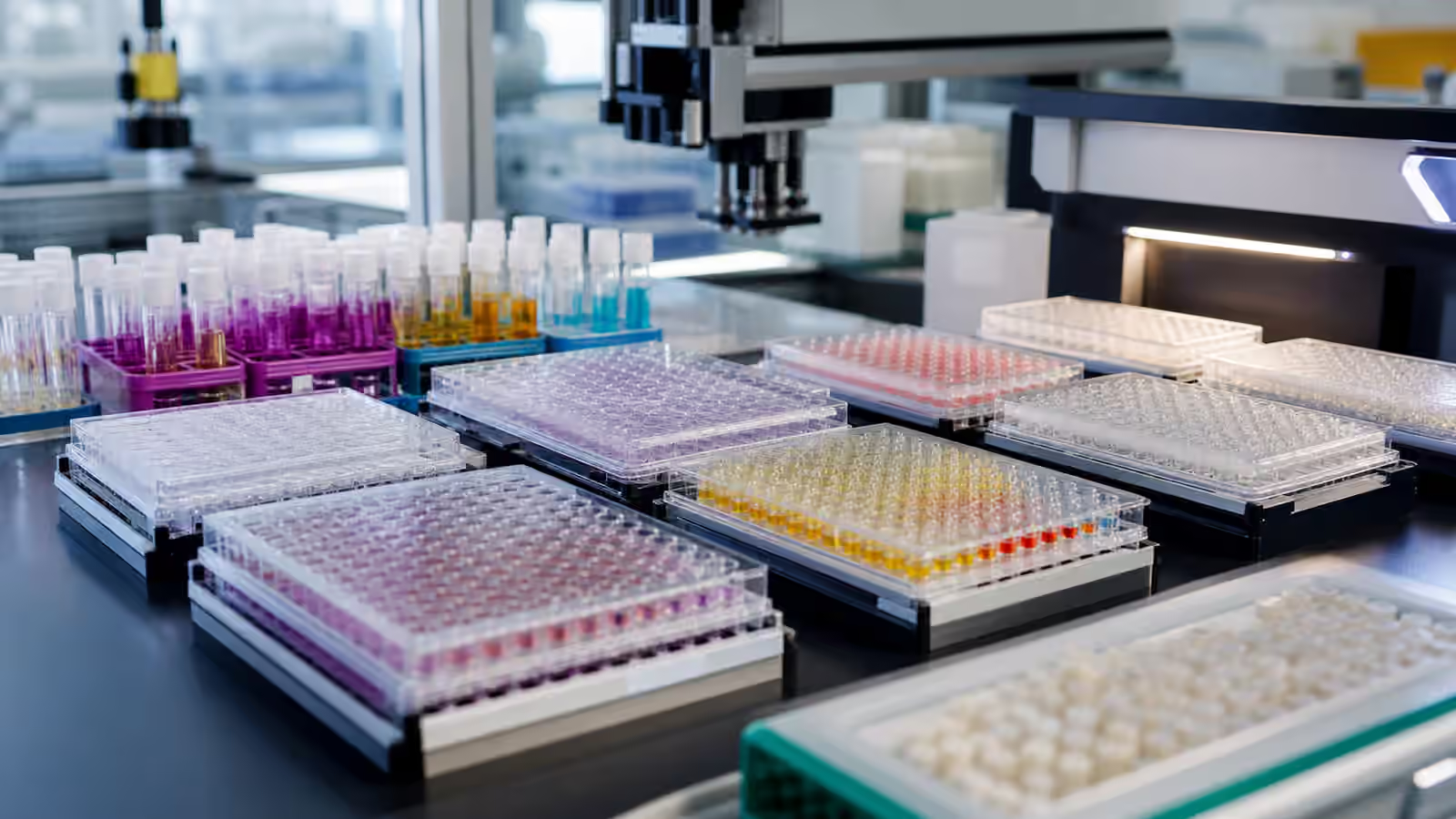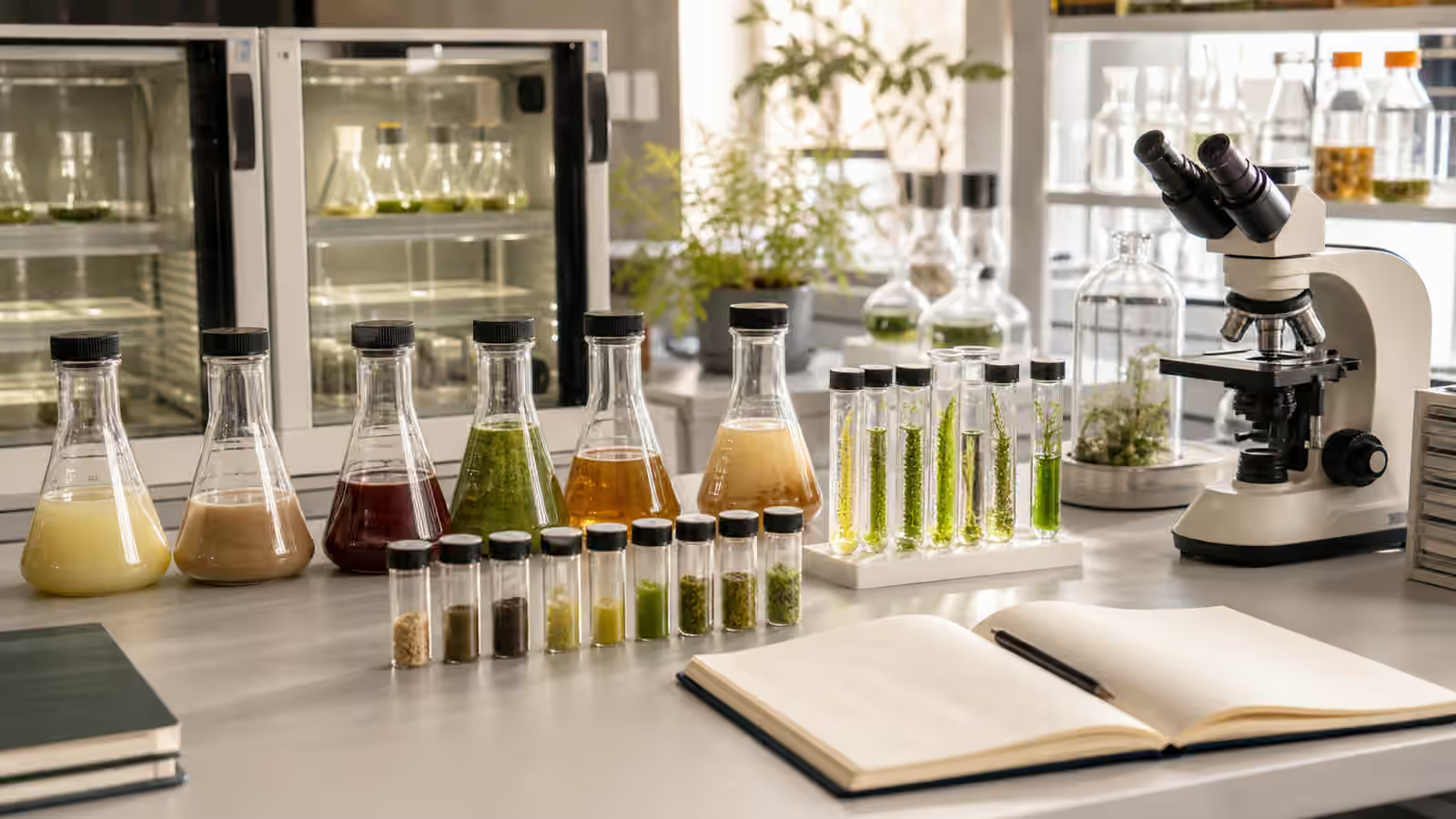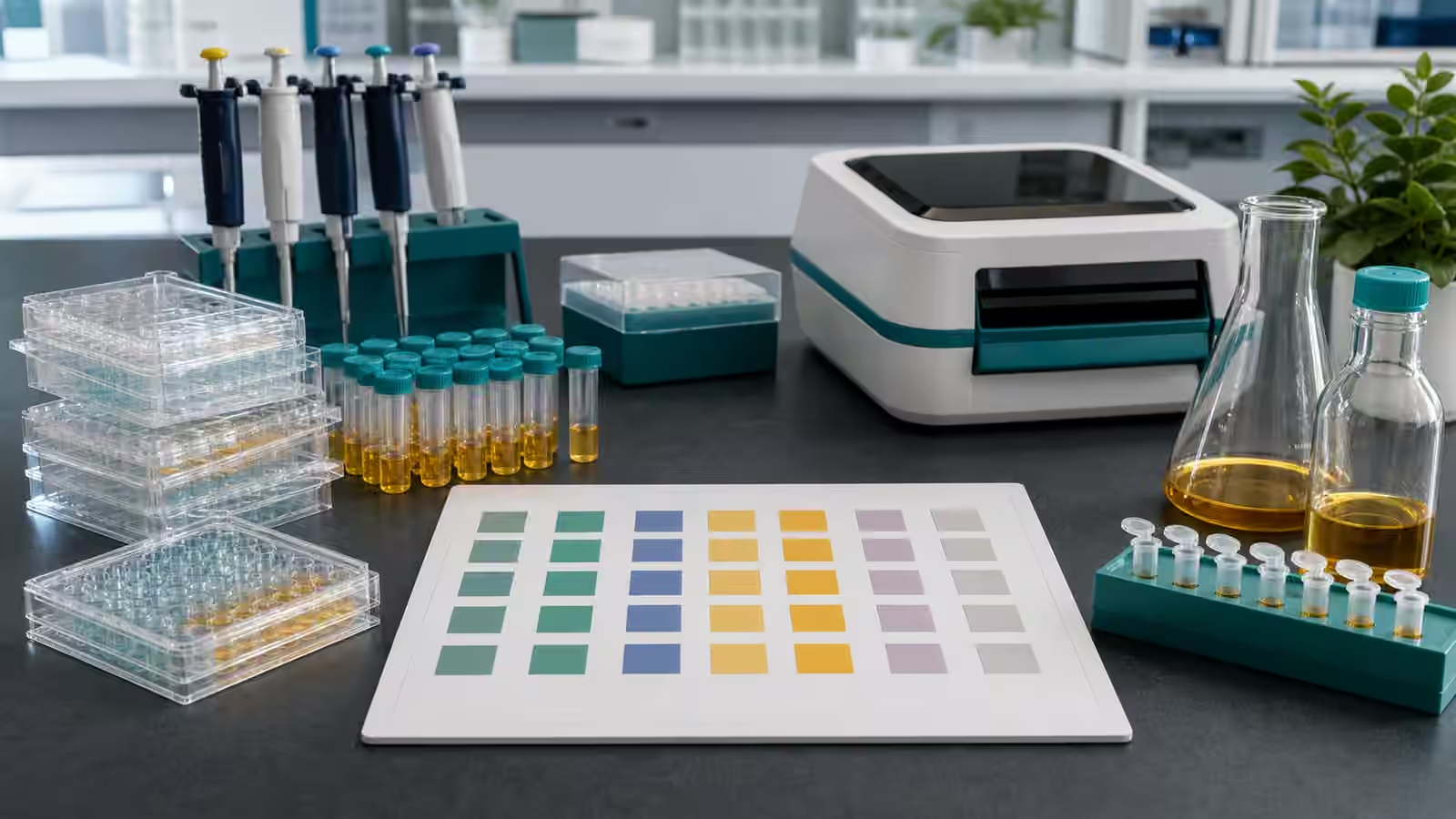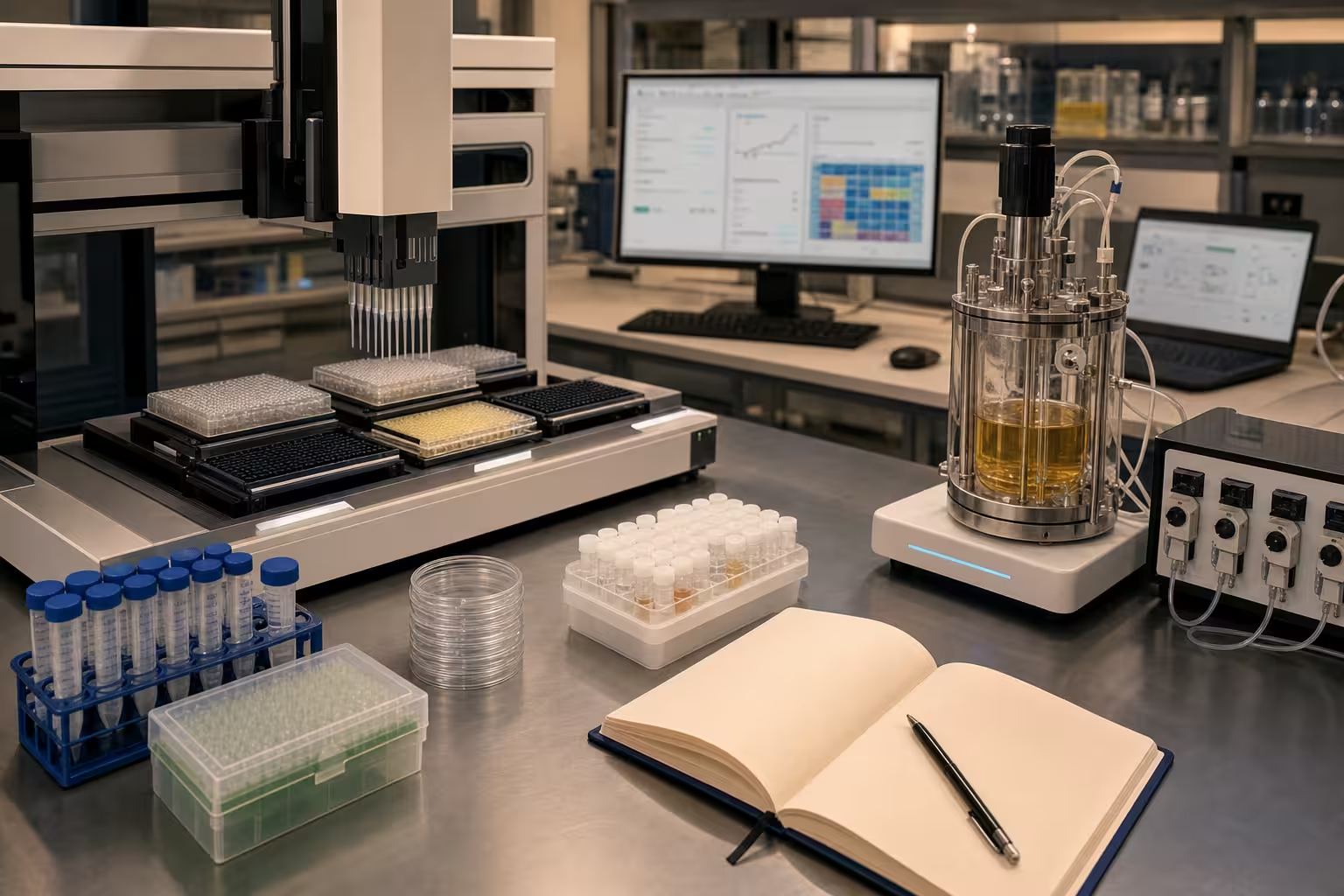
A biofoundry is easiest to understand if you imagine a workshop where the prototypes are living systems and the measuring tools matter as much as the ideas.
The word can sound grand, as if a biofoundry is a factory stamping out organisms. That picture is too crude. A real biofoundry is closer to a disciplined loop. Researchers design biological parts or pathways, build them into cells or cell-free systems, test what happened, learn from the measurements, and then redesign. The foundry part is not only the equipment. It is the rhythm of turning biological guesswork into measured iteration.
This matters because synthetic biology is often described through its most imaginative verbs. We can program cells. We can write DNA. We can engineer microbes. We can design proteins. Those phrases are useful, but they can make the work sound cleaner than it is. A DNA design does not become a product because it looked elegant on a screen. It has to be built, introduced into a biological system, expressed, measured, debugged, stressed, scaled, documented, and kept within safety boundaries.
The biofoundry is where that humbling work becomes visible.
Biology needs iteration, not just inspiration
In ordinary software, a programmer can write code, run it, inspect the output, and change it quickly. The analogy to biology is tempting, but it breaks down fast. Cells are crowded, resource-limited, evolving systems. A gene that works in one host may fail in another. A pathway that produces a molecule in a flask may slow down when scaled. A protein may fold poorly. A sensor may respond to the wrong signal. A cell may decide that the engineered task is stressful and route resources elsewhere.
That is why synthetic biology depends on iteration. One design is rarely enough. Researchers may test many promoters, enzymes, host strains, temperatures, media conditions, growth times, and genetic arrangements. They may measure not only whether the target molecule appeared, but how much appeared, how fast the cells grew, whether unwanted byproducts accumulated, and whether the system stayed stable across generations.
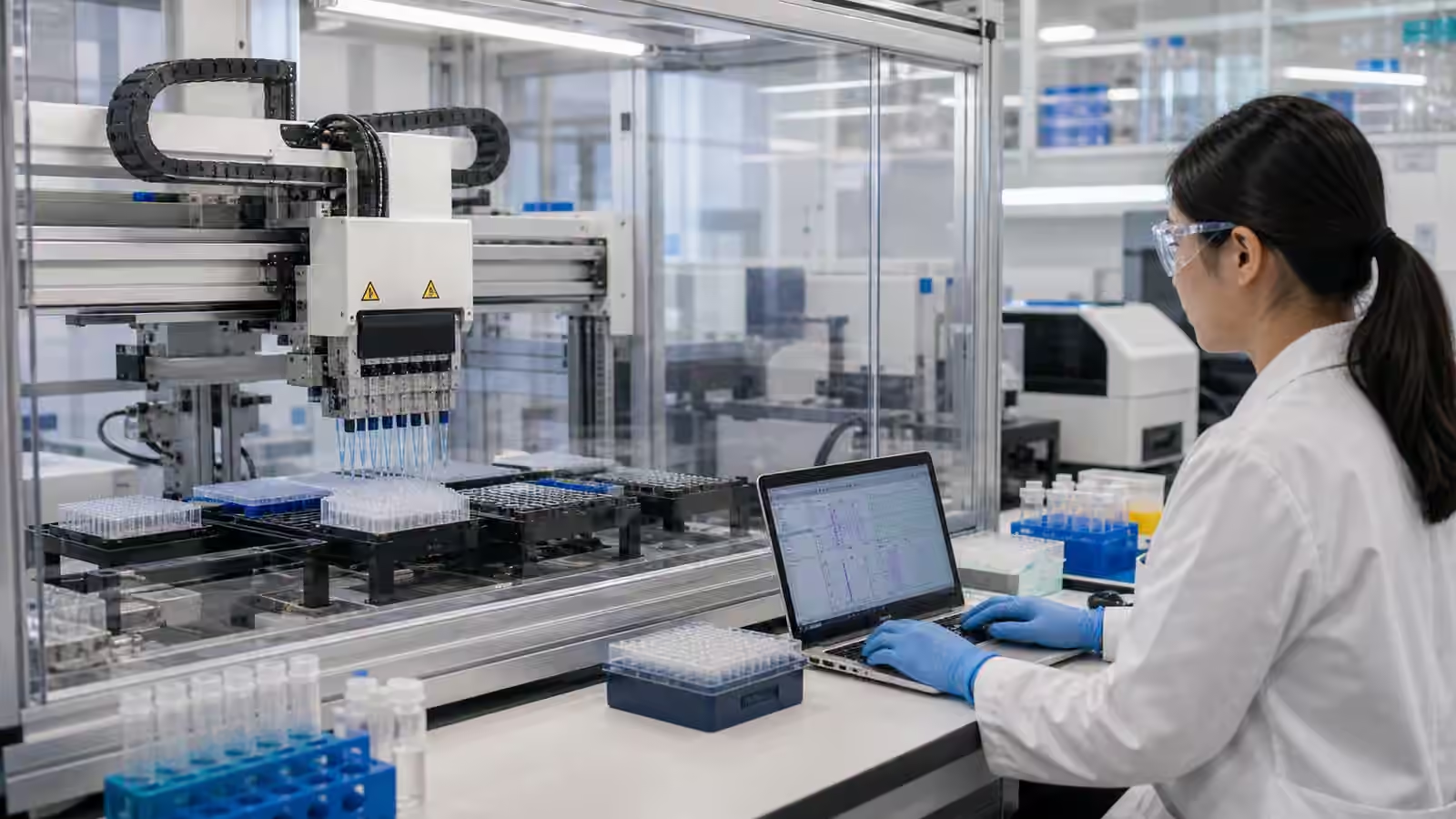
Manual lab work can do some of this, but manual work becomes a bottleneck. It is slow, tiring, variable, and hard to compare across large numbers of designs. Biofoundries use automation and standardization to make the loop faster and more reliable. Robotic liquid handlers can move tiny volumes into plates. Instruments can read fluorescence, absorbance, mass, sequence, or chemical composition. Software can track samples and conditions. Data systems can connect the design to the result.
The goal is not to remove scientists from the process. The goal is to let scientists ask better questions at a scale that biology increasingly demands.
The design-build-test-learn loop
The phrase design-build-test-learn can sound like a slogan until you follow one pass through the loop.
The design stage begins with a biological intention. A team may want a microbe to make a fragrance molecule, a yeast strain to produce a dairy protein, a cell-free system to express an enzyme, or a genetic sensor to respond to a contaminant. The design may involve DNA sequences, regulatory parts, host organisms, pathway diagrams, and predictions from previous experiments.
The build stage turns the design into physical biology. DNA may be synthesized, assembled, edited, or introduced into cells. Strains may be grown under defined conditions. Samples may be prepared in plates or tubes. This is where automation can reduce handling errors and keep the work traceable.
The test stage asks what happened. Did the cells grow? Did the gene express? Did the protein appear? Did the molecule accumulate? Did the system respond to the right input? Did it create a safety concern, a contamination issue, or a surprising burden on the organism?
The learn stage is where data becomes judgment. A weak result may mean the design was poor, the measurement was wrong, the host was stressed, the pathway was unbalanced, the enzyme was slow, the sample was contaminated, or the target molecule was hard to detect. Learning is not just choosing the highest number in a spreadsheet. It is understanding why the number appeared.
Then the loop begins again. The next design is less naive because the previous test left evidence behind.
Automation does not make biology automatic
There is a common misunderstanding that lab automation turns biology into a push-button process. It does not. Automation can pipette more consistently than a tired person. It can run plates overnight. It can reduce repetitive strain and make sample histories clearer. It can connect instruments to data systems. But it cannot magically decide which biological question is worth asking.
Bad experimental design becomes bad automated experimental design. Poor controls remain poor controls. A mislabeled sample is still a problem. An instrument can produce a beautiful stream of numbers that measure the wrong thing. A robot can handle liquid precisely while the biological system inside the liquid behaves unpredictably.
This is why the best biofoundries combine machinery with judgment. They need people who understand molecular biology, statistics, software, robotics, safety, data management, and the messy behavior of cells. The equipment makes the loop stronger only when the questions, controls, and interpretations are strong too.
The same is true of artificial intelligence in the lab. Models can help suggest designs, predict protein structures, analyze images, flag patterns, or plan experiments. But the lab still has to test. In biology, prediction and validation belong together. A model may narrow the search space, but the organism gets a vote.
Measurement is the quiet center
Biofoundries are sometimes described through their robots, but measurement is the quiet center. If you cannot measure the result well, you cannot learn reliably.
Measurement in synthetic biology is difficult because living systems produce layered signals. A fluorescent reporter might suggest gene expression, but expression is not always the same as useful product. Cell growth might look healthy, but the target molecule might be low. A chemical assay might detect a product, but miss an impurity that matters for scale-up. A strain might perform well once, then drift or fail under stress.
Good measurement asks what success actually means. For a research experiment, success might be proof that a pathway can work at all. For a food ingredient, success includes yield, purity, safety, taste, cost, regulatory clarity, and consumer trust. For a medicine, the bar is much higher. For an environmental sensor, success may depend on specificity, containment, retrieval, and robustness outside the lab.
The biofoundry helps by making measurements more systematic. Samples can be tracked. Replicates can be planned. Conditions can be recorded. Instrument outputs can be connected to designs. Over time, the foundry can build institutional memory. It learns which designs tend to fail, which hosts behave well, which measurements are trustworthy, and which shortcuts are not worth taking.
Scale-up changes the question
A small successful experiment is not the same as a working process. This is one of the central lessons of synthetic biology.
A strain that makes a useful molecule in a small plate may behave differently in a flask. A flask result may not survive a bioreactor. A bioreactor result may still fail when purification, cost, contamination control, feedstock sourcing, waste handling, and quality assurance are included. Biology changes with volume, oxygen, mixing, heat, pressure, nutrients, and time.
Biofoundries do not eliminate scale-up risk, but they can expose it earlier. They can test ranges of conditions, compare strains, gather richer data, and identify failure patterns before a company or lab commits to a larger process. They can also help separate scientific possibility from manufacturing readiness.
That distinction matters for readers. When a synthetic biology story says a microbe can make a product, ask where the work sits. Is it a proof of concept? A lab-scale process? A pilot-scale run? A commercial product? The same sentence can mean very different things depending on scale.
Safety is built into the workflow
Because biofoundries work with biological systems, safety is not a side topic. It belongs in the workflow from the start.
Responsible biofoundry work includes choosing appropriate organisms, using containment, documenting samples, preventing cross-contamination, screening DNA when relevant, tracking materials, managing waste, and designing systems with realistic assumptions about failure. The goal is not to make the lab feel dramatic. The goal is to make ordinary discipline strong enough that dramatic failures become less likely.
Biosecurity also matters. Easier design and synthesis tools can accelerate useful work, but they also require guardrails. A mature biofoundry culture treats access, oversight, training, and recordkeeping as part of the engineering environment. The question is not only what can be built. It is who should build it, under what controls, for what purpose, and with what review.
This is where the workshop metaphor needs one more layer. A biofoundry is not a garage full of clever tools. It is a workshop with rules because the materials can grow, spread, mutate, contaminate, or be misunderstood.
Why biofoundries matter
Biofoundries matter because synthetic biology is moving from isolated heroic experiments toward repeatable engineering practice. That transition is not glamorous, but it is where fields become useful.
If precision fermentation is going to produce reliable food proteins, teams need to iterate strains and processes. If engineered microbes are going to make chemicals, teams need to balance pathways and measure byproducts. If AI-designed proteins are going to become enzymes, medicines, or materials, designs need to be built and tested. If tissue models are going to improve drug research, cells and scaffolds need consistent protocols. If safety claims are going to be trusted, records and controls need to be real.
The biofoundry sits behind all of that. It is not the headline product. It is the place where the field learns how to learn.
For a beginner, that may be the most important takeaway. Synthetic biology is not magic DNA writing. It is a disciplined relationship between design and evidence. The foundry makes the relationship faster, clearer, and more accountable.
The future of the field will not be decided only by the cleverest sequence. It will be decided by the labs that can build, test, measure, learn, and ask whether the next design deserves to exist.