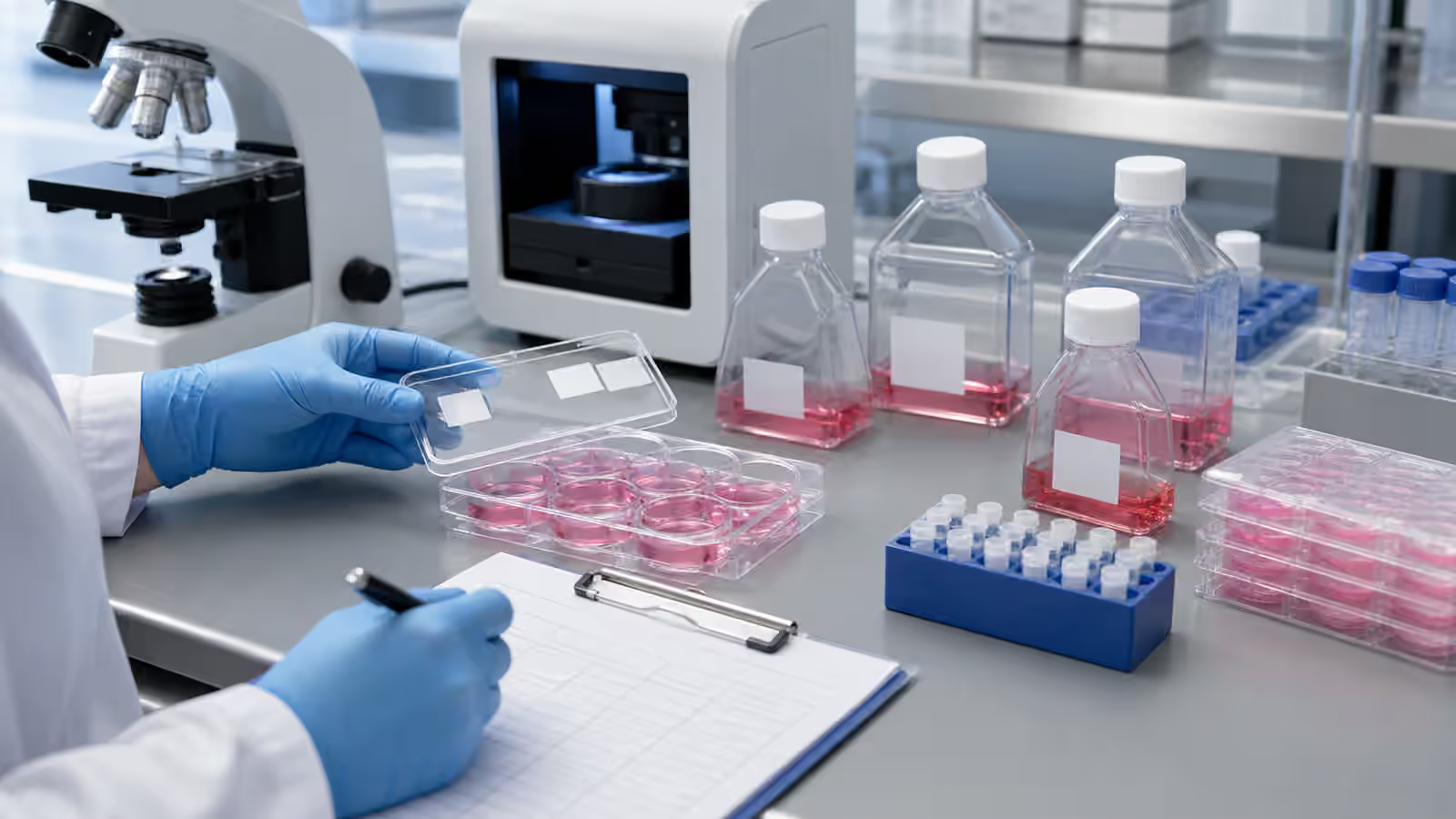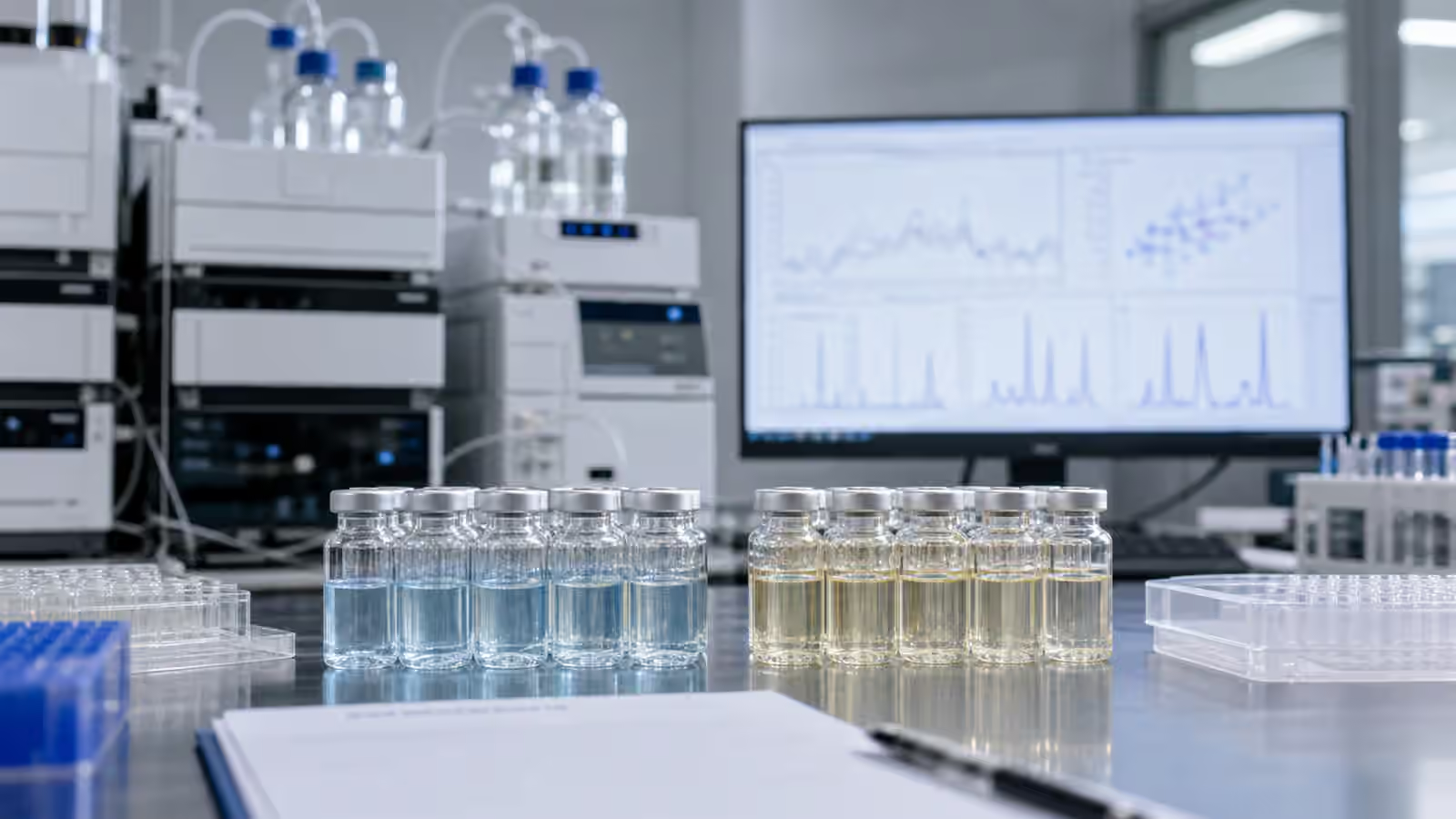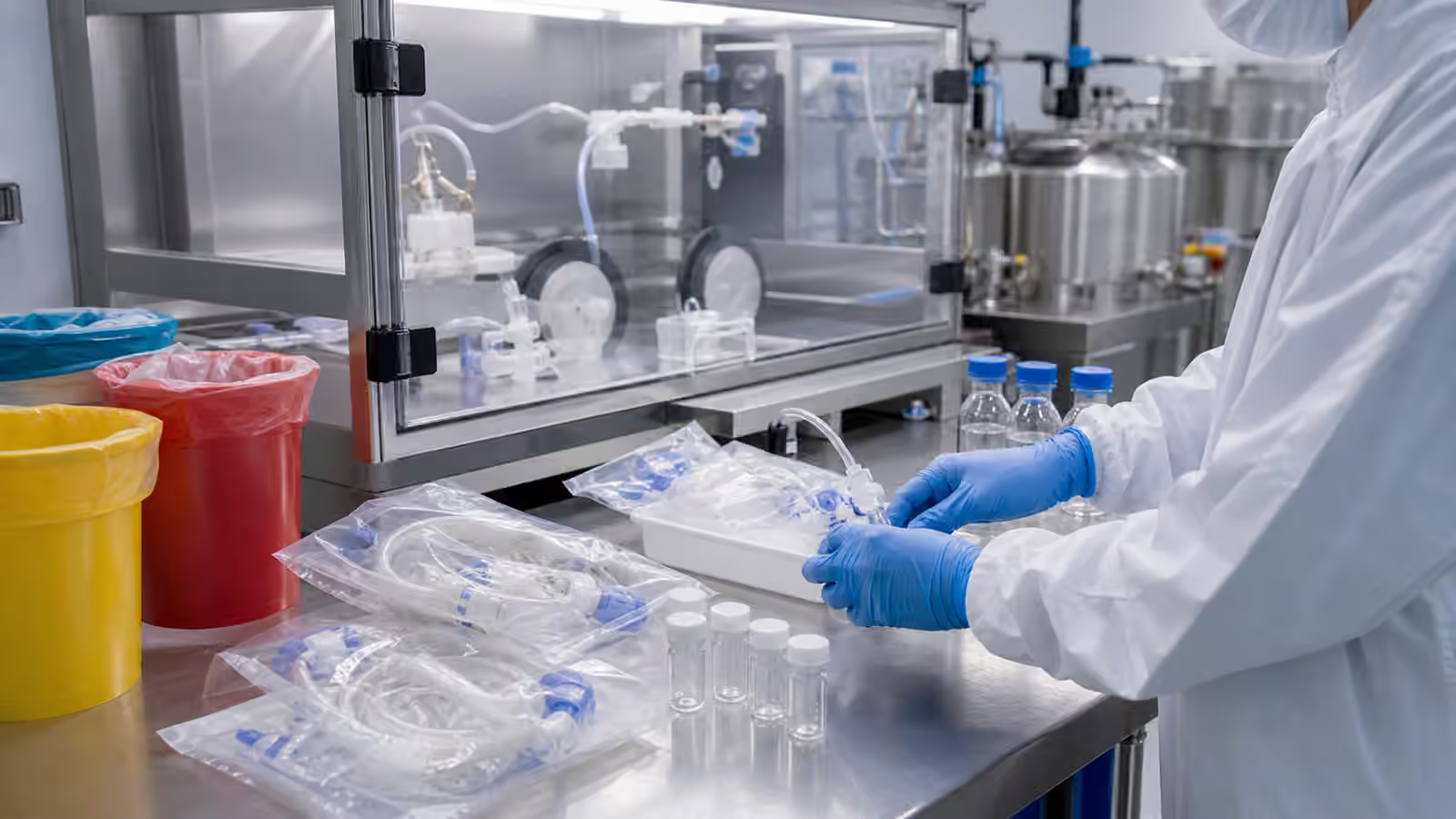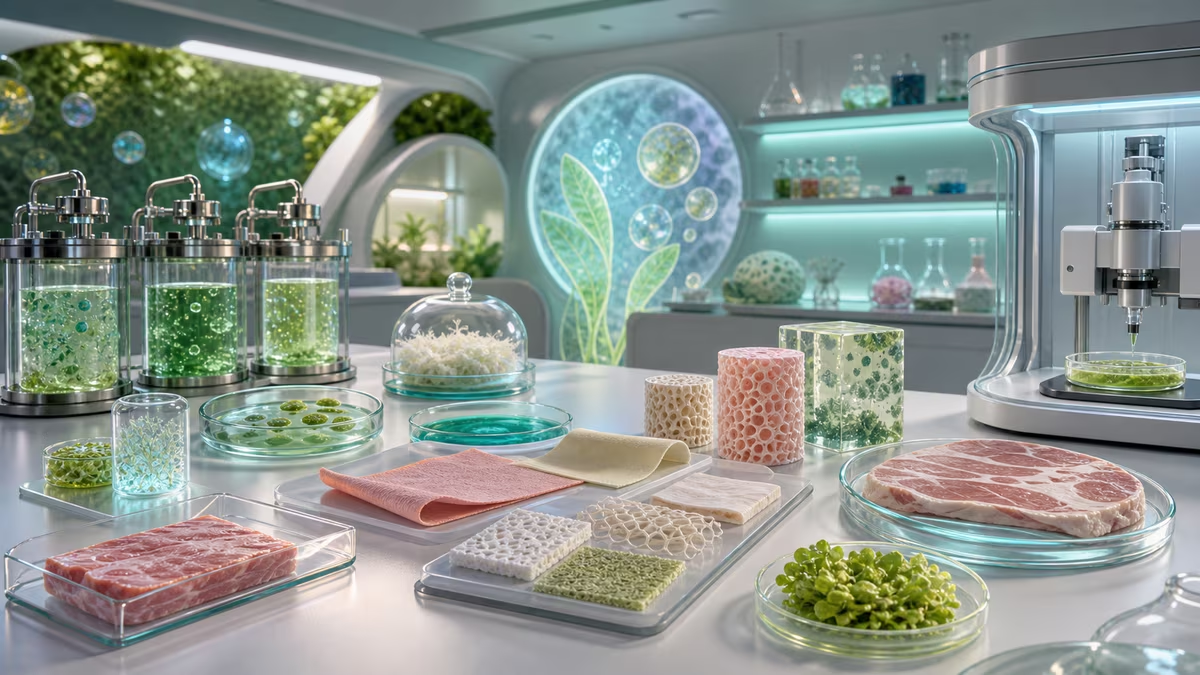
Imagine walking into a workshop where the shelves do not hold lumber, bolts, and plastic pellets. They hold cells, enzymes, nutrients, scaffolds, and carefully controlled environments. One station grows a leather-like material without a hide. Another uses microbes to make a pigment. Another prints a tiny tissue model for drug testing. A tank in the corner is not brewing beer; it is growing a protein that may become part of a food, medicine, or material.
That workshop is the spirit of biofabrication.
Biofabrication means using living systems, biological components, or biologically inspired processes to make useful things. It is broader than synthetic biology, but the two fields overlap deeply. Synthetic biology supplies the programmable instructions. Biofabrication asks how those instructions become matter in the world.
The word can feel slippery because it covers different scales. At one scale, it means cells producing molecules in a fermentation tank. At another, it means arranging living cells into tissue-like structures. At another, it means growing materials from mycelium, cellulose, collagen, silk-like proteins, or other biological building blocks. What unites the examples is a shift from carving and heating matter into shape toward coaxing biological systems to assemble, grow, secrete, deposit, or transform matter.
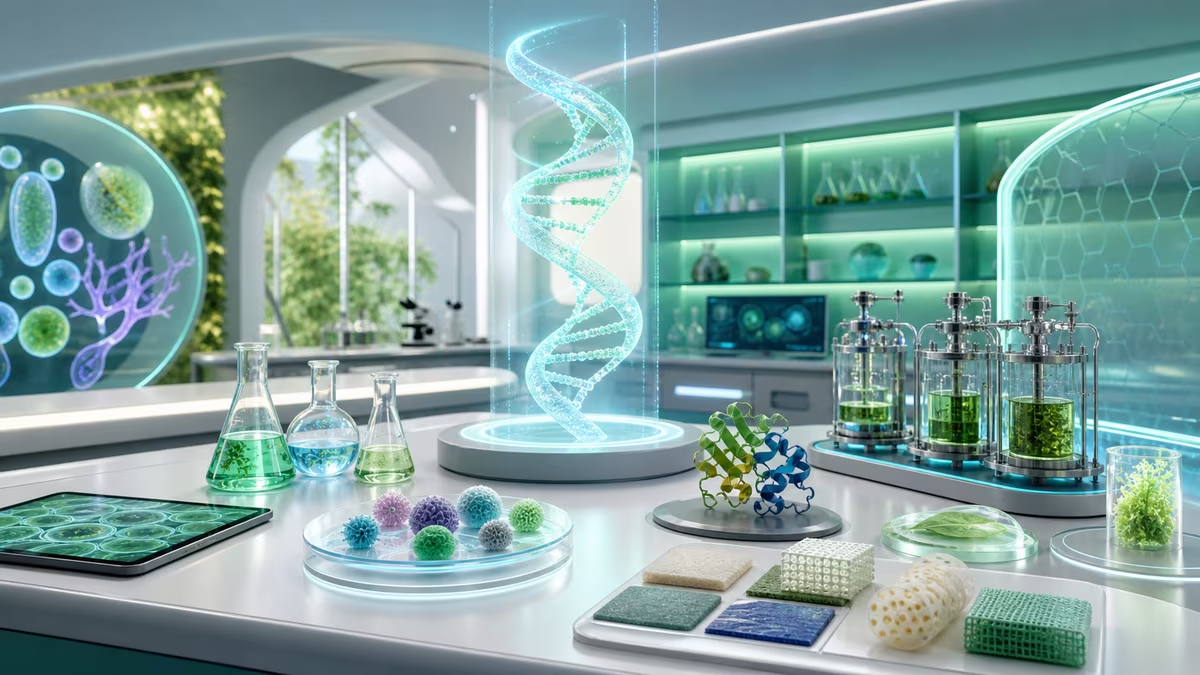
From factory floor to living workshop
Traditional manufacturing often begins with extraction. Mine the mineral, pump the oil, harvest the crop, cut the tree, slaughter the animal, refine the raw material, apply heat and pressure, ship the product. Biofabrication begins with a different question: can a living system make the ingredient or structure directly?
Yeast and bacteria already do this every day. They convert sugar into alcohol, acids, proteins, pigments, vitamins, and aromas. Fungi build branching networks. Plants make cellulose and complex chemicals. Animal cells build tissues. Enzymes cut, join, fold, and modify molecules with exquisite specificity.
Synthetic biology makes this more deliberate. If a microbe naturally makes a little of a useful molecule, researchers may redesign its pathway to make more. If an animal produces a protein with desirable texture, cells or microbes may be engineered to produce a version of that protein without raising the whole animal. If a tissue model needs multiple cell types in a particular arrangement, a bioprinter may place bioinks in layers that help cells organize.
The result is not one technology. It is a family of production stories.
Three kinds of biofabrication
The first kind is molecular biofabrication. Here the goal is not to grow a visible object. The goal is to produce a molecule: insulin, an enzyme, a dairy protein, a fragrance compound, a specialty chemical, a polymer building block, or a medicine ingredient. The production organism is like a living chemical plant, and the main industrial challenge is making enough product reliably, then purifying it safely and affordably.
The second kind is material biofabrication. Here biology helps make a physical material: a mycelium foam, a bacterial cellulose sheet, a collagen-based textile, a silk-like fiber, a pigment, a coating, or a bioplastic precursor. The challenge is not only whether the material can be grown, but whether it performs well. Does it stretch, breathe, resist water, age gracefully, accept dye, withstand shipping, and compete on cost?
The third kind is cellular or tissue biofabrication. Here living cells are part of the final structure or model. Researchers may build tissue models for drug testing, disease research, wound healing, or future regenerative medicine. This overlaps with Tissue Printing and Organs , where the promise is dramatic and the engineering constraints are severe.
These categories blur. Cultivated meat uses animal cells to grow edible tissue or tissue-like biomass. Precision fermentation uses microbes to make specific proteins or fats that can become food ingredients. A biofabricated material might use engineered microbes to make a polymer and then conventional equipment to shape it.
Why biofabrication matters
Biofabrication matters because many of our supply chains are built on difficult tradeoffs. Leather can be durable and beautiful, but animal agriculture, tanning chemistry, land use, and waste all matter. Petroleum plastics are cheap and useful, but persistent pollution and fossil carbon are major problems. Medicines can be life-saving, but complex biological drugs require sophisticated production. Meat is culturally important and nutritionally dense, but livestock systems carry climate, land, water, disease, and animal welfare questions.
Biofabrication does not erase those tradeoffs. It creates new routes through them.
A biofabricated textile could reduce dependence on animal hides or petroleum feedstocks. A fermentation-derived protein could supply a food function without needing the animal that originally made it. A tissue model could help researchers screen drug candidates before testing in animals or people. A biofoundry could accelerate the search for microbes that make a useful chemical from renewable feedstocks.
The honest version is not “biology will replace factories.” It is “some factories may begin to look more biological, and some biological systems may become more factory-like.”
That is a serious shift.
What people often misunderstand
The first misunderstanding is that grown means natural. Biofabricated products can be deeply engineered. A microbe may be altered. A feedstock may come from industrial agriculture. A purification process may be energy-intensive. A final material may still behave like a plastic. Naturalness is not the right test. Performance, safety, sustainability, transparency, and fairness are better tests.
The second misunderstanding is that biofabricated means biodegradable. Some bio-based materials do biodegrade under specific conditions. Some do not. Some require industrial composting. Some are chemically similar to petroleum-derived materials and should be recycled or managed the same way. A material’s origin and its end-of-life behavior are separate questions.
The third misunderstanding is that a successful prototype proves a supply chain. A square of lab-grown material in a photograph can be beautiful, but a product needs consistent quality, affordable inputs, reliable equipment, regulatory acceptance, manufacturing partners, customers, and waste handling. Scale-up is where many elegant biology ideas meet hard economics.
The fourth misunderstanding is that biology is automatically gentle. Cells may grow at mild temperatures, but sterile operation, agitation, cooling, water use, cleaning, purification, and failed batches can all carry costs. Biofabrication should be compared against real alternatives, not against a fantasy factory with no footprint.
Real examples to keep the idea concrete
Bacterial cellulose is one accessible example. Some bacteria can produce cellulose as a sheet or gel-like material. Researchers and companies have explored it for wound dressings, food textures, textiles, and packaging. The appeal is that the material grows with fine structure. The challenge is turning that growth into predictable, durable, affordable products.
Mycelium materials are another. Fungal networks can grow through agricultural residues and form lightweight foams or leather-like sheets. These materials can be shaped by molds and conditions. They are promising for packaging, furniture components, fashion experiments, and insulation-like uses, but performance and cost vary by application.
Precision-fermented proteins are a molecular example. Microbes can be programmed to produce proteins that resemble those found in milk, eggs, or other foods. The finished ingredient may be used for texture, nutrition, foaming, melting, or flavor. To explore that production path, read Precision Fermentation Explained .
Bioprinted tissue models are a medical example. They may not become transplantable organs soon, but they can help researchers study human-like tissues in the lab. A small model that mimics skin, liver, tumor tissue, or blood vessel behavior can be valuable even if it never becomes a full organ.
Future possibilities
The future of biofabrication will probably be less glamorous and more consequential than the most dramatic headlines. Expect more hybrid products: a conventional food improved by a fermentation-derived ingredient, a textile blended with a biofabricated fiber, a medical test that uses a printed tissue model, a plastic supply chain that swaps in a bio-based precursor for one component.
Biofoundries could make this faster by standardizing the way biological designs are built and measured. AI tools could help search the design space. Robots could run more experiments. Better sensors could show what cells are doing in real time. Better life-cycle analysis could reveal which products actually reduce harm.
The ethical questions will grow with the technology. Who owns biological designs based on nature? What happens to farmers and workers when an ingredient moves from field or animal to tank? How should products be labeled? Which claims about sustainability deserve trust? Which uses should be encouraged, regulated, paused, or rejected?
Biofabrication is not just a new way to make things. It is a chance to ask what kinds of making we want.
Try this: map the making
Choose one object near you: a jacket, snack, bottle, bandage, chair cushion, soap, or phone case. Trace how it is probably made today. Then imagine one biofabricated substitute for one ingredient, not the whole product.
Ask:
- What biological system could help make that ingredient?
- Would the final product need living cells, purified molecules, or a grown material?
- What performance test would matter most: strength, taste, safety, shelf life, flexibility, cost, or disposal?
- What claim would you refuse to believe without evidence?
This is the core habit of biofabrication literacy: follow the material all the way from feedstock to end of life.
Further reading
- NIST engineering and synthetic biology
- NIST synthetic biology program
- DOE bioenergy and biomanufacturing initiatives
Next steps
Read Precision Fermentation Explained to follow one of the clearest biofabrication routes. Read Lab-Grown Meat vs Precision Fermentation vs Plant-Based Food to compare the food future without mixing up very different technologies.