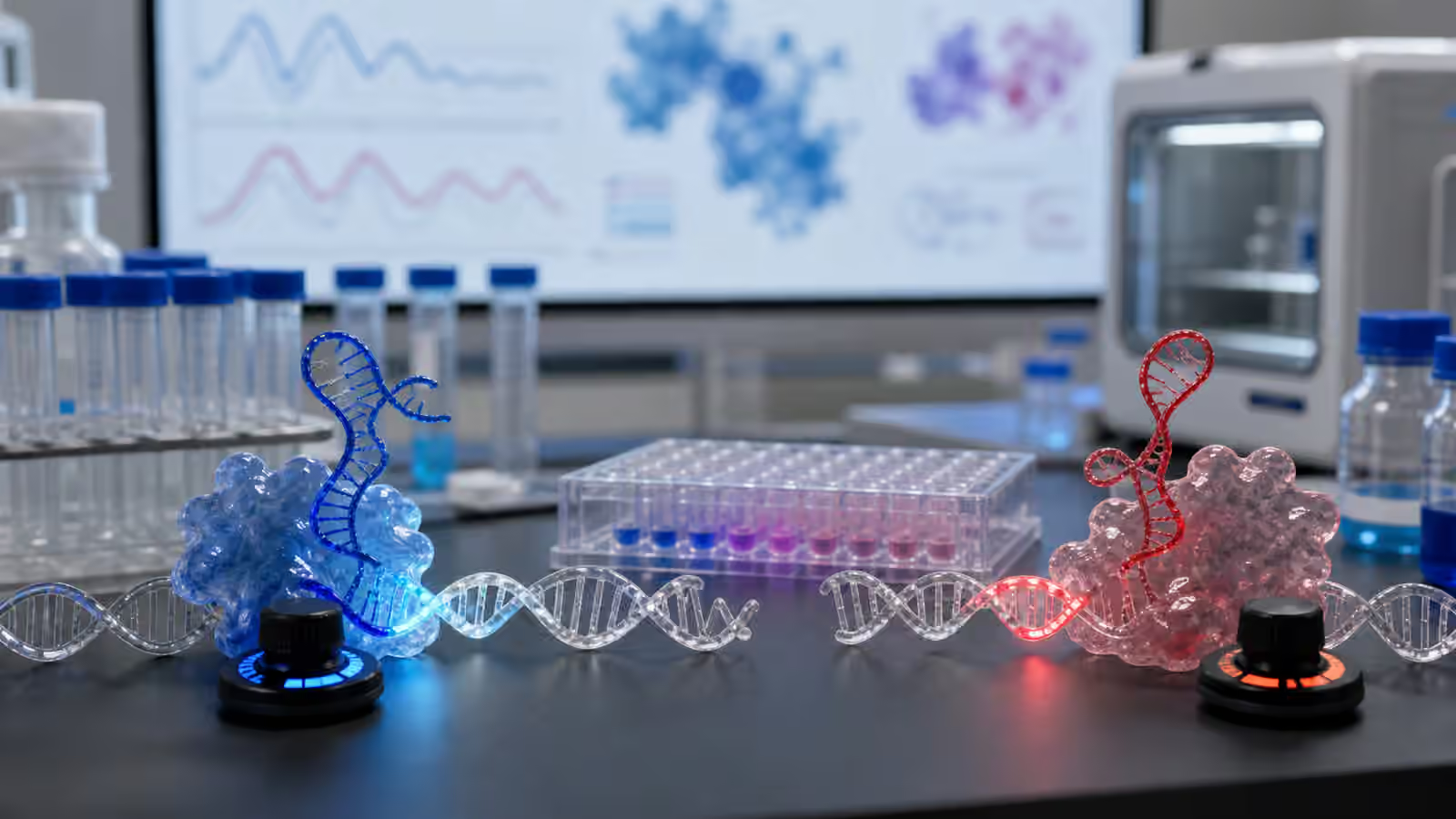
If DNA is a recipe book, proteins are much of what the recipe book is trying to make.
Proteins are not just nutrients on a label. They are molecular machines, scaffolds, signals, sensors, cutters, carriers, motors, antibodies, enzymes, channels, and structural supports. Hemoglobin carries oxygen. Collagen gives tissues strength. Enzymes speed up chemical reactions. Antibodies recognize targets. A protein’s job depends heavily on its shape, and its shape emerges from a chain of amino acids folding into a three-dimensional structure.
For decades, one of biology’s great puzzles was this: given the amino acid sequence of a protein, can we predict the shape it will fold into? The problem mattered because structure helps explain function. If you can see the pocket where a molecule binds, the surface where another protein attaches, or the fold that stabilizes an enzyme, you can reason about biology more effectively.
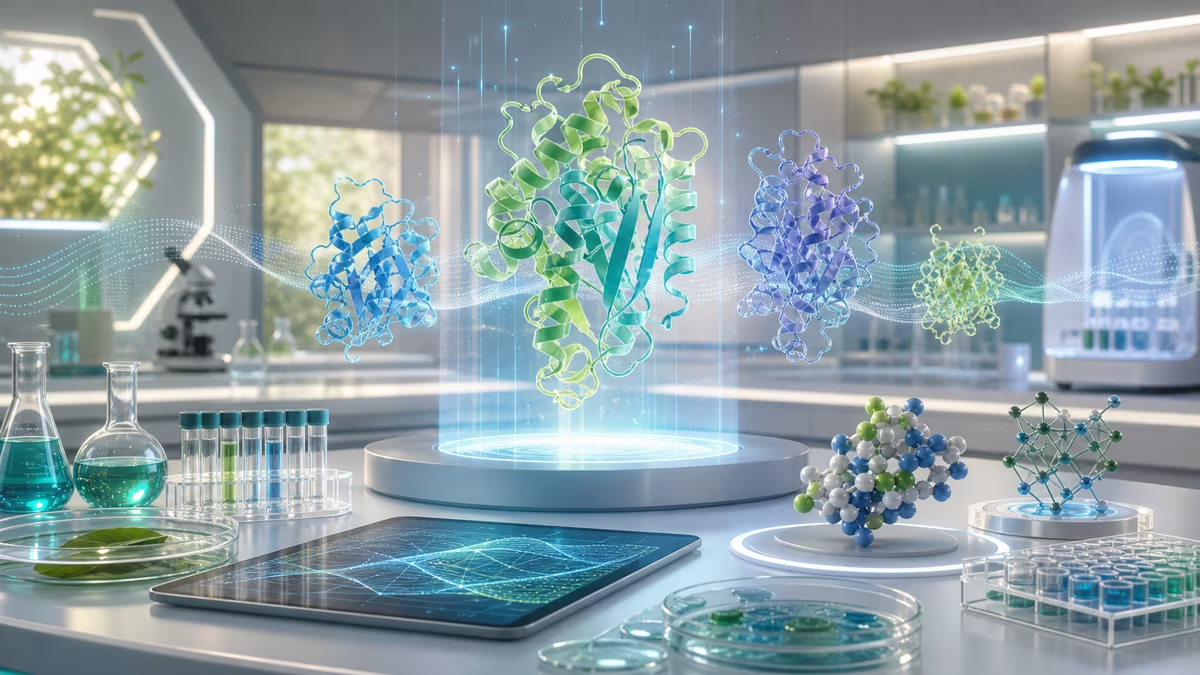
AI systems changed the pace of that work. Tools such as AlphaFold showed that machine learning could predict many protein structures with remarkable accuracy. That did not solve all of biology, and it did not replace experiments, but it gave researchers a new map. Now the frontier is expanding from predicting existing proteins toward designing useful new ones.
Prediction is not the same as design
Protein structure prediction asks, “What shape is this sequence likely to make?” Protein design asks, “What sequence might make a shape or function we want?”
That difference is enormous. Predicting a house from a blueprint is hard. Designing a house for a family, climate, budget, building code, and future repairs is harder. In proteins, the design challenge includes folding, stability, function, manufacturability, toxicity, immune response, interactions with other molecules, and behavior in messy biological conditions.
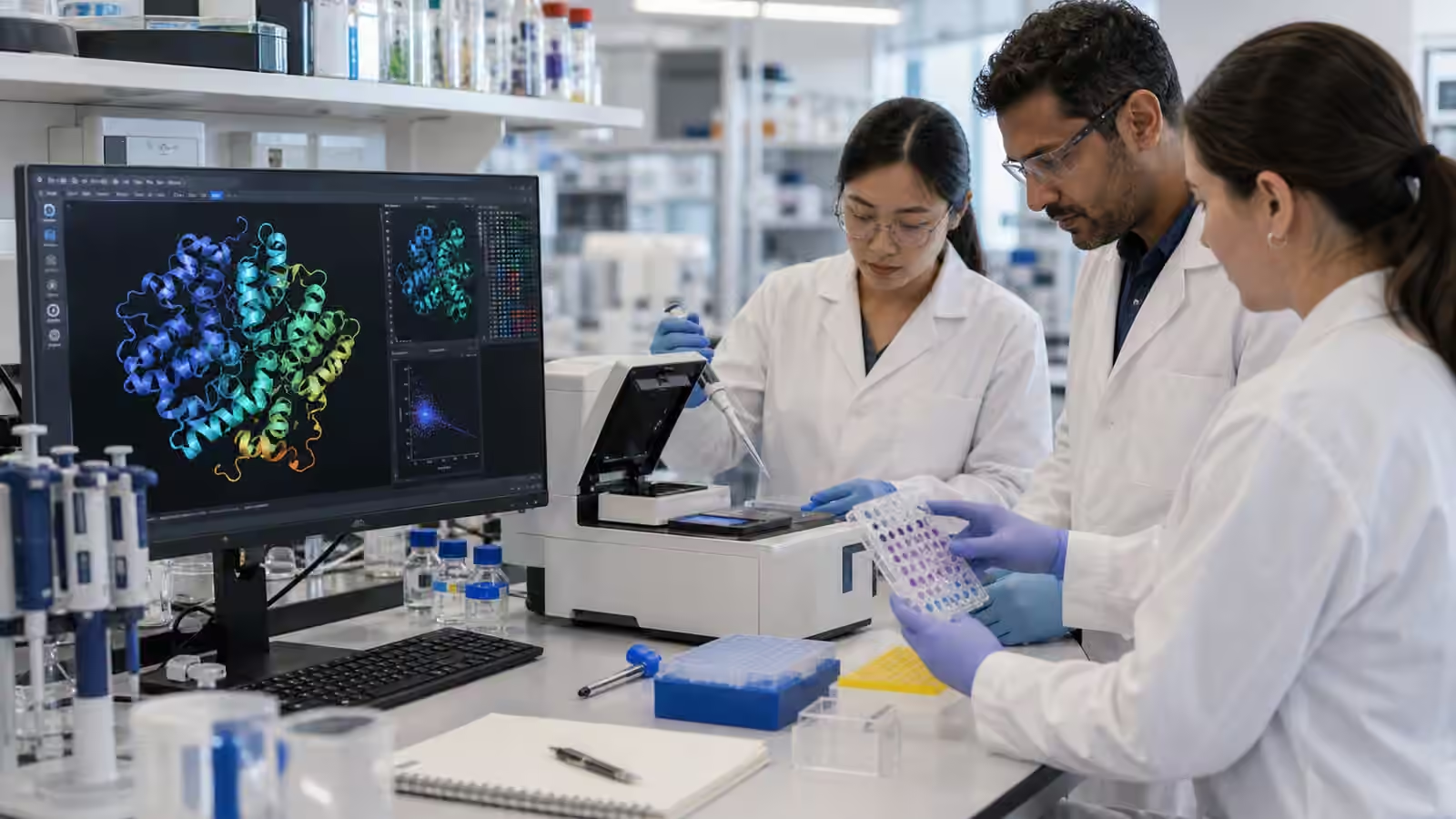
AI helps because the design space is gigantic. A small protein can have more possible amino acid sequences than any human team could search by intuition. Machine learning models can learn patterns from known proteins, propose candidates, predict structures, suggest mutations, or generate novel backbones. But a proposed protein is still a hypothesis. It must be made, purified, measured, stressed, tested, and compared with alternatives.
In synthetic biology, that means AI is part of a loop. Design on the computer. Build in the lab. Test with instruments. Learn from the data. Design again.
This loop connects directly to Synthetic Biology Quickstart and to biofoundries, where automation can help run many build-test cycles.
Why proteins are such attractive targets
Proteins are attractive because they already do so much in nature. If you want to speed up a reaction, bind a target, sense a molecule, cut DNA, assemble a material, control a cell signal, or build a therapeutic, a protein may be the right tool.
In medicine, designed proteins could become better antibodies, vaccines, delivery vehicles, enzymes, or therapeutic binders. In industry, they could become enzymes that work at lower temperatures, tolerate harsh conditions, or transform specific feedstocks. In materials, they could help assemble fibers, adhesives, coatings, or responsive structures. In environmental applications, they could help detect pollutants or break down certain compounds.
The appeal is precision. A small change in a protein can alter binding, stability, speed, or specificity. That precision can be powerful, but it also means hidden problems matter. A protein that performs beautifully in a computer model may misfold in a cell, aggregate in a bottle, trigger an immune response, break down too quickly, or fail in real-world conditions.
AI opens doors. Biology decides which doors lead anywhere.
What people often misunderstand
The first misunderstanding is that AlphaFold or similar tools “solved biology.” They solved or advanced a major structure-prediction problem for many proteins. Biology includes dynamics, regulation, metabolism, cells, tissues, organisms, ecology, development, disease, and evolution. A structure prediction is a powerful clue, not a complete explanation.
The second misunderstanding is that a good predicted shape means a working product. Function depends on motion, chemistry, environment, partners, concentration, and timing. Many proteins are flexible. Some change shape when they bind something. Some work only inside a particular cellular context. Structure is one layer of truth.
The third misunderstanding is that AI design removes the need for wet labs. It may reduce blind searching, but experiments become more important, not less. If a model can generate thousands of plausible designs, researchers need better ways to choose, build, test, and learn from them.
The fourth misunderstanding is that all AI-designed proteins are risky because they are new. Risk depends on use. A designed enzyme inside a closed industrial process is different from a therapeutic injected into people, which is different from a protein expressed by an engineered organism, which is different from a molecule proposed for environmental release. Safety review should follow the application.
A concrete analogy
Imagine trying to design a key for a lock you can barely see. In older biology, researchers often had a blurry sense of the lock’s shape and used slow trial and error to make keys. Better structural biology gave clearer lock images. AI prediction made many more locks visible. AI design suggests candidate keys.
But a key that looks right on a screen may be weak metal, hard to manufacture, uncomfortable to use, or likely to break in winter. So you still cut the key, try it in the real lock, test copies, and watch what fails.
Protein design is like that, except the keys are molecules, the locks may be proteins or cells, and the test environment can be a living body.
Real-world examples
AI-assisted protein work is already influencing research pipelines. Scientists use structure predictions to understand disease-related proteins, prioritize experiments, and interpret mutations. Designers use computational tools to create protein binders, enzymes, vaccine scaffolds, and molecular assemblies. Some designed proteins are research tools; others are being explored for medicine or industry.
Enzymes are especially intuitive. An enzyme is like a tiny catalyst with a shaped active site. If AI helps design an enzyme that works faster, at a lower temperature, or on a new substrate, it could affect manufacturing, recycling, food processing, or medicine. But enzyme claims should always ask about conditions. Does it work in pure lab buffer or in dirty industrial feedstock? Does it tolerate heat, solvents, pH, and contaminants? How long does it last?
Protein binders are another major area. A designed binder might attach to a viral protein, cancer marker, toxin, or inflammatory signal. A binder is only useful if it is specific enough, stable enough, deliverable enough, and safe enough.
Future possibilities
The future may bring faster protein engineering cycles. A model proposes candidates. A biofoundry builds them. Instruments measure folding, binding, activity, stability, and toxicity. The data returns to the model. Over time, design becomes less like guessing and more like disciplined search.
That could change drug discovery, vaccine design, diagnostics, industrial enzymes, material science, and synthetic biology circuits. It could also create governance challenges. More powerful design tools should be paired with screening, access controls, audit trails, responsible publication norms, and education. The problem is not knowledge itself. The problem is capability without context or guardrails.
AI-designed proteins also raise a philosophical question. Nature’s proteins are products of evolution, constrained by survival in particular organisms. Designed proteins can optimize for human goals that evolution never targeted. That is exciting. It is also a reminder that usefulness and wisdom are not the same thing.
Try this: protein job interview
Pick a protein job: bind a cancer marker, digest a plastic-like polymer, make a food foam stable, carry oxygen, sense a toxin, or form a strong fiber. Then answer:
- What function does the protein need: binding, catalysis, structure, signaling, transport, or sensing?
- Where must it work: inside a cell, in a tank, in food, on skin, in blood, or in the environment?
- What could fail besides the target function?
- Which tests would convince you that the design is real and not just a nice model?
The lesson is that every designed protein has a job description and a workplace.
Further reading
- Google DeepMind AlphaFold overview
- AlphaFold Protein Structure Database
- Nobel Prize background on computational protein design and prediction
Next steps
Read Can Bacteria Make Plastic, Fuel, and Medicine? to see how designed proteins can become part of microbial production. Read Synthetic Biology Safety for the governance side of powerful biological design tools.