Working memory is the small mental workbench where you try to hold everything the current moment demands at once: what you are doing, what comes next, where you left the thing you need, why you just walked into this room, and the one item you absolutely must not forget on the way out. It is a genuinely tiny workspace, and it was never built to store the running total of a modern day. When you pile too much onto it, pieces slide off the edge, and the pieces that fall are usually the ones you needed. That dropped thread, the forgotten step, the item left on the counter, the decision you have now re-made four times, is not carelessness. It is the predictable result of asking a small workbench to do a warehouse’s job.
Offloading is the habit of moving those fragile pieces out of your head and into the world, where they will sit still and wait for you. The world does not get tired, does not get distracted, and does not quietly overwrite one reminder with a newer one. A tray, a hook, a whiteboard, a notebook, a checklist, a calendar, a label, a launch pad by the door, each of these can hold a piece of information more reliably than your attention can, and it holds it in a place your eyes will pass over at the right moment. The goal is not to become the kind of person who never forgets. It is to build a few dependable homes so that forgetting no longer costs you anything.
More apps is not the answer
The common mistake is to hear “external memory system” and immediately reach for software, collecting a dozen apps that each promise to be the one place everything lives. In practice a sprawl of half-used tools recreates the original problem in a new form: now you also have to remember which app holds which thing, and the overhead of maintaining the system quietly exceeds the cost of the forgetting it was meant to prevent. Good offloading is not about owning more tools. It is about making sure each important cue has one reliable home, and that the home is visible at the exact moment you need it.
Visibility at the point of use is the quiet rule that makes or breaks a system. A beautiful reminder written in a notebook that stays in a drawer helps no one, because the drawer is not where the task happens. The reminder to grab the return package needs to live physically in the path between your chair and the door, not in an app you will open tomorrow afternoon. When you place a cue where the action occurs, the environment does the remembering for you and your working memory is free to spend itself on the task in front of you instead of on the anxious background hum of things you are trying not to forget.
Capture, contain, cue, and reset
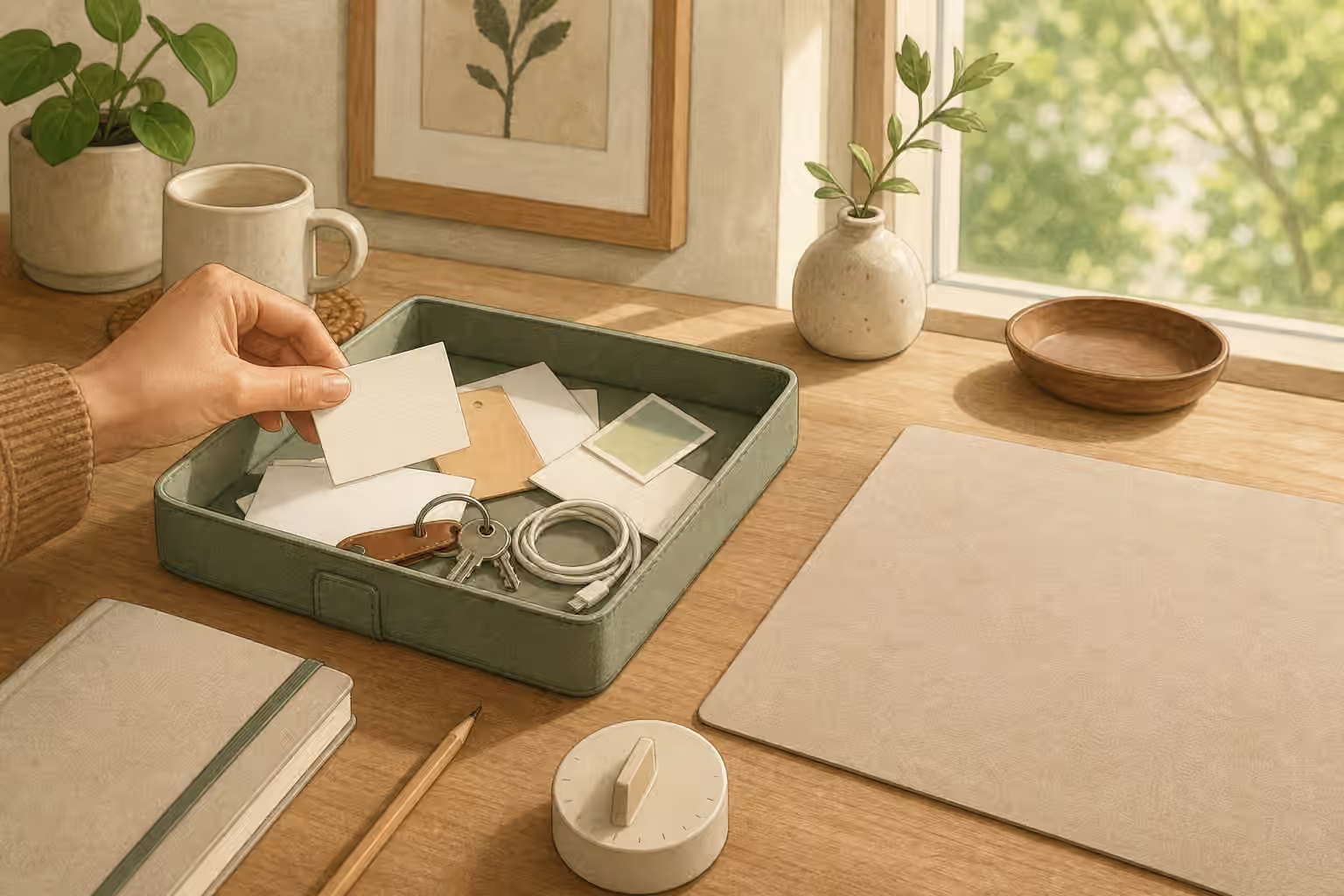
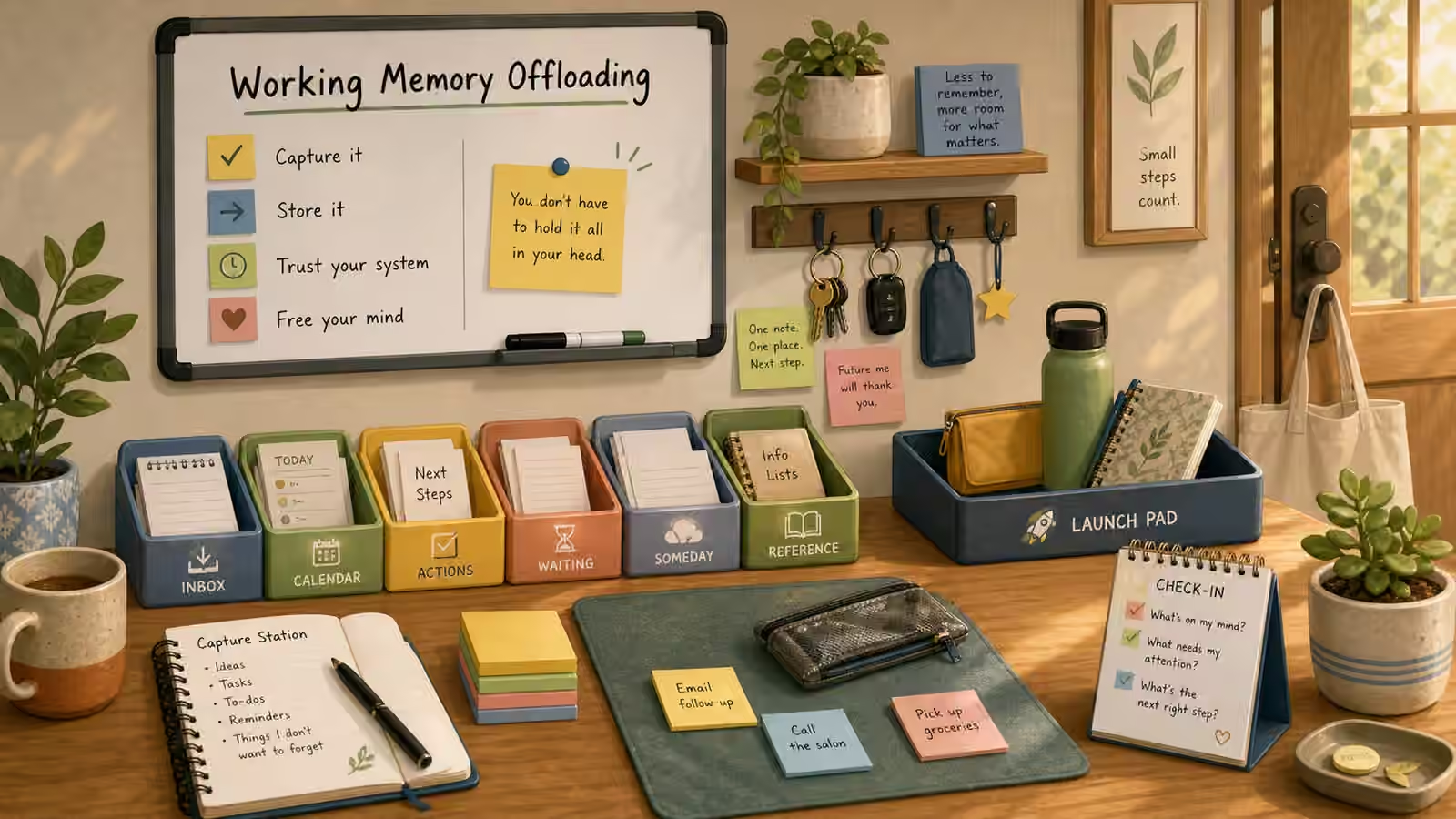
An offload station tends to do four kinds of work, and it helps to see them as distinct so you can tell which one yours is missing. Capture is the fast, low-friction place where loose thoughts, forms, links, and reminders land the instant they appear, before they have a chance to evaporate. If capturing something takes real effort, you will not do it in the moment it matters, so the capture point has to be almost thoughtless to use, a single notebook, a sticky pad, one inbox tray. Containment is the next layer: trays, folders, hooks, and launch pads that keep categories from bleeding into one another, so that bills do not vanish into the general drift of paper and keys have a home that is not “somewhere.”
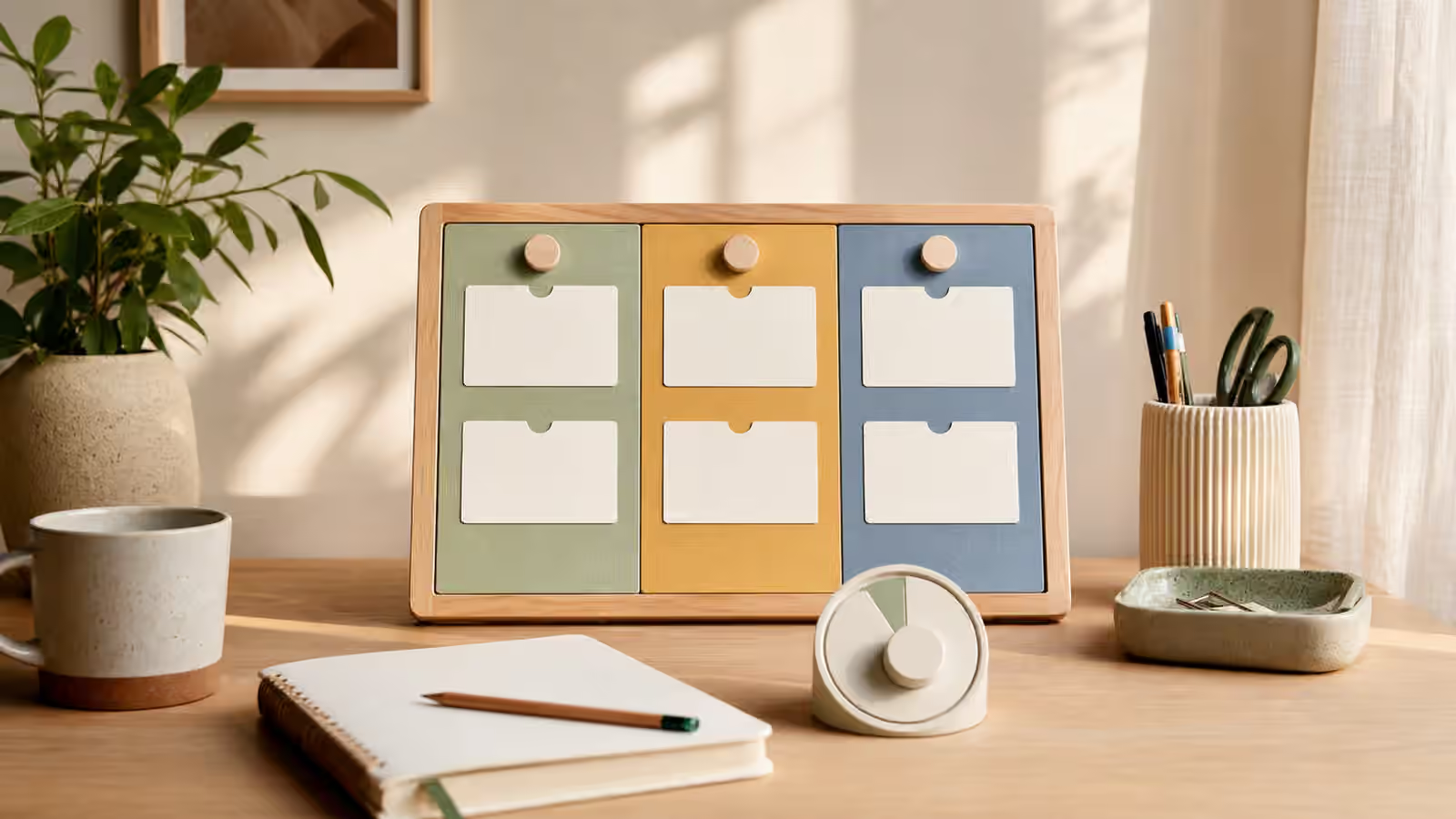
Cueing is where labels earn their place, and the trick is to label with the action rather than the noun. A tray marked “papers” tells you nothing you did not already know; a tray marked “reply by Friday” tells you what to do and by when, so a glance is enough to know whether it needs you. Finally, review is what keeps the whole thing from decaying into a pile. Any capture point will fill up, and a station that is never emptied stops being a system and becomes clutter with good intentions. A short, predictable reset, tied to an anchor you already hit, like sitting down in the morning or closing the laptop at night, is what keeps the station trustworthy enough that you actually rely on it.
What good stations look like
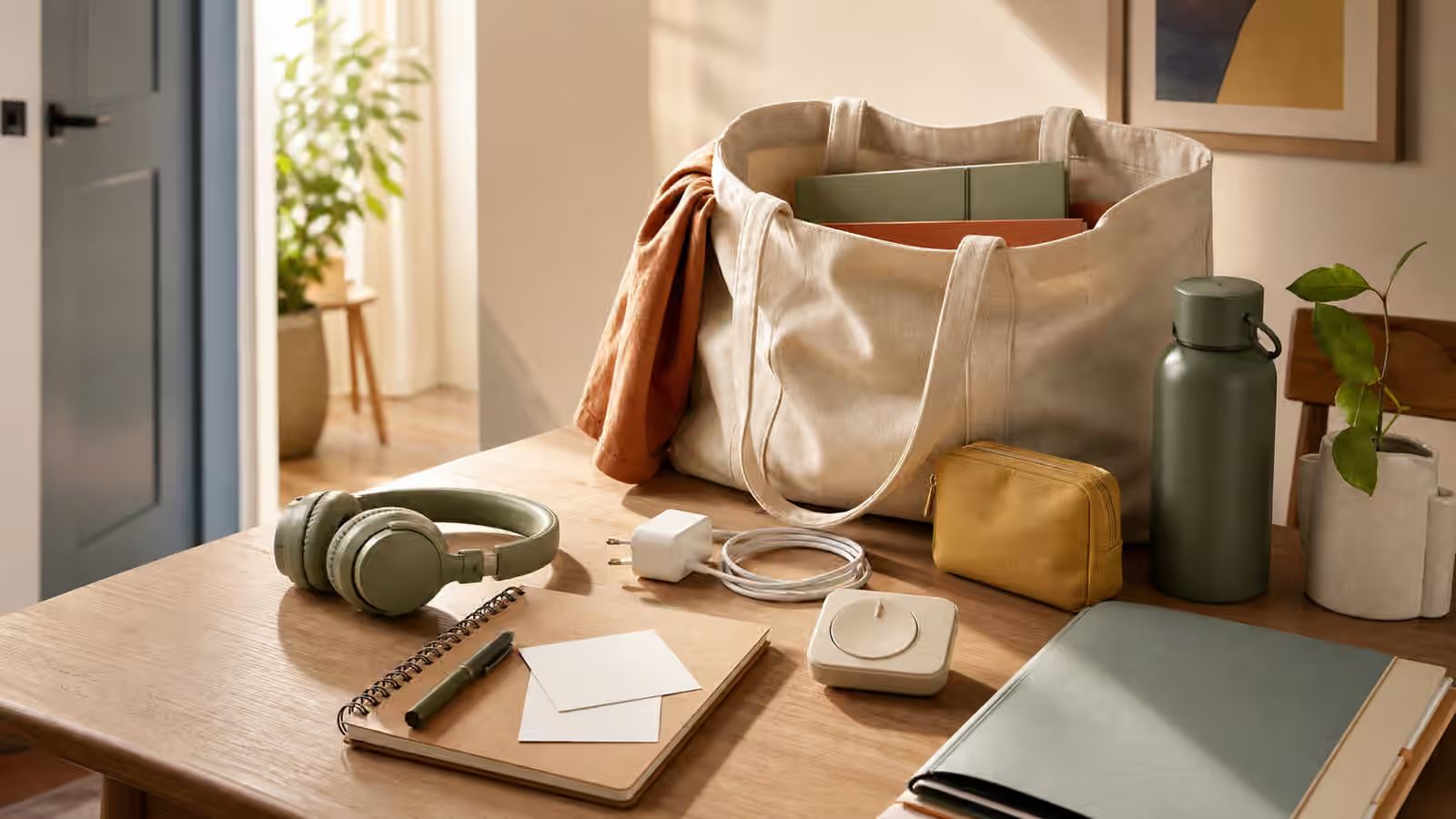
The useful versions of this are humble and specific. A launch pad by the door might hold only the things that must leave with you: keys, wallet, charger, the package to return, and a single card naming tomorrow’s first errand, so that leaving the house is a matter of sweeping up one small tray rather than searching five rooms. A whiteboard beside the desk works best when it shows only the next two or three work actions instead of the entire backlog of your life, because a board crammed with everything becomes as easy to ignore as no board at all. A tray labeled with a deadline keeps time-sensitive forms from dissolving into ordinary paper. In every case the value comes from narrowness: one category, one clear home, one visible instruction, placed exactly where the task begins or ends.
Start with a single leak rather than trying to externalize your whole existence at once. Pick the one thing memory keeps dropping, keys, homework, bills, browser tabs, lunch, chargers, and give that one category a physical home labeled with its next action. Use it for a week before you add anything, so the habit sets before the system grows, and reset it at a fixed anchor time so it never turns into a heap. A few pitfalls are worth naming so you can steer around them: building a lovely station far from where the task actually happens, letting one giant pile pose as an offload station, capturing everything but never reviewing any of it, and swapping tools every time the current one loses its novelty. Each of these quietly returns the load to your head.
A closing note on scope. Offloading is meant to ease the ordinary memory strain of a busy life, and it does that well. It is not a response to memory changes that are sudden, severe, worsening, or tangled up with safety concerns; those deserve qualified medical attention rather than a better whiteboard. For the everyday kind of forgetting, though, the path is gentle and concrete: choose one leak, give it a visible home, and make only the next start line easier to find. When you want to connect this to the rest of your systems, The Shutdown Routine helps you close open loops before they slip away, Study Spaces That Actually Help keeps supplies and cues near the work, and the Keepers Guild is where records, manuals, parts, and maintenance logs find their long-term home.