A weekly reset can be useful, but the phrase often arrives with too much pressure. It can start to mean cleaning the whole home, planning every meal, clearing every inbox, folding every piece of laundry, reviewing every goal, and becoming a new version of yourself before Monday. That kind of reset may look inspiring from a distance. Up close, it is too large to start.
Startable Life Lab treats a weekly reset as a small handoff between one stretch of days and the next. The purpose is not to overhaul your life. The purpose is to make a few repeated starts easier: leaving the house, finding papers, beginning work, making food, handling laundry, or knowing which task gets first attention. A useful reset is allowed to be ordinary.
Choose the next few days, not your whole identity
A reset gets heavy when it tries to answer every question about who you are becoming. Keep the time horizon short. Ask what would make the next two or three days easier to enter. Maybe the answer is clean clothes for work. Maybe it is an errand tray by the door. Maybe it is a first work task written on a card. Maybe it is clearing the kitchen counter enough to make breakfast possible.
This smaller horizon makes the reset more honest. You are not promising a perfect week. You are reducing friction for the starts that are most likely to matter soon. Task Triage When Everything Feels Urgent can help when the reset surface fills with competing demands. Pick the next few days, then pick the supports that belong to those days.
If the week ahead is unusually demanding, the reset should become smaller, not larger. A stressful week does not need a decorative planning ritual. It needs the few cues, materials, and buffers that will protect the most important starts.
Reset the places where tasks begin
A weekly reset works best when it touches start locations. The entryway where errands begin. The desk where work begins. The kitchen counter where food begins. The laundry spot where clean clothes either return or stall. The paper tray where forms disappear. These places matter because they shape future task initiation.
Choose one or two start locations and make them easier to enter. You might place keys and a bag near the door, clear the desk surface around tomorrow’s first task, put the laundry basket where the next handoff can happen, or gather loose papers into an admin tray. The goal is not to clean every room. The goal is to make the first move in a few rooms less hidden.
Morning Launch Pad and Errands and Out-the-Door Starts both use this principle. The reset is not separate from daily life. It quietly prepares the places where daily life restarts.
Let undone work stay named
Many weekly resets fail because they require closure that is not available. Some tasks will remain unfinished. Some messages will stay unanswered. Some laundry will wait. Some forms will need information you do not have yet. If the reset pretends everything must be complete before the week can begin, it becomes another source of avoidance.
Instead, name undone work in a way that makes it safer to return to. Write the next visible action, the missing piece, or the date when the task should be checked again. Place the object in a defined holding spot. This does not complete the work, but it stops the work from floating through the room.
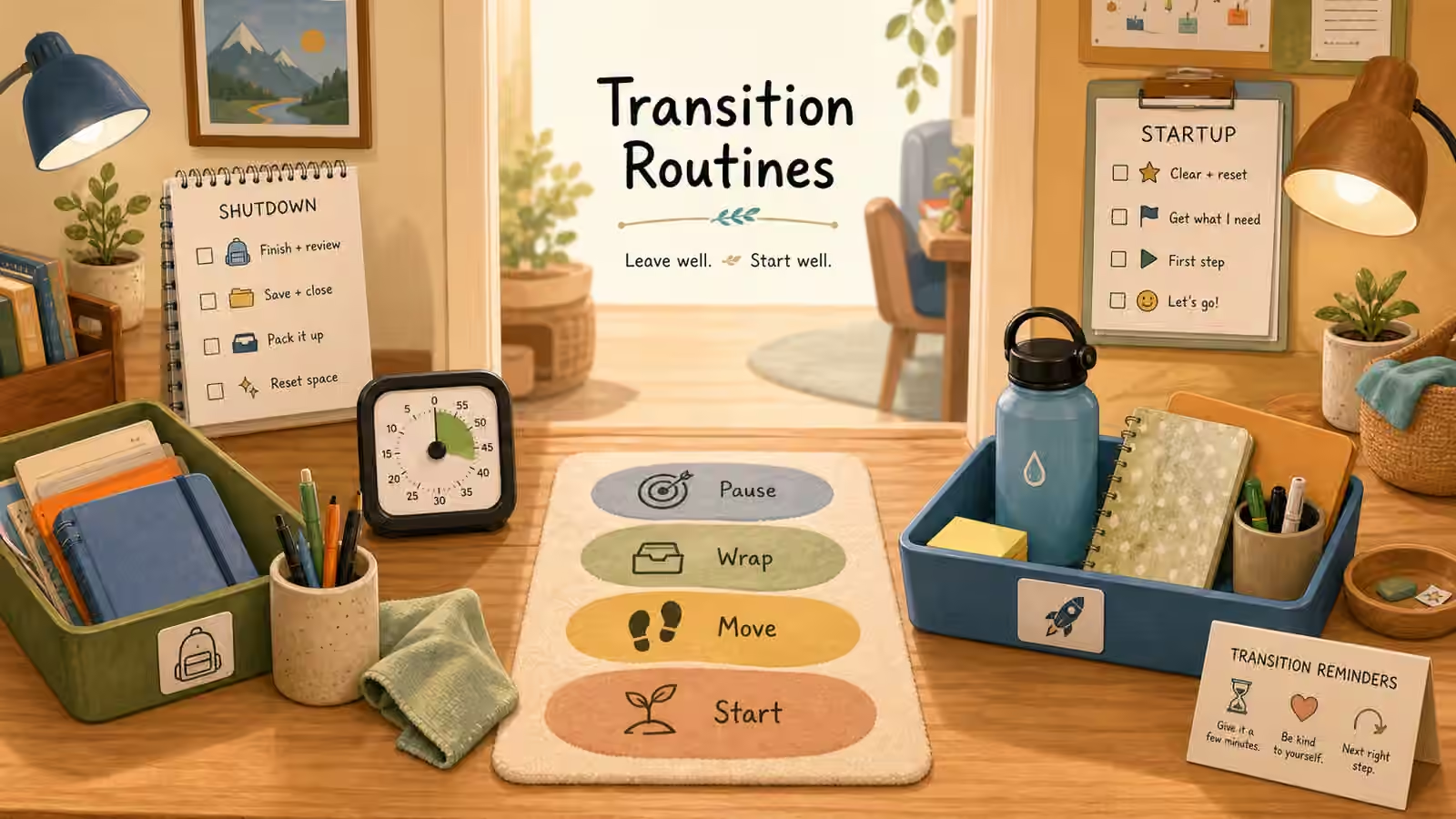
The Shutdown Routine uses the same idea at the end of a work session. A weekly reset is a larger shutdown and startup sequence. You are closing some loops, parking others, and giving the next week a clearer doorway.
Use a timer as a boundary, not a threat
A reset without a boundary can expand until it proves impossible. A timer gives the session a container. The timer does not need to pressure you into speed. It can simply mark the difference between a reset and an entire day of unpaid household project management.
Choose a length that fits the current energy level. Ten minutes may be enough to stage a launch pad. Twenty minutes may be enough to gather papers and choose Monday’s first task. A longer session can work when the day allows it, but it should still have an edge. Without an edge, the reset can keep discovering more work and never reach a clean stopping place.
Time Blindness Without Shame is relevant because resets often distort time. A person may expect the reset to take fifteen minutes and then lose two hours, or expect it to take all day and never begin. Visible time makes the reset easier to size.
Keep review factual
A reset can turn into a trial of the previous week. You remember what slipped, what was late, what was avoided, what stayed messy, and what you meant to do differently. Some reflection can help. Too much judgment makes the reset harder to repeat.
Keep review factual and close to design. Which start location caused trouble? Which task lacked a first action? Which appointment needed a better departure cue? Which repeated chore stalled at the same handoff? These questions lead to supports. They do not require you to argue with your character.
The Bad-Day Reset is useful when the week carried disappointment. A weekly reset should repair the next doorway, not prosecute the last seven days. If a pattern is serious or harmful, it may deserve outside support. The reset can help you notice the pattern, but it does not need to solve it alone.
End by making tomorrow visible
The reset should end with one visible start for the next day. Not a complete schedule. Not a perfect list. One start. Put the first task card on the desk. Put the bag by the door. Put the breakfast item where you will see it. Put the document in the tray. Put the laundry basket beside the machine. The visible start is the proof that the reset has become practical.
This final move protects the reset from becoming a planning performance. If nothing changes in the room, the reset may stay theoretical. If one start location is easier to enter, the reset has done its job. The Two-Minute Setup gives this move a nightly version; the weekly reset simply chooses the most important version for the next stretch.
A weekly reset becomes startable when it stays close to the next few days, touches real start locations, names unfinished work without shame, and ends with one visible doorway into tomorrow. That is enough. The week does not need to begin with an overhaul before it can begin at all.