Storage is supposed to make life easier, but it often becomes its own task. A drawer hides the object, a bin hides the drawer, a label system requires maintenance, and the object that was meant to be put away becomes harder to use. For people who rely on visible cues, too much storage can turn everyday items into memory tests.
Visual storage is not about displaying everything. It is about making the next use and the next return easier. The best storage place is not always the neatest place. It is the place where the object can be found, used, and returned with the least invisible work. The bin spiral begins when storage asks for more sorting, remembering, opening, closing, and labeling than the task itself can tolerate.
Storage Should Serve the Next Start
Before choosing a bin, ask what the object helps start. Keys help leaving. Chargers help devices become usable. Mail helps paperwork become visible. Cleaning cloths help a surface reset begin. A backpack helps tomorrow’s school or work start. If storage is separated from the next start, it may look organized while quietly making the routine harder.
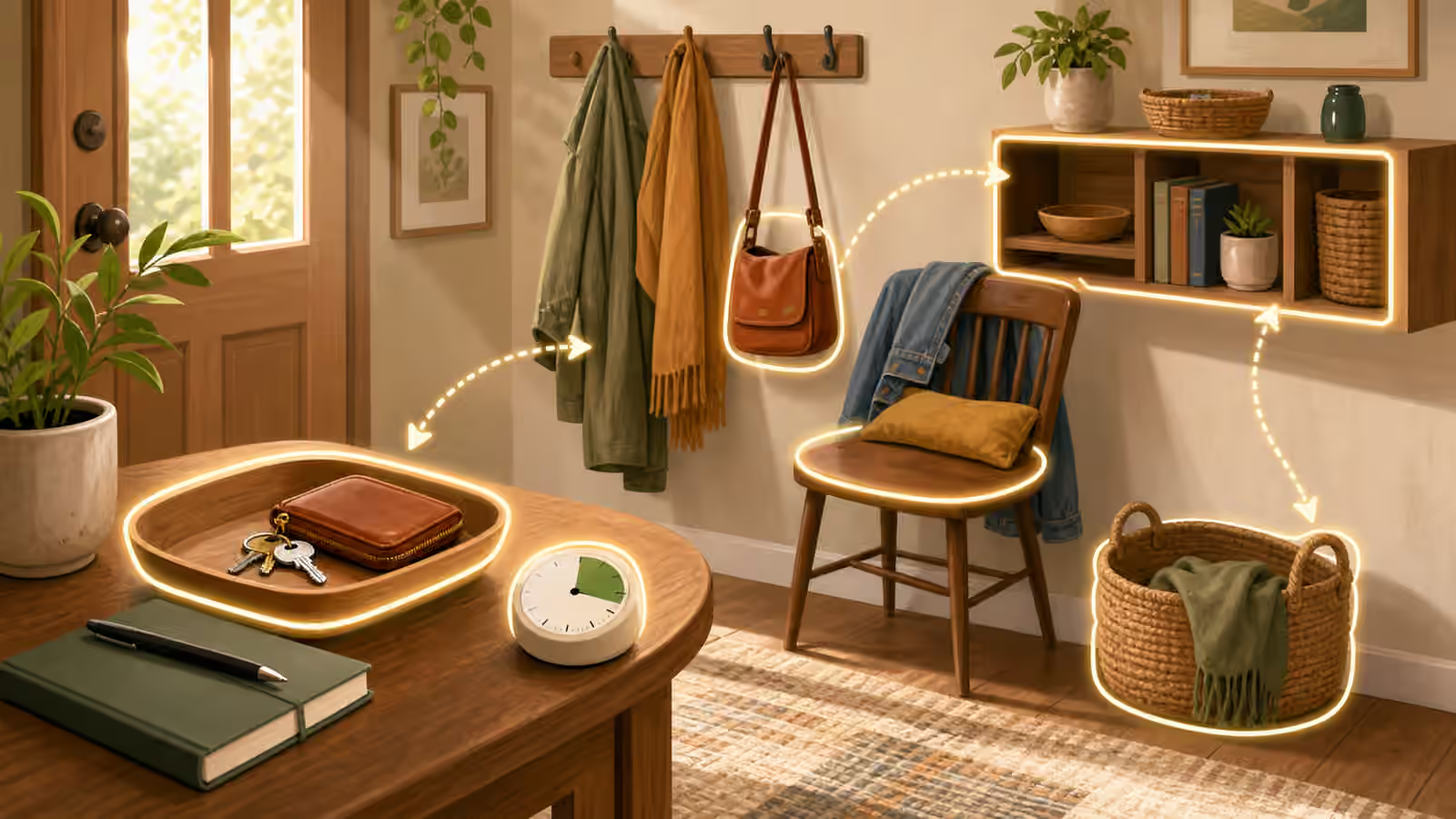
The entryway is a simple example. Keys buried in a drawer may be visually tidy, but a bowl near the door may support the leaving-home routine better. A charging cable coiled in a labeled box may look neat, but a small charging station may prevent the morning from starting with a dead device. Device Charging Start Station is built around that exact idea: the storage place should protect the next use.
Good visual storage begins by respecting where objects actually travel. If an object always lands on the kitchen table, the question is not how to shame it into a distant closet. The question is whether a tray, hook, bowl, shelf, or open bin near that route can make the landing less chaotic and the return more predictable.
Use Open Enough, Not Perfectly Open
Some objects need to be fully visible. Others only need a visible container. The difference matters. If every item is exposed, a room can become visually loud. If every item is hidden, the room may look calm while the task becomes impossible to remember. Open enough means the cue remains visible without making the whole space feel like a supply closet.
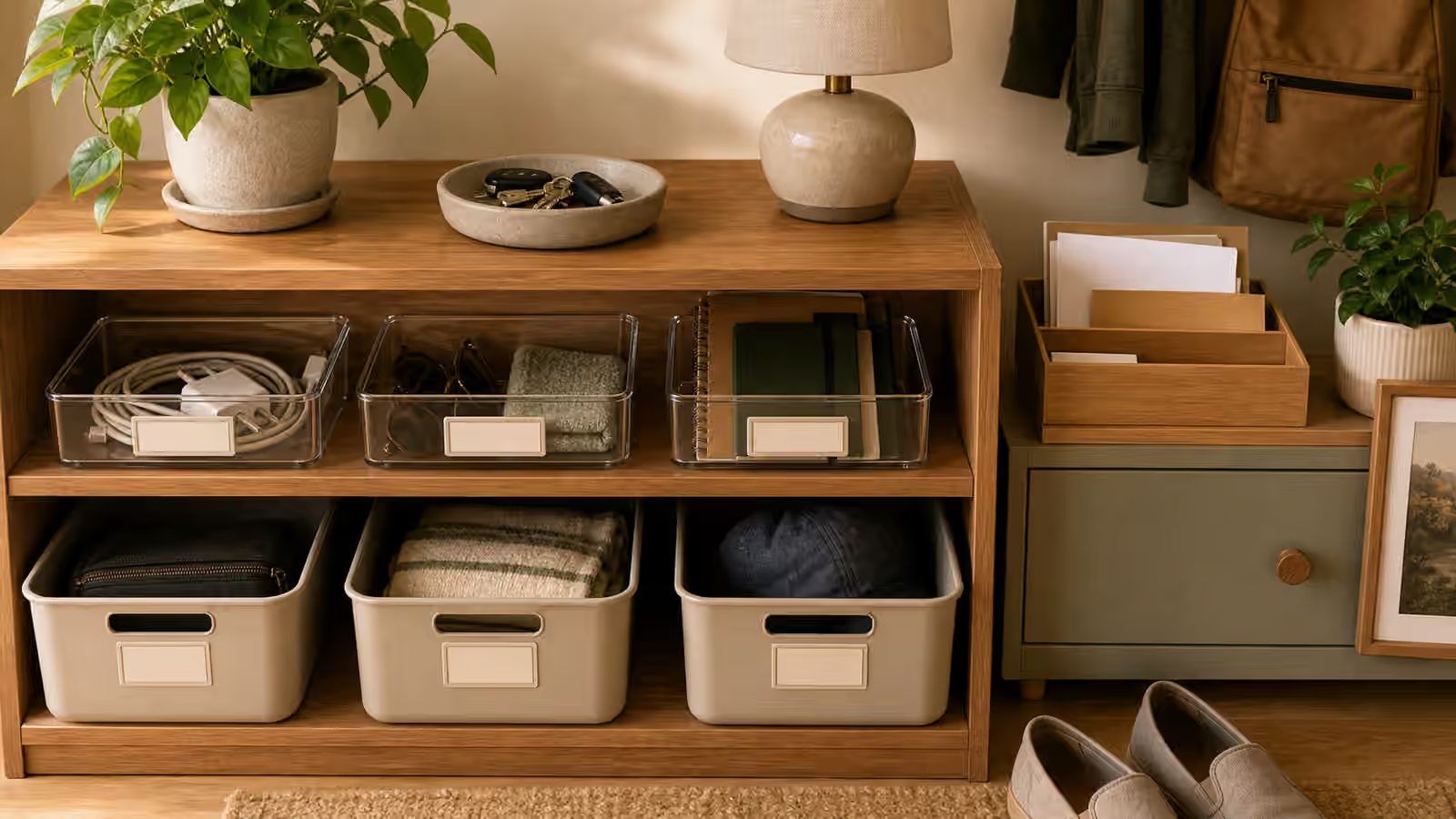
Transparent trays, shallow baskets, open-top bins, wall hooks, small shelves, and color-coded folders can all work when they reduce steps. A lidded bin may be fine for rarely used supplies, but it may be too many moves for objects used daily. A closed drawer may work for socks because the category is obvious, but not for a permission slip that must leave the house tomorrow.
Working Memory Offloading explains why this helps. The object is carrying the reminder. The storage place becomes a cue instead of a hiding place. You are not asking memory to know that the form is in the blue folder inside the cabinet under the other folder. You are letting a visible landing place hold the task until the next action.
Avoid Sorting Systems That Require a Different Person
The bin spiral often starts with a system designed for a calmer, more patient, more consistent version of life. It has exact categories, perfect labels, matching containers, and a rule for every object. It may work for a day. Then one rushed evening breaks the rules, and the system becomes another place to avoid.
A startable storage system should tolerate tired returns. If you come home with bags, mail, keys, water bottle, jacket, and leftovers, the storage place should not require a full organizing session before anything can land. It should have forgiving zones. One tray for papers that need action. One bowl for pocket objects. One hook or chair-back rule for the bag. One open bin for items that go upstairs later.
Coming Home Landing Strip is the practical companion for this. It treats arrival as a task with its own start and finish. Visual storage makes that landing strip easier to maintain because objects have places that do not require a perfect mood.
Make Returns as Easy as Retrieval
Many storage systems focus on finding objects and forget returning them. A tool that is easy to find but annoying to put away will eventually live on the counter. A document folder that opens awkwardly will collect loose papers beside it. A basket behind a door may be reachable in theory and skipped in practice.
Test storage by returning the object when you are tired. Can you put it away with one hand? Can you see where it goes? Does the lid, latch, stack, or label slow the return? Does the storage place compete with another object? If putting the object away requires clearing a path, the storage system is asking for a chore before it can support the task.
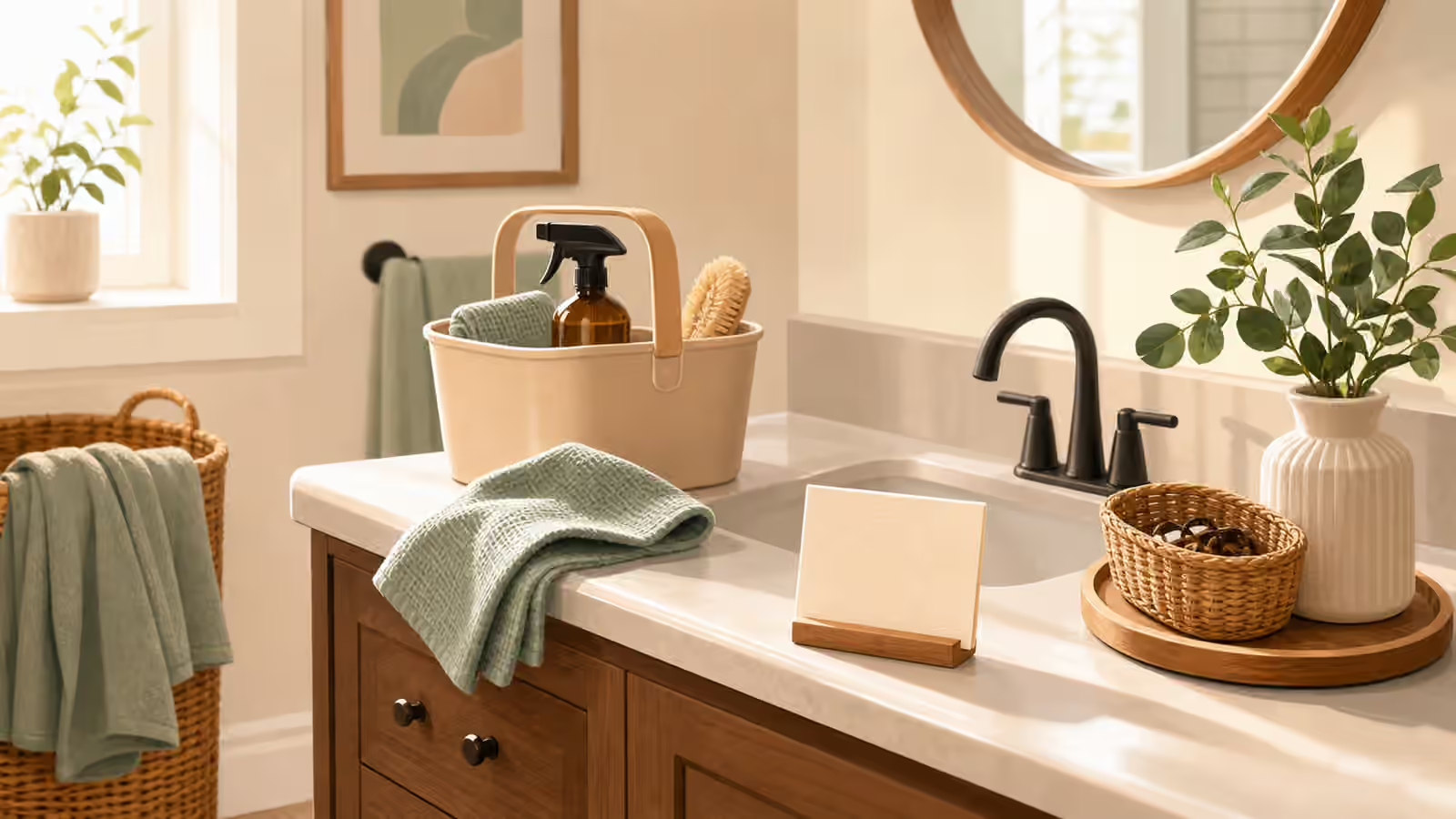
After-Task Reset helps here because every finished task leaves materials behind. A good reset does not require a full cleanup. It asks where the next start would want these objects to be. Visual storage gives that reset a realistic destination.
Use Labels as Cues, Not Proof of Organization
Labels can help, but they can also become decoration. A label works when it reduces decision load at the moment of use or return. It fails when it describes an ideal category nobody can maintain. The best labels are usually simple, visible, and tied to action: charge, leave, return, mail, wash, repair, or tomorrow. Even then, the label should not be the only cue. The object, container, and location should also make sense.
For shared spaces, labels can reduce negotiation. A household board or shelf works better when people can tell what belongs where without asking. Shared Household Handoff Board uses the same principle for chores, errands, and papers. The cue should lower the social friction as well as the memory friction.
If labels become fussy, shrink them. Use fewer zones. A tray called “next action” may work better than five precise folders nobody opens. A hook for “daily bag” may work better than a closet system that requires sorting contents first. The point is not to prove that every object has a perfect category. The point is to make the next start findable.
Keep a Parking Place for Objects in Motion
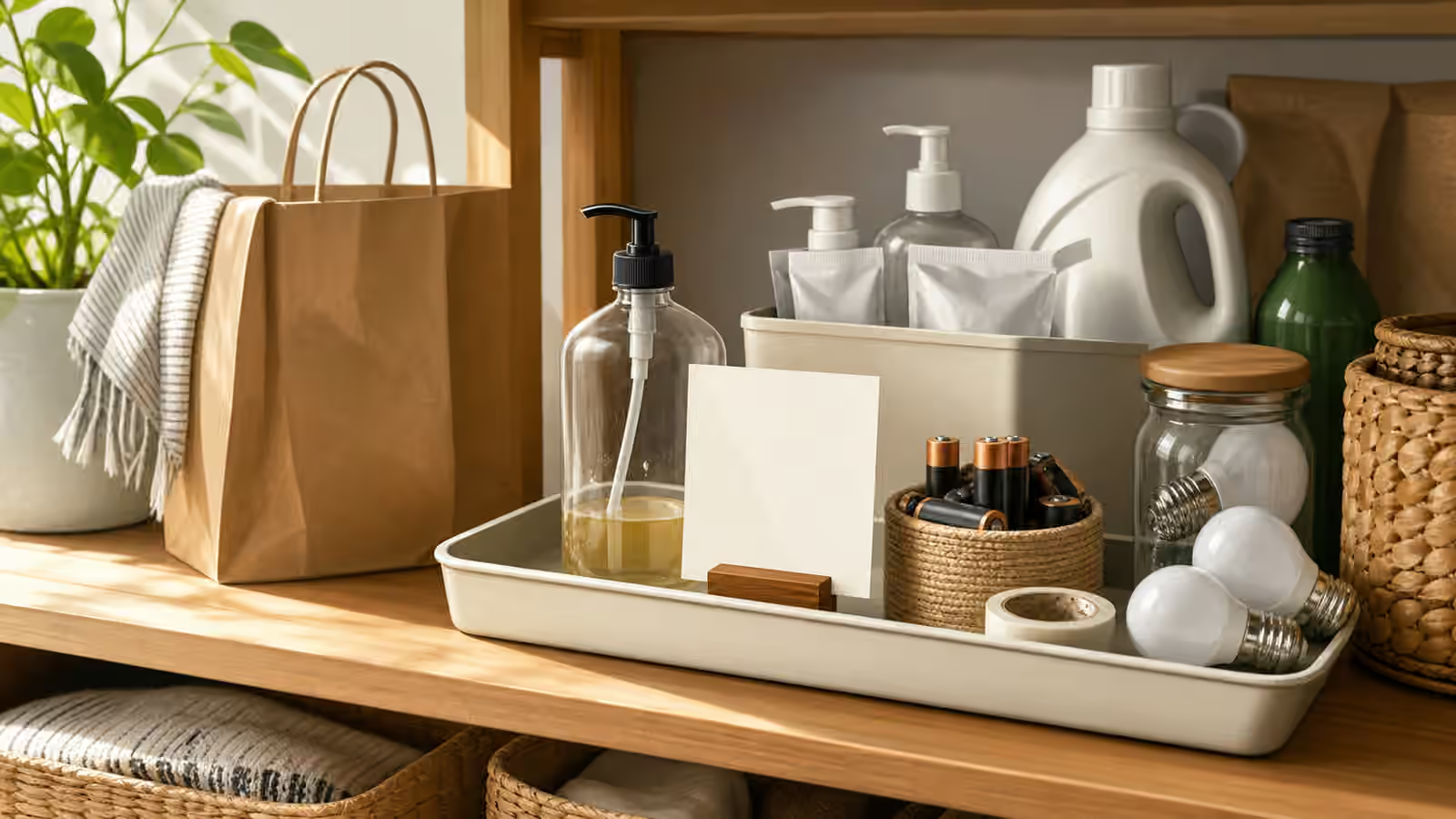
Not every object is ready for its final home. A library book waiting to be returned, a gift to deliver, a receipt needed for a form, a borrowed tool, or a bag of donations is in motion. If moving objects have no temporary place, they spread across surfaces and become background noise.
Create one visible parking place for objects that are waiting for a next action. It might be a shelf, basket, tray, or section of a table. The place should be limited enough that it cannot become a second room of storage. When it fills, the task is not to buy a larger bin. The task is to choose one next action or move one object to its real home.
The Open-Loop Parking Lot goes deeper on unfinished objects and tasks. Visual storage gives those open loops a physical boundary. The boundary matters because open loops are easier to trust when they are visible and contained.
Visual storage is successful when it quietly reduces searching, starting, and returning. It may not look like a magazine closet. It may include a bowl, a tray, a hook, an open bin, and a few honest labels. That is enough if the objects stop disappearing and the next start gets easier.