A visible task board is useful only if it helps work move. It should not become a second job where the cards are tidier than the day. The point is to put a few live tasks where your eyes can find them, show what is actually active, and make the next start line visible before memory has to reconstruct the whole situation.
The planner spiral begins when the system asks for too much interpretation. You sit down to start a task and instead redraw categories, change colors, rewrite every card, reorganize an app, or search for the perfect layout. That work can feel productive because it is adjacent to the real task. It also keeps the real task safely unstarted. A Startable Life task board should do the opposite. It should make the first physical move smaller, not prettier.
Make the Board Smaller Than Your Ambition
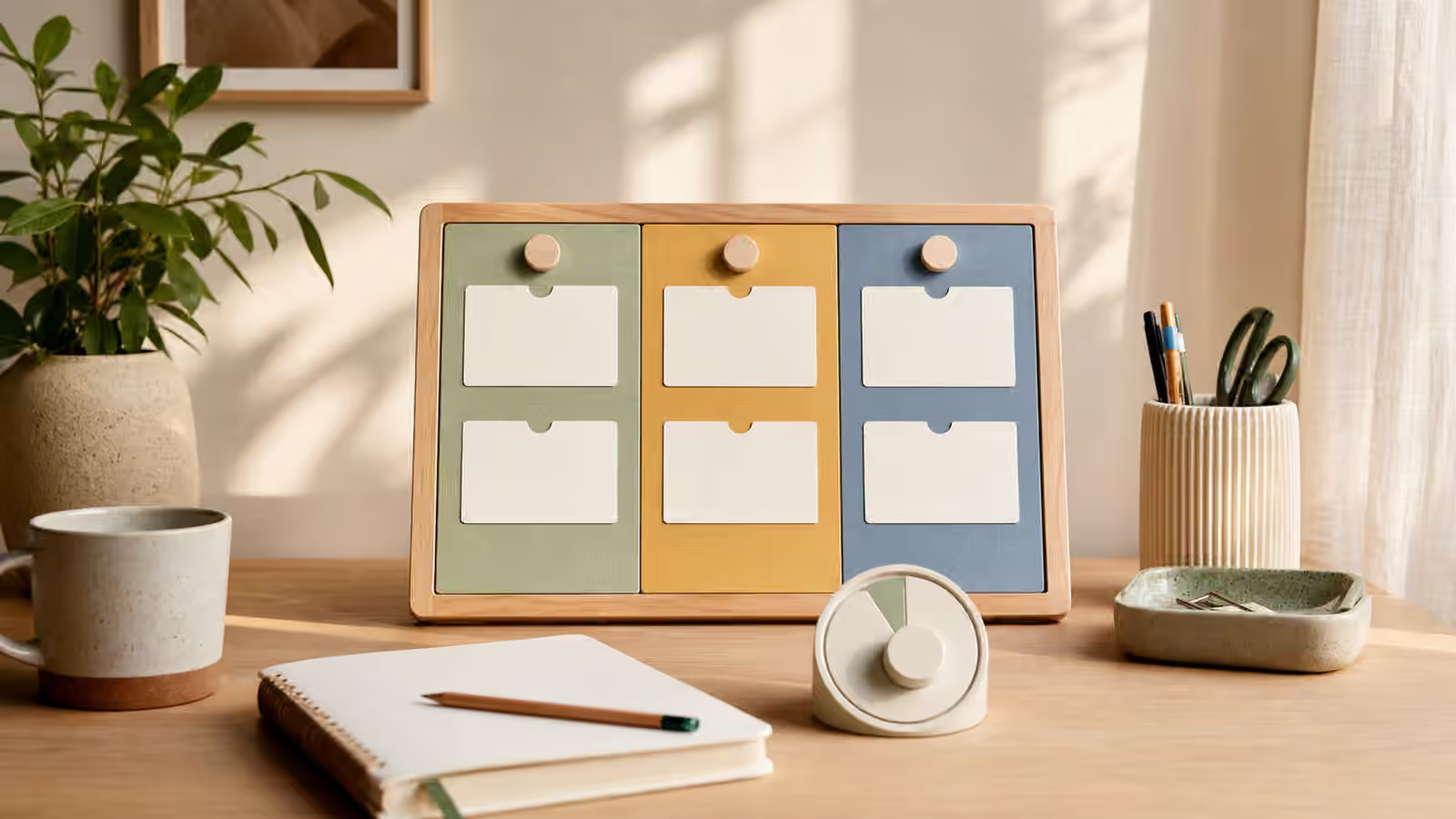
The board works best when it is almost disappointingly small. Three zones are enough for most ordinary days: a place where tasks wait, a place where one task is active, and a place where paused tasks can return. You can name the zones however you like, but the meaning should be obvious at a glance. If the labels require a legend, the board is asking for too much working memory.
Start with paper, sticky notes, a whiteboard, a cork board, or a single page in a notebook that stays open. Digital boards can work, but they are easy to turn into a hidden warehouse. A physical board has a useful friction: it runs out of room. That limit is not a defect. It protects the board from becoming a decorative version of the whole backlog.
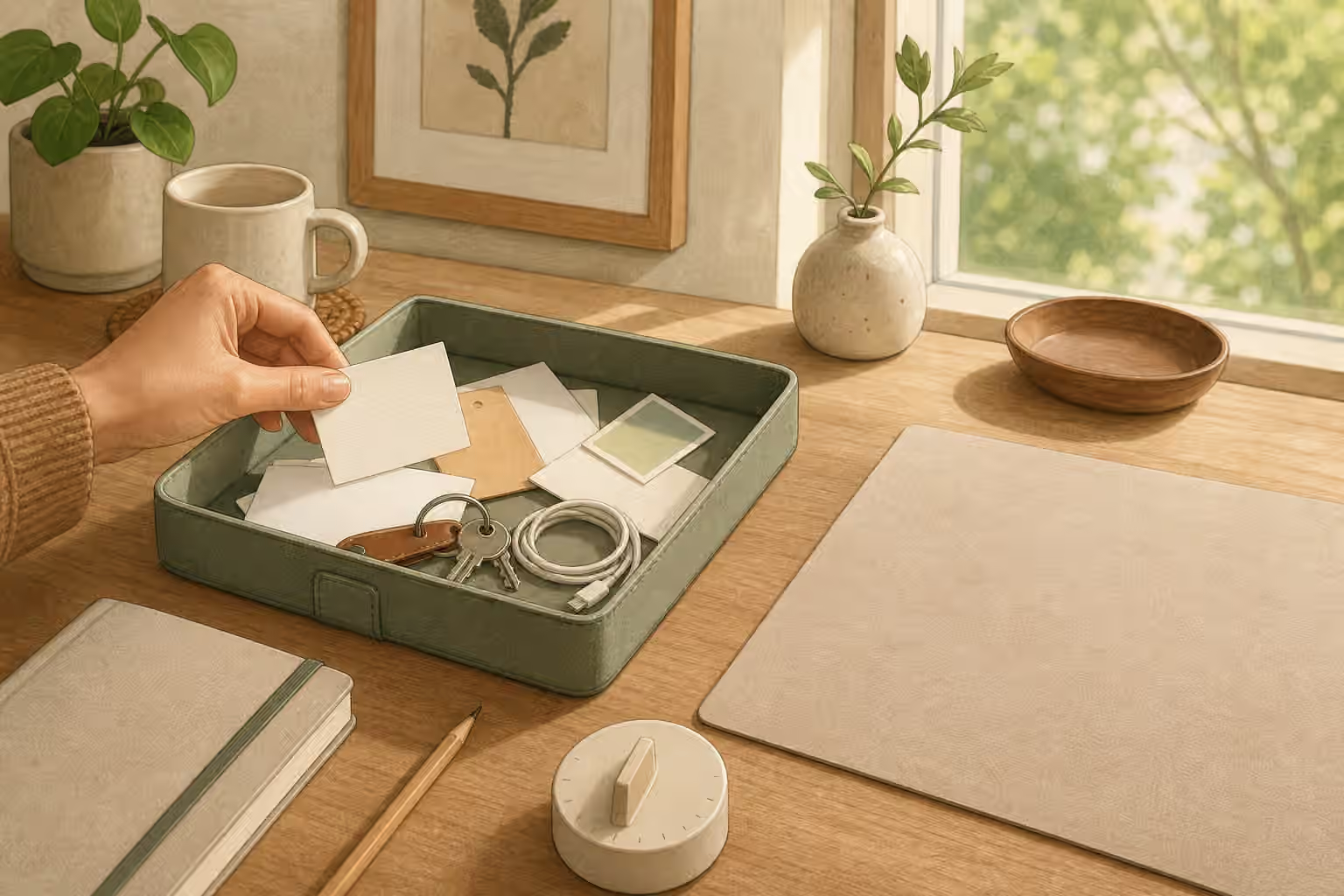
The waiting area should hold only tasks that might reasonably become active soon. The active area should hold one task, or one task plus a waiting cue if your day genuinely requires it. The paused area is for work that has already begun and needs a return point. If a card has not moved in weeks, it may belong in an Open-Loop Parking Lot rather than on the live board. Parking is not failure. It is how the active surface stays honest.
Write Cards as Start Lines, Not Outcomes
A task card should tell you what body movement begins the work. “Finish application” is an outcome. “Open the folder and put the form on the desk” is a start line. “Clean kitchen” is an outcome. “Put the dish tub beside the sink” is a start line. “Plan report” is an outcome. “Open the notes file and paste the three source links” is a start line.
This wording matters because a visible board can still hide work inside vague language. When the card says only the outcome, the brain has to choose the first object, remember the context, estimate the time, and decide the next move before the task can begin. That is exactly the load the board is supposed to reduce. If the first move is not visible, use The Start Line before adding the card.
Keep the card plain. Use a verb, an object, and a location if the location matters. You do not need a full plan on the card. A card that says “laptop on table, open draft” is more startable than a beautiful paragraph about the whole project. If the task has a necessary finish line, add one small edge: “send rough version,” “move five items,” or “choose one appointment time.” The card should be useful while you are tired, interrupted, or slightly annoyed.
Let Movement Carry the Review
The easiest review is a physical move. When a card enters the active zone, the board says, “This is the task I am touching now.” When it moves to paused, it should carry a return note: where you stopped, what remains open, or what you are waiting for. When it moves off the board, the task has either finished, parked elsewhere, or become irrelevant.
This is different from reviewing a full task manager. You are not scanning your life. You are updating the small surface that helps the next start happen. The board should answer one practical question: what is the next visible thing I can touch? If the board cannot answer that, the board needs less content, not more decoration.
The movement also protects against the common habit of treating everything as active. A task in the waiting area is not a promise to finish today. A paused card is not a personal accusation. An active card is not a moral identity. The zones simply show the current relationship between you and the work. That distance makes it easier to choose without turning the board into a courtroom.
Use the Board During Messy Transitions
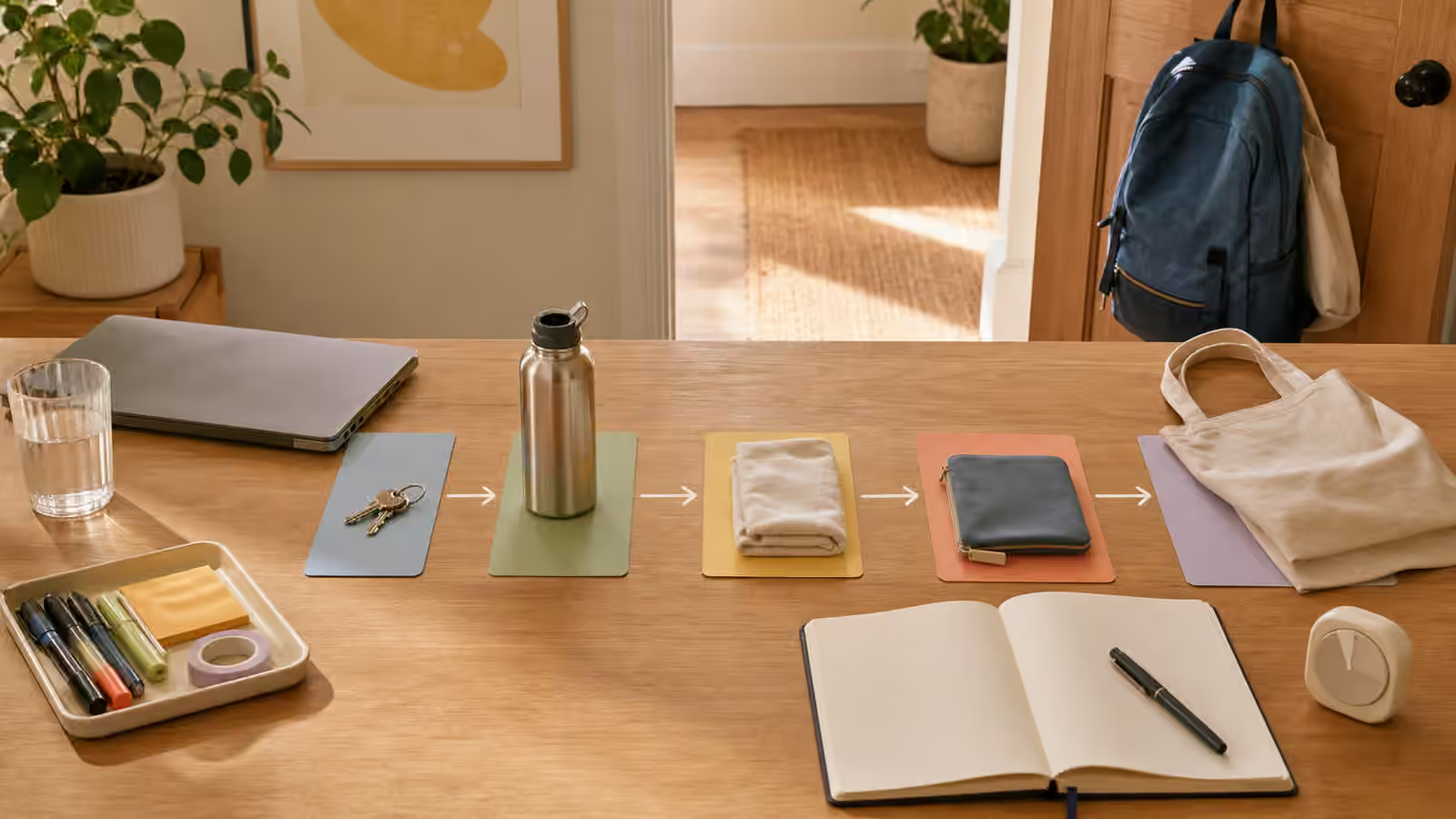
The board earns its place when the day shifts. You get interrupted, leave for an errand, come back from a meeting, or lose the thread after a break. A useful task board lets you return without rebuilding the day from memory. The active card tells you what you were touching. The paused card tells you why something is waiting. The empty active space tells you that the next round needs a choice.
This is why a board pairs well with Return Points After Interruptions . The return point can live directly on the card, on a sticky note attached to the card, or in a notebook page named by the card. The exact format matters less than the handoff. Future-you should not have to remember what past-you meant.
For screen-heavy work, the board can sit beside the computer and name the one browser window or file that belongs to the task. That keeps the board connected to Digital Distraction Map work without forcing the whole system into another app. The board is a steering surface, not a storage unit.
Stop Before the Board Becomes Theater
There is a particular kind of productive theater that task boards invite. You can rewrite the same task three times, invent a better color system, move cards to feel momentum, or spend the start round making the board more complete. That behavior is understandable. It gives you a controlled version of work when the actual task feels uncertain.
Use a timer or ordinary clock to limit board contact. Give the board a short opening touch and a short closing touch. During the opening touch, choose one active card and make the start line specific. During the closing touch, move the card honestly and leave a return note if the task is not done. Between those touches, the board should mostly disappear into the background while the task receives attention.
If you notice yourself maintaining the board instead of starting, do a Friction Audit on the card itself. Maybe the hidden step is a missing password, unclear instructions, fear of sending the rough version, or a decision that should be made before the work round begins. Fixing that hidden step is more useful than inventing a better board.
Keep One Reset Ritual
A visible board needs a reset, but the reset should be small enough that it actually happens. At the end of a work block, school day, household admin round, or evening routine, clear finished cards, park stale cards, and choose whether anything deserves to stay active. This can fit beside The Shutdown Routine because both practices protect the next restart.
The reset is not a life review. It is a surface reset. If a card carries guilt, make it factual. If a card carries too many steps, split off the first move. If the board is crowded, move older cards to the parking lot. If the active zone has two or three tasks because real life demanded it, choose which one gets the next physical touch.
A good visible task board becomes ordinary. It is not exciting after the first few days. It is just a place where the day stops hiding. That is enough. The board has done its job when the next move is visible, the paused work has a return path, and the planning surface remains smaller than the work it supports.