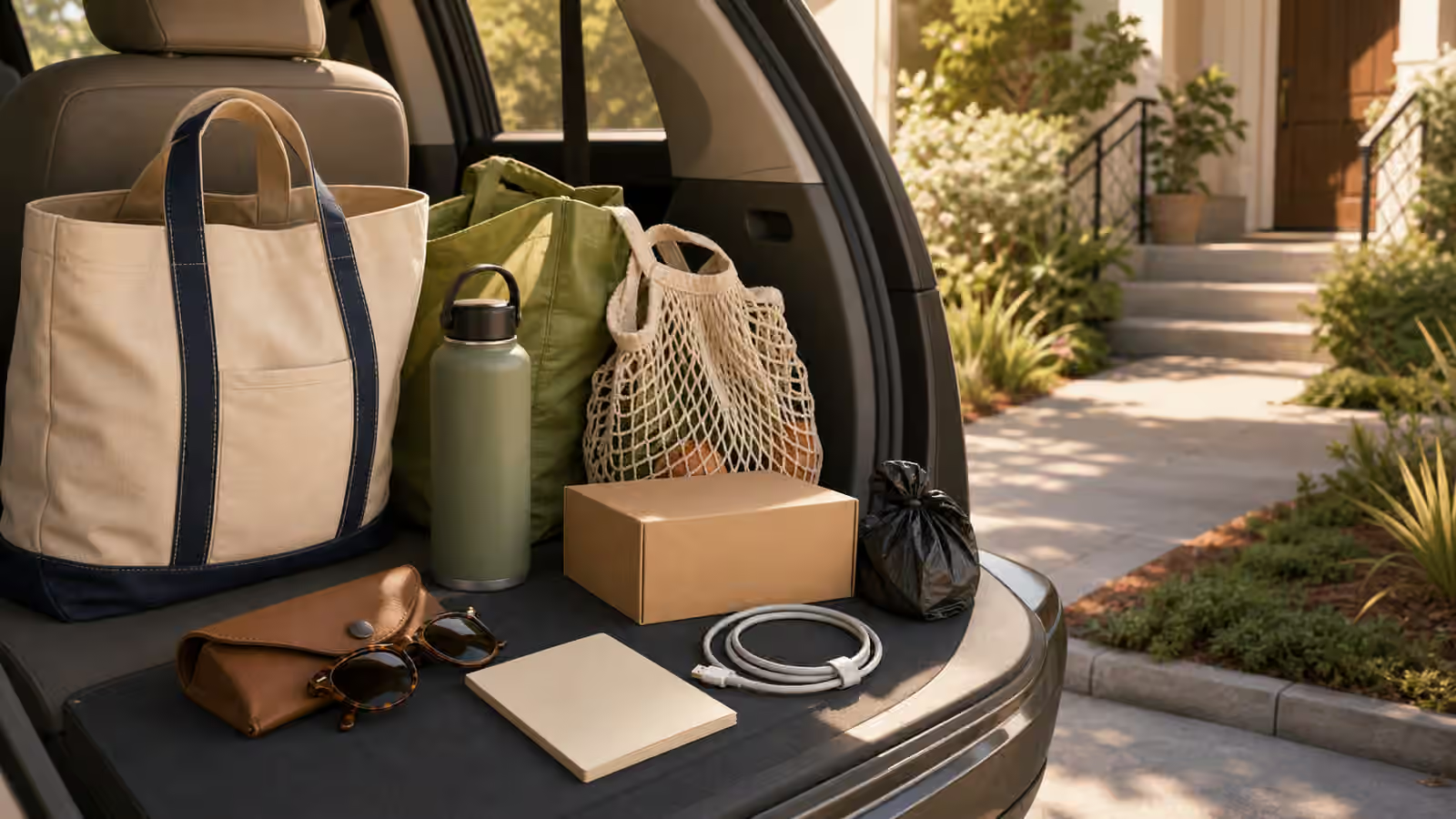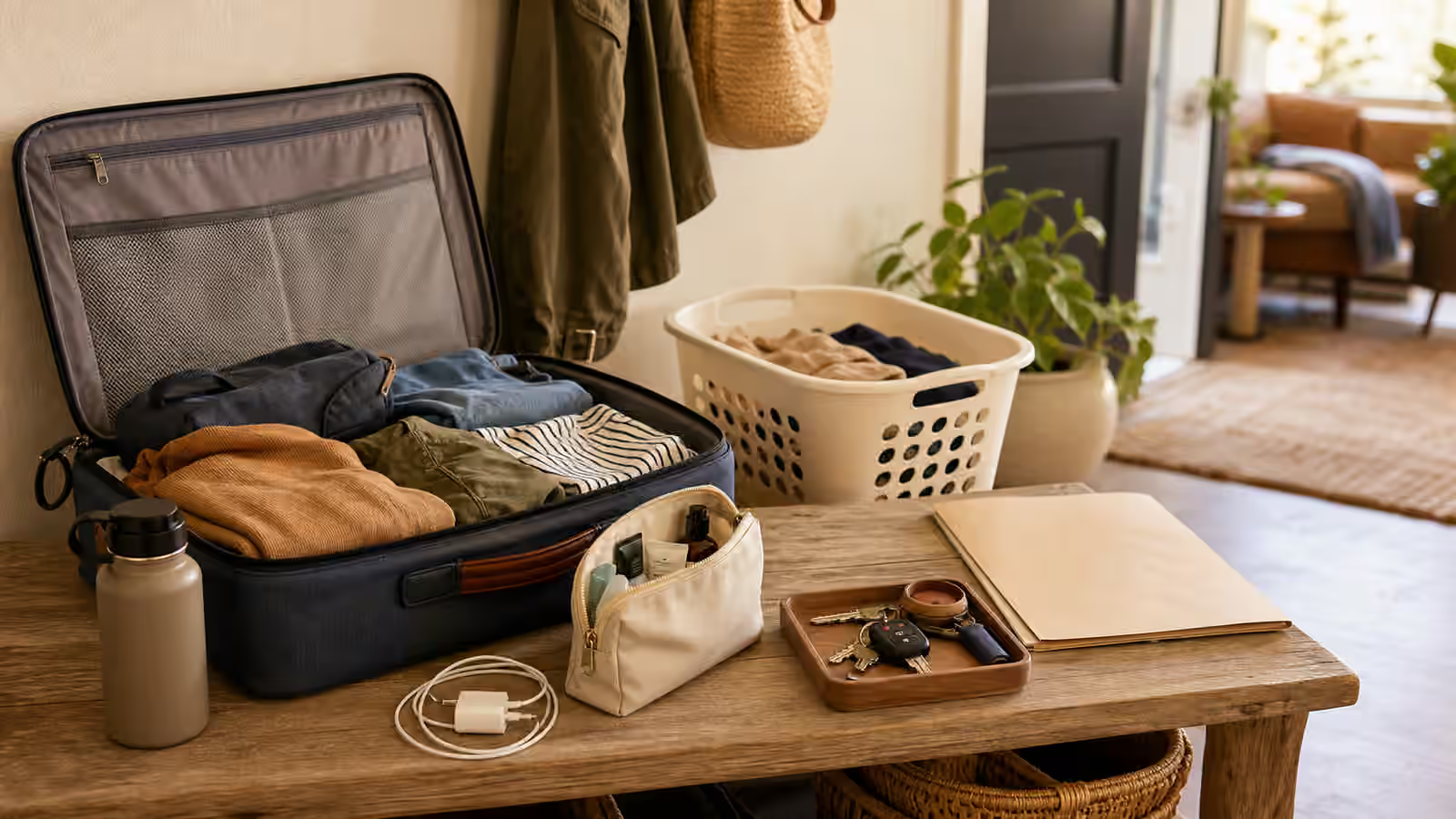
Coming home from a trip can look like the end of a task while quietly beginning another one. The door opens, the bags land, shoes come off, keys hit a surface, and the body wants to be done. But the suitcase, overnight bag, tote, laundry, chargers, receipts, snacks, toiletries, damp items, borrowed objects, and leftover papers have all crossed back into the home. If they are not routed soon, the trip keeps living in corners for days.
A trip return reset is not a full recovery day or a perfect unpacking system. It is a short landing routine that prevents travel objects from becoming future friction. The goal is to open the bag while the trip still has context, remove the items that create trouble if they stay hidden, and leave one clear next state for anything that cannot be finished immediately.
Open the Bag Before It Becomes Furniture
The first start line is opening the bag in a place where sorting can happen. A closed suitcase by the bed quickly becomes part of the room. An unopened backpack near the door becomes a storage object. The longer it sits, the less the contents feel connected to specific actions. A charger becomes “somewhere.” A receipt becomes “maybe in the bag.” A damp swimsuit becomes a mystery smell. A borrowed item loses its return path.
Coming Home Landing Strip gives the broader principle. Arrival is a transition, and transitions need a physical place. For a trip return, the landing strip may be a bench, bed edge, table, laundry area, or clear floor spot. The place does not need to be pretty. It needs enough room for the bag to open and for the first few categories to separate.
If a full unpack feels too large, open only the main compartment and remove the items that should not stay sealed. The start is not “unpack everything.” The start is “let the bag stop being a closed container.”
Pull the Perishable and Time-Sensitive Items First
Some travel objects become harder to handle the longer they wait. Food containers, water bottles, damp clothes, toiletry leaks, borrowed keys, return receipts, medication if it is part of someone’s established routine, school papers, work notes, and chargers may all need attention before the rest of the bag matters. These items create the strongest reason to do a small reset even when tired.
The first pass should catch what can spoil, leak, smell, vanish, or block tomorrow. Put laundry where laundry starts. Put dishes near the sink or dishwasher. Put chargers at the Device Charging Start Station . Put papers where Paperwork Without the Pile can catch them later. Put borrowed objects somewhere visible enough that they can return to their owner.
This pass is not a sorting performance. It is a protection move. You are protecting tomorrow’s start from hidden objects and protecting the home from a bag that keeps leaking unfinished decisions into the room.
Separate Unpacking From Cleaning
Trip return resets often stall because unpacking turns into cleaning, laundry redesign, closet repair, souvenir sorting, email catch-up, and calendar review. Those may be real tasks, but they do not all belong inside the first return pass. If every object requires a final decision before it leaves the bag, the bag may stay untouched.
Use Open-Loop Parking Lot thinking. Items that need later action can be parked visibly instead of solved immediately. A receipt can go to the admin tray. A gift can go to a return basket. A borrowed jacket can hang near the door. A note about a follow-up call can go into the capture place. Parking keeps the reset moving while preserving the next action.
The difference between parking and hiding is visibility. A box shoved into a closet with no cue is hiding. A tray labeled by location in your own mind, placed where the next review happens, is parking. The trip return reset should leave unfinished items findable without demanding that you finish every branch of the trip at once.
Restore the Bag to Its Next Job
A suitcase, backpack, diaper bag, gym bag, overnight tote, or work travel bag has a next job. Sometimes the next job is storage. Sometimes it is tomorrow’s commute. Sometimes it is another trip soon. The bag should not be left in a half-used state where future-you has to guess what is clean, charged, packed, missing, or still dirty.
Bag Reset After School or Work handles the daily version of this problem. The travel version uses the same question: what must leave, what must return, and what must be ready next time? A toiletry pouch may need refilling. A charger may need to return to the bag after charging. A notebook may need one page marked. A suitcase may need to stand open until laundry is removed, then close and return to its storage place.
If restoring the whole bag feels too big, choose one readiness object. Put the charger where it belongs. Refill the travel toiletry item. Return the bag to its hook. One restored readiness object is still a real reduction in future friction.
Make Laundry a Route, Not a Pile
Travel laundry can linger because it arrives in mixed states. Some clothes are clean enough to return. Some need washing. Some are damp. Some belong to a specific person. Some are folded in a way that makes the whole bag look still organized enough to ignore. Without a route, the suitcase becomes a second hamper with worse memory.
Laundry Cycles Without the Pile is the companion. The trip reset does not have to wash everything. It needs to route laundry into a visible cycle. Damp items should not wait inside a closed bag. Clearly dirty clothes can go to the hamper or washer area. Clean items can return to a drawer or a temporary folded place if the drawer step is too much. Ambiguous items can be handled by whatever household rule keeps them from returning to the suitcase.
The useful finish line may be “all clothes out of the bag,” not “all clothes washed and put away.” That finish line keeps the trip from occupying the suitcase after the trip is over.
Leave a Reentry Cue
Trips often create follow-up tasks: send a thank-you note, submit a receipt, return a borrowed item, charge a device, restock a pouch, wash one load, move photos, answer the message you postponed, or check the calendar for the next normal morning. If those tasks stay attached only to memory, they become background noise.
Leave one reentry cue before closing the reset. It may be a note in the Capture Inbox Without the Pile , a paper in the admin tray, a charger on the station, a bag by the door, or a calendar block connected to a physical object. The cue should be small and specific. “Trip stuff” is too vague. “Submit parking receipt from tote pocket” is usable.
The reset ends when the bag no longer hides urgent objects and the unfinished pieces have visible homes. The home may still be tired. You may still be tired. That is allowed. The trip return reset is only there to keep the return from becoming a week-long search.