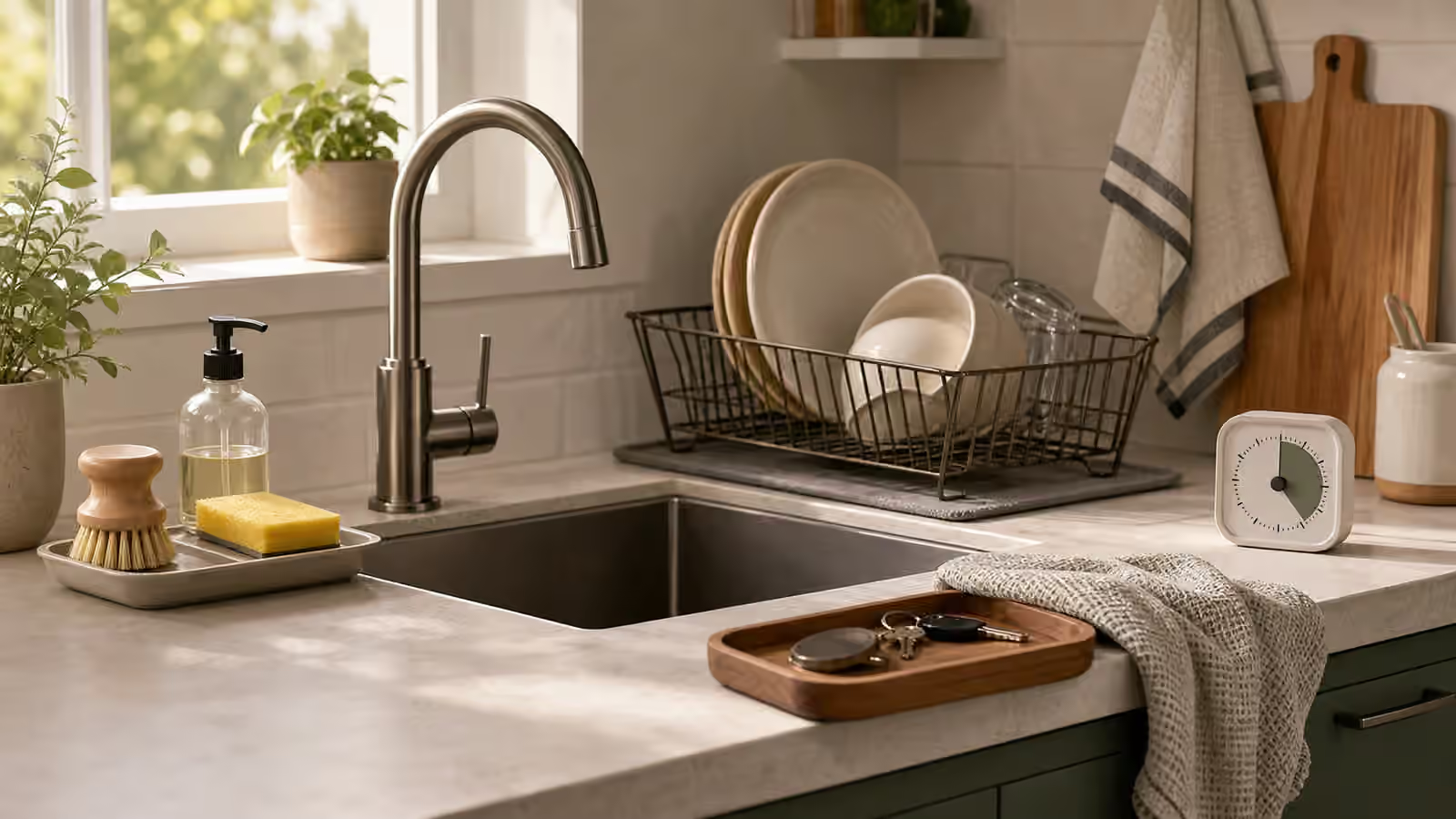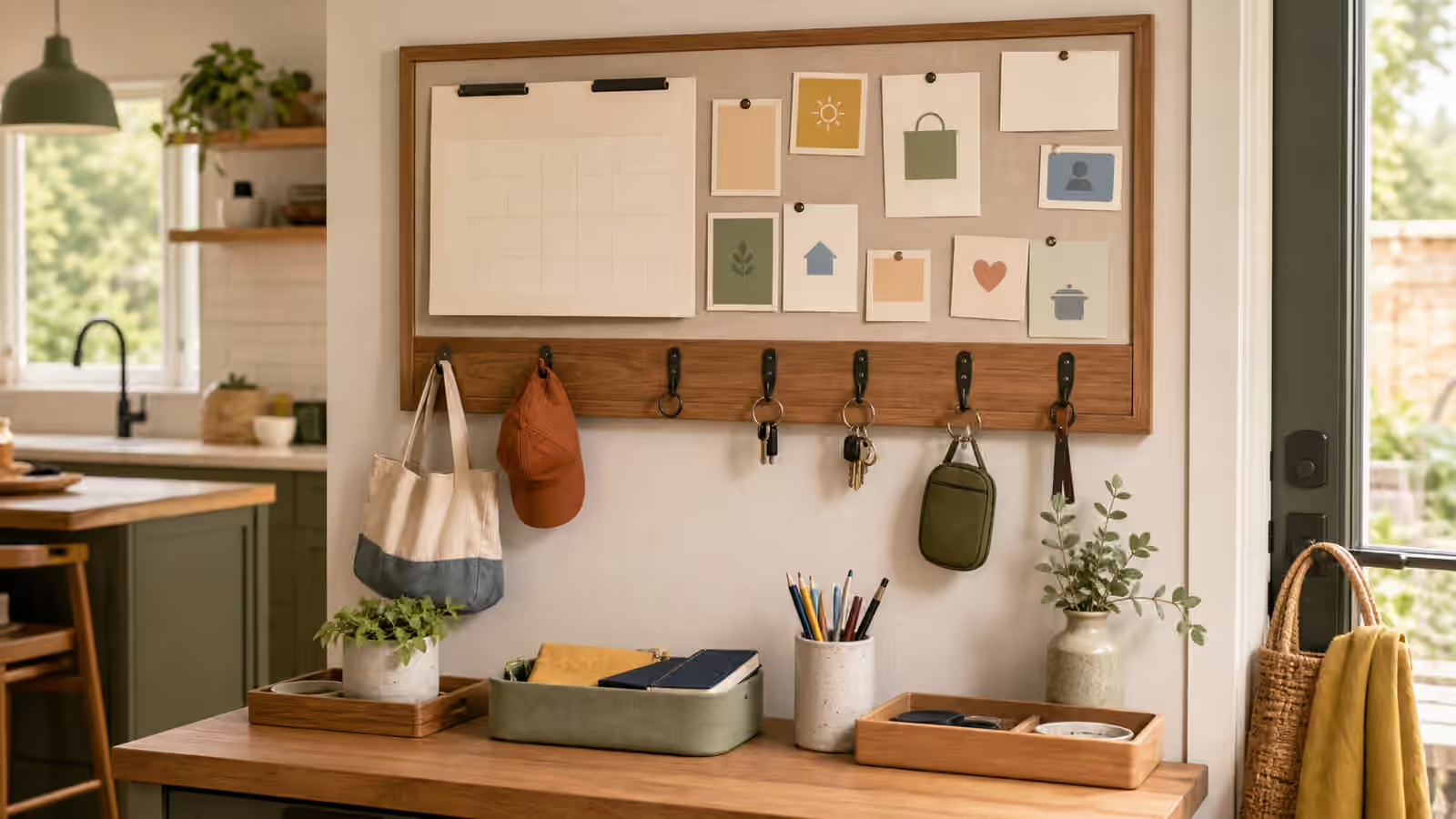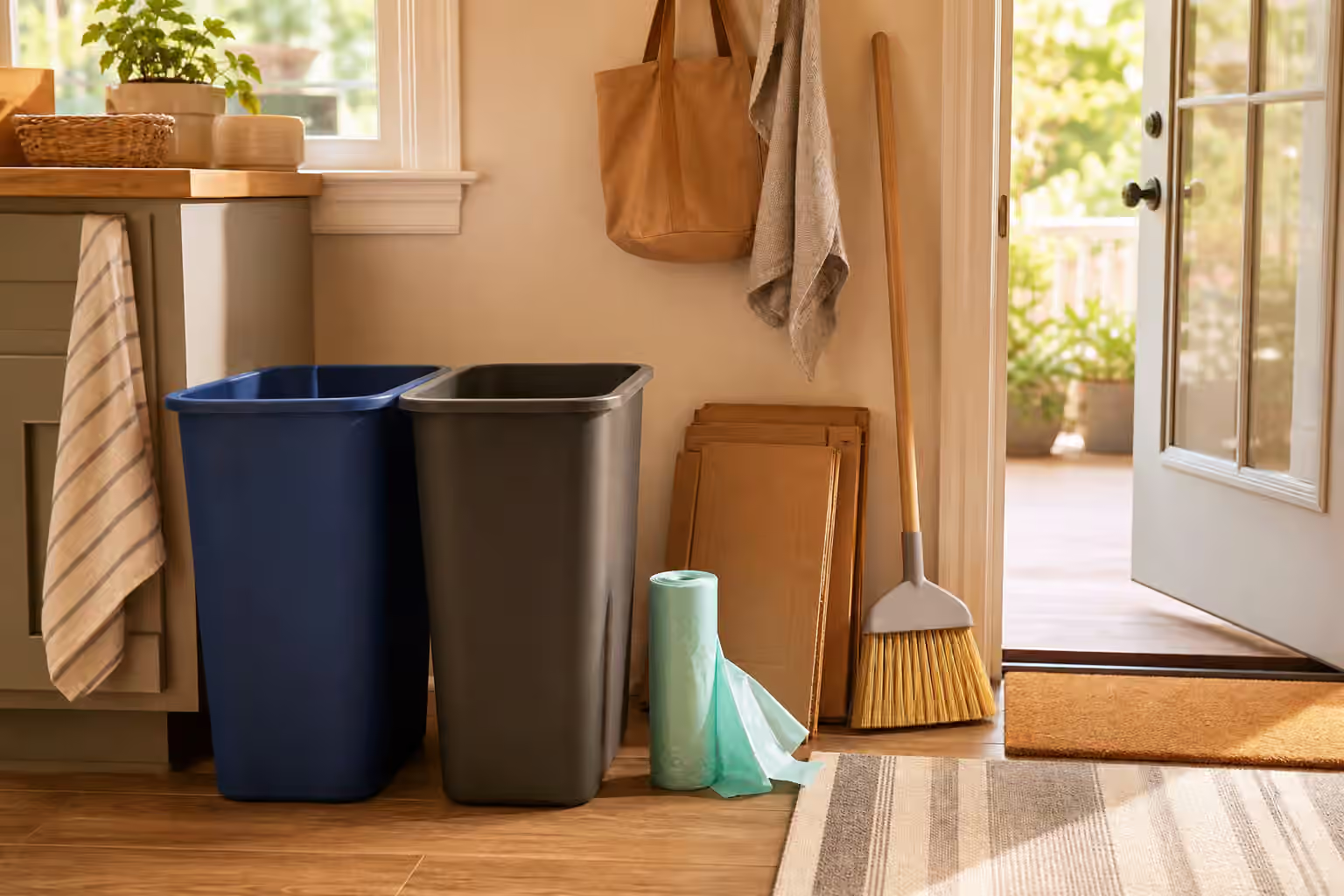
Trash and recycling look like simple chores until they become a whole map of hidden steps. A bin is full, but the bags are elsewhere. A box needs flattening, but the scissors are missing. Food packaging sits on the counter because the liner tore. The pickup day is remembered after the truck has passed. The visible problem says “take out trash,” while the lived task asks for sorting, bagging, tying, carrying, replacing, checking the path, and sometimes coordinating with other people.
A startable trash routine does not try to solve every household system at once. It makes the first move obvious, keeps supplies near the point of use, and gives the task a finish line that is smaller than “clean the whole kitchen.” Local rules for disposal and recycling vary, so the practical aim here is not to define what belongs in each bin. The aim is to make the household task easier to enter and easier to reset.
Name the Bin Task, Not the Whole Room
Trash often gets tangled with cleaning. A full bin lives beside a messy counter, a sticky floor, a sink pile, and a refrigerator that may need attention. If taking out the trash silently means repairing the entire kitchen, the first move becomes heavier. The start line should name only the bin task.
“Tie the kitchen bag and place a new liner” is a different task from “clean the kitchen.” “Carry flattened cardboard to the outside bin” is different from “organize the entry.” “Empty the bathroom bin into the larger bag” is different from “reset the bathroom.” This distinction is not lowering standards. It is protecting motion.
Low-Friction Chore Starts uses the same boundary for household work in general. Trash and recycling deserve their own boundary because they sit at the edge of many other tasks. Cooking creates packaging. Mail creates paper. Laundry creates lint and tags. Errands create receipts and bags. If every source task must be solved before the bin moves, the bin may stay full for days.
The first start line should be visible and physical. Pull one bag from the roll. Open the lid. Move the flattened box to the door. Put the small bathroom bin by the kitchen bin. Place shoes near the exit if the outside bin requires a trip. The first move should be so concrete that it can begin before the whole room gets a vote.
Keep Bags Where Fullness Happens
A trash task becomes less startable when the replacement supplies live far from the full bin. The bag comes out, the replacement is in a closet, the closet contains other objects, and the simple task becomes a search. If the replacement liner is not visible at the moment of emptying, the bin may remain bare, which makes the next person avoid using it or create a new pile nearby.
The fix is placement. Keep a small number of liners near the bin that uses them. If that is not practical, keep a visible cue near the bin that points to the supply location. The cue should be plain enough to work when the task is already annoying. A person should not have to remember where the roll lives while holding a full bag.
This is a form of Working Memory Offloading . The supply location holds the next step for you. The household no longer has to rely on someone remembering to replace the liner later. When the roll is close, the task can close while the context is still active.
For recycling, the supply may be less about bags and more about a path. Flattening cardboard might need a safe tool, a clear corner, or a staging place near the door. Return bottles might need a crate. Paper might need a dry spot. Follow whatever local disposal guidance applies where you live, but keep the starting supply close to the place where the recyclable item first appears.
Make Sorting a Small Decision
Sorting can stall a trash routine because it asks for judgment. Is this container clean enough? Does this material belong here? Should this box be flattened now? Is this paper private? Is this object actually donation, repair, trash, or storage? When every item asks a question, the bin becomes a decision board.
The startable move is to separate obvious items from uncertain ones. Obvious trash can move. Obvious recycling can move according to local guidance. Uncertain items can go to a small holding spot for later checking. The holding spot should be modest and reviewed, or it becomes a second bin with no rules.
Decision Paralysis: Shrink the Choice Before the Task is useful here. The choice is not “solve every disposal question.” The choice is “move what is obvious and park what needs a decision.” That keeps the routine from being blocked by one confusing object.
Private papers deserve special care. A startable system can include a small place for papers that need shredding, filing, or careful disposal, but that place should not swallow ordinary mail. If every scrap of paper waits for a perfect privacy decision, the pile grows. Put sensitive items where they can be handled appropriately, and let ordinary non-sensitive paper follow the household’s usual path.
Build a Pickup-Day Bridge
Outdoor bins, shared bins, and pickup days add time to the task. Remembering the day is one step. Moving the bin or bag is another. Bringing the bin back may be a third. If those steps live only in memory, they fail at predictable moments: late night, early morning, bad weather, or a rushed departure.
A pickup-day bridge ties the time cue to the object. The cue might be near the door, on a household board, in a calendar, or beside the bin path. The stronger bridge names the physical move, not only the event. “Bins to curb after dinner” is more useful than “trash day” because it tells the body what happens.
Calendar-to-Start Bridge explains this pattern. A calendar entry becomes startable when it connects to materials, buffers, and first moves. For trash and recycling, the materials are bags, bins, shoes, path, and any shared handoff. If the task happens in the dark or bad weather, stage what makes the trip realistic before the last minute.
Shared households benefit from visible state. A bin waiting by the door says something different from a note in one person’s head. Shared Household Handoff Board can hold the task if several people are involved. The board should name the state of the bin and the next action, not the character of the person who forgot last time.
Give the Task a Closing Move
Trash is not done when the bag leaves the room if the bin remains unlined, the lid is dirty, the path is blocked, or the replacement task has been left for future-you. The closing move should be small enough to happen while the task is still active. Put in a liner. Return the roll. Close the lid. Move the outdoor bin back when appropriate. Wash hands if that is part of your household routine. The exact steps depend on the setting, but the principle is that the task leaves the next start easier.
This closing move connects to After-Task Reset once that habit exists. The reset is not a full cleaning session. It is a little kindness to the next person who meets the task, including you. A bin with a liner is an invitation to keep using the system. A bin without one asks for another start.
If the closing move is often skipped, make it more visible. Store liners at the bottom of the bin if that is practical and safe for your household. Keep the roll in the cabinet directly beside it. Put the replacement bag over the edge before carrying the full one away. The best version is the one that survives a tired evening.
Use Overflow as Information
Overflow is not only a mess. It is evidence. A constantly full small bin may be in the wrong place, too small for the use, missing replacement supplies, or attached to a pickup rhythm that does not fit the household. A recycling pile by the door may mean the outside trip is the hidden step. A bathroom bin that overflows may mean no one knows who empties it or when.
Do not redesign everything during the overflow moment. Move the most obvious part first. Then ask what the overflow is teaching. If the hidden step is carrying, create a carrying container. If the hidden step is liners, move the liners. If the hidden step is pickup timing, create a bridge. If the hidden step is sorting uncertainty, make a tiny decision spot.
Trash and recycling are ordinary, repeating tasks. That is exactly why they deserve start lines. A household does not need a dramatic cleanup plan every time a bin fills. It needs a first move, nearby supplies, a small sorting boundary, a pickup bridge, and a closing move. When those pieces are visible, the task is less likely to wait until overflow becomes the reminder.