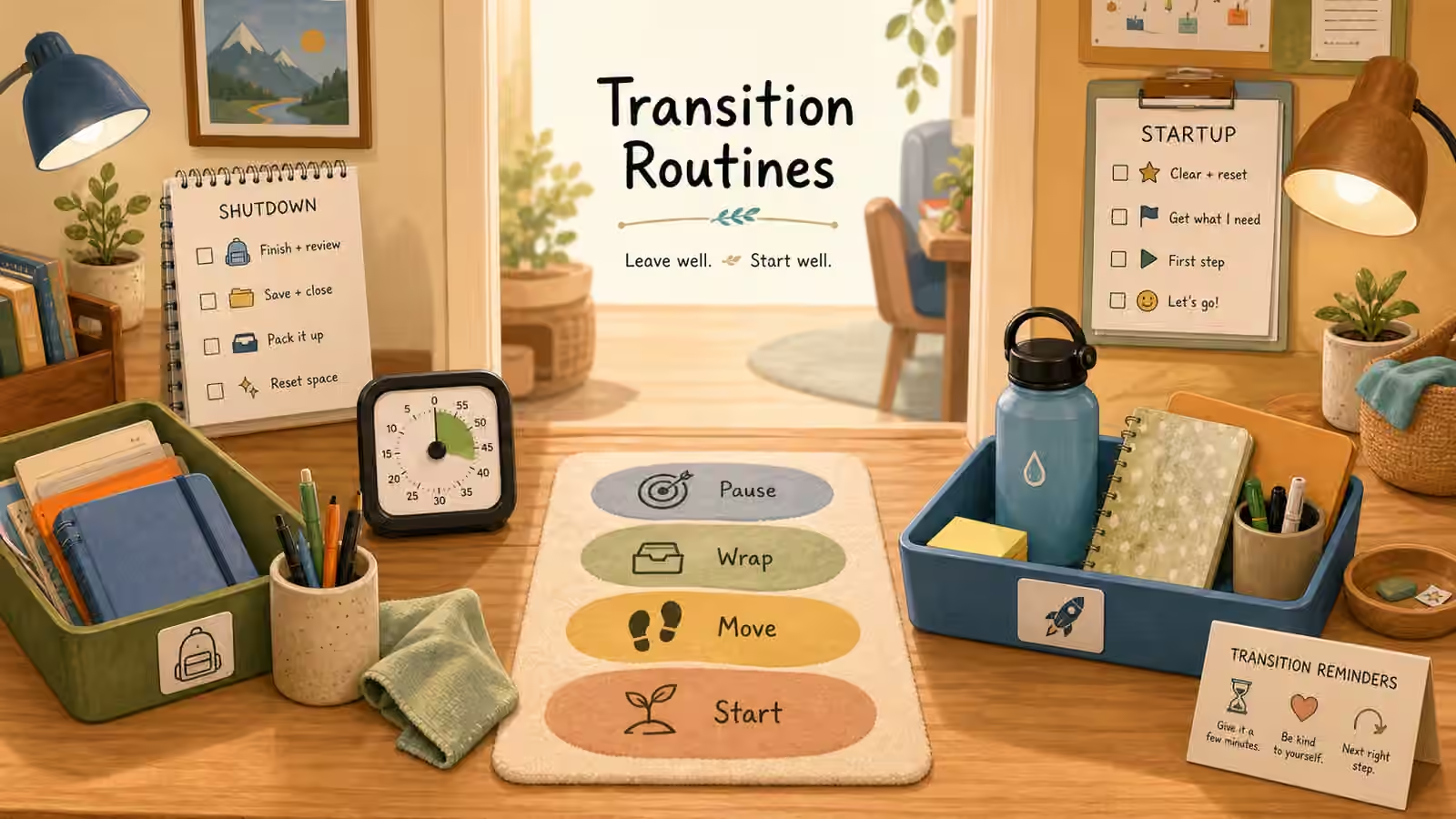
The hardest part of many days is not any single task but the gaps between them. Leaving a problem set for dinner, closing a spreadsheet to be present with family, climbing off the couch and into the shower, shifting from the noise of a classroom into the quiet of homework, each of these looks like nothing on a schedule and feels like dragging an anchor in real life. That resistance is easy to read as laziness or bad character, but it is usually something more mechanical: switching tasks asks you to stop one thing, hold on to where you were, physically relocate, and boot up a completely different frame of mind, all in a moment when no part of your body wants to move. When that whole sequence is invisible, the friction gets blamed on you instead of on the missing handoff.
A transition routine gives the switch a shape it was lacking. It is a short, repeatable sequence that closes the task you are leaving firmly enough that you can actually let go of it, and opens the task you are entering just enough that stepping in feels obvious instead of daunting. Think of it as a ramp rather than a cliff. You are not asking yourself to leap from one activity straight into another; you are giving yourself a graded slope to walk down and back up.
The four beats of a good ramp
Every workable transition moves through the same four beats, and naming them makes it easier to see where yours is breaking. The first is noticing. A transition that starts only when the next thing is already urgent is a transition that starts too late, so the earliest move is a cue that tells you the current task is nearing its edge while you still have room to wind down. A five-minute warning, whether it comes from a timer, a partner, or the natural end of a class, buys you the space to close properly instead of being yanked away mid-thought.
The second beat is closing. Leaving a task without a note feels like freedom in the moment and costs you dearly later, because the version of you who comes back has to reconstruct everything from scratch. A good close captures the state of things in a single line: what got done, what comes next, where to pick up the thread. It takes fifteen seconds and it is the difference between resuming and re-deciding.
The third beat is moving, and it is the one people skip most often. Your body is a surprisingly literal instrument; changing place, posture, lighting, sound, or even just the object in your hands is a signal it understands more readily than any internal resolution. Standing up, walking to a different room, switching on the evening lamp, or swapping your work chair for the kitchen stool all announce to your nervous system that the category of the moment has changed. Without a physical shift, the old task tends to follow you into the new one and sit there humming.
The fourth beat is opening. A transition that ends with a vague sense that you should now do the next thing has not really ended. A transition that ends with the next task’s first object already staged, the textbook open to the right page, the draft on the screen with the cursor waiting, the detergent sitting on top of the machine, ends with a start line instead of a fresh negotiation. Closing one task and opening the next are two halves of the same gesture, and the opening is what keeps the whole day from stalling in the doorway.
What ramps look like in practice
The satisfying thing about transition routines is how ordinary the good ones look. After class, a workable ramp might be: close the laptop, write one line about where homework should begin, set the notebook on the kitchen table, and only then take a snack break, so that returning means walking back to a scene that is already set. After work, it might be parking your browser tabs, writing down tomorrow’s very first action while today’s context is still warm, clearing the desk surface, and clicking on the lamp that means the workday is over. Before leaving the house, the ramp is often a matter of staging: shoes waiting by the door, keys in their tray, bag zipped the night before, phone kept away from the bed so the morning does not begin with a scroll. In each case the routine is short, physical, and specific, and none of it depends on feeling motivated in the moment it fires.
Keeping the ramp honest
Two failure modes tend to creep in, and both are worth watching for. The first is the ramp that grows longer than the task it serves, an elaborate shutdown ritual for a ten-minute chore, which quickly becomes its own form of avoidance. If the routine starts to feel like a task in its own right, cut it back until it is genuinely a bridge and not a destination. The second is starting the next task by reopening something designed to swallow you, the news feed, the group chat, the game, and calling that a transition. A ramp that funnels you into a distraction has opened the wrong door. Aim the opening at the real first object, not at the thing that feels like a reward for having switched.
It also helps to build your ramps for a messy weekday rather than an ideal one. If the routine only works when the house is quiet, the desk is clear, and everyone is cooperating, it will abandon you on exactly the days you need it. So start small: pick a single daily transition that reliably snags, add a warning cue, write a one-line closing note, make one physical move between zones, and stage the first object on the far side. Afterward, notice one thing that made the switch easier and one thing that still caught, and adjust from there rather than from guilt.
One honest caveat belongs at the end. Sometimes a transition is hard not because the handoff is missing but because the place you are heading into is genuinely stressful, unclear, unsafe, or overwhelming, and no amount of ritual should paper over that. A routine can smooth an ordinary switch; it should not be used to force yourself repeatedly into a situation that actually needs attention or support. For the everyday kind of friction, though, the move is simple and forgiving: choose one task, make only its next start line more visible, and leave a return point behind you. When you want the ending half of this worked out in more detail, The Shutdown Routine covers closing work so tomorrow restarts easily, and Time Blindness Without Shame covers the cues and buffers that keep transitions from arriving as a surprise.