Some days do not fail because you have nothing important to do. They fail because too many things sound important at the same volume. The inbox looks urgent, the laundry is visible, the form is overdue, the school portal has a message, the sink is annoying, and the work task is still waiting. When every item shouts, choosing becomes another task, and the day can stall before any real work begins.
Task triage is not a perfect priority system. It is a way to make one next start possible without pretending the rest of life has disappeared. Startable Life Lab uses triage as a visible sorting move: the loud tasks leave your head, land on a page or table, and become easier to compare. The goal is not to rank your whole life. The goal is to lower the cost of the next honest start.
What this helps you make visible
Use task triage when your brain keeps switching between responsibilities without touching any of them. That restless scanning often means the task list is carrying several different kinds of pressure at once. One item may be time-sensitive. Another may be emotionally uncomfortable. Another may be visible to someone else. Another may be small but noisy because it sits in your path all day. If those pressures stay blended together, they all feel like emergencies.
The triage move is to separate loudness from sequence. A loud task is not always the first task. A quiet task is not always safe to ignore. You are looking for the task that needs a real start now, the task that needs a later appointment, and the task that only needs to be parked somewhere trustworthy. This is where Working Memory Offloading helps: the page or tray does the holding so your mind can stop rehearsing the whole crowd.
Separate loudness from importance
Loudness usually has a source. A task can be loud because it is late, because another person is waiting, because the materials are in your way, because the next step is unclear, or because you dislike the feeling attached to it. Those are different problems. Treating them all as the same problem creates a fog where the only available strategy is panic.
Try naming the source in plain language. The sink is loud because it is visible. The work email is loud because someone may be waiting. The form is loud because it has unfamiliar fields. The laundry is loud because tomorrow morning depends on it. Once the source is named, the next move often gets smaller. The sink may only need the counter cleared. The email may only need a draft opened. The form may only need the account number found. The laundry may only need one load started, not the whole closet rescued.
This is close to the idea in The Start Line , but triage happens one step earlier. Before you define a first physical move, you decide which responsibility earns that first move. That decision should be visible enough that you can disagree with it, adjust it, and stop re-deciding it every six minutes.
Build a tiny triage station
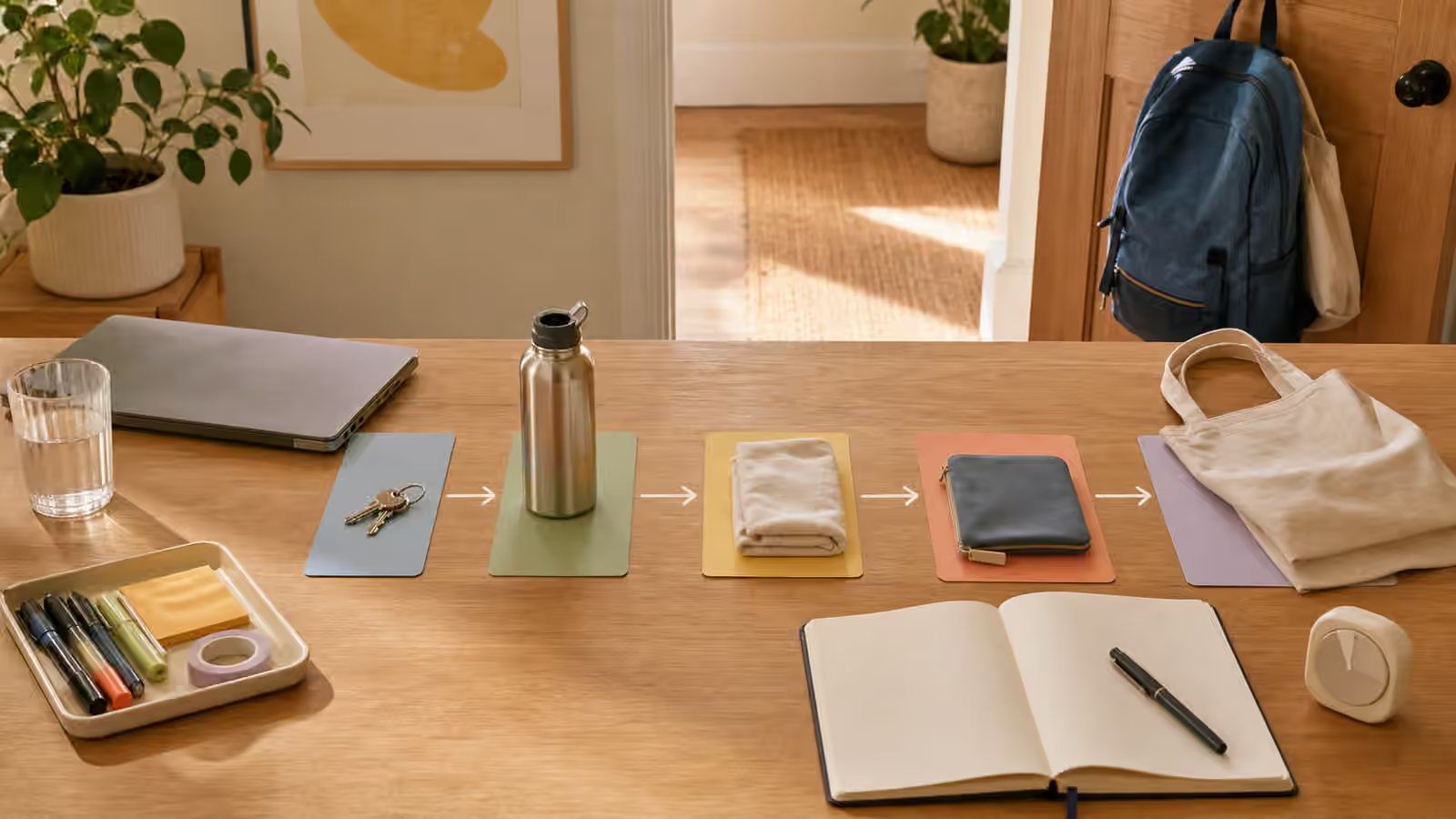
A useful triage station can be as simple as a notebook page, three blank cards, or a cleared corner of the table. Put every loud task into the station in short, ordinary words. Do not write a full project plan. A long plan can become another hiding place for avoidance. Write just enough to let the task sit outside your head.
Then look for consequences that change with time. Some tasks truly become worse if they wait until tomorrow. Some only feel worse because you have been looking at them all day. Some can wait if you leave a return point. A good triage station gives each task a place to wait without requiring a dramatic decision about your identity, discipline, or future.
The next task should have a start line that can happen within the current conditions. If you have ten minutes before leaving, the best task may be opening the document and writing the return point, not completing the document. If you are tired, the best task may be staging materials for tomorrow. If another person is waiting, the best task may be sending a brief status note before doing the deeper work. Triage respects the day you actually have.
When everything is still too close
Sometimes triage does not produce an obvious winner. This is common when several tasks are overdue or emotionally loaded. In that case, choose the task with the clearest next physical move, not the task with the most dramatic story. Starting the clearest task can reduce overall noise, and it gives you evidence that movement is possible.
Another useful tie-breaker is dependency. If one small action makes a later task easier, that small action may deserve the next start. Putting the charger in your bag makes the afternoon appointment less brittle. Opening the school portal makes the homework conversation less vague. Finding the form makes the paperwork task less imaginary. These are not glamorous moves, but they change the shape of the day.
Avoid using mood as the only judge. Feeling ready is helpful when it appears, but triage is built for days when readiness is unreliable. The better question is: which first move would make the next hour less tangled? That question keeps the decision practical and prevents the loudest emotional task from automatically steering the whole day.
Park the tasks you are not choosing
The task you do not choose still needs a place to land. Otherwise it will keep interrupting the task you did choose. Parking is not ignoring. Parking means leaving the task with a visible cue, a return time if needed, and enough context that you will not have to reconstruct it from memory.
For a screen task, parking may mean closing extra tabs and leaving one note in the document. For a household task, it may mean placing supplies in a tray. For a form, it may mean putting the envelope, pen, and missing document request in one folder. For a school task, it may mean marking the page and leaving the calculator beside the notebook. The parked task becomes calmer because it has a known home.
This is why The Shutdown Routine pairs well with triage. Shutdown is not only for the end of a work session. A tiny shutdown can happen every time you choose one task over another. You close the loop enough that the unchosen tasks stop chasing you.
Practice on an ordinary messy day
Do not wait for a clean morning to practice triage. It is most useful when the kitchen is half reset, the phone has alerts, the backpack is not ready, and the task list is already noisy. Choose a surface, write the loud tasks in short phrases, and ask what pressure each one is carrying. Then choose one start line that fits the time and energy actually available.
The result may look modest. You may start one load of laundry, send one status email, open one form, or clear one study space. That is enough for practice. Task triage teaches your day that not every loud item gets the steering wheel. One task can start, the others can wait visibly, and the whole system can become a little less foggy.