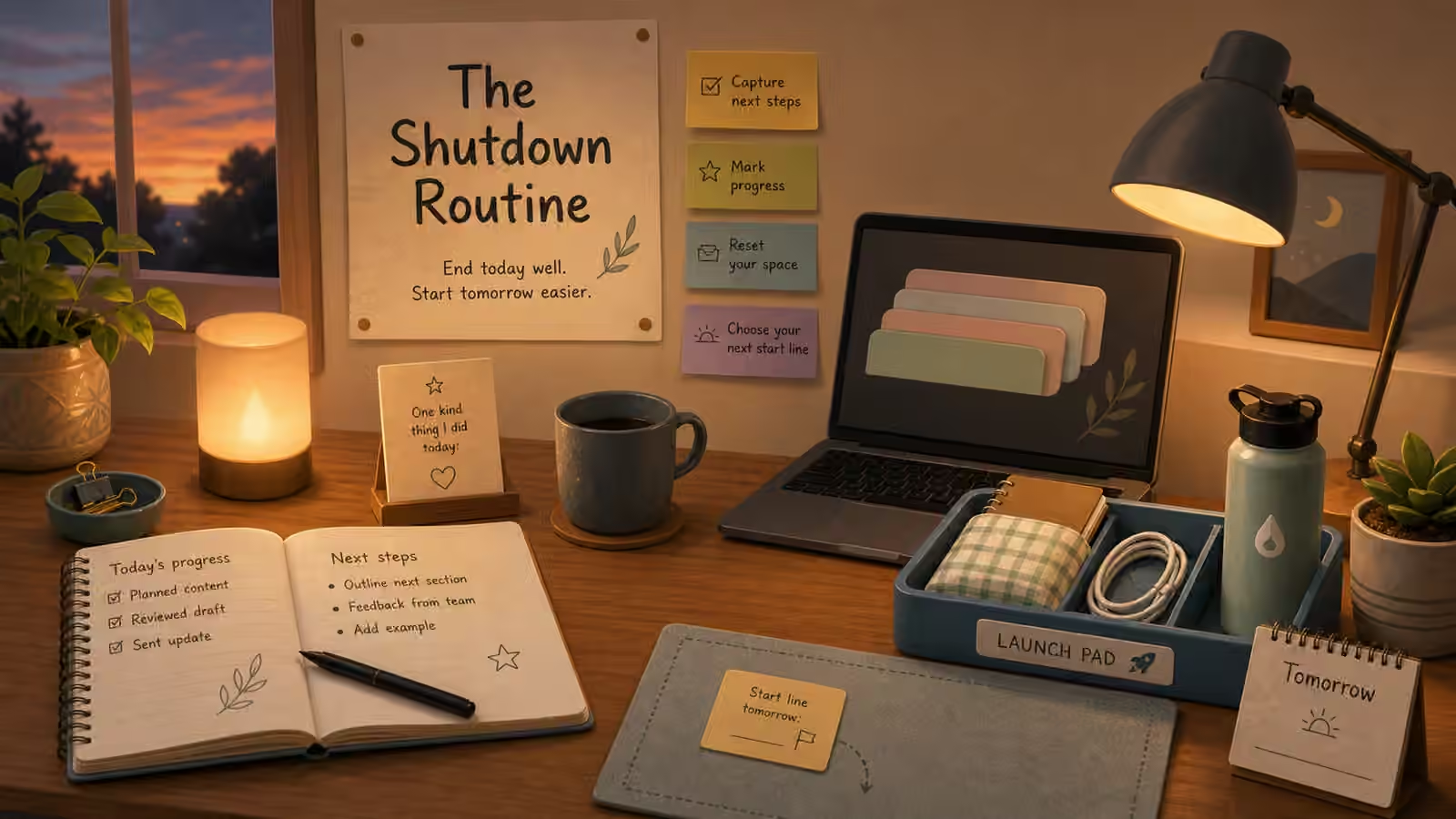
A shutdown routine is a small kindness you do for your future self. It has almost nothing to do with ending the day tidily and everything to do with what tomorrow’s start will cost. When you stop work abruptly, leaving no trace of where you were, the next session has to open with detective work: reconstructing what you had done, where you had left off, and what you were about to do next. That reconstruction is expensive, and it happens at exactly the moment when starting is already hard. Most of the pain we blame on “not being able to get going in the morning” is really the pain of arriving at a cold, unmarked task with no clue where the door is.
The shutdown routine solves this by spending a few cheap minutes at the end, while everything is still fresh in your mind, to leave a warm, obvious entry point for later. The person who did the work knows exactly where the thread was. The person who has to pick it up tomorrow knows nothing. A good shutdown is simply the first person writing a short note to the second one, so the thread is never actually dropped.
Capture what changed while you still remember
The first move at shutdown is to write down what actually happened, even when the task is nowhere near finished. This feels unnecessary in the moment, because of course you know what you did; you just did it. But that knowledge is startlingly perishable. A single night of sleep, or even a couple of hours doing something else, is enough to blur the details, and tomorrow you will be surprised how little you can recall about where the work stood. A couple of plain lines are enough: what got done, where you got stuck, and what remains. You are not writing a report. You are leaving fingerprints on the work so you can find it again.
It helps to keep this capture blunt and short. Three quick lines under the headings done, stuck, and next will carry more useful information than a polished paragraph, and they take a fraction of the effort. “Done: drafted the introduction. Stuck: need a source for the second claim. Next: open the saved article and copy the quote” tells tomorrow’s version of you everything it needs in one glance.
Name the next start line
The single most valuable thing a shutdown routine produces is the next start line: one concrete, physical or digital first move for the next session. Not a goal, not a topic, but an action small enough that beginning it requires no decision. “Work on the report” is not a start line, because it still contains all the friction of figuring out how to begin. “Open the outline and write the heading for section two” is a start line, because you can do it without thinking. When you sit down tomorrow and the very first move is already chosen and waiting, the hardest part of starting has been quietly removed the night before.
Writing the start line at shutdown is far easier than writing it at startup, because right now you still hold the whole task in your head and you know exactly what the sensible next step is. Tomorrow you will have lost that context, which is precisely why you should spend the momentum you have now to buy yourself an easy beginning later.
Park the open loops
Work leaves loose ends everywhere: tabs you meant to read, links you meant to save, half-typed messages, questions you meant to ask someone. The tempting move is to leave them all open so you will “remember” them, but a screen full of open tabs is not a memory system; it is a pile of anxiety that you will have to re-sort tomorrow anyway, and it makes the fresh start feel cluttered before you have done anything. Parking the loops means moving each loose end somewhere intentional: a saved list, a note, a task manager, a bookmark folder. The act of parking is what lets you close the tabs without the nagging fear of losing something, and it is what lets tomorrow open onto a clear surface instead of yesterday’s debris.
Reset the surface, but not too much
The last piece is a light reset of the work surface, and the emphasis is on light. Clear only what would block the next start, and leave in place the materials that stage it. The failure mode here is over-cleaning: sweeping the desk so thoroughly that the very things you set out for tomorrow’s first move disappear back into drawers, so that starting now requires re-gathering everything. A good shutdown does the opposite. It clears the clutter and then deliberately places the next material where you will need it, so tomorrow’s task is already partly set up. The notebook is open to the right page, the next document is on the launch pad, the one tool you need is on top.
A simple closing cue can bookmark the whole ritual: turning off the lamp, pushing in the chair, closing the notebook. The cue is not superstition; it gives your attention a clean edge to leave the work at, which makes it easier to actually stop rather than trailing off into a distracted, unresolved evening.
Keep it short and let it be imperfect
The whole routine should fit inside about five minutes, and it is worth setting a short timer for it so it does not sprawl. Speed protects the habit, because a shutdown that takes half an hour is one you will skip the moment you are tired, and the tired evenings are exactly when a clear next-day start matters most. Test it on an ordinary, messy weekday rather than an idealized one: after a long session, in a cluttered room, when you would rather just walk away. If a two-line capture and one placed material still make tomorrow easier under those conditions, the routine has earned its place.
It also helps to let the routine survive imperfect sessions. There is a strong pull to skip shutdown on the days the work went badly, as if a rough session does not deserve a proper close. But those are the days a return point helps most, because a stalled task with no note is the hardest of all to reopen. A short, honest capture of a bad day, “made no real progress, next: reread the brief and write one sentence,” is worth far more than a clean desk and no memory of where you were.
A careful next step
If unfinished work regularly keeps you from sleeping or produces real distress, a shutdown routine can be one genuine support, but it should sit alongside honest conversations about workload and, where needed, professional help, rather than standing in for them. For everyday practice, spend five minutes at the end to capture what changed, name one next start line, park your open loops, and place tomorrow’s first material where you will find it. For related systems, see Working Memory Offloading for external memory, and The Two-Minute Setup for staging tomorrow’s first move.