Shared household work often fails in the handoff. The task itself may be ordinary: return the library book, move laundry, sign the school form, take out the trash, buy the missing ingredient, bring the package to the car, refill the pet supplies, or call about the appointment. The hard part is that the task lives between people, places, and times. Someone notices it, someone else needs to act, and the information evaporates before the action becomes visible.
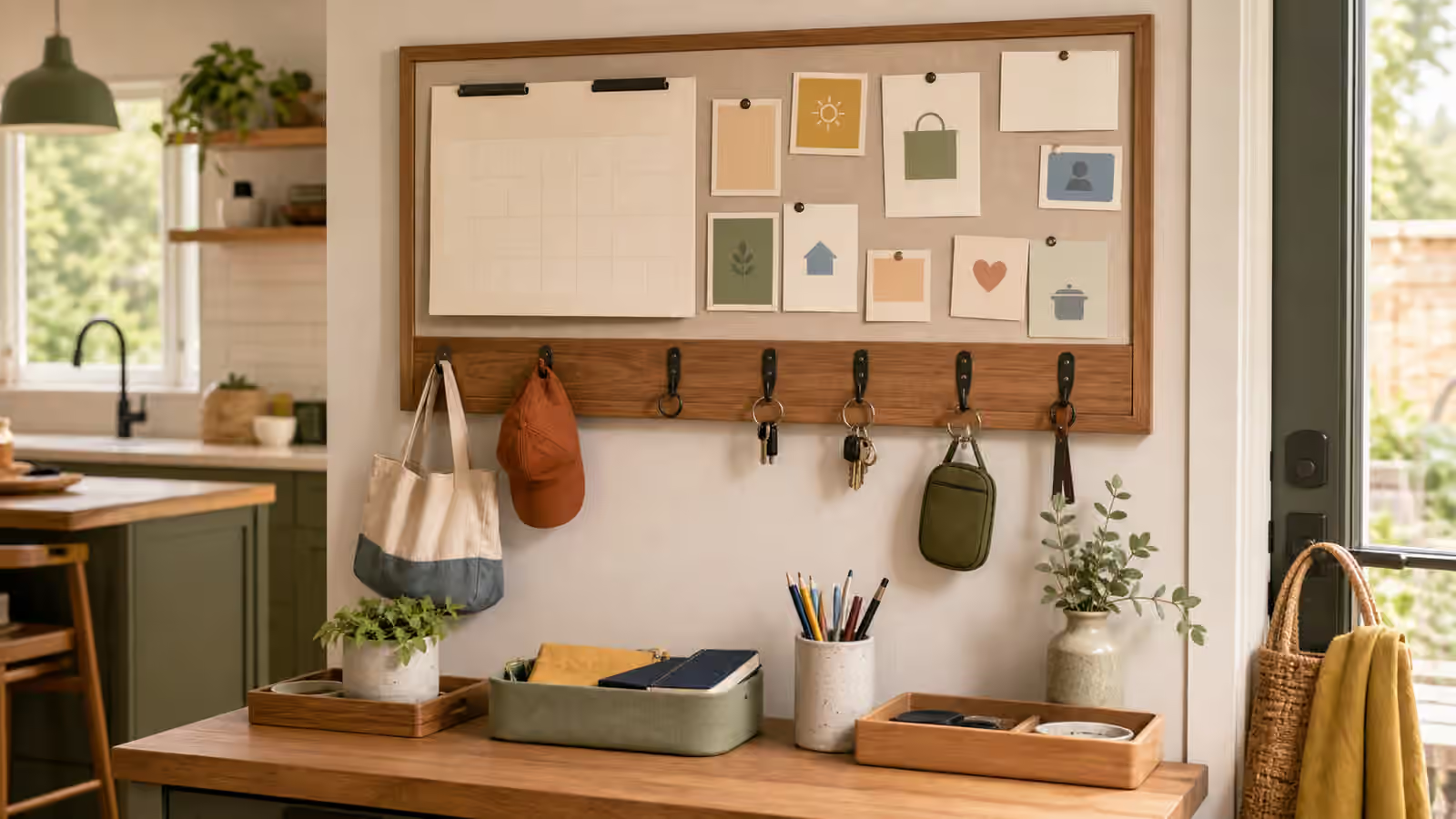
A shared household handoff board gives those in-between tasks one calm place to land. It is not a command center for the entire home. It is not a public scoreboard for who is doing enough. It is a small visible surface that says what needs a handoff, where the object is, and what the next startable move looks like.
Keep the Board Close to the Handoff
Location matters more than design. A household board should sit near the place where tasks change hands: an entryway, kitchen corner, laundry area, mudroom shelf, desk nook, or cabinet door. If the board lives in a decorative spot far from the objects, people will admire it and forget to use it. The board has to be near the keys, bags, papers, baskets, packages, chargers, lunch boxes, or shoes that belong to the next move.
The board should also have a small physical companion: a tray, hook, envelope, clip, basket, or folder. A card that says the package needs to leave is weaker than the package sitting in the leaving tray. A note about a form is weaker than the form clipped under the note. Handoffs become startable when information and object meet.
Working Memory Offloading explains the larger principle. Memory is fragile, especially when several people assume someone else has the detail. The board removes the need for everyone to carry the same invisible reminder at the same time.
Write the Next Move, Not the Complaint
A shared board can easily become a wall of irritation. “Trash again” may express a real feeling, but it does not create a startable handoff. “Tie bag and put by back door” is more useful. “School form!!!” shows urgency, but “Sign top page and place in blue folder” gives the next person a physical move. The wording should lower the temperature of the room.
This does not mean swallowing every frustration. Some household patterns need direct conversation, fairer agreements, or outside support. The board is not a substitute for those conversations. Its job is narrower: make the current handoff visible enough that ordinary tasks do not depend on hints, resentment, or mind reading.
When the handoff needs another person, Asking for Help Without the Spiral is a useful companion. A clear request names the task, the needed action, and the place where the object waits. The board can hold that request without turning it into a speech.
Separate Shared Tasks From Personal Backlogs
The handoff board should not hold every personal to-do. If one person fills the board with their entire backlog, the household surface stops feeling shared. Keep it for tasks that cross a boundary: another person needs the object, the task affects a shared space, the errand depends on whoever leaves next, or the information must survive until a different person can act.
This boundary protects the board from clutter and protects relationships from constant broadcast. A private essay draft, hobby project, or work email probably belongs somewhere else. A payment envelope, grocery gap, borrowed tool, trash pickup note, shared appointment paper, or laundry transfer cue may belong on the board because the household needs the handoff.
The boundary also helps with fairness. When shared tasks are visible, it becomes easier to notice which categories keep landing on the same person. Visibility does not solve fairness by itself, but it gives the conversation better evidence than memory alone. The board should make patterns easier to discuss, not easier to ignore.
Use Objects as Evidence
Household tasks often disappear because the object moves away from the reminder. The note stays on the counter while the return item remains in a closet. The school paper sits in a backpack while the parent remembers it in the kitchen. The laundry reminder lives in someone’s head while the wet load sits behind a closed door. A good handoff board pulls the object into the same path as the reminder when possible.
This can be as modest as a leaving tray, a signed-paper clip, a laundry token, or a hook for bags that need to go out. The object does not have to be pretty. It has to be findable. If the item is too large to move, the board should name the exact location: by the back door, top shelf of hall closet, dryer, front seat, freezer bin, or desk tray.
Low-Friction Chore Starts and Errands and Out-the-Door Starts both use the same logic. The first move becomes easier when the needed object is already in the path of action. The board simply extends that logic across more than one person.
Make a Handoff, Then Remove It
The board should not become a museum of completed tasks. When a handoff has happened, remove the card, clear the object, or move the card to a small done spot only long enough for others to see the update. Old cards create noise. Noise teaches people to stop looking.
If a task cannot move yet, the card should say why. Waiting for reply, missing form, needs ride, choose time, or ask landlord are different states. A stalled card without a reason starts to feel like clutter or blame. A stalled card with a reason is a parked open loop.
This is where The Open-Loop Parking Lot can help. Some household tasks are not ready for the live handoff board. They need to wait for information, money, weather, a delivery, a decision, or a better time. Parking those tasks somewhere visible but separate keeps the handoff board focused on the next few moves.
Reset Without Holding Court
A household board needs a reset rhythm, but the reset should not become a weekly trial. Choose a calm anchor: after dinner, before school bags are packed, during a Sunday kitchen reset, or before the first weekday commute. The reset asks simple questions. What is still waiting? What has moved? What object needs to be placed with its reminder? What card has become stale enough to park elsewhere?
Keep the reset short and factual. If a bigger household conflict appears, name it as a conversation for another moment rather than forcing the board to carry it. The board is a tool for handoffs, not a judge. It should make cooperation easier by lowering the memory load and making the next move visible.
A shared handoff board succeeds when people glance at it because it usually tells the truth. There are not too many cards. The cards point to objects. The wording names actions instead of complaints. Completed items disappear. Stalled items explain what they need. Over time, the board becomes less like a reminder wall and more like a small landing place where household tasks stop falling between people.