A task that starts well at one desk may fall apart everywhere else. The notebook is at home. The charger is in the other bag. The pen is missing. The document was printed but not packed. The headphones are on the bedside table. The appointment has waiting time, but the useful task cannot begin because its first objects are scattered across three rooms.
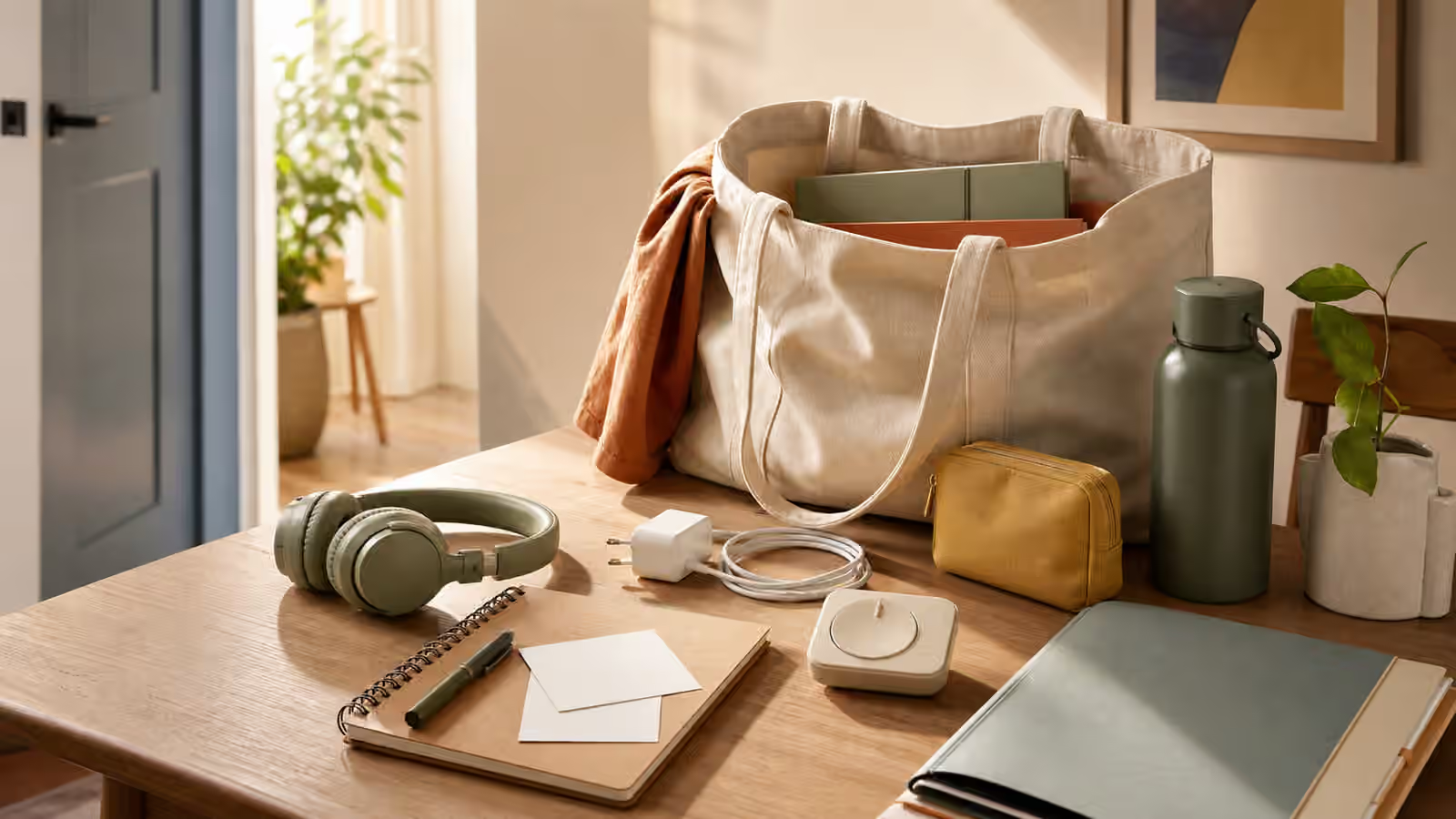
A portable start kit is a small task-start location you can carry. It is not a survival bag, a perfect productivity pouch, or a decorative collection of supplies. It is a modest container for the objects that repeatedly make work, study, errands, paperwork, or waiting-room tasks easier to enter away from the usual setup.
A Kit Is a Start Location You Can Carry
Startability often depends on place. A desk can hold the pen, charger, notebook, water, timer, and return note that make the first move obvious. Away from that desk, the task has to rebuild its environment from memory. That rebuilding is invisible work. If you are already in a library, classroom, office, waiting room, car line, or kitchen corner, the missing environment can become the reason the task never opens.
The portable kit solves a narrow problem: it keeps the first objects together. The kit does not have to hold everything needed to finish the task. It should hold enough to start, resume, or leave a return point. For writing, that might be notebook, pen, charger, and one folder. For paperwork, it might be a slim pouch with pen, sticky notes, blank envelope, and the active document. For errands, it might be return label, receipt, small tape roll, and the card needed at the counter.
Working Memory Offloading explains why this matters. When the kit holds the repeated objects, memory does not have to keep proving itself every time you leave the house.
Choose a Narrow Purpose
The fastest way to ruin a portable kit is to make it responsible for every possible task. A bag that holds all categories becomes a moving junk drawer. The better starting point is one repeated situation. Maybe the kit is for studying after class. Maybe it is for household admin that gets handled at the kitchen table. Maybe it is for appointment days when waiting time appears but the right materials do not. Maybe it is for errands that require returns, forms, or pickup details.
A narrow purpose makes the reset easier. If the kit is for study starts, then the question after each use is simple: are the notebook, pen, charger, headphones, and current folder back in place? If the kit is for errands, the reset may be receipt, return item, label, and card. The more mixed the kit becomes, the harder it is to trust when you are tired.
This does not mean you need several bags. A pouch inside a bag can be enough. The important thing is that the start objects share a home and do not have to be hunted separately.
Pack the First Move, Not the Fantasy Session
A portable kit should be designed around the first move. If the first move is “open the reading and mark one confusing sentence,” the kit needs the reading, a marker, and a place to write. If the first move is “draft the reply before the appointment,” the kit needs the device, charger, and enough context to know what the reply is about. If the first move is “process the school form,” the kit needs the form, pen, ID information if appropriate to carry, and a folder for papers that should not be loose.
Packing for the fantasy session creates bulk and disappointment. You imagine a perfect two-hour focus block and fill the bag with every possible tool. Then the bag becomes heavy, the reset becomes tedious, and the kit stops leaving the house. A start kit earns its place by being light enough to keep using.
The Two-Minute Setup can prepare the kit the night before. The question is not what would make tomorrow ideal. The question is what object would make the first move almost too obvious to miss.
Make Missing Parts Boring
The kit is most useful for repeated missing parts. Chargers, pens, headphones, small notebooks, blank cards, folders, water bottles, and simple timers are common because they are ordinary enough to vanish. The goal is not to buy special equipment. The goal is to stop losing the same start to the same missing object.
If a missing part is expensive, private, or risky to carry, design around it instead of forcing it into the kit. A note can say that the document lives in the home tray. A folder can hold copies rather than originals when copies are appropriate. A device can be charged at the launch pad rather than carried with extra cables. Practical systems should respect security, privacy, and personal circumstances rather than turning convenience into carelessness.
The kit should also have a place for return points. A blank card or small notebook lets you leave a note before the task closes. That note can say where you stopped, what object is missing, or what the next start should be. Without that return point, the kit may help you begin but not help you resume.
Use the Kit for Bridge Time
Portable start kits are especially useful during waiting mode. An appointment day can make the hours around it feel unstable. If the kit is ready, a short bridge task can fit into the time without requiring a full desk. You might review notes, draft a message, sort one folder, read a section, or prepare the next start line for later.
Waiting Mode Bridges is the companion guide here. The kit does not force every waiting block to become productive. It simply gives you a practical option when you want one. Sometimes the right bridge is rest, food, or quiet. Sometimes the right bridge is a small start that stops the day from disappearing.
The kit can also support Errands and Out-the-Door Starts . If the return package, card, and label always gather in one place, leaving becomes less dependent on a last-minute search.
Reset It While the Memory Is Fresh
The portable kit lives or dies by reset. If it comes home and lands half-empty on a chair, it will be unreliable the next time. Resetting does not have to be elaborate. Put the kit near the launch pad, remove trash, return the active papers to their tray, replace the pen, charge the device, and leave the next needed object visible.
The reset works best at a natural edge: arriving home, closing the laptop, unloading the bag, or preparing tomorrow’s first move. If the kit needs more than a few minutes to reset, it may be carrying too much. Shrink the purpose until the reset is easy enough to do on an ordinary day.
A portable start kit is not a promise that you will use every spare minute perfectly. It is a way to stop the same missing objects from deciding whether a useful start can happen outside the usual room.