Phone calls are rarely just phone calls. They ask for timing, privacy, a charged device, a quiet enough room, the right number, an explanation of why you are calling, a way to take notes, and the ability to respond in real time. Appointment tasks add another layer. You may need dates, insurance cards, school forms, transportation plans, childcare, work schedules, or a memory of what happened last time.
When a call keeps sliding from today to tomorrow, the problem may not be unwillingness. The task may be too many invisible steps stacked behind one verb. “Call the office” sounds small until you notice how much must be gathered before the first ring. Startability begins by giving the call a physical shape.
Make a call station before making the call
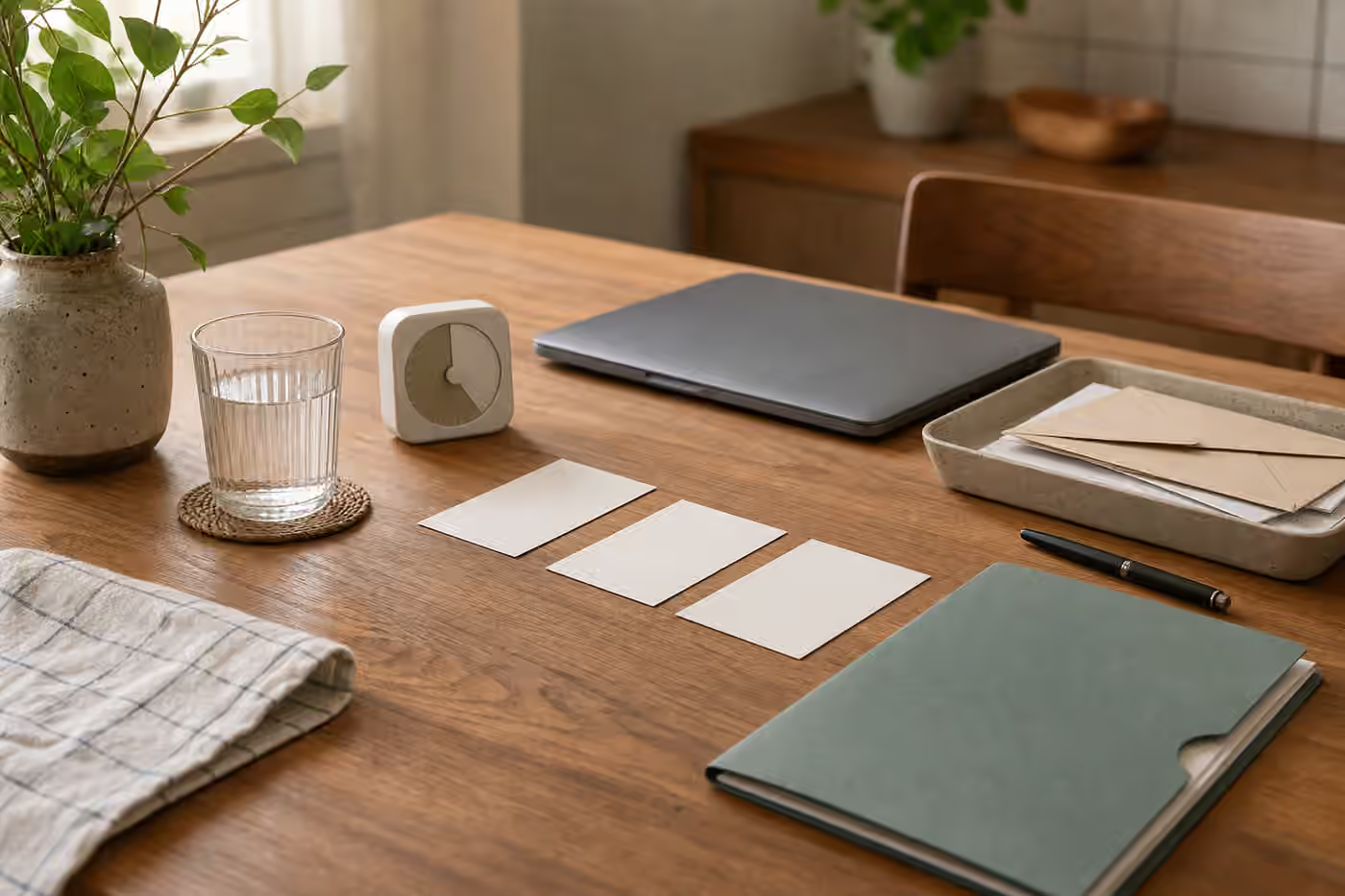
A call station is a small surface where the call can begin without searching. It might be a desk corner, kitchen table, hallway shelf, or the edge of a bed with a notebook. Put the phone, charger if needed, water, pen, calendar, and any relevant papers in one place. If the call involves an account, form, class, repair, or appointment, place the object that explains the call in the station too.
This setup matters because phone calls have a narrow entry point. Once the call starts, memory and attention are already busy. If you have to hunt for a date while someone is waiting, the task can feel much harder than it needed to be. Paperwork Without the Pile uses the same idea for forms and mail: put the active pieces together before asking yourself to process them.
The call station should not become a permanent pile. It is a temporary runway. Build it, make the call or define the next missing piece, then reset it. If the call cannot happen yet because you are missing information, write that missing piece on the note. You have still made progress because the task is no longer a vague cloud.
Write the opening sentence
Calls often stall at the first sentence. You may know the reason for the call but not how to begin. Writing the opening sentence gives the task a start line. It can be plain: you are calling to schedule, confirm, ask, change, cancel, check, report, or follow up. It does not need to sound polished. The first sentence only has to get the call into the correct room.
The sentence is not a script for controlling the whole conversation. It is a bridge over the first drop. Once the other person answers, the call may become more ordinary. If the task is emotionally loaded, writing the sentence ahead of time keeps the opening from absorbing all available energy.
The Start Line is especially useful for calls because “make appointment” is abstract. “Put the number, calendar, and one-sentence reason on the table” is physical. “Dial after the timer starts” is physical. “Write the next available times on paper” is physical. Calls become easier when the body knows what to do before the mind debates the whole conversation.
Give appointments a holding shape
Appointment tasks get heavy when every detail is held in memory. You may need to remember why the appointment exists, what dates work, how to get there, which papers to bring, what questions to ask, and what follow-up might happen. A holding shape keeps those details outside the head.
Use one page, card, or note for the appointment. Put the reason for the appointment at the top in ordinary language. Add the flexible time windows, the documents or objects to bring, and the one question you do not want to forget. Avoid making the note a full life history. If the situation needs more documentation, keep it in a folder and let the appointment note point to the folder.
This is not medical, legal, or financial advice. It is a practical setup for ordinary scheduling and follow-through. For serious decisions, the note can help you ask the right qualified person instead of trying to solve the whole matter during a rushed call.
Use waiting mode on purpose
Phone and appointment tasks often create waiting mode. You may feel unable to start anything else because a call window is approaching, an office may call back, or an appointment later in the day seems to occupy the whole schedule. The waiting is real, but it does not need to take the entire day by default.
Name the anchor first. The anchor is the call time, appointment time, expected callback window, or departure time. Then choose a bridge task that can stop cleanly. A bridge task is not the most ambitious thing on your list. It is something that can be paused without damage: washing a few dishes, clearing the call station, reading a page, folding one small stack, or preparing the bag.
Waiting Mode Bridges gives this problem its own method. Calls and appointments benefit from that method because they often create attention limbo. Once the anchor and bridge are visible, the day has more than two states: frozen and late.
Close the loop after the call
The call is not finished when the other person hangs up. It is finished when the next action is visible. That next action might be putting an appointment in the calendar, placing a form in a folder, writing down a confirmation, setting a departure cue, or deciding that no further action is needed. Without this closing move, the call creates a new loose thread.
Take thirty seconds while the context is fresh. Write the outcome in ordinary words. Put any new date where you actually look for dates. Place papers where they will travel or be processed. If you need to call again, write why and what information is still missing. This small closing ritual pairs with The Shutdown Routine , which is not only for desk work. A call can have a shutdown too.
If the call was stressful, separate the emotional residue from the admin result. You may need a breath, a walk, a drink of water, or a note about what made the call hard. That is different from leaving the confirmation number in a random margin because you were overwhelmed. The system should protect the practical information while you recover.
Practice on a low-stakes call
It is hard to build a call routine only when the call feels urgent. Practice with a lower-stakes task if you can. Confirm hours. Ask a simple question. Schedule something routine. Change a pickup time. The point is not to become someone who enjoys calls. The point is to learn which support makes the first ring easier.
Notice the part that caught. Was the room too noisy? Was the number hidden in a thread? Did the calendar live on another device? Did the opening sentence help? Did the call create a new paperwork task? Use that information to tune the station. Task Triage When Everything Feels Urgent can help when every call seems loud at once.
A phone call becomes more startable when the materials wait together, the first sentence is written, the appointment has a holding shape, and the post-call action is captured before the context disappears. That small structure does not remove every awkward moment, but it keeps the task from hiding inside one intimidating verb.