A package return looks like one errand from the outside. In practice, it is a chain of small tasks that live in different places. The item is in one room. The packaging may be in another. The receipt is in email, a pocket, or a box. The label might need printing, saving, showing on a phone, or requesting from a portal. The drop-off point has its own hours, route, and rules. Any one hidden step can stop the whole return.
The package then becomes household scenery. It waits by the door, on a chair, in a closet, in the car, or beside the desk. Every time you see it, the task says “later” without showing the next move. A startable return station turns the return from a vague errand into a visible sequence with one first action.
Separate the Return From the Decision
Some returns stall because the decision is not finished. You are not sure whether to keep the item, exchange it, repair it, give it away, or return it. If the decision is still open, the task is not “make the return.” It is “make the return decision visible.” That is a different start line.
Put the item in a decision place with a note about what is unresolved. Maybe the question is fit, size, duplicate purchase, missing part, or whether another person needs to try it. Keep the note factual. If the item is still being evaluated, do not stage it as a return yet. A half-decided return creates drag because every later step has to reopen the decision.
If the decision is made, say so physically. Place the item in the return station, not back in general household storage. Decision-to-Action Bridge is useful here because the return often fades after the decision has already happened. The bridge is the first visible move that proves the decision has left your head.
Build One Return Station
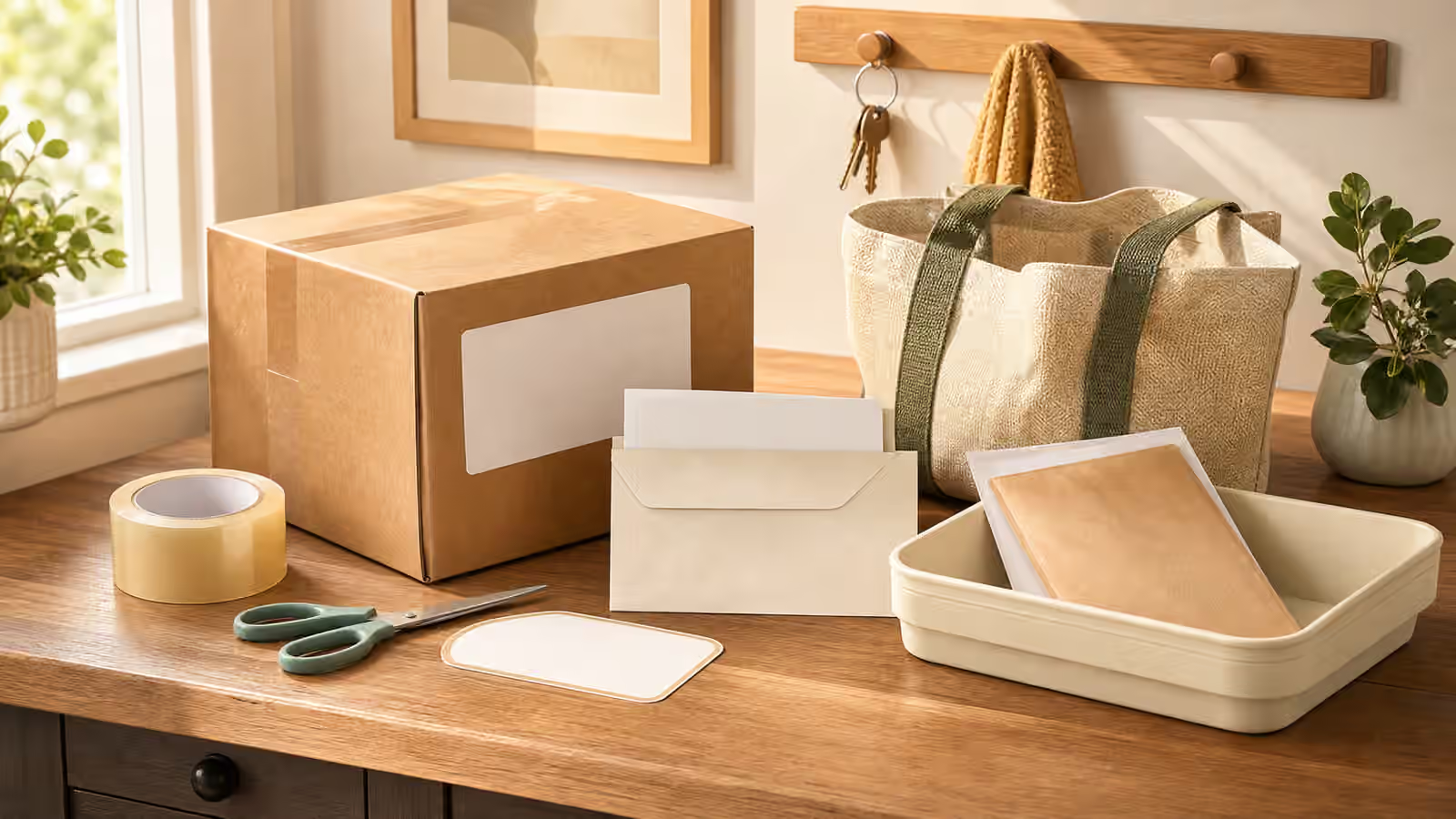
A return station is a small place where return objects and return information meet. It can be a tray, tote, shelf, box, or section of an entry table. It should hold the item, packaging, label cue, receipt cue, and any small tool that regularly blocks the process. Tape, scissors, a marker, a mailer, or a folder may matter more than a perfect organizer.
The station should not become a permanent warehouse. It is a live work surface for returns that are actually in motion. If the item is waiting for a decision, it belongs elsewhere. If the item has no realistic next action, it may need an Open-Loop Parking Lot instead. A return station works because it is narrow.
For households with shared errands, the station may live near the door with a simple handoff cue. The person leaving next should be able to see that the return is ready to travel. Errands and Out-the-Door Starts uses the same logic: the object that must leave should be waiting where leaving begins.
Make the Digital Step Visible
The most common hidden step in a return is digital. The label lives behind a login. The instructions are in an email. The receipt is a screenshot. The QR code is in an app. The drop-off location is on a map. The item is physical, but the permission to move it may be digital.
Name that digital step before opening the device. “Find return email,” “save label to print,” “check drop-off type,” or “put QR code in wallet app” is clearer than “deal with return.” Keep the screen path narrow. If the return requires a portal, open only the portal. If the label requires a download, save it where you can find it. If the phone will carry the code, make sure the phone is charged before the doorway.
Login Friction Start Lines and Digital Files Without the Search Spiral can prevent the return from turning into a browser search. The goal is not to master every account. It is to connect the physical item with the digital permission that lets it move.
Define Ready to Leave
A package can sit near the door and still not be ready. Ready to leave means the return has the item, packaging, label or code, receipt if needed, destination cue, and travel container. The exact requirements vary by seller, carrier, and return method, so the practical move is to check the instructions for this return and then translate them into objects.
Do that translation before the leaving moment. A return that still needs tape, a printer, a box, or a code at the doorway will often bounce back into the house. A return that is already in a tote with its cue can join another errand. If the return is too large to stage by the door, place a smaller cue there that points to its location.
This is a place where Calendar-to-Start Bridge can help. If the drop-off must happen on a particular day, the calendar entry should include the start object, not just the destination. “Return package” on a calendar is weaker than “package in tote by door before leaving.”
Close the Loop After Drop-Off
The return does not end the moment the package leaves your hand. There may be a receipt, tracking slip, confirmation email, refund notice, exchange detail, or note to another person. Avoid treating those as invisible aftermath. Decide where the proof or follow-up will land before it disappears into a bag or inbox.
For many ordinary returns, a photo, email folder, paper envelope, or short note may be enough. The point is not to over-document. The point is to prevent the completed return from generating a new search later. If a return needs follow-up, park that follow-up visibly with a date or trigger. If it does not need follow-up, clear the station so the old return does not keep taking attention.
Paperwork Without the Pile is helpful when receipts and confirmation papers repeatedly become clutter. The return station should release the task, not become a second inbox for every scrap.
Let the Station Stay Modest
A package return station does not need to solve shopping habits, household clutter, email management, or every errand route. It only needs to make the next return less likely to dissolve between rooms, screens, and departure times. Keep the station small enough that you can reset it after one return.
The next time a return appears, choose one start line. Put the item in the station. Find the label. Place the package in the leaving tote. Save the code. Choose the drop-off anchor. Any of those moves can turn a stalled return into a task with edges. Once the object, information, and route are visible, the package is no longer just sitting in the house accusing you. It is waiting in a real sequence, ready for the next trip out the door.