An open loop is any unfinished thing that keeps asking to be remembered. It may be a library book that needs to go back, a form waiting for one missing detail, a sweater that needs mending, a school paper that needs a signature, a half-packed return package, a birthday card without a stamp, or a project note that no longer belongs on the desk but cannot be thrown away. Open loops are small on their own. Together, they can make a room feel loud.
The usual choices are both hard. You can leave everything visible and live inside a landscape of reminders, or you can put everything away and risk forgetting it. Startable Life Lab uses a third option: park open loops in a visible, limited, and reviewable place. The parking lot does not finish the tasks. It gives unfinished tasks a place to wait without forcing your memory to carry them all day.
Visibility without surface takeover
Visible reminders are useful until they become visual noise. A bill on the table may help for one day. Five unrelated papers, two returns, a broken zipper, a charger, and an appointment card can turn the same table into a vague alarm system. The brain sees that something is unfinished, but it may not know which object matters first or what action belongs to it.
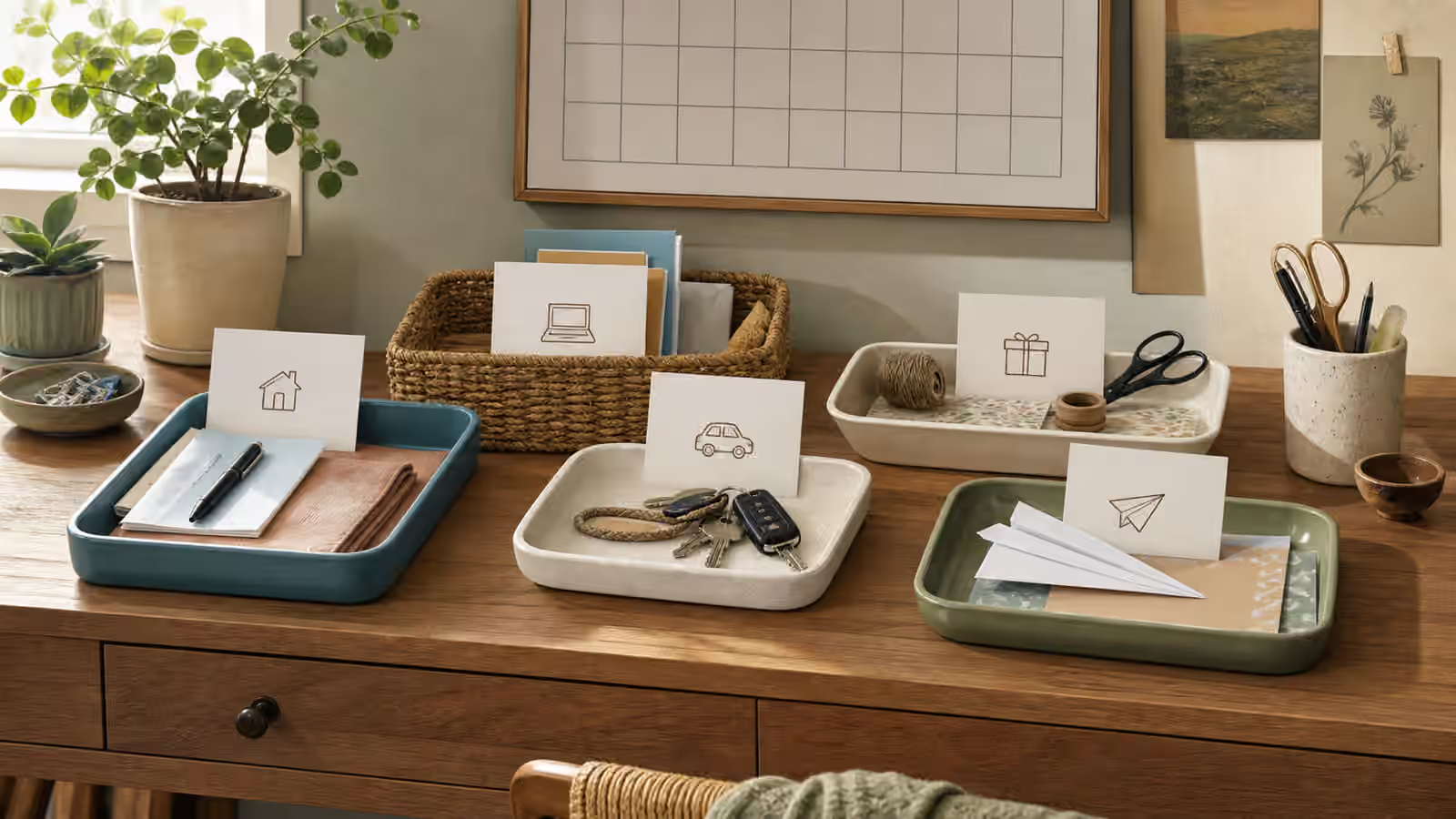
An open-loop parking lot creates a boundary around unfinished things. It might be one tray near the door, one basket on a shelf, one clipboard, one section of a whiteboard, or one shallow box on a desk. The location should be easy to reach and hard to confuse with ordinary storage. If the parking lot becomes a closet, it will hide the loops. If it becomes every surface, it will stop being a system.
Working Memory Offloading explains the larger principle: memory becomes more reliable when the outside world holds part of the task. The parking lot is an offload station for tasks that are not ready to be done now but should not disappear.
Park the next action, not just the object
Objects are not always clear reminders. A form on a desk may mean “sign this,” “ask someone about this,” “scan this,” “file this,” or “do not forget the deadline.” A charger on the counter may mean “return this to the backpack,” “test whether it works,” or “pack it for the trip.” If the parking lot holds only objects, you may still have to reconstruct the task every time you look at it.
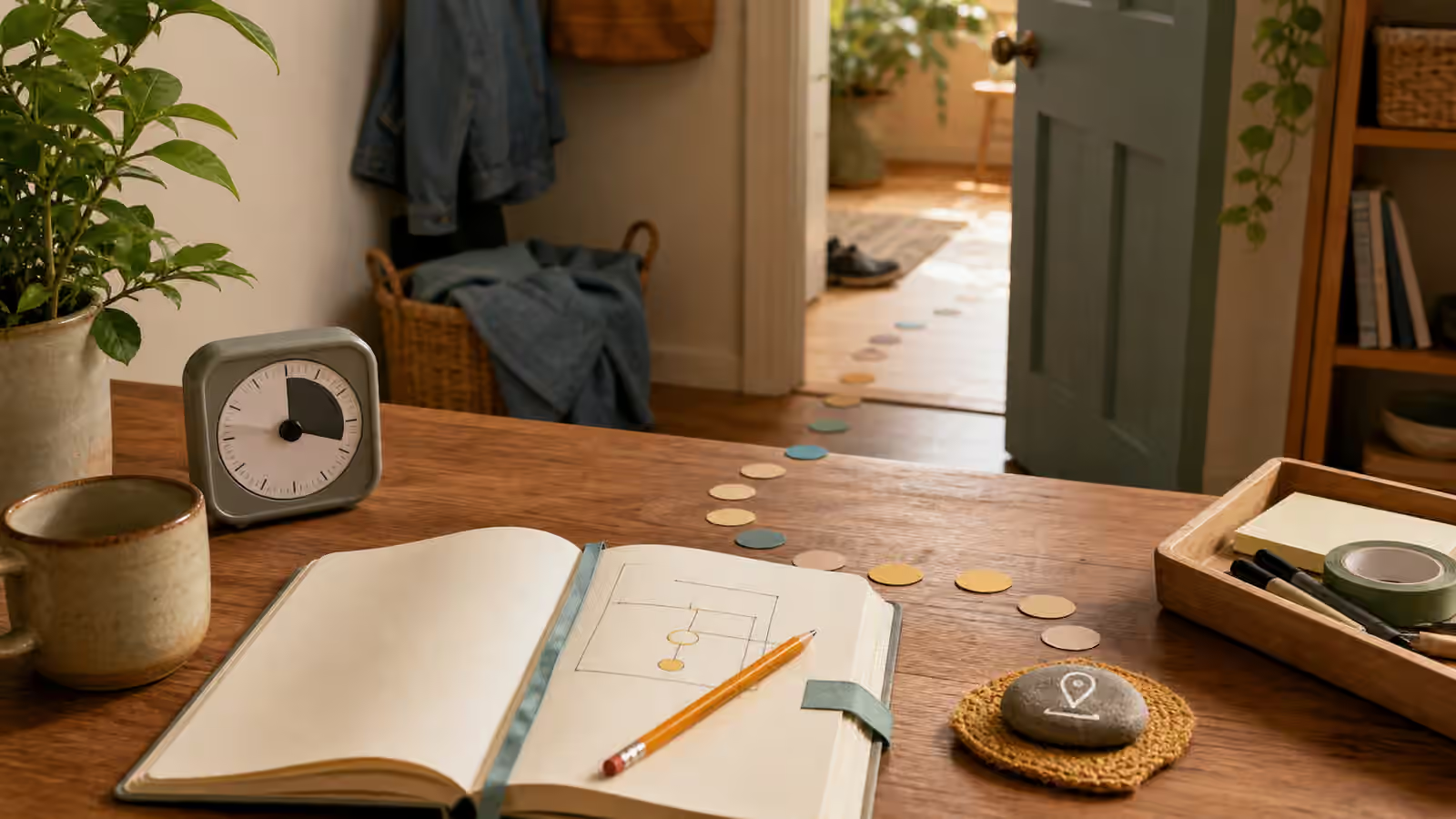
The fix is to park the next action with the object. The note can be very short. It can be a blank card placed in a meaningful position, a sticky marker, a clipped paper, or a single line in a notebook that points to the tray. The point is to reduce interpretation. When you return to the loop, you should not have to ask, “Why is this here?” You should be able to ask the smaller question, “Is now the time to do the next move?”
This keeps the parking lot different from clutter. Clutter is often an undecided pile. A parking lot is a decided waiting place. The loop may still be unfinished, but its next doorway is visible.
Keep the lot small enough to review
A parking lot fails when it becomes a warehouse. If every unresolved object lands there and nothing ever leaves, the tray begins to carry the same pressure as the surfaces it was meant to rescue. The lot needs a size limit because size creates review. A shallow tray asks to be checked sooner than a deep bin. A small clipboard asks for fewer papers than a drawer. A basket by the door can hold errands for the week, but it should not become a museum of every good intention from the last year.
The size limit should fit your real life. A student may need a school-paper parking place that resets every evening. A household may need one admin tray and one out-the-door tray. A person with craft repairs may need a small box for mending, but not a whole room of silent projects. When the lot fills, that is useful information. It means the system needs a review, a smaller commitment, or a different category.
The Weekly Reset Without the Overhaul is a natural review moment. The review does not need to solve every loop. It can simply ask what still belongs in the lot, what needs a calendar cue, what can be returned to ordinary storage, and what is no longer worth carrying.
Separate waiting from starting
Open loops create trouble when waiting objects sit in the same place as active starts. If tomorrow’s first work task is buried under six parked loops, the start line disappears. If a launch pad holds both the bag for leaving and a month of unresolved mail, leaving the house becomes heavier. Parking lots work best when they do not crowd the places where tasks begin.
Morning Launch Pad and Errands and Out-the-Door Starts both depend on clean start zones. The parking lot should support those zones, not invade them. A return package can wait near the door if it is truly part of the next errand. If it is waiting for a label you have not printed, it may belong in the admin lot instead. A school form can sit in the launch pad overnight if it is ready to go back tomorrow. If it still needs information, it belongs in the paper lot with its next action visible.
This separation lowers the emotional weight of starting. The start zone says, “This is what begins now.” The parking lot says, “These are the loops that have not been lost.” They are both useful, but they should not speak at the same volume.
Give each loop a return condition
Some open loops are waiting for time. Some are waiting for a person. Some are waiting for energy. Some are waiting for missing information. A good parking lot names the return condition so the loop does not have to shout constantly. The condition might be “review on Sunday,” “ask during the next call,” “bring when leaving for errands,” “finish when the glue dries,” or “decide after payday” if the decision is financial and belongs to your own situation. The condition is not a legal, medical, or financial recommendation. It is a memory cue.
Without a return condition, the loop can create constant low-grade pressure. You see the object and feel that something should happen, but not when or why. With a return condition, the task can wait more quietly. It has a place and a trigger.
Task Triage When Everything Feels Urgent can help when the parking lot contains loops with different kinds of pressure. Some loops are loud because they are visible. Some are important because they affect other people or future deadlines. Some are simply annoying. The lot makes them easier to compare because they are no longer scattered across the room.
Let the parking lot release things
A parking lot is not only for remembering. It is also for releasing. During review, some loops will turn out to be unnecessary, outdated, duplicated, or too expensive for the current season. A half-started craft may no longer matter. A saved article may not need reading. A form may have been replaced by a newer version. A repair may be better handled by donating, recycling, or accepting the object’s current state. The parking lot gives you a chance to make that decision deliberately instead of letting unfinished objects drift forever.
This matters because open loops can create a false sense of obligation. If an object has waited long enough, it can start to feel morally important just because it has been visible. The review asks a calmer question: does this still deserve a next action? Sometimes the answer is yes. Sometimes the answer is no. Both answers reduce the amount of invisible work in the room.
An open-loop parking lot is successful when it makes unfinished things findable, limited, and easier to restart. It does not promise an empty tray every day. It promises that unfinished work has a known place, a visible next action, and a review rhythm. That is often enough to make a room quieter and a start line easier to see.