A messy room can make a task feel impossible even when the task itself is small. The laptop needs a place to sit. The form needs a pen and a clear patch of table. The craft project needs enough space for one tool. The bill needs to be separated from receipts, mail, cups, chargers, and yesterday’s unfinished objects. When every surface is already speaking, the next task has nowhere to land.
The mistake is assuming that the whole room must be cleaned before anything can begin. That turns a blocked task into a larger blocked task. Startable Life Lab uses a smaller move: reset one surface for one purpose. The surface does not have to become beautiful. It only has to become usable enough that the next start line can happen there.
Choose the surface that starts the next task
A one-surface reset begins by refusing to solve the entire environment. Choose the surface that will let the next useful action happen. It might be the desk where a message needs to be written, the kitchen table where a form needs a signature, the counter where lunch gets assembled, the floor patch where laundry can be sorted, or the chair where tomorrow’s clothes can wait.
This choice matters because cleaning has a way of spreading. You pick up one paper, then notice a drawer, then remember a shelf, then carry a cup to the kitchen and find dishes. The original task disappears inside a chain of reasonable side quests. A one-surface reset keeps the question narrow: what space does this task need in order to begin?
Connect this to The Start Line . If the first move is “open the form,” the surface needs room for the form, the pen, and maybe one reference document. If the first move is “fold five shirts,” the surface needs room for the five shirts, not the whole bedroom. If the first move is “reply to one message,” the surface needs the device, water, and a note, not a complete desk makeover.
Move objects into temporary homes
The reset should not require perfect decisions about every object. Many surfaces are crowded because objects are in the middle of a story. A receipt may need to be filed, a book returned, a tool put away, a toy repaired, a package opened, or a cup washed. If the reset asks you to finish every story, it will become too heavy to start.
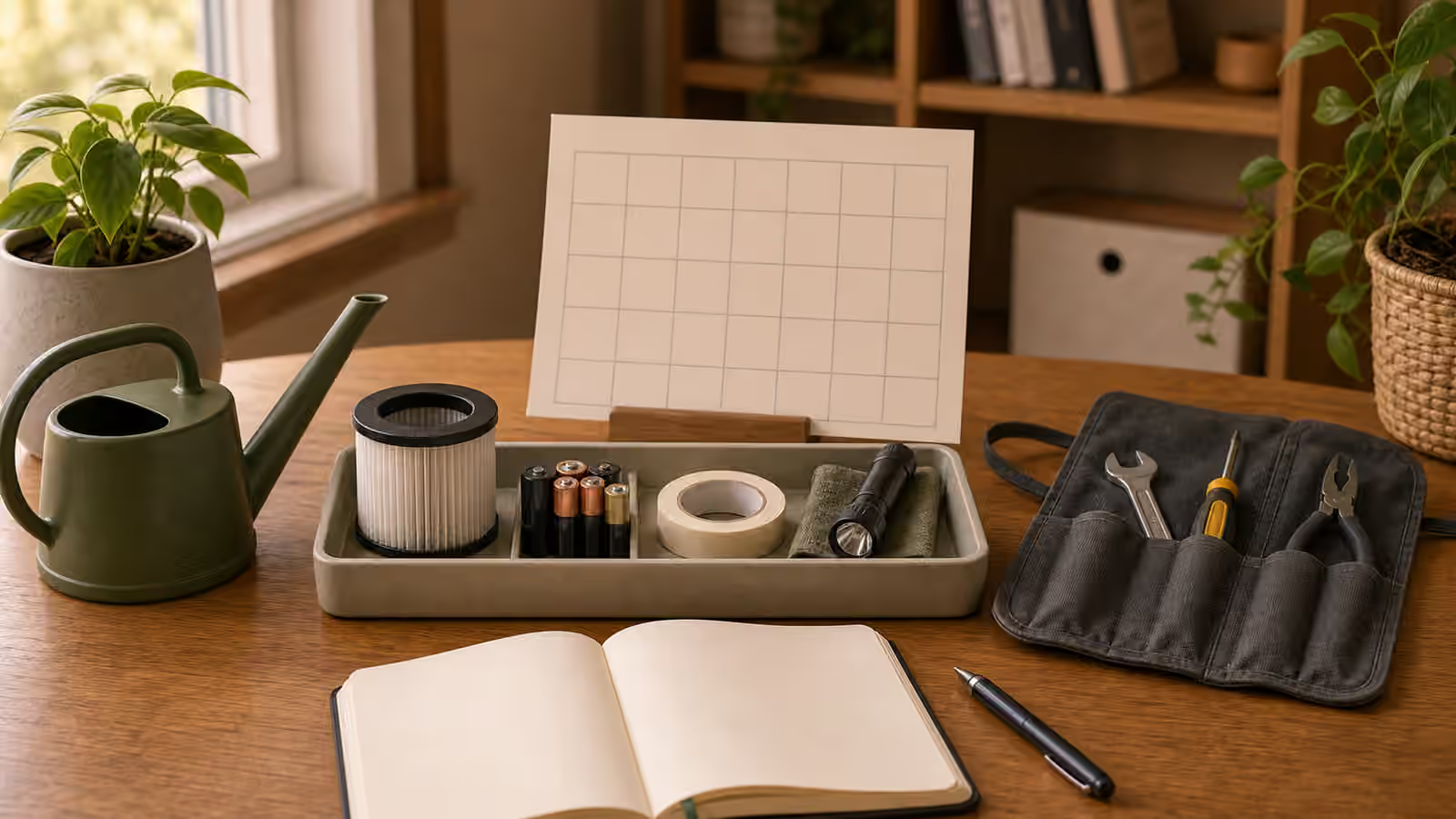
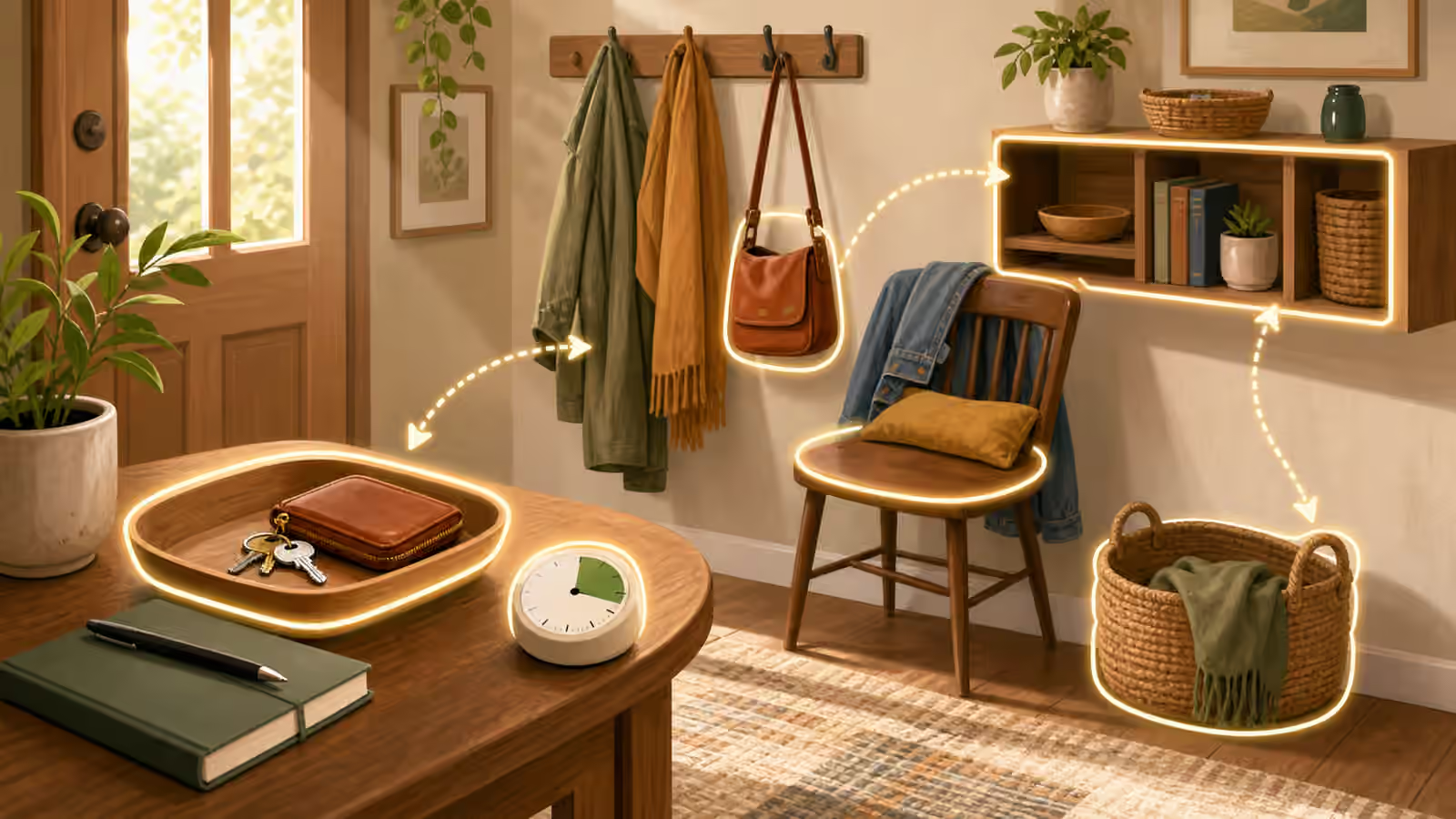
Use temporary homes. A tray can hold papers that need later sorting. A basket can hold objects that belong in other rooms. A small dish can hold keys, clips, coins, and pocket objects. A folder can hold the documents related to one admin task. Temporary homes are not dumping grounds when they are named by purpose and reviewed later. They are a way to protect the current start from every unfinished loop in the room.
The Open-Loop Parking Lot explains the same idea at a larger scale. An open loop needs a place to wait without taking over the live surface. The one-surface reset is the physical version. You are not pretending the other objects are done. You are giving them a bounded place so the next task can have a clear enough runway.
Keep the clear area modest
The usable patch should be smaller than your ambition. If you tell yourself the whole table must be clear, the reset may become emotionally loaded. If you choose a rectangle the size of a notebook, a laptop, a cutting board, or one folded shirt, the body can begin. A modest clear area is not a lowered standard. It is a practical standard matched to the task.
This is especially useful when clutter carries shame. A crowded surface can make a person feel as if the room is announcing failure. That feeling often leads to either avoidance or a frantic overhaul. Neither helps the next small task begin. A modest reset says, “This much space is enough for the next honest move.” It shifts attention from judging the room to preparing a surface.
Low-Friction Chore Starts uses the same refusal of all-or-nothing thinking. A chore can start with a supply in the right place. A surface can reset with one tray, one clear patch, and one visible tool. If the room improves afterward, fine. If it does not, the surface still served its purpose.
Use the surface as working memory
A cleared surface can remember a task for you. When the form, pen, envelope, and reference card sit together, the surface holds the sequence. When the laptop, notebook, and timer are arranged for one work block, the surface says what belongs to the next start. When the folded clothes are placed on the bed beside the drawer, the surface carries the handoff.
This matters because a reset is not only about neatness. It is about reducing interpretation. If the surface is empty but the task materials are hidden, the first minute still asks for memory. If the surface holds exactly what the next move needs, the room becomes a prompt. Working Memory Offloading is not limited to lists and whiteboards. A table can be an offload tool when the objects are arranged to show the next action.
Try to let the surface tell a simple story. The active material goes in the center. Waiting material goes in one tray or stack. Unrelated material moves to the edge or a temporary home. The story should be readable when you return from the bathroom, an interruption, a phone call, or a break. Future-you should not have to decode a pile.
Stop before the reset becomes the task
Surface resets are vulnerable to productive avoidance. Clearing feels useful because it is useful, but it can become a substitute for the task that needed the surface. You may polish the table, sort every paper, reorganize supplies, and still never open the form. The reset has then become a very clean detour.
Give the reset a stopping rule. It can stop when the required object fits on the surface. It can stop when the first tool is visible. It can stop when the timer starts. The stopping rule should be physical, not emotional. “When I feel ready” is too vague. “When the notebook and pen fit on the table” is clear.
This pairs well with Breaks With Return Points because both practices protect the original task from disappearing. If you pause during a reset, leave the active material in the clear area and put the unresolved objects in one temporary home. If you pause after the task begins, leave a return note on the surface before walking away.
Reset after the work just enough
At the end of a task, the surface does not need a perfect closing ceremony. It needs enough reset that the next start is not punished. Put away the one tool that will otherwise block the next task. Park the papers in their folder or tray. Throw away the obvious trash. Leave a note if the work is unfinished. This can take less than a minute when the expectation is modest.
The Shutdown Routine uses this principle for work sessions. A one-surface reset is a tiny shutdown routine for a table, counter, desk, or floor patch. It leaves evidence of what happened and reduces the cost of returning. The room may still be imperfect, but the active surface has not become a mystery.
The deeper benefit is trust. If you learn that starting a task does not require cleaning the whole room, more tasks become approachable. If you learn that one surface can hold one story at a time, clutter becomes less powerful. The reset is not a promise to become a different kind of person. It is a way to give the next task a place to land.