Movement can become hard to start when it is treated as a full workout before the first shoe is even found. The task swells quickly. It asks for the right clothes, the right time, the right plan, the right energy, the right weather, the right app, the right playlist, and a future version of you who is already committed. By the time all of that has assembled in the mind, the first physical move has vanished.
A movement start line is smaller. It does not promise fitness results, solve health questions, or turn exercise into a moral score. It simply makes the first ordinary movement visible enough to begin. The start may be putting on shoes, unrolling a mat, stepping outside for one block, standing beside the chair, or filling the water bottle. The point is to reduce the doorway until the body can cross it.
Start With the Object, Not the Identity
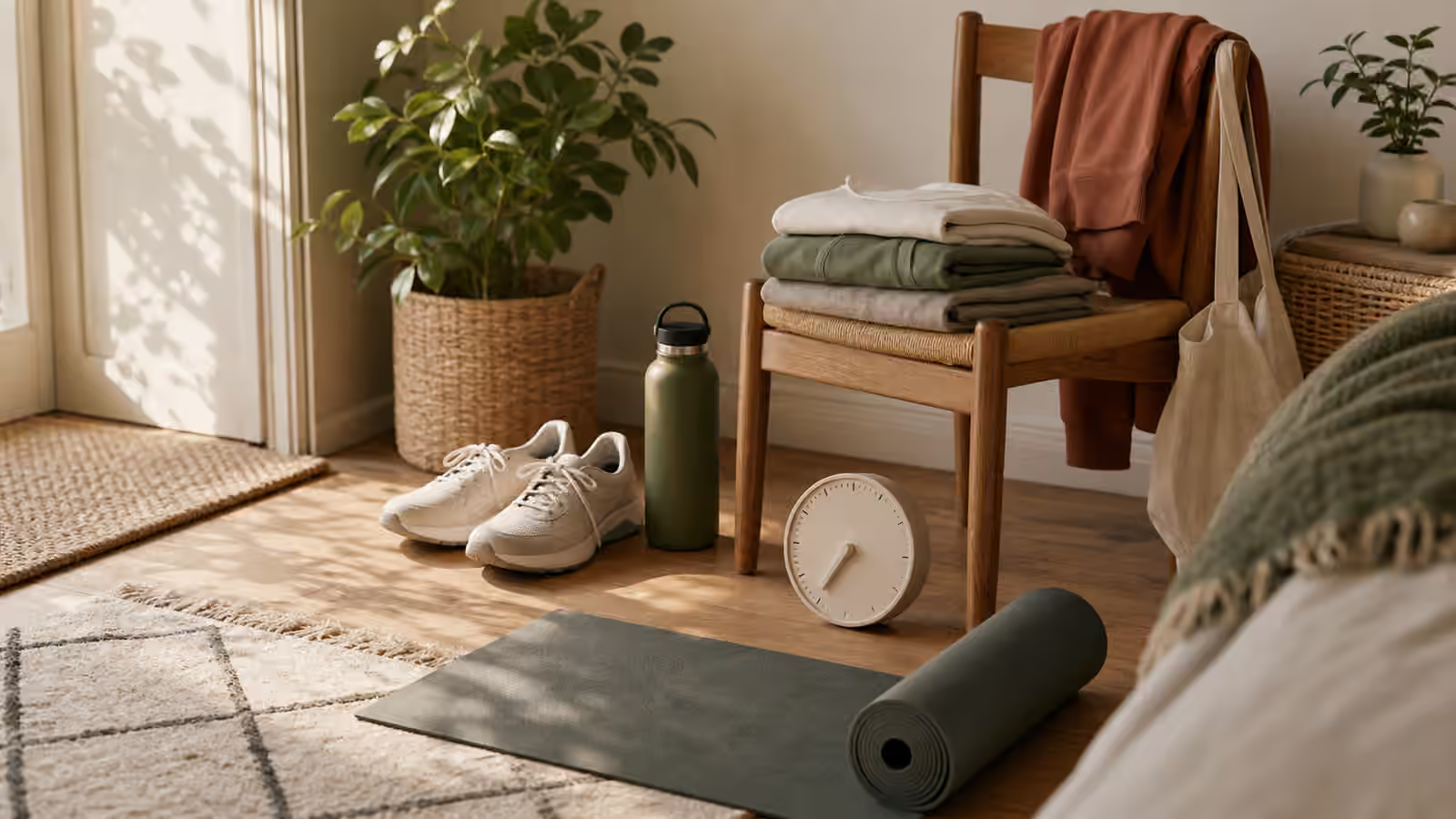
Many movement plans fail because they begin with identity language. Be consistent. Become disciplined. Get serious. Those phrases may sound strong, but they do not tell a tired person where to place a hand. Startable systems work better when they begin with an object. Shoes by the door. A mat visible beside the chair. A jacket on the hook. A water bottle next to keys. The object carries the instruction when motivation is thin.
This is the same logic as The Start Line . A useful first action is physical and observable. “Exercise after work” is not a start line. “Put on walking shoes before opening the laptop again” is closer. “Unroll the mat and sit on it” is closer still. The move can be almost embarrassingly small because the task is not proving character. The task is crossing the doorway from not-started to started.
Object-first movement also protects working memory. If you need to remember the plan, the clothes, the route, and the timing all at once, the task is carrying too much invisible load. A staged object does some of that remembering for you.
Lower the Doorway
Movement routines often borrow the language of peak energy, but many real starts happen in low or mixed energy. You may be stiff, distracted, restless, bored, self-conscious, or overloaded. A doorway that only works on a perfect day will not be used often enough to become familiar.
The startable version asks what movement could begin without negotiating with the whole day. That might mean walking to the corner and back, stretching beside the bed, doing a few gentle mobility moves while water heats, or carrying the laundry basket to the washer and pausing there. The movement should be ordinary enough that it does not require a ceremony.
Energy-Matched Task Menu is useful here. Instead of deciding between nothing and a full session, create a low-energy version, a medium-energy version, and a high-energy version. The low version matters most because it keeps the start line alive. If the low version is “shoes on and five minutes outside,” it still gives the body a bridge. Some days it will become more. Some days it will simply be the right-sized move.
Keep Setup From Becoming the Task
Movement can hide behind setup. Finding socks becomes reorganizing laundry. Choosing a route becomes comparing options. Looking for a video becomes scrolling. Charging headphones becomes checking messages. The original intention is still nearby, but every hidden step gives avoidance another place to sit.
A movement start station should remove the common setup traps. Keep one usable outfit option easy to reach. Put shoes where the start actually happens. Keep the mat visible if mat work is the plan. If headphones help, return them to the same charging place. If a route choice creates friction, choose a default loop that is boring on purpose. Novelty can be added later; the start line needs reliability first.
This is a small Friction Audit . Notice the step that repeatedly interrupts movement before it begins. If the block is clothing, stage clothing. If the block is weather, stage a simple backup. If the block is deciding what counts, name one acceptable minimum. Do not rebuild the entire routine when one hidden step is doing most of the damage.
Use a Return Point for Paused Movement
Movement is easy to abandon when a break feels like failure. A return point changes the meaning of stopping. You can pause because the phone rang, the child needed something, the room got noisy, or the body asked for a slower pace, and still leave yourself a way back. The return point might be a mat left open for ten more minutes, shoes left by the door, a timer paused instead of cleared, or a note that says the next move is another short loop.
Breaks With Return Points applies directly. A break should not erase the task. It should hold the thread lightly while you step away. For movement, the return point needs to be visible but not scolding. The shoes by the door are enough. The water bottle on the counter is enough. A chair facing the mat is enough.
This matters because many people start movement in interrupted homes, shared rooms, or crowded schedules. The routine has to survive ordinary life. If every interruption means restarting from the emotional beginning, the routine becomes too expensive.
Give Movement a Good-Enough Finish
An unclear finish can make movement hard to start. If the only successful ending is a complete workout, a long walk, a perfect class, or a full sweat, then small starts feel fake before they begin. A good-enough finish gives the task a shape that can be completed on an ordinary day.
Good-Enough Finish Lines is the anchor. For movement, enough might be ten minutes, one loop, one song, one set of gentle stretches, or simply putting on shoes and stepping outside when that is the true barrier. The finish line should be named before the start, not negotiated afterward by a disappointed inner coach.
A clear finish also makes stopping less dramatic. You can say, “This round is done,” return the objects, and let the next start stay possible. If there is more energy, continue. If there is not, the first version still counted as a completed startable task.
Close the Loop So the Next Start Survives
The last minute of a movement start can protect the next one. Return the shoes to the start place. Put the mat where it can be seen. Refill the water bottle if that is part of the routine. Put sweaty clothes where laundry can catch them. If the route or timing worked, leave a small cue for next time. If something blocked the start, name one adjustment without turning the moment into self-criticism.
This closing move is a form of After-Task Reset . The reset does not need to be large. It only needs to prevent tomorrow from beginning with a search. Movement becomes easier to repeat when the objects return to their start positions and the finish does not create a new mess.
The practical question is not whether the movement was impressive. It is whether the next start is slightly easier because of how this one ended. If the answer is yes, the system is doing useful work.