Looking for a missing object is not one task. It is a stack of tasks that arrive under pressure. You have to remember when you last saw the object, decide where to search, resist checking the same place again, keep the original deadline in mind, and manage the rising irritation that makes the search wider and less useful. A missing key, wallet, charger, notebook, form, or pair of glasses can turn a simple departure into a full-room investigation.
The spiral begins when the search loses its edges. You open drawers that had no reason to contain the object, move piles without creating new information, and repeat the same path because the object still feels possible everywhere. A startable search does not promise that the object will appear quickly. It gives the search a visible shape so effort produces evidence instead of fog.
Start With the Last Real Contact
The most useful first question is not “Where could it be?” That question is too wide. Ask where the object last had a real job. The charger was used near the couch, the form came out of the bag at the kitchen table, the wallet paid for something near the door, or the notebook was open during the phone call. Last real contact gives the search a starting zone.
A starting zone is not a guarantee. It is simply better than searching the whole home at once. Move to the place where the object last made sense and look only for evidence connected to that use. If the keys were used at the door, check the entry tray, coat pocket, bag mouth, nearby shelf, floor edge, and any surface touched during the transition. If the object was used at a desk, check the live desk zone before walking into unrelated rooms.
This is a small Friction Audit for the missing object. You are looking for the hidden handoff where the item left its normal path. The goal is to find the break in the sequence, not to prove that you should have remembered better.
Search in Zones, Not Feelings
A feeling-based search follows anxiety. It jumps from closet to bag to desk to laundry to car to kitchen because each place feels briefly possible. A zone-based search names a small area, checks it once with attention, and then marks it as searched. The mark can be a note, a moved object, a mental phrase, or simply closing the drawer after checking it fully.
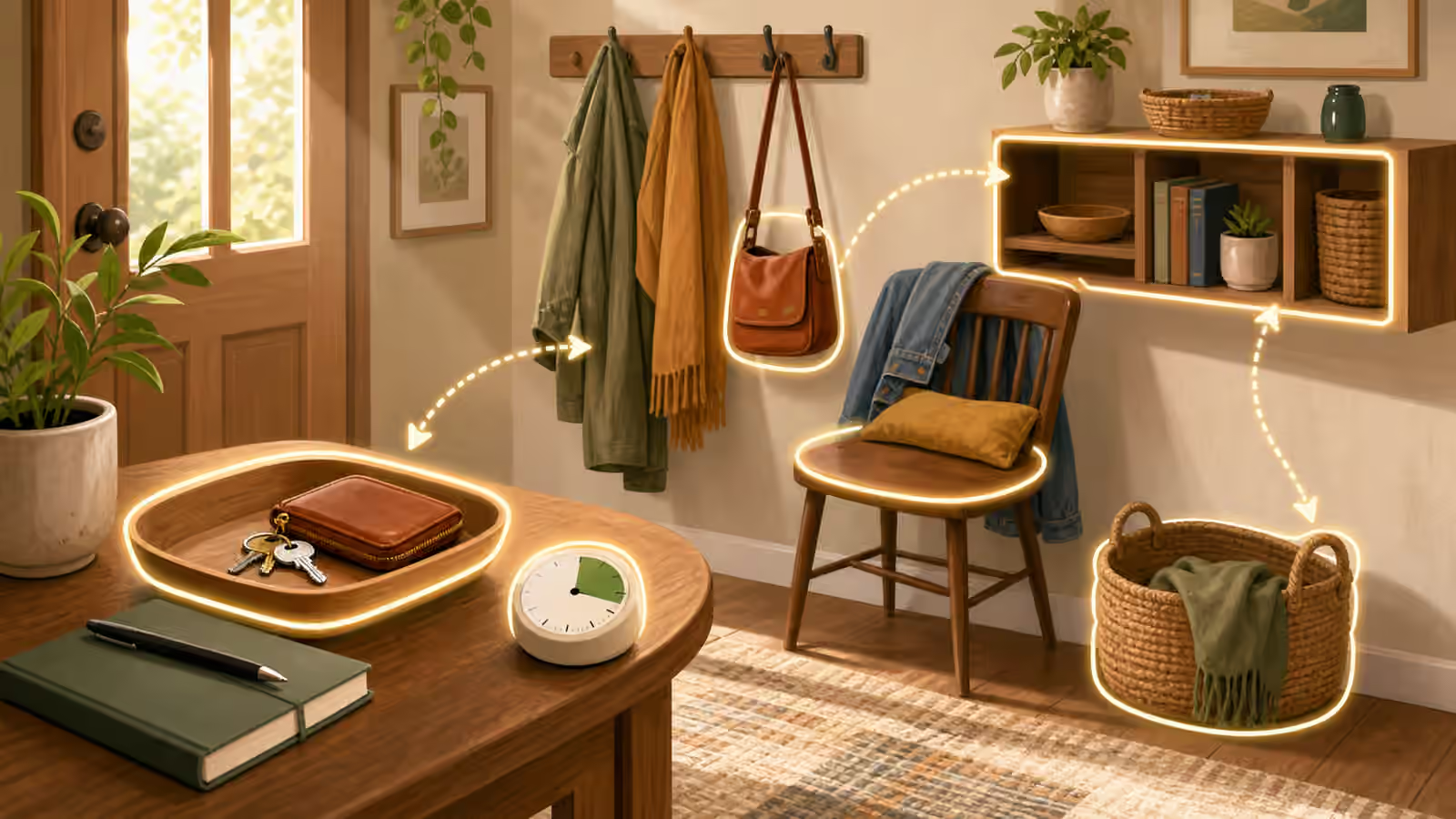
Zones should be ordinary and physical. Entryway tray. Coat pockets. Bag interior. Chair cushion. Desk surface. Laundry basket. Bathroom counter. Car console. The zone has to be small enough that you can finish checking it without drifting. “The bedroom” is too wide. “The top of the dresser and the floor below it” is a usable zone.
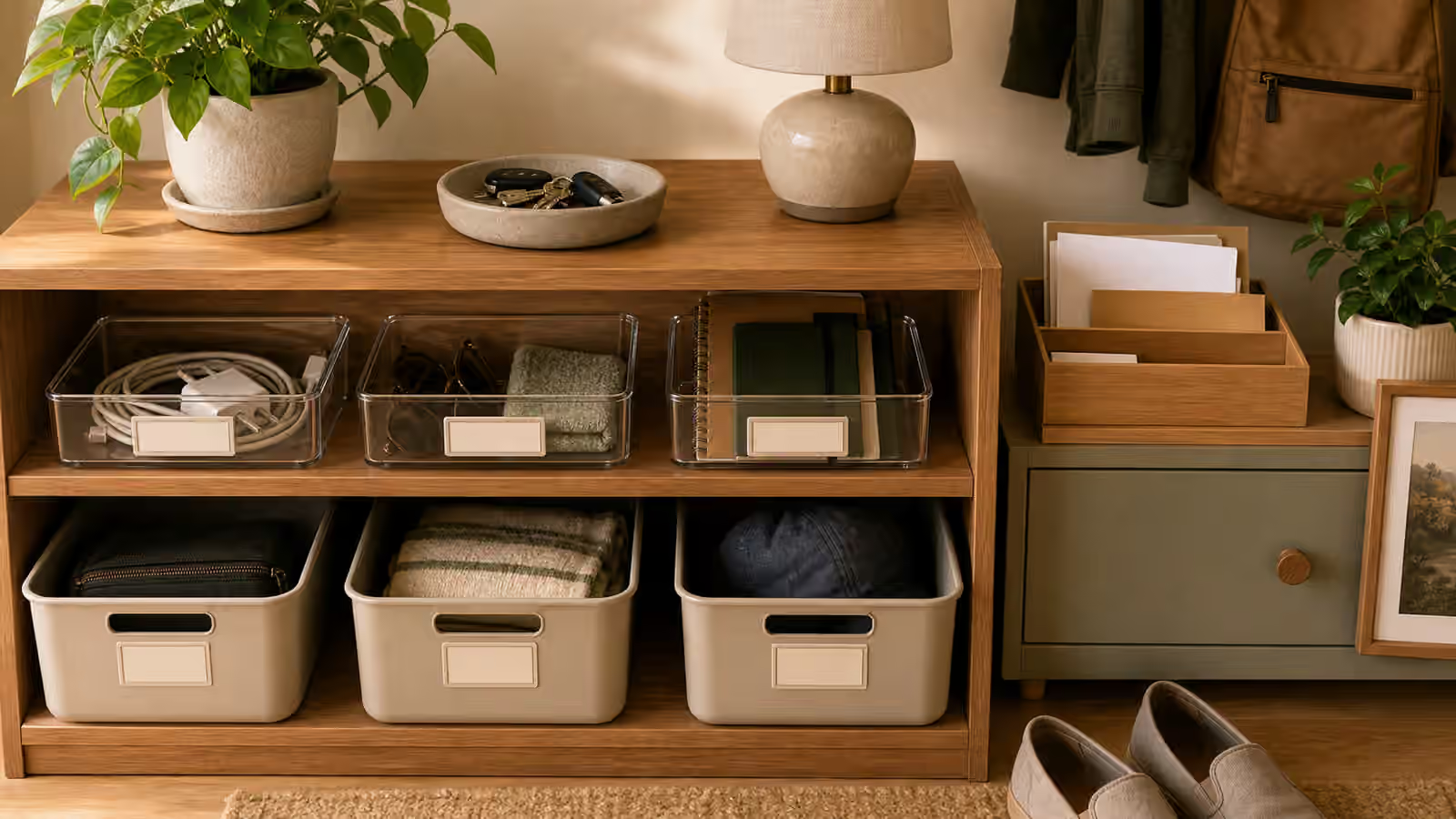
If the search is happening while you need to leave, choose only the zones connected to leaving. Coming Home Landing Strip explains why keys, bags, papers, and pockets need a visible landing place. A lost-item search often reveals which landing place is missing or too crowded.
Stop Rechecking by Leaving Evidence
Rechecking is not a character flaw. It happens because memory does not trust the search under stress. If you looked in the bag while worried, the brain may not store the check as complete. Then the bag pulls you back again and again. Leaving evidence helps the search move forward.
Evidence can be very small. Put the searched bag on a chair. Leave the checked drawer open until the current round ends. Place a sticky note on the table that says the entry tray was checked, if writing helps you. Put checked coats on one hook and unchecked coats on another. The point is not to create a formal system. The point is to stop making your memory carry the whole search.
This is the same principle as Working Memory Offloading . The search becomes calmer when the environment shows what has already happened. You can then make the next choice from visible evidence instead of panic.
Make a Time Boundary Before the Search Widens
Lost-item searches widen because they feel urgent and unfinished. Without a boundary, the search can consume the whole departure, the whole evening, or the whole work block. A boundary does not mean giving up. It means deciding what kind of search this round is.
For a leaving-now search, the boundary might be one pass through the most likely zones and then a backup plan. For a non-urgent search, it might be a short timed search followed by a parking note. For an important object that cannot be replaced easily, the boundary might be a careful room-by-room search, but even then each room should be broken into zones.
Time Blindness Without Shame is useful here because the search often steals time invisibly. A visible clock or timer gives the search a shape. It also helps you notice when the search has changed from useful investigation into repetitive distress.
Turn the Find Into a Future Start Line
When the object appears, the search is not quite finished. The next move is to ask where the object should live next time, while the sequence is still fresh. If the wallet was under a coat because the entry tray was full, the support might be a clearer tray. If the charger was in the couch because the outlet is awkward, the support might be a small charging basket. If the form was in the bag because there is no paper landing place, the support might be an admin folder near the door.
This is not about building a perfect home system after every search. It is about using the found object as evidence. The object tells you which path failed. Visual Storage Without the Bin Spiral can help if the same categories keep disappearing into closed containers, crowded drawers, or “temporary” piles that become permanent.
Do not redesign the whole room while relieved. Choose one future start line. Put keys in one tray before sitting down. Place the charger in one basket after use. Put the form in the paper inbox when it enters the house. A small placement rule is more likely to survive than a whole-home storage project born from frustration.
Use the Search as Information
A lost object can make the whole day feel unreliable. It can also show where a routine needs a visible handoff. The useful question after the search is not why you are like this. It is where the object left the path and what would make that path easier to see.
The next search can be smaller if the common objects have landing places, the search zones are named, checked places leave evidence, and the search has a time boundary. You may still lose things sometimes. Everyone does. The difference is that the search no longer has to become a foggy tour of every room. It can become a visible process with a start, a few zones, and a way to learn from the place where the object finally appears.