Laundry is often described as one chore, but it behaves like a chain of separate tasks. Sorting is one task. Starting the machine is another. Remembering the transfer is another. Drying, folding, matching, carrying, and putting away are all different entry points. A person can be willing to do laundry and still get stuck because the chore keeps changing shape.
The pile makes the problem look like volume. Sometimes volume is the problem. More often, the harder part is the cycle. Laundry asks you to return at the right time, change locations, keep track of unfinished objects, and tolerate a task that is visibly done only after several quiet handoffs. Startable laundry begins by naming the handoffs.
Stop treating laundry as one action
“Do laundry” is too broad for a stuck day. It hides the first movement, the waiting period, the transfer, and the return. A better start line names the next physical action. Bring one basket to the machine. Put one load into the washer. Move the wet clothes to the dryer. Put folded towels on the shelf. Each action belongs to the same cycle, but each one can start separately.
This matters because a laundry system that depends on finishing everything in one heroic burst is fragile. Ordinary days have interruptions, fatigue, shared machines, missing detergent, bedtime, work calls, and family needs. Low-Friction Chore Starts explains why a chore should not secretly become a whole-house reset. Laundry is a perfect example. The start should be small enough to survive the day you actually have.
Choose the stage you are truly in. If clothes are clean but unfolded, the start line is not washing. If the machine is full of wet clothes, the start line is transfer. If folded stacks have been sitting out for two days, the start line is return. Naming the real stage prevents the whole cycle from becoming one blurry accusation.
Make the transfer visible
The transfer is where many laundry systems fail. The machine finishes quietly, and the task leaves the room. Wet clothes wait out of sight. Dry clothes sit in a basket because the next location is not ready. A visible transfer cue turns the hidden middle of laundry into something the room can remind you about.
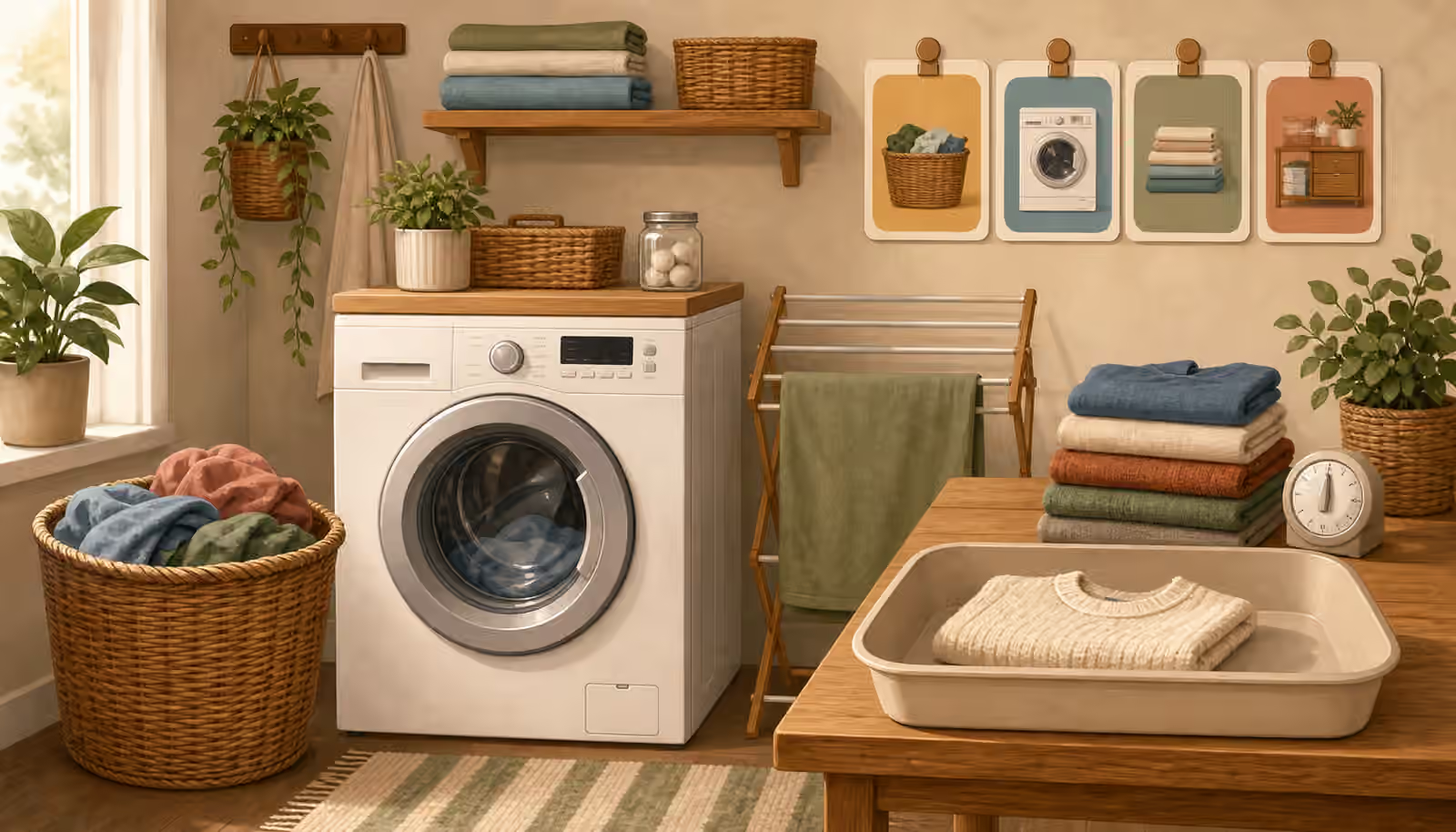
Use a timer, but do not rely on the timer alone. Place the basket where you will see it when the machine finishes. Leave the detergent cap turned upright, the laundry room light on, or a blank cue card near the door if those cues are safe and ordinary in your home. The cue should point to the next hand movement, not to the entire chore. “Move load to dryer” is more useful than “finish laundry.”
Time Blindness Without Shame is relevant because laundry has real elapsed time. A washer cycle creates a future task. If time disappears easily, the future task needs an anchor you can see, hear, or encounter in your path.
Give clean clothes a landing
Clean laundry often stalls because it has no believable landing. A basket of dry clothes may be easier to ignore than a drawer system that asks for perfection. Folding may feel impossible because every category wants a different destination. Putting away may require entering a room, clearing a surface, opening drawers, and deciding what belongs where.
Create one landing for the next state. Towels might have a shelf. Work clothes might have hangers waiting on the door. A child’s clean clothes might land in one drawer without a full category sort. Clothes that need decisions can have a separate small basket, but that basket should not become the default for everything. The landing is not a magazine-level closet. It is the place clean things go so the cycle can end.
This is a form of Working Memory Offloading . The basket, hanger, shelf, or return tray remembers the next step for you. Without it, the brain must keep tracking which clothes are clean, which are damp, which are folded, and which are still waiting for a home.
Shrink folding to the useful minimum
Folding can become a standard trap. Some clothes need neatness because they wrinkle, share space, or must be easy to identify. Other clothes may only need to be contained. If the ideal fold prevents the cycle from ending, the ideal is not serving the household.
Decide which categories deserve careful handling and which only need a simple return. Towels may fold because they stack. Underlayers may go into a drawer without ceremony. Exercise clothes may roll, stack, or land in a bin. Children’s clothes may need speed more than precision. The system should respect the actual use of the clothing rather than perform tidiness for an imaginary inspector.
This is not an argument for mess. It is an argument for matching effort to consequence. A cycle that ends imperfectly is often better than a perfect pile that waits on a chair for a week. The finished state should be recognizable and reachable.
Handle shared laundry without turning it into a trial
Shared laundry adds negotiation. Different people may have different timing, standards, sensory preferences, or tolerance for piles. The task can become emotional when one person’s unfinished stage blocks another person’s start. A shared system needs visible handoffs, not only reminders shouted from another room.
Put shared cues where the handoff happens. A basket for “ready to move,” a surface for “belongs upstairs,” or a note near the machine can reduce the need for repeated verbal prompting. The language should describe the state of the laundry, not the character of the person who left it there. Meeting and Class Reentry Notes is about another setting, but the principle transfers: capture the handoff while the context is fresh.
If reminders are needed, make them specific. “The towels are dry and need the shelf” is more startable than “you never finish laundry.” The goal is to reduce hidden work and resentment at the same time.
Reset from the current stage
When laundry has become a large pile, resist the urge to redesign the entire system while standing over it. First find the current stage. Are there dirty clothes mixed with clean ones? Is there a wet load waiting? Are clean clothes blocking the bed? Is the real problem that nothing has a destination? One stage will usually be most urgent because it affects smell, sleep, school, work, or shared space.
Start there. Move the wet load. Clear the bed. Put towels away. Gather one visible dirty load. Let the reset be smaller than the whole backlog. The Bad-Day Reset is useful because laundry backlogs invite courtroom thinking. The task starts moving again when you stop trying to punish the pile and choose the next handoff.
Laundry becomes startable when the cycle is split into visible stages, transfer cues are placed where they will be noticed, clean clothes have a realistic landing, and folding standards match actual use. The pile may not vanish in one session, but the next stage can become visible enough to begin.