Absorbing work can feel like relief. The noisy parts of the day fall away, the task finally has momentum, and attention stops scattering. Then the hour changes. A class begins, dinner needs attention, a ride is leaving, a meeting is starting, or sleep is becoming less optional. The hard part is not only stopping. It is stopping without tearing the thread so badly that returning later feels impossible.
A hyperfocus exit ramp is a designed way out of deep engagement. It treats stopping as a transition, not as a moral test. You are not trying to punish yourself for getting absorbed, and you are not pretending that a loud alarm will automatically produce a graceful switch. You are building a bridge between the task that has your attention and the next piece of life that needs contact.
Respect the Thread Before You Pull Away
The first mistake is treating deep focus as something that should be cut off cleanly by force. Sometimes life really does require a hard stop, and there may be no elegant version. Most ordinary transitions, though, improve when the task gets a short landing sequence. A landing sequence tells the current task where to wait before you ask attention to move elsewhere.
The sequence can be simple. Name what is open, mark where you stopped, save the file or place the object in a visible position, and write the next return move. The note should be concrete enough that you can come back without rereading the whole project. “Continue” is not enough. “Open section with the yellow highlight and compare two examples” gives the returning mind something to hold.
This is the same principle behind Return Points After Interruptions , but it matters even more when the interruption is intentional. You are asking yourself to leave something compelling. A good return point makes that request less threatening because the task is not being abandoned. It is being parked with care.
Build an Early Signal, Not Only a Final Alarm
A final alarm often arrives too late. By the time it sounds, the next obligation already feels like an intruder. An early signal works differently. It gives the mind a few minutes to notice that a transition is coming while there is still time to land the current task.
The signal can be a timer, a clock check, a light change, a person giving a gentle heads-up, or a calendar alert that appears before the true stop time. The signal should not ask you to stop immediately. It should ask you to begin the exit ramp. That distinction is important. When the signal means “prepare to stop,” it is less likely to be treated as an enemy.
Time Blindness Without Shame is useful here because deep focus can flatten time. A visible timer, analog clock, or progress marker gives the transition a shape. You still may not feel time accurately, but the room can carry some of the information for you.
Define the Last Safe Move
Absorbing tasks often have tempting false endings. There is always one more paragraph, one more edit, one more search, one more small fix, one more level, one more drawer, one more idea. The exit ramp needs a last safe move that can be done without opening a new branch.
A last safe move is small, visible, and reversible. Save the file. Close the paint jar. Put the tool in the tray. Write the next sentence as a fragment. Put a bookmark under the current step. Photograph the arrangement before clearing the table. Send the rough message to drafts instead of rewriting it again. The last safe move should protect return, not improve the whole project.
This connects to Good-Enough Finish Lines . The finish line for a hyperfocus round may not be completion. It may be a stable pause. When the chosen end is “stable pause,” the task no longer has to justify stopping by being done. It only has to become returnable.
Give the Next Task a Physical Claim
It is hard to leave deep focus for a vague next thing. “Get ready” competes poorly with a task that already has texture, progress, and reward. The next task needs a physical claim on the environment before the transition begins. Put the bag by the door, place the dinner pan on the counter, set the notebook on the chair, open the meeting document, or move the bill into the active tray.
This is not a full setup. It is a bridge object. The object says, “There is a real next place to land.” Without that bridge, stopping may feel like stepping into fog. With it, the next task has a start line waiting outside the absorbing task.
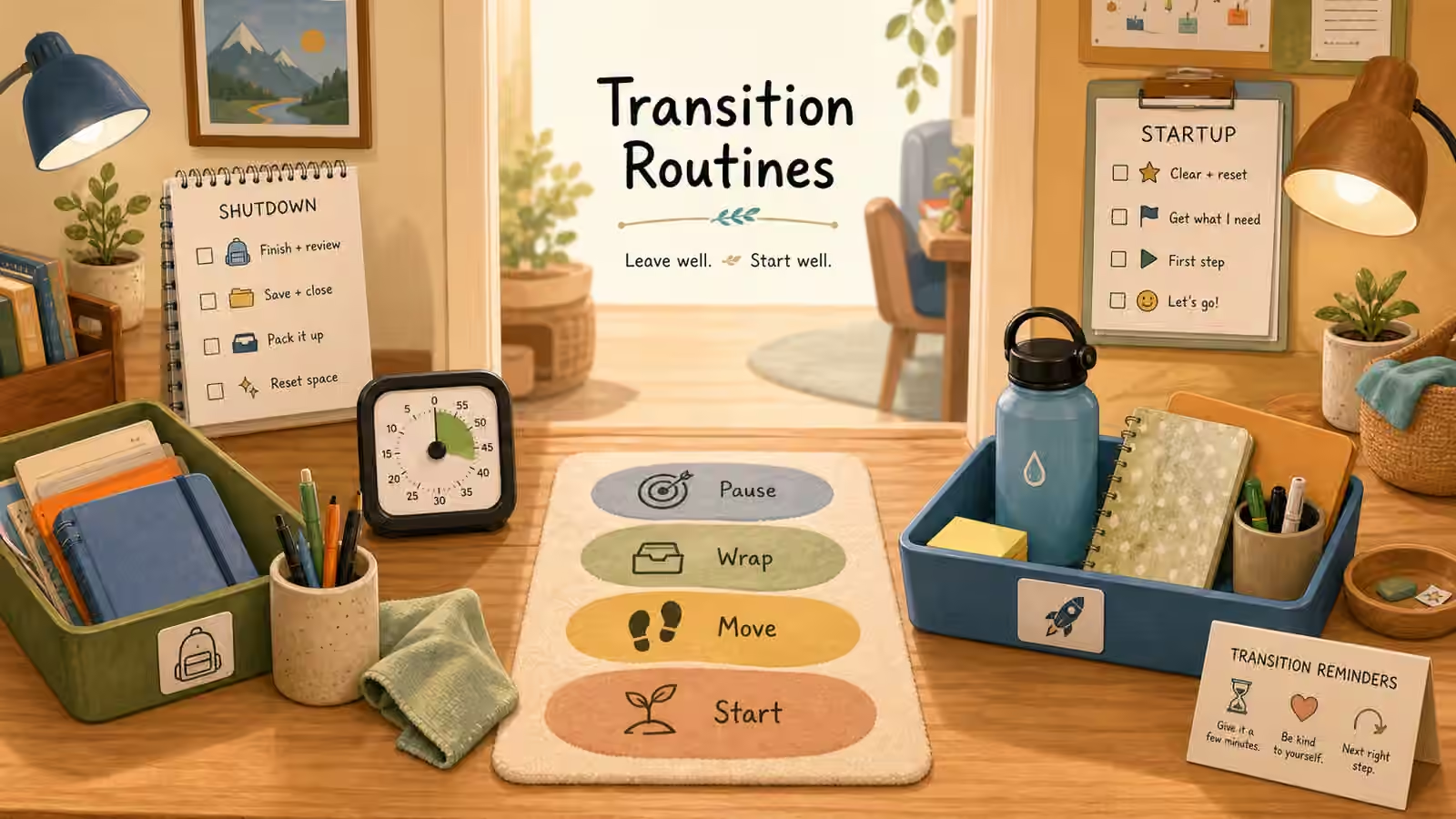
Transition Routines can help when the same switch repeats often, such as leaving desk work for dinner, moving from homework to bedtime, or stopping a creative project before an appointment. The repeated bridge object becomes familiar, which lowers the negotiation each time.
Expect Friction at the Edge
Even with a good ramp, the edge may feel bad. You may feel irritated, protective of the task, worried you will lose the idea, or tempted to bargain for five more minutes. That friction does not prove the system failed. It means the task has attention momentum. The ramp exists because attention momentum is real.
Use plain language at the edge. “I am parking this, not erasing it.” “The next move is saved.” “The bag is already by the door.” “I can return after dinner.” The script is not magic. It simply points the mind toward evidence instead of panic. If another person is involved, the script can be external: “I need two minutes to write my return note, then I can switch.”
When a task becomes so absorbing that basic needs, safety, sleep, school, work, or relationships are repeatedly harmed, practical ramps may not be enough on their own. That is a reasonable time to seek qualified support. For ordinary days, the goal is narrower: leave the task with less damage and arrive at the next obligation with less resentment.
Close the Loop After You Return
The exit ramp improves when you test the return. Later, when you come back to the absorbing task, notice whether the return point worked. Did the note make sense? Was the file open enough? Did the object placement help? Did the last safe move prevent cleanup from becoming a second task? If the return was rough, adjust one piece before the next round.
This review should be short. The danger is turning the ramp into another planning system. You are looking for one practical change, not a full self-analysis. Maybe the early signal needs to arrive sooner. Maybe the return note needs to name the exact file. Maybe the next task needs a stronger bridge object. Maybe the stop time was unrealistic and needs a buffer.
Deep focus is not the enemy of a startable life. It can be useful, satisfying, and sometimes necessary. The problem is the unmarked edge. A hyperfocus exit ramp gives that edge shape: signal early, protect the thread, choose a last safe move, give the next task a physical claim, and return later with enough context to begin again.