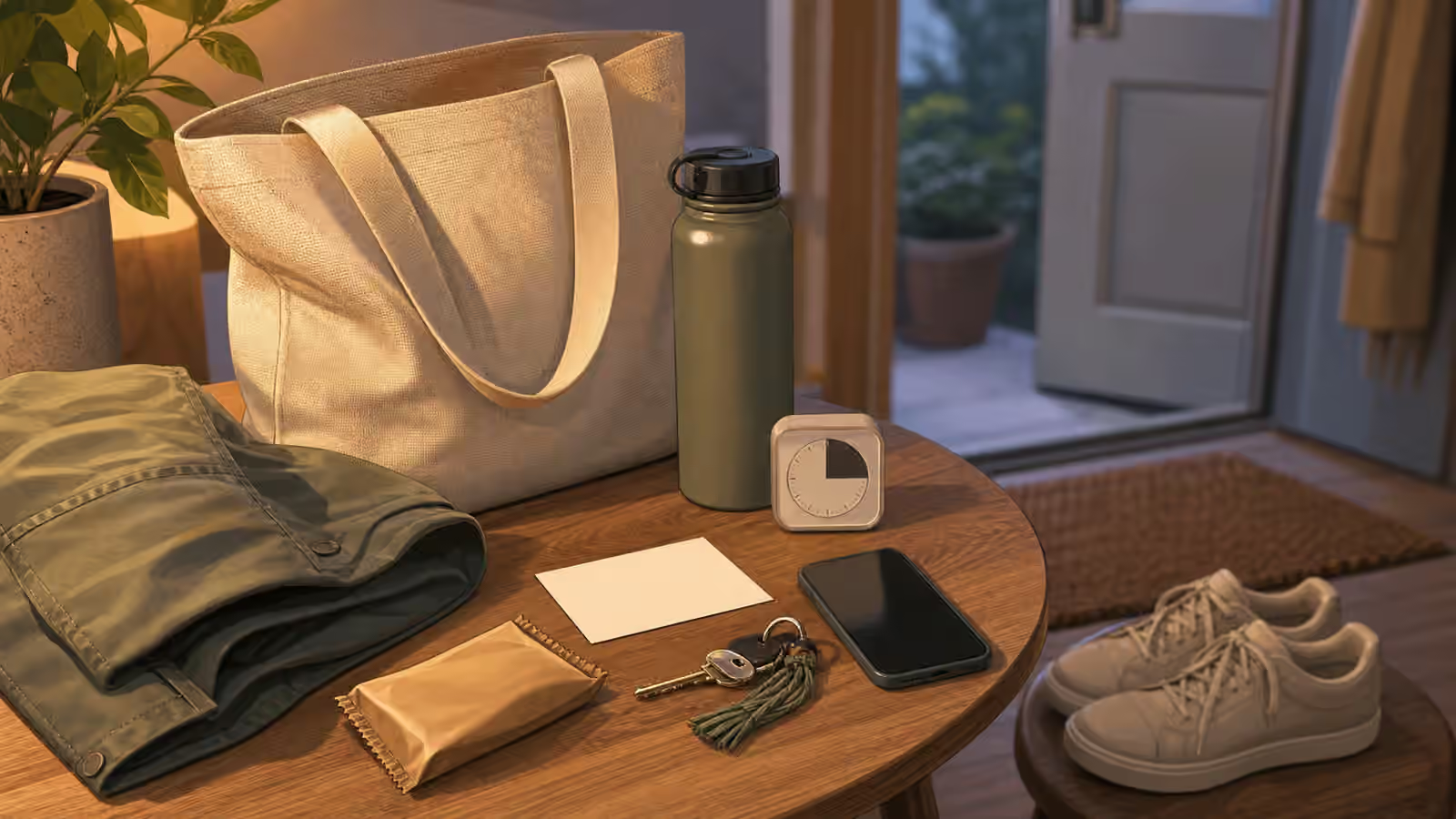
Errands look simple on a calendar because the calendar only shows the destination. Pick up the order. Return the package. Drop off the form. Go to the appointment. Buy the missing item. In real life, the errand begins much earlier. It begins when you find the receipt, choose the bag, check the time, remember the address, gather the object, put on shoes, leave the room, and cross the doorway.
For people who struggle with task initiation, time awareness, or working memory load, the hardest part of an errand may not be the errand itself. It may be the out-the-door start. The task asks for planning, movement, memory, timing, and tolerance for interruption before any visible progress happens.
Treat leaving as its own task
Leaving is not a blank space before the task. It is a task with materials, sequence, timing, and friction. When the leaving task is invisible, the whole errand feels unpredictable. You may know where you need to go and still stall because the first physical move is unclear.
Name leaving as a separate start line. The errand might be “return library books,” but the leaving task might be “put the books and card in the tote by the door.” The errand might be “appointment,” but the leaving task might be “place the form, keys, and water bottle on the entry table.” The errand might be “buy the missing ingredient,” but the leaving task might be “put shoes on and put the reusable bag on the handle.”
The Start Line is useful here because “run errands” is too wide to start. A visible leaving action gives the body a first move before the destination has to be solved.
Build an errand tray before the clock gets loud
An errand tray is any visible place where the errand objects wait together. It does not need to be a literal tray. A bag, bench, hook, basket, or corner of counter can work. The important part is that the object that must travel is no longer hiding inside the home.
For returns, the tray might hold the item, receipt, packaging, and bag. For school or household papers, it might hold the form and the backpack. For pickups, it might hold the card, bag, or container that belongs with the pickup. For an appointment, it might hold the document, notebook, water, and anything needed for the transition. The tray changes the question from “What am I forgetting?” to “What is already staged?”
This pairs naturally with Morning Launch Pad when errands are attached to the first part of the day. It also works later, especially for small errands that are easy to postpone because they do not feel like a full event.
Put time where the exit happens
Many errand problems are time-shape problems. The destination time may be clear, but the exit time is not. You know the appointment starts at three, but you have not made the leaving moment visible. You know the store closes later, but you have not accounted for shoes, keys, traffic, checkout, or the energy needed to restart after coming home.
Place a clock, timer, or written departure time near the exit surface. The cue belongs where the transition begins, not only inside a phone calendar. A visible departure cue can include setup time and buffer without requiring you to calculate it repeatedly. Time Blindness Without Shame explains why buffers should be treated as real parts of the task rather than signs of poor discipline.
The cue should appear before the last possible minute. If the only alarm happens when you must already be walking out, the alarm becomes a threat. If the cue appears when shoes, bag, and object can still come together, it becomes a ramp.
Reduce the number of doors
An errand can scatter across too many doors. One door is the calendar. One is the email. One is the package in the closet. One is the wallet. One is the car, bus stop, bike, or walking route. One is the store or office. The more doors involved, the more chances the task has to dissolve before leaving.
Reduce the doors by bringing the physical pieces together first. If you need a digital detail, such as an address or pickup code, write a non-sensitive cue on the route card or put the phone task in a clear order. Do not open every app while standing in the doorway. Decide which digital door is needed and keep it tied to the errand.
Digital Distraction Map can help if the route to an errand repeatedly turns into a screen drift. The goal is not to avoid every device. It is to keep the device from replacing the leaving task.
Make the return part of the errand
Errands do not end at the destination. They end when the returning objects have a place to land. Without a return landing, the receipt stays in a pocket, the bag stays by the door, the new item sits on a counter, the form copy gets lost, or the returned object leaves packaging behind. Then the errand produces a new task.
Before leaving, decide where the return object will go. The library receipt may go in the paper tray. The groceries may have a counter zone. The appointment papers may land in the admin folder. The reusable bag may return to the hook. This does not need to be elaborate. It simply prevents the errand from turning into household sediment.
This is a small version of The Shutdown Routine . You are closing the loop while the context still exists. The return landing also helps the next errand because the bag, card, or container will be available instead of becoming another search.
Use one errand as practice
Choose one errand type that often stalls. Do not redesign every trip. Maybe returns are the problem. Maybe leaving for appointments is the problem. Maybe quick store stops become late because the list is vague. Maybe school papers get remembered at the door. Pick one repeating errand and build the out-the-door start around it.
After the errand, notice which part was easier and which part still caught. Did the staged object help? Did the departure cue arrive early enough? Did the route require a digital search? Did coming home create a new pile? These observations are more useful than scolding. They show which invisible step needs a visible support.
An errand becomes startable when leaving is treated as a real task, the travel objects wait together, the exit time is visible, and the return has a landing place. That is not a perfect system. It is a doorway with fewer hidden demands.