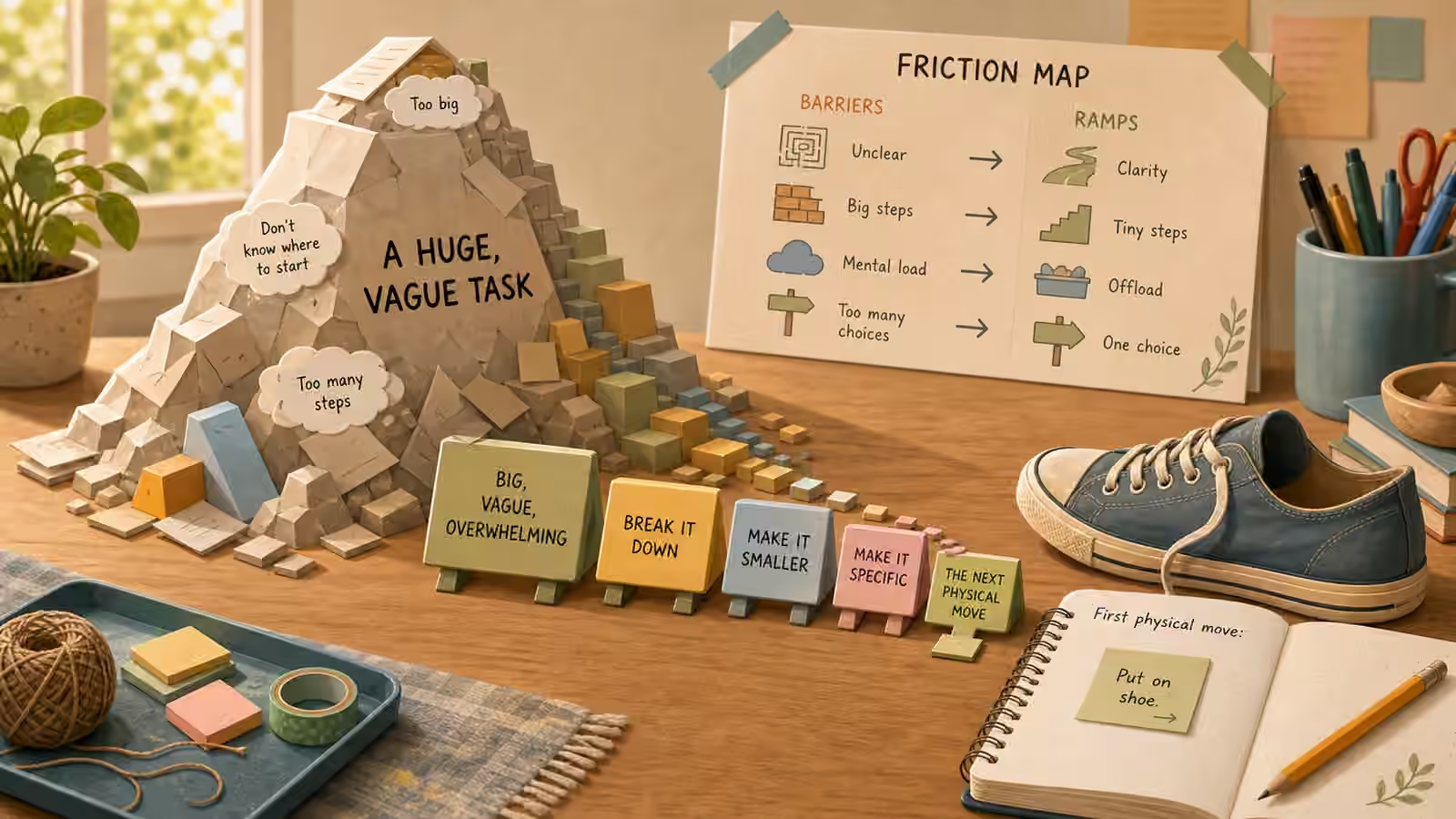
Making a decision can feel like the hard part, and sometimes it is. But many everyday tasks stall after the decision is already made. You know which email to send, which form to open, which errand comes first, or which corner of the room needs attention. The choice is no longer the block. The block is the small, strange gap between “I chose” and “my hands are doing something.”
The decision-to-action bridge is for that gap. It gives a made decision a physical landing place before the mind starts reopening the choice, renegotiating the plan, or waiting for a better mood. It pairs well with Decision Paralysis: Shrink the Choice Before the Task , but it solves a different problem. Decision paralysis asks how to choose. The bridge asks what happens in the first minute after the choice.
The Choice Needs a Place to Land
A decision that stays only in your head is easy to lose. It has to compete with notifications, doubts, hunger, noise, other people’s needs, and the next interesting thought. The bridge starts by moving the decision out of memory and into the room. Put the chosen paper on the table. Move the chosen tab to its own window. Place the shoes by the door. Put the book, charger, or form in the task tray. Write the chosen action on a card and set it where your hands will meet it.
This is not decoration. It is a change in the task’s shape. When the decision has a place to land, you do not have to keep proving that the choice was correct before you begin. The physical object says, for this round, this is the task. It can be revised later, but the next minute no longer belongs to the whole argument.
If the task is digital, the landing place can still be physical. A sticky note beside the laptop, a printed form, a notebook line, or a timer beside the keyboard gives the action a surface. Working Memory Offloading is useful here because the bridge depends on not asking memory to hold the plan, the reason, the first step, and the deadline all at once.
Make the First Move Smaller Than the Decision
A common mistake is letting the first move inherit the size of the whole decision. You decide to clean the room, so the first move feels like cleaning the room. You decide to apply for the program, so the first move feels like completing the application. You decide to answer the message, so the first move feels like saying everything correctly. The bridge works better when the first move is much smaller than the decision.
The first move should be a physical change that can happen before the mind rebuilds resistance. Open the file. Put the bill on the desk. Pull the laundry basket into the hallway. Place the return item by the door. Start the browser and stop at the login page. Write one rough sentence. If the first move creates evidence that the task exists in the world, it is doing its job.
The Start Line names this principle clearly: the first action should be observable. A decision-to-action bridge uses that start line immediately after choosing, before the decision cools into another vague intention. The action may look tiny from the outside, but it prevents the decision from becoming an invisible burden again.
Protect the Decision From Reopening Too Soon
Some people lose momentum because every first move reopens the entire choice. As soon as the document opens, the mind asks whether this is the right task, the right time, the right method, or the right order. That review may be useful later. In the first minute, it usually makes the task slippery.
Give the decision a short protection window. The window can be five minutes, one setup song, one timer, or one physical action. During that window, the job is not to optimize the whole plan. The job is to honor the chosen start. After the window, you may adjust. This keeps the bridge honest. It does not trap you in a bad plan, but it gives a reasonable plan enough time to become real.
This is especially useful when everything feels urgent. Task Triage When Everything Feels Urgent can help choose the task; the bridge helps stop the triage from restarting every time a new worry appears. The phrase “for this round” is useful. For this round, the first move is opening the form. For this round, the first move is clearing the left side of the sink. For this round, the first move is sending the status note.
Use a Handoff From Deciding Mode to Doing Mode
Deciding and doing often need different conditions. Deciding may happen in a chair, on a walk, in a notebook, or during a conversation. Doing may need a surface, a login, a phone, a quiet room, a tool, a bag, or another person. If you finish deciding but do not hand the task to the place where action happens, the decision has to survive a transition unsupported.
Make the handoff explicit. After deciding, carry one object to the action place. Put the notebook on the desk. Move the shoes to the door. Put the form in the bag. Open the document and leave the cursor at the first editable spot. If another person is involved, send the tiny handoff message while the decision is still fresh. The point is to leave a mark that the next setting can understand.
Transition Routines can support this because many decisions fail during movement between rooms, tabs, roles, or times of day. A bridge does not require a full routine. It only needs one handoff that makes the chosen next move easier to find.
When the Decision Was Made by Someone Else
Sometimes the decision is not yours. A teacher assigns the page, a manager names the deliverable, a family member asks for a pickup, or a form states the next requirement. The action can still stall because accepting a decision is not the same as starting the task. The bridge can help without pretending you chose the whole situation.
Translate the outside decision into a first object and a first motion. The assignment becomes an open notebook and the first source. The requested pickup becomes the item by the door and the departure buffer. The work request becomes the file, the previous example, and the first rough heading. You are not required to feel enthusiastic before making the bridge. You are only making the next move visible enough to reduce the drag.
If the outside decision carries confusion or resentment, a tiny help request may be the true first move. Asking for Help Without the Spiral gives language for asking for one missing detail instead of trying to explain the entire stuck feeling. A bridge can begin with clarification when the task cannot responsibly start without it.
Leave Evidence Before You Stop
The bridge also protects returns. If the first action begins but the task is interrupted, leave evidence of the decision before you leave. Circle the next line. Put the paper back in the tray. Write “next: attach receipt” on the note. Leave the browser on the exact page if that is safe for your setting. The decision should not have to be remade from nothing.
This is where the decision-to-action bridge meets Return Points After Interruptions . A return point is not a full plan. It is a breadcrumb with enough context to restart. The more easily a task loses its thread, the more valuable this final ten seconds becomes.
The bridge is modest by design. It does not promise instant motivation or perfect follow-through. It simply gives a made decision a body: an object, a place, a first motion, and a short protection window. When the choice can land in the room, the next action has a better chance of happening before the whole task turns back into fog.