Some tasks do not start because they are hard. Others do not start because a decision is hiding inside them. The task says “clean the room,” but the first real question is where to begin. The task says “work on the project,” but the first real question is which file matters. The task says “answer messages,” but the first real question is which person deserves attention first. When the decision remains invisible, the whole task can feel like resistance.
Decision paralysis is not always dramatic. It can be the quiet pause before opening a laptop, the drift around a messy room, the repeated checking of a calendar, or the sudden urge to improve the system before using it. The mind is not refusing to act. It is often trying to compare too many options without enough shape.
Separate the decision from the task
A stuck task becomes easier to read when you pull the decision out into the open. Instead of asking “Why can’t I start this?” ask what choice the task is demanding before it lets you begin. The choice might be about order, size, tool, location, person, standard, deadline, or stopping point. Once the choice is named, it stops pretending to be the whole task.
For example, “start the essay” may contain the decision “which source should I open first?” “Organize paperwork” may contain “which document category counts as active?” “Clean the kitchen” may contain “do I start with dishes, counters, trash, or floor?” These are real choices. If they are not named, they can consume the same energy that was supposed to go into doing the work.
Task Triage When Everything Feels Urgent is useful when the decision is about priority across several tasks. This guide is narrower. It is for the moment when one task is selected, but the task still will not become a first move because too many internal doors remain open.
Choose a rule before choosing an option
When options feel equally loud, choosing by feeling can take a long time. The mind keeps sampling each option for certainty. A rule gives the choice an outside edge. The rule does not need to be perfect. It only needs to be fair enough to let action begin.
The rule might be based on visibility: start with the object already in your hand. It might be based on time: start with the part that can change in ten minutes. It might be based on consequence: start with the item that blocks another person. It might be based on energy: start with the least social, least noisy, or least setup-heavy piece. The rule matters because it prevents every option from asking for a complete debate.
This is not the same as ignoring judgment. High-stakes decisions deserve care, advice, and time. A Startable Life rule is for everyday task starts, where the cost of endless comparison is higher than the cost of choosing a reasonable first piece. If the decision is legal, medical, financial, or otherwise serious, the startable move may be gathering the question for a qualified person rather than deciding alone.
Make the choice physical
Decision paralysis stays stronger when every option remains in imagination. A physical choice can be smaller. Put two papers on the table and move one forward. Open three tabs, then close two. Place one laundry basket in the doorway. Put one book on the desk. Move the chosen object into the place where the task starts.
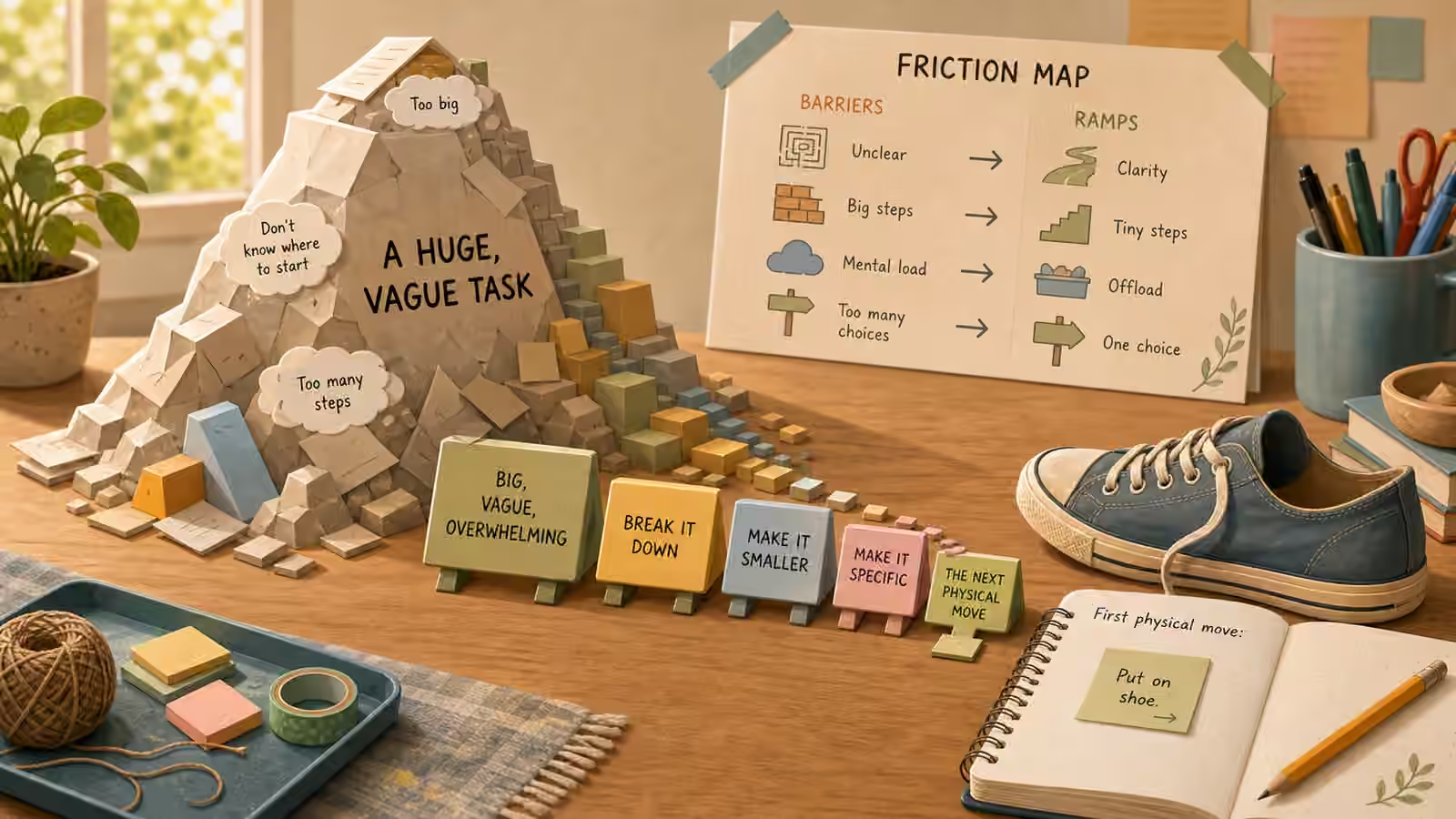
The movement matters. It turns a mental comparison into a visible commitment for the next few minutes. You are not choosing your identity, your future, or the best possible system. You are choosing the object that gets the next attempt. The Start Line uses the same principle: the first action should be concrete enough that someone else could see it happen.
If the choice still feels too large, shrink the time window. You do not have to decide what matters for the whole day. Decide what gets the next five minutes. You do not have to decide which room gets cleaned. Decide which surface gets one pass. You do not have to decide the final structure of a project. Decide which file opens first and where the return note will go.
Avoid turning the decision into a new project
One common trap is building a better decision system instead of making the decision. You open a planning app, rewrite categories, research methods, color-code labels, or design a scoring grid. Sometimes that is useful. Often it is a sophisticated way to avoid the uncomfortable moment of selecting one imperfect next move.
A useful decision support should be lighter than the task it supports. If choosing where to begin in a room takes longer than clearing one visible surface, the support has grown too large. If deciding which email to answer requires a full inbox philosophy, the support is not helping the first start. If choosing a study topic requires rewriting the semester plan, the choice has escaped its container.
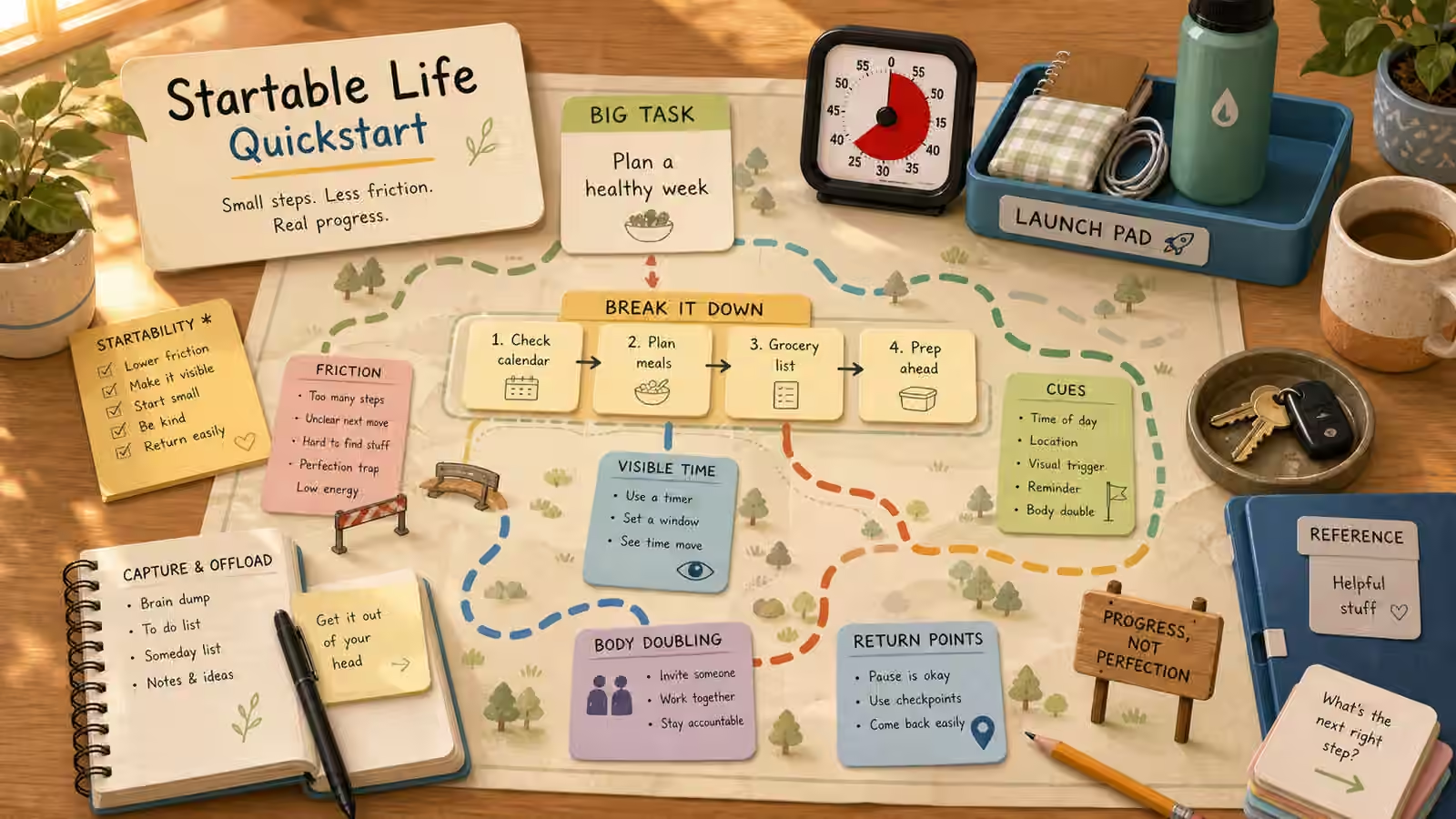
Keep the container small. Ask what would make the next action obvious enough to begin, not what would make the entire system permanently elegant. Working Memory Offloading can help here because the decision can be parked on paper instead of held in a looping argument.
Watch for hidden standards
Decision paralysis often carries a hidden standard. The person is not only choosing a task. They are choosing the correct task, the efficient task, the responsible task, the task that proves they are not behind, or the task that will not be criticized. That extra meaning makes ordinary choices heavy.
When a choice feels too charged, name the standard out loud or on paper. Maybe the hidden sentence is “If I start with the wrong thing, I will waste the whole afternoon.” Maybe it is “If I answer one message, I have to answer all of them.” Maybe it is “If I clean one area, the rest of the mess will look worse.” Once the standard is visible, you can test whether the next five minutes really need to carry it.
Often the kinder and more accurate standard is smaller. A start only needs to make the task more readable. It does not have to solve the whole category. If you answer one message, you have one fewer open loop. If you clear one surface, you have a place to continue. If you open one source, the essay has a door. Starting imperfectly is not the same as choosing badly.
Leave a note for the next decision
The end of a short attempt is a good place to reduce the next choice. Before stopping, write what should happen next in plain language. The note can be as simple as “continue with the blue folder,” “reply to the second message,” “wipe the counter next,” or “open the notes from class.” It does not need to explain the whole task. It only needs to prevent the next session from reopening the same decision.
This turns decision work into a return point. Return Points After Interruptions explains why this matters: after a break, the cost of reconstructing context can be larger than the task itself. A short decision note saves future attention from starting at zero.
The practical goal is not to become decisive all the time. It is to notice when a task is secretly a choice, choose a simple rule, move one option into the start position, and leave enough context that the next choice is smaller. That is how a stuck task becomes a sequence again.