Breaks are supposed to help, but a break can quietly become a second task that swallows the first one. You step away to stretch, get water, answer one message, or recover from a difficult paragraph. When you return, the original task has lost its shape. The tab is still open, the notebook is still there, and the supplies are still on the table, but the thread is gone. Restarting now asks for memory, orientation, decision-making, and a little emotional repair before any real work can continue.
Startable Life Lab treats a break as a temporary handoff, not a disappearance. The useful question is not whether breaks are good or bad. The useful question is what the task needs in order to survive the pause. A break works better when the return is designed before you leave.
A break should lower the restart cost
Many people judge a break by what happens during it. Did it feel restful? Did it reduce pressure? Did it give the body a change of position? Those things matter, but a startable break also has to be judged by what happens after it. If the pause makes the restart harder than the original work, the system needs a better bridge.
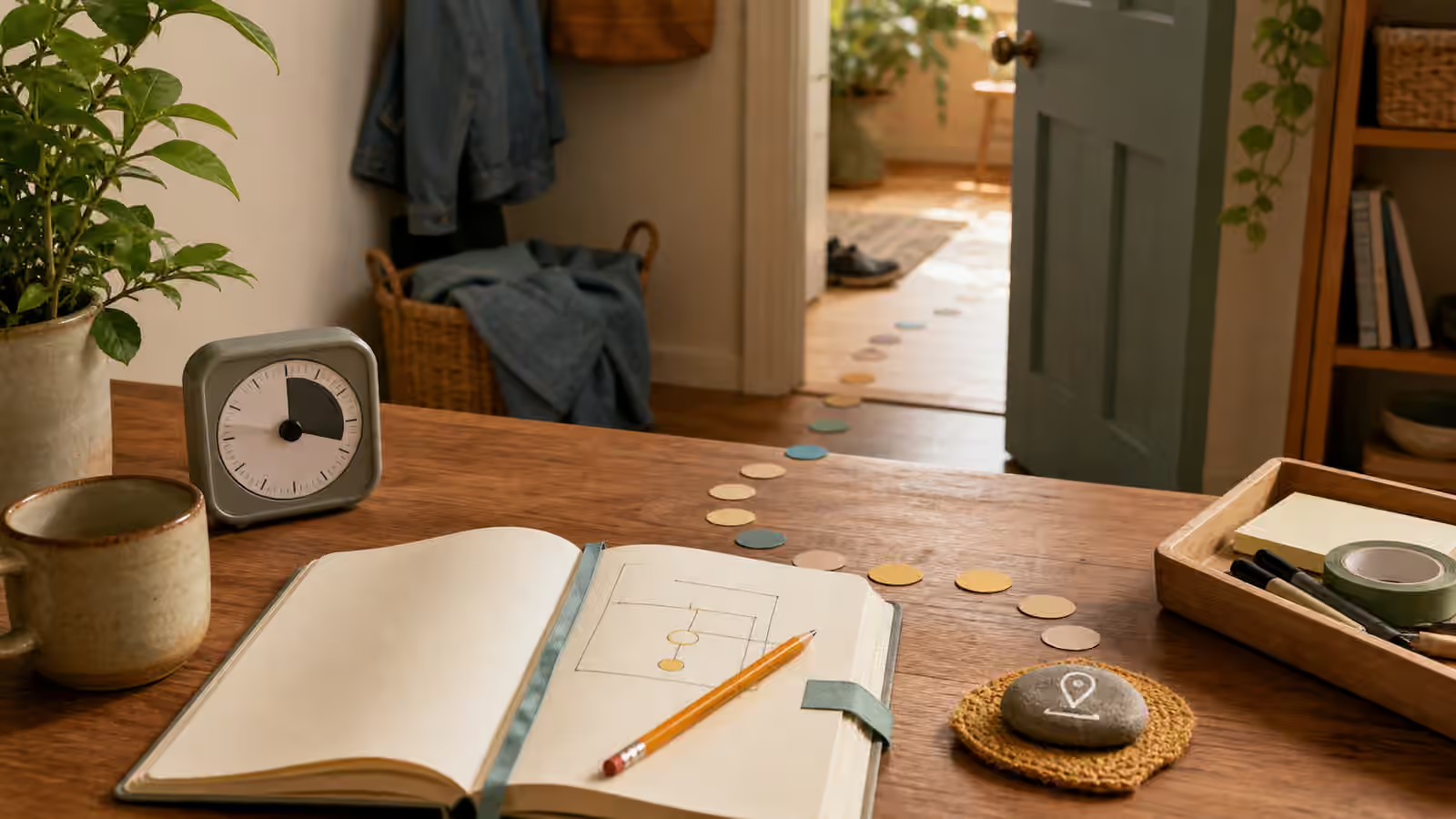
The bridge can be very small. Before standing up, write the next sentence you were going to draft. Place the pencil across the worksheet at the next problem. Leave the mixing bowl, measuring spoon, and ingredient together on the counter. Put the bill on top of the envelope it belongs with. Move the browser tab you need into its own window and close the unrelated ones. These cues are not decorations. They are memory supports. They let the task say, “Return here,” without asking you to reconstruct the whole scene.
Return Points After Interruptions covers unplanned disruptions. Breaks need the same idea with one difference: you usually have a few seconds to prepare. That preparation is the difference between a pause and a vanishing act.
Make the stopping place visible before you move
A common break mistake is leaving at a vague stopping place. The work feels heavy, so the body leaves while the mind still holds the next move. That can work for a minute. It fails when the break stretches, someone asks a question, a phone opens, or a new demand arrives. Future-you returns to the task but not to the mental state that made the next move obvious.
The stopping place should be visible outside your head. In writing, that might be a half sentence followed by a blank line. In studying, it might be the page open to the exact section and the notebook turned to the next blank space. In housework, it might be the cleaner and cloth sitting inside the sink instead of hidden under it. In admin, it might be the form placed above the document that supplies the next answer. The return cue should be obvious enough that a tired person can understand it without rereading everything.
This is not about being perfectly organized. It is about leaving a physical breadcrumb at the moment when the task still makes sense. Working Memory Offloading is useful here because a break often exposes how much of the task was being carried in memory. If the task collapses when you stand up, it was asking memory to do too much.
Give the break an edge
An open-ended break is easy to enter and hard to leave. That does not mean every pause needs a harsh alarm. It means the break needs an edge you can see or feel. A timer can provide the edge. So can a kettle boiling, one song, a walk to the mailbox, a glass of water by the chair, or a body-double check-in at a specific moment. The edge tells the break what shape it has.
Visible time matters because breaks can distort time in both directions. Five minutes can feel too short to help, so the break never starts. Twenty minutes can disappear because nothing marked the middle. Time Blindness Without Shame explains why time needs shape, especially when attention is tired. A break with an edge is easier to trust because it does not ask you to monitor the whole pause internally.
The edge should match the task and the state you are in. After intense reading, a movement break may need a soft return cue more than a loud alarm. After physical chores, sitting down may need a visible object in your line of sight so the break does not become a full context switch. After emotional admin, such as a difficult message or a confusing form, the edge may need to be especially gentle: a glass of water, three slow breaths, and the document still open to the next blank field.
Keep the break from becoming a new maze
Some breaks are restful because they are simple. Others become a maze because they contain too many doors. A phone break can become messages, feeds, shopping, news, and a search about something unrelated. A snack break can become kitchen cleanup. A quick chat can become a new problem to solve. The issue is not moral weakness. The issue is that the break environment has more entrances than exits.
Before a break, notice which doors are likely to steal the return. If the phone is the door, leave it face down across the room and use a plain timer or clock instead. If the kitchen is the door, decide whether the break is water only, food only, or a small reset of the counter. If the browser is the door, do not make the break happen inside the same window as the task. Digital Distraction Map can help identify which exits are useful and which ones make the task vanish.
The goal is not to remove pleasure from breaks. It is to protect the return. A break can be pleasant and still be bounded. It can include a stretch, music, sunlight, a snack, or a short conversation. What it cannot easily include is every possible doorway at once.
Use a restart ramp, not a demand
Returning from a break is a transition. If the first return instruction is “finish the task,” the restart may feel too large. A ramp is smaller. It tells you how to reenter without deciding the whole project again. Open the notebook. Read the return card. Put your hand on the next tool. Copy the next sentence. Wash one dish. Mark the next blank field. These are not fake steps. They rebuild contact with the task.
Transition Routines uses the same principle at a larger scale. A person moving from rest to work, from class to homework, or from chores to admin benefits from a small ritual that tells the body and attention what is happening now. The break return can be a tiny version of that ritual. The first action should be physical, visible, and too small to argue with.
If the restart still feels hard, shrink the ramp again. Instead of writing, read the last sentence aloud. Instead of cleaning the whole counter, put one item in the correct zone. Instead of answering the message, open the draft and write the greeting. The break did not fail because the restart needed help. The system is showing you where the next support belongs.
When the break reveals real fatigue
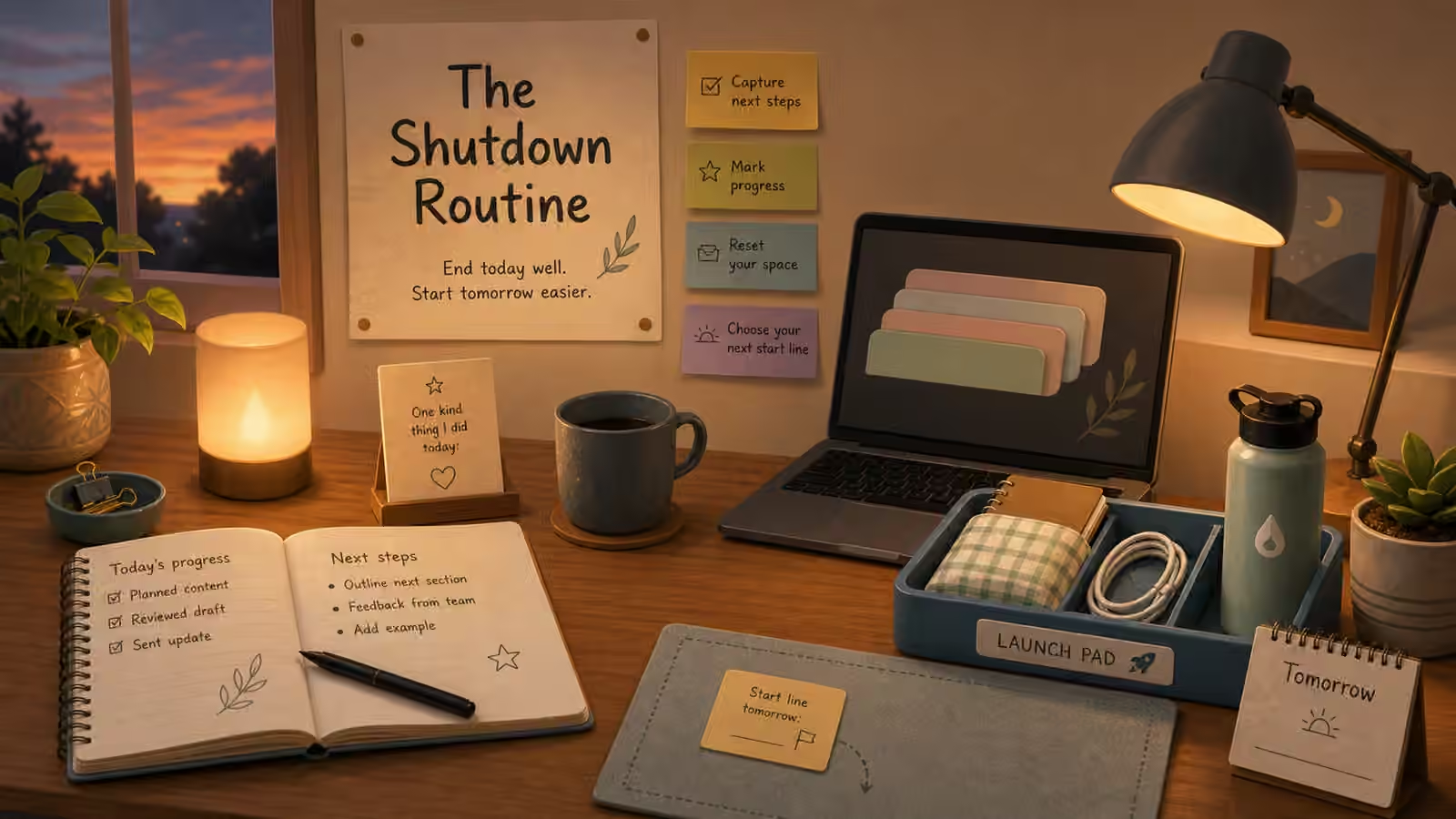
Sometimes a break does not lead back because the person is genuinely out of capacity for that task. A startable system should make room for that possibility without turning it into drama. If you return and the task still feels impossible, leave a stronger return point before stopping for longer. Write what is done, what remains, what the next physical move is, and what material should stay visible. Then choose a different kind of stop: a shutdown, a lower-energy task, or a reset for the room.
This is where The Shutdown Routine matters. A shutdown is not a failed break. It is a deliberate close that protects the next start. The difference is honesty. A break says, “I am coming back soon.” A shutdown says, “I am parking this well so it can be found later.” Both are useful. Trouble starts when a shutdown disguises itself as a break and leaves no return path.
Breaks become startable when they lower the restart cost, not when they prove you have perfect discipline. Leave the next move visible. Give the pause an edge. Keep the break from opening too many doors. Return through a small ramp. If the task truly needs to stop, park it clearly. The work does not need to stay in your head while you rest.