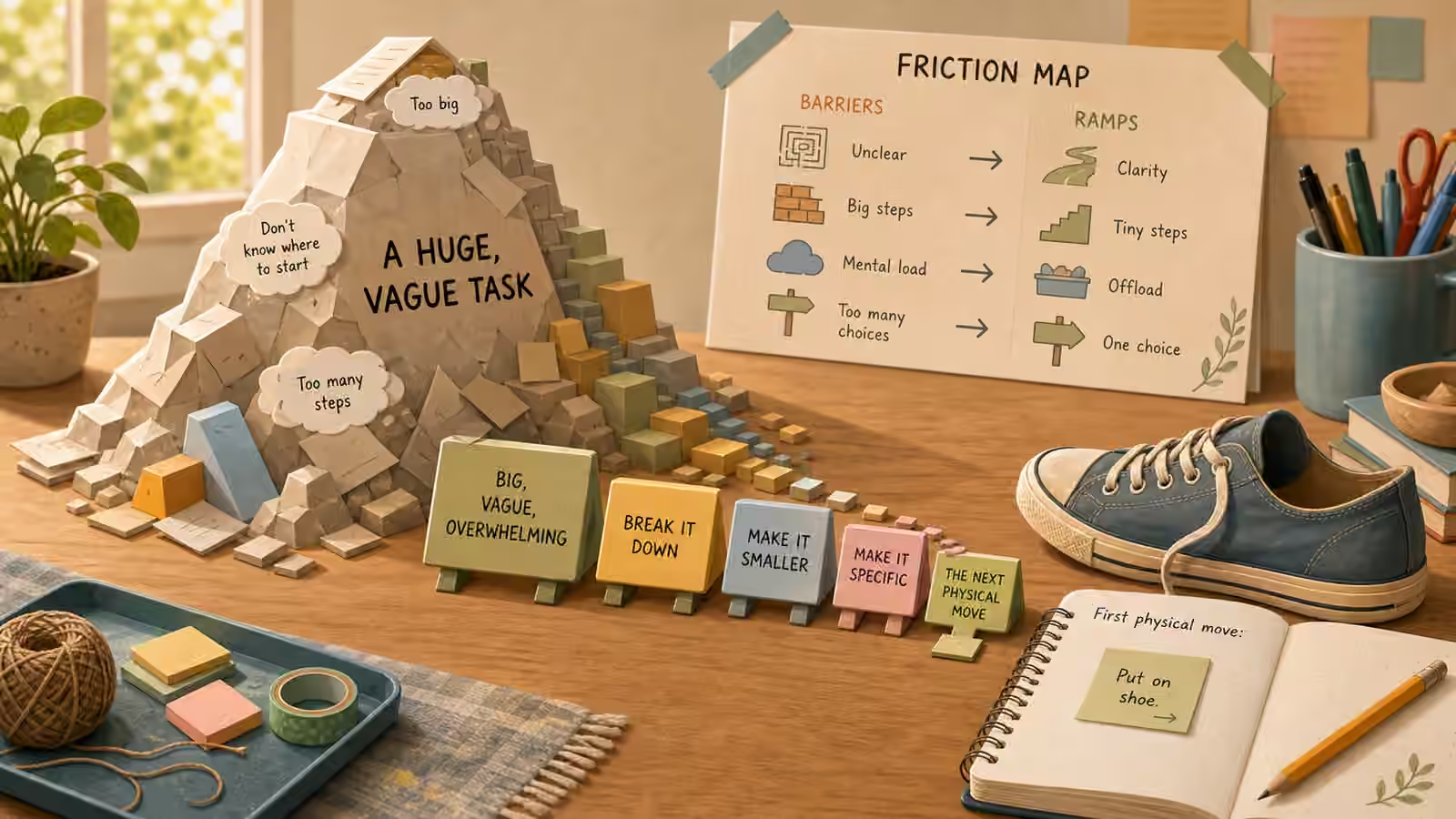
A big project can be difficult to start because it is not one task. It is a landscape. There may be research, messages, decisions, files, supplies, deadlines, people, and half-remembered constraints. The project title sits on a list as if it were a single action, but the first move is hidden somewhere inside the landscape. “Apply for the program,” “organize the move,” “plan the event,” “finish the portfolio,” and “catch up in the course” all sound like commands. None of them tells your hands what to do first.
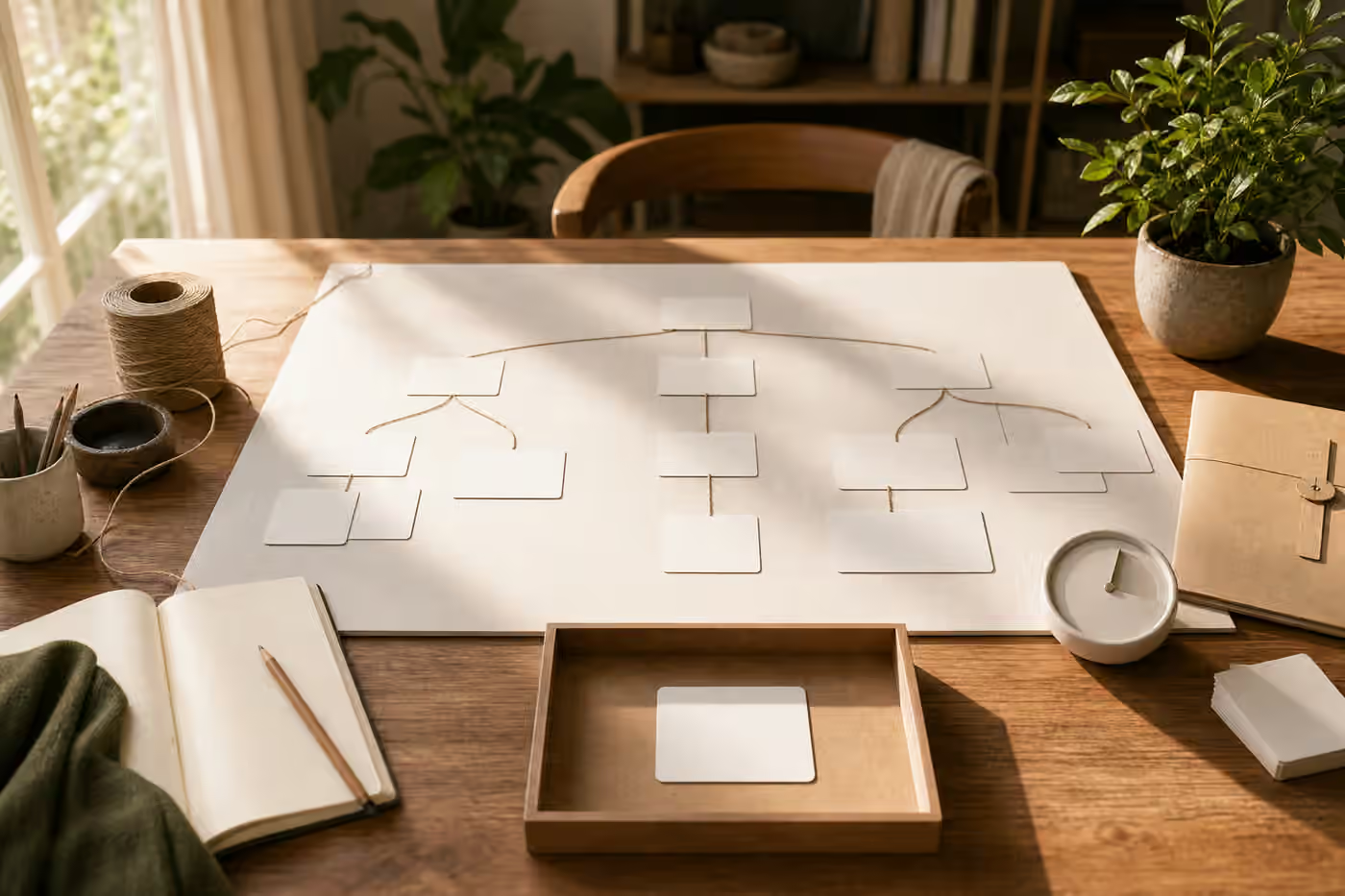
A first map is a small external picture of the project before it becomes a full plan. It does not need software, color coding, or perfect sequence. It only needs to move the project out of the fog and onto a surface. Once the main pieces are visible, you can choose a first start line without expecting memory to hold the whole thing at once.
The Map Comes Before the Plan
Many people avoid large projects because planning itself becomes too large. The calendar opens, the blank document waits, and the project immediately asks for priorities, dates, estimates, dependencies, and confidence. If those are not available yet, the project seems impossible. A first map is intentionally humbler. It asks what kinds of pieces exist before it asks when every piece will happen.
You might notice a people piece, a document piece, a supply piece, a decision piece, a money piece, a time piece, and a place piece. Those categories are not a formal method. They are a way to stop treating the project as one sealed box. A move might need a landlord message, packing supplies, address changes, a donation trip, and a first-night bag. A portfolio might need file gathering, selection, captions, formatting, feedback, and delivery. A course catch-up might need a syllabus, missing assignments, one teacher message, and a study block. Seeing the pieces is already progress because the project now has edges.
Working Memory Offloading is the foundation here. A large project should not have to fit on the mental scratchpad. The first map gives the project a temporary home.
Keep the First Map Messy Enough to Finish
The first map should be quick and imperfect. If you spend the whole session making a beautiful system, the map has become another project. Blank cards, a notebook page, a whiteboard, or a simple document can work. The map should capture pieces in ordinary language: the form, the email, the supplies, the room, the ride, the file, the question, the review. The words should be plain enough that you understand them when you are tired.
Do not force sequence too early. Sequence often becomes clearer after pieces are visible. The hidden first move may not be the official first step. Before writing the report, you may need to find the old notes. Before organizing the closet, you may need a bag for donations. Before applying, you may need to know whether one document exists. The first map lets those pre-steps appear without shame.
A Friction Audit pairs well with this moment. If one card feels heavy, ask what object, decision, memory load, or setup demand is inside it. A card that says “forms” may secretly contain passwords, dates, signatures, and a missing envelope. Once the hidden demand is visible, the first move can shrink.
Choose One Entry Point
After the map exists, choose one entry point rather than trying to begin the whole project. The entry point should make the next round clearer. It may be gathering materials, asking a question, creating a folder, opening the file, checking the requirement, or placing one object where it belongs. The point is not drama. The point is movement that changes the state of the project.
The best entry point is often a low-risk information move. Find the assignment sheet. Pull the forms into one tray. Create the project folder. Photograph the broken item before requesting help. Put all supplies on the table. Send the clarification message. These actions do not finish the project, but they make the next decision less imaginary.
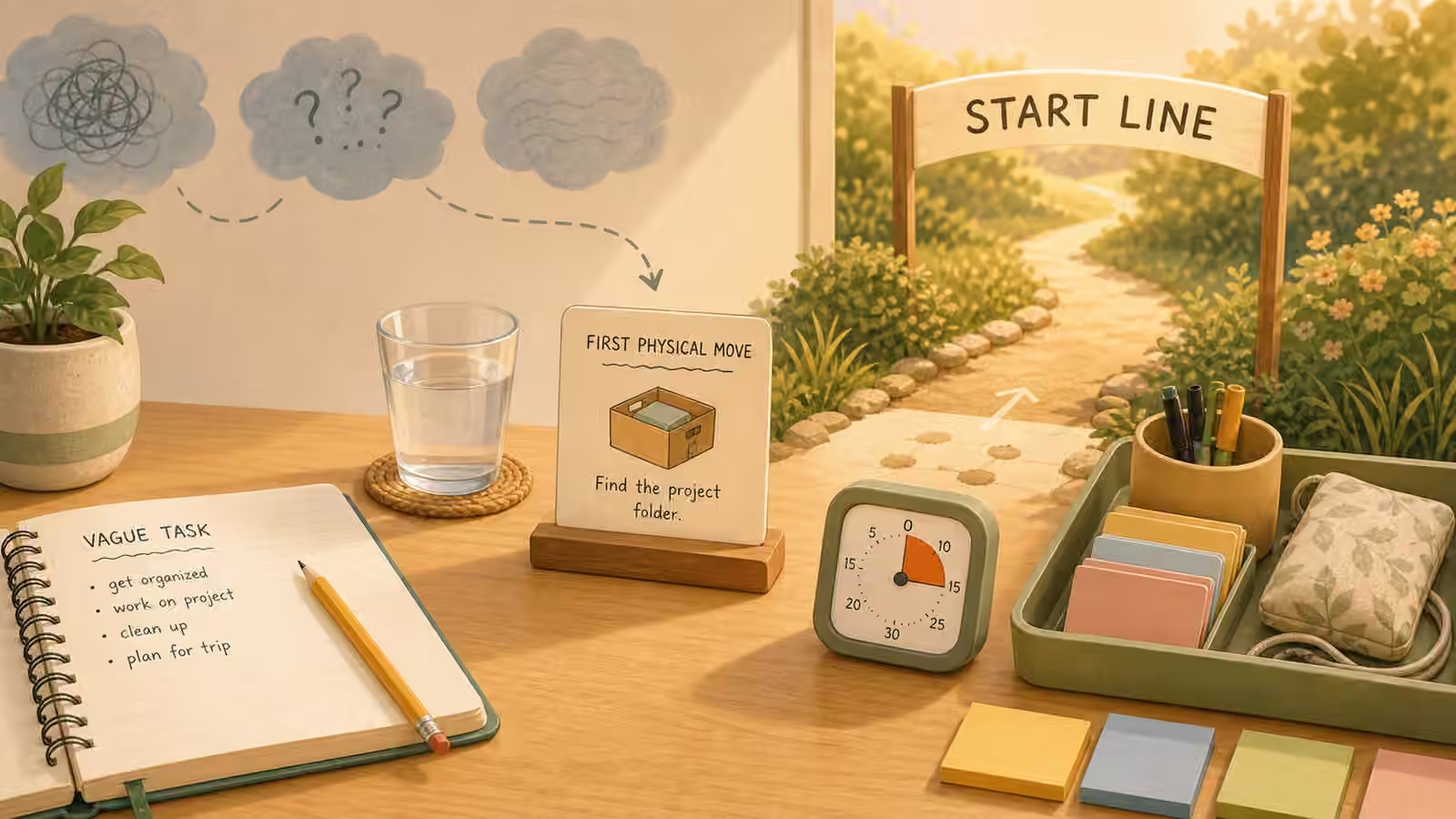
The Start Line can turn the chosen entry point into a physical move. Instead of “start the project,” the start line becomes “put the folder, notebook, and first form on the table” or “open the project document and write the question at the top.” A large project needs that specificity because vague effort evaporates quickly.
Give the Project a Parking Place
A big project should have a place to wait between work sessions. Without a parking place, every session begins by re-collecting scattered parts. The parking place can be a tray, folder, box, desktop folder, notebook page, or whiteboard corner. It should hold the current map, the next start line, and anything that must not disappear.
The parking place is especially important for projects that share space with daily life. A kitchen table cannot stay covered forever. A laptop cannot keep twenty tabs open indefinitely. A bedroom floor cannot hold every packed category for weeks. A parking place lets the project pause without dissolving into clutter.
The Open-Loop Parking Lot explains this more broadly. The project remains unfinished, but it becomes findable. That difference matters. Findable unfinished work is much easier to restart than unfinished work spread across rooms, tabs, pockets, and memory.
Review Before Expanding
Large projects invite expansion. One file leads to another file. One errand becomes six errands. One idea becomes a redesign. Expansion is not always wrong, but it should not happen unnoticed. After the first entry point, pause long enough to review the map. Ask what changed, what became clearer, and what one next move would help most.
This review should be short. The map is a living surface, not a court record. Move a card, add a missing piece, cross out something that was not real, or mark one question. Then choose the next start line or leave the project parked. The review keeps the project from becoming either a fantasy plan or a shapeless dread.
The map can also reveal that the project needs support. Maybe the next move belongs to another person. Maybe the requirement is unclear. Maybe the project has a deadline that deserves professional, academic, workplace, or household help. A first map is useful because it makes those needs easier to name.
Make the Next Session Easier Than This One
The first session with a large project is often heavy because it includes orientation. Do not make every future session repeat that cost. End by leaving a visible note that says where to restart. The note can be brief: “Next, find the receipt,” “Ask Sam about the date,” “Open folder and choose three examples,” or “Pack the books on the lower shelf.” The exact wording matters less than the fact that the next session does not begin from emptiness.
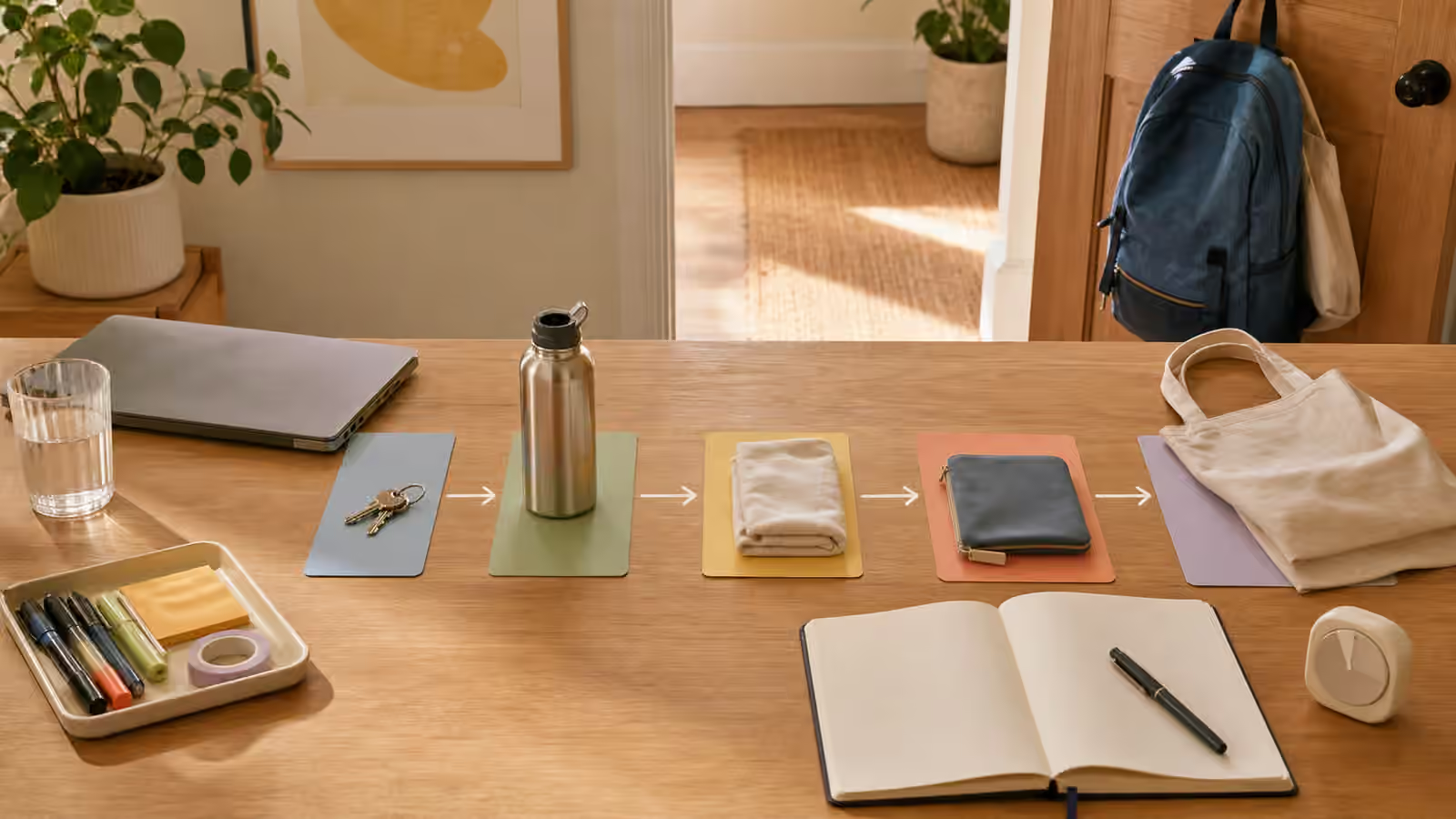
If the project travels with you, Portable Start Kit can hold the folder, notes, charger, and first materials. If the project stays home, a tray or shelf can do the same job. Either way, the map should reduce the number of things you must remember before the next start.
A big project becomes startable when it stops pretending to be one task. Give it a map, choose one entry point, park it where it can be found, and leave the next move visible before the context fades.