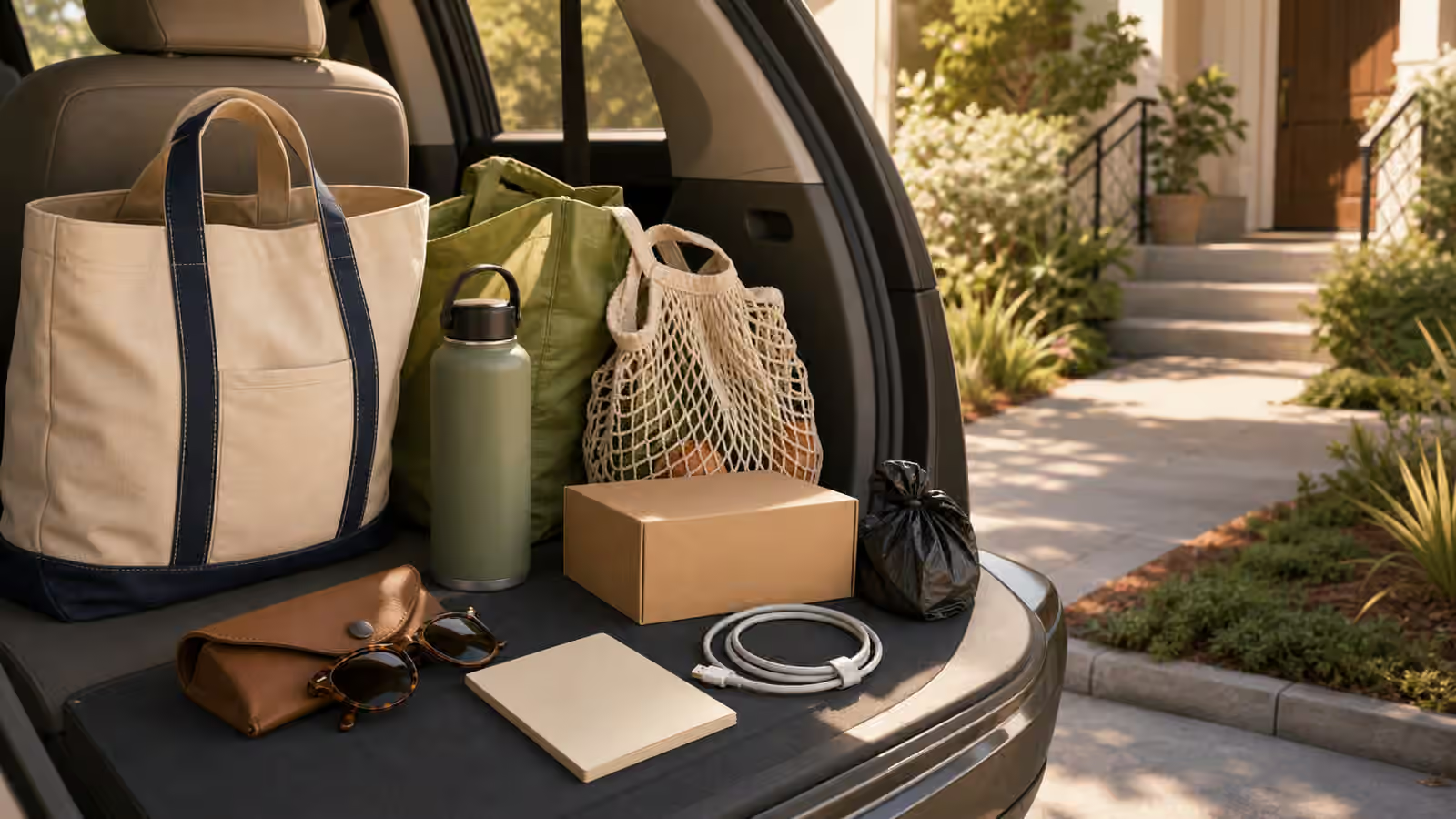
A daily bag is a moving launch pad. It carries the objects that help work, school, errands, appointments, caregiving, study, and ordinary leaving-home tasks happen away from the house. It also collects evidence of the day: papers, receipts, containers, chargers, crumbs, borrowed items, damp clothes, unfinished notes, and things that were supposed to return somewhere else. If the bag is never reset, tomorrow begins by digging through yesterday.
A bag reset after school or work is not a full unpacking ceremony. It is a short landing routine that makes the next departure less fragile. The aim is to move the few objects that should not stay hidden, restore the few objects that must be ready again, and leave the bag with a clear start state.
Treat the Bag as a Transition Place
Coming home is not only arrival. It is a transition from outside demands to inside demands. The bag crosses that boundary with you. If it lands closed on a chair, the transition is unfinished. Papers stay trapped. Food containers stay hidden. Chargers fail to charge. The object you need tomorrow remains in the wrong pocket. The bag becomes a sealed box of future friction.
Coming Home Landing Strip gives the broader method. Keys, shoes, papers, and bags need a landing place because the doorway is a state change. The bag reset is a focused version of that landing strip. It asks what the bag is carrying that must either leave, return, charge, dry, be signed, be answered, or stay ready.
The reset works best near the bag’s natural drop point. If the bag always lands by the door, create the reset there. If it lands by a desk, use the desk edge. If a student empties a backpack in a bedroom, the first version should meet that reality instead of pretending the kitchen command center will be used. A routine far from the actual landing place becomes another task to remember.
Open the Bag Before the Day Disappears
The most important move is opening the bag while the day still has context. You may still remember which paper came from class, which container needs washing, which charger was borrowed, which note needs a reply, and which object must return tomorrow. If you wait until morning, the same objects become less meaningful and more urgent.
The first start line can be very small: unzip the main compartment and remove only what should not sleep in the bag. That may include a lunch container, water bottle, paper needing attention, borrowed item, damp clothing, receipt, or device that needs charging. The reset does not require emptying every pocket. It requires catching the items that create tomorrow’s trouble if they stay hidden.
This connects to Capture Inbox Without the Pile . A bag often functions as an accidental capture inbox. It catches everything because it is available. The startable version gives captured items a next home before the bag becomes storage. A school paper moves to a visible tray. A receipt moves to the admin place. A charger moves to the charging station. A lunch container moves to the sink or dishwasher.
If opening the bag feels like too much, reduce the task to one pocket. The front pocket may hold the day’s loose items. The main compartment may hold the lunch container and folder. A partial reset is still useful if it catches the items that most often cause trouble.
Give Papers a Route
Papers are one of the main reasons a bag reset matters. A form, permission slip, invoice, meeting handout, appointment note, return label, study sheet, or receipt can hide in a folder long after it needed action. The problem is not paper itself. The problem is paper without a route.
Create one route from bag to action. The paper does not need a perfect filing system at the doorway. It needs a place where the next person or next task can see it. A student form may move to a parent tray. A work note may move to the desk folder. A receipt may move to the admin batch. A study sheet may stay in the bag if it is needed tomorrow, but it should be intentionally returned, not forgotten.
Paperwork Without the Pile is useful when papers require signatures, dates, accounts, or replies. The bag reset should not process all paperwork. It should expose the paper and attach it to the right starting place. If the paper needs later work, give it a plain cue before it leaves your hand.
For shared households, the route should be visible enough to reduce repeated asking. A folder by the door, a tray on the counter, or a board near backpacks can say “this paper needs attention” without turning the evening into a search. The language should stay factual. The paper is not proof that someone failed. It is an object that needs a next move.
Restore the Objects That Make Leaving Possible
Some bag items are not tasks. They are readiness objects. Chargers, headphones, transit cards, badges, pens, notebooks, water bottles, medication if it is part of a personal care plan, glasses cases, and keys may all determine whether tomorrow’s leaving starts smoothly. When these objects drift, the morning becomes a search.
The reset should restore only the objects that matter for the next likely departure. This is where Morning Launch Pad and Device Charging Start Station meet the bag. A charger may need to live at the station overnight and return to the bag in the morning. A badge may need to stay clipped to the bag. A water bottle may need washing before it can return. The correct answer depends on use, not on a universal rule.
If an object often goes missing, make its home more physical. A small pouch, pocket, hook, tray, or clip can reduce the number of places the object can hide. The home should be easy enough to use when tired. If returning the charger requires wrapping it perfectly and opening three zippers, it may stay on the floor instead.
Restoring readiness objects is not the same as packing for every possible future. Packing Without the Last-Minute Search handles larger trips and unusual days. The bag reset handles the ordinary repeat: what must be ready tomorrow because it is usually needed?
Leave a Tomorrow Cue
After the bag has been opened, papers routed, and readiness objects restored, leave one cue for tomorrow. The cue might be the bag placed by the door, a blank card on top, shoes beside it, a folder sticking out visibly, or a note near the launch pad. The cue should name the first move of the next departure without turning the bag into a bulletin board.
Calendar-to-Start Bridge can help when tomorrow has a specific event. If the bag is for a class, appointment, work shift, or errand, connect the calendar entry to the physical bag. The start line might be “put signed form in front pocket,” “charge laptop before leaving,” or “bring package to car.” The bag holds the object side of the calendar.
Avoid overloading the cue. A bag covered in old notes becomes visual static. One active cue is usually stronger than many faded reminders. If several tasks need attention, park them in a visible board, admin tray, or open-loop parking lot instead of asking the bag to speak for all of them.
The tomorrow cue should also protect rest. Once the bag is ready enough, you can stop rehearsing the morning. That is one quiet benefit of a reset: it gives the mind evidence that the next start has a physical shape.
Keep the Reset Short Enough to Repeat
A bag reset fails when it becomes too complete. Emptying every pocket, wiping the bag, reorganizing supplies, filing every paper, washing every container, and planning every future use may be satisfying once in a while, but it is too large for most evenings. The repeatable version should take only a few minutes.
Set the finish line before starting. The finish might be “food out, papers routed, charger charging, bag by door.” It might be “front pocket clear and tomorrow folder visible.” It might be “water bottle washed and laptop plugged in.” The finish line should match the bag’s most common failure points.
Good-Enough Finish Lines is the right companion. The good-enough bag is not pristine. It is enterable. Tomorrow’s hand can reach in without meeting a mystery. The objects that spoil, vanish, or block departure have been handled. The rest can wait for a deeper reset when there is more capacity.
If the reset is skipped, do not punish the morning with a speech. Use the evidence. What stayed hidden? What object caused the search? What landing place was missing? Adjust one piece. A bag is a daily system, and daily systems need to be forgiving. Open it, move the obvious items, restore the readiness objects, leave one cue, and let the next departure begin with less digging.