This guide explains word finding as one part of language, not as laziness, attitude, or lack of ideas. It is educational background, not a diagnosis, therapy plan, school eligibility decision, or substitute for a licensed speech-language pathologist, teacher, psychologist, physician, audiologist, reading specialist, or qualified local evaluation team. See Aphasia for the professional reference behind this topic.
Children can have trouble learning new words, storing word meanings, retrieving words they already know, explaining relationships between words, or using vocabulary flexibly in school and conversation. Those problems can look similar from the outside. A careful evaluation looks at the pattern rather than assuming that every pause means the same thing.
When the word is there but hard to reach
Many adults have felt a word sit just out of reach. The name is familiar. The idea is clear. The mouth is ready, but the word will not arrive until ten minutes later. For some children, that experience happens often enough to affect classroom participation, friendships, storytelling, reading, and confidence. They may use a vague word like “thing,” talk around the target, substitute a related word, pause for a long time, abandon the message, or become frustrated when someone says, “You know this.”
Word finding can be especially misunderstood because the child may know the word in one setting and lose it in another. A student may name an object in a quiet therapy room but struggle during a timed classroom answer. A child may understand a science term while reading with an adult but fail to retrieve it during a group project. A child may say the first sound, gesture, describe the use, or choose the word from options, yet not produce it independently. That inconsistency does not mean the problem is fake. It may mean retrieval depends on load, time, context, emotional pressure, and how strongly the word is connected to other language.
The broader Language Development guide separates receptive language, expressive language, pragmatics, narrative, literacy, and cognition. Word finding sits inside that larger map. It affects expression, but it can also reveal gaps in vocabulary depth, sentence formulation, memory for new words, or academic language.
Vocabulary is more than a label
Adults often teach vocabulary as names for objects. That is a useful beginning, but knowing a word is richer than pointing to a picture. A child who knows “volcano” may know it is a mountain, that it can erupt, that lava comes out, that it is dangerous, that it belongs with earth science, that it appears in stories and diagrams, and that it can be compared with an earthquake. These connections make the word easier to understand and easier to retrieve.
Thin vocabulary knowledge can look like word-finding trouble. A child may recognize a word when someone else says it but have too few connections to use it independently. Another child may know everyday words but struggle with school words such as compare, evidence, estimate, habitat, explain, before, unless, although, and result. These words carry classroom thinking. If they are weak, the child may appear confused even when the topic is interesting.
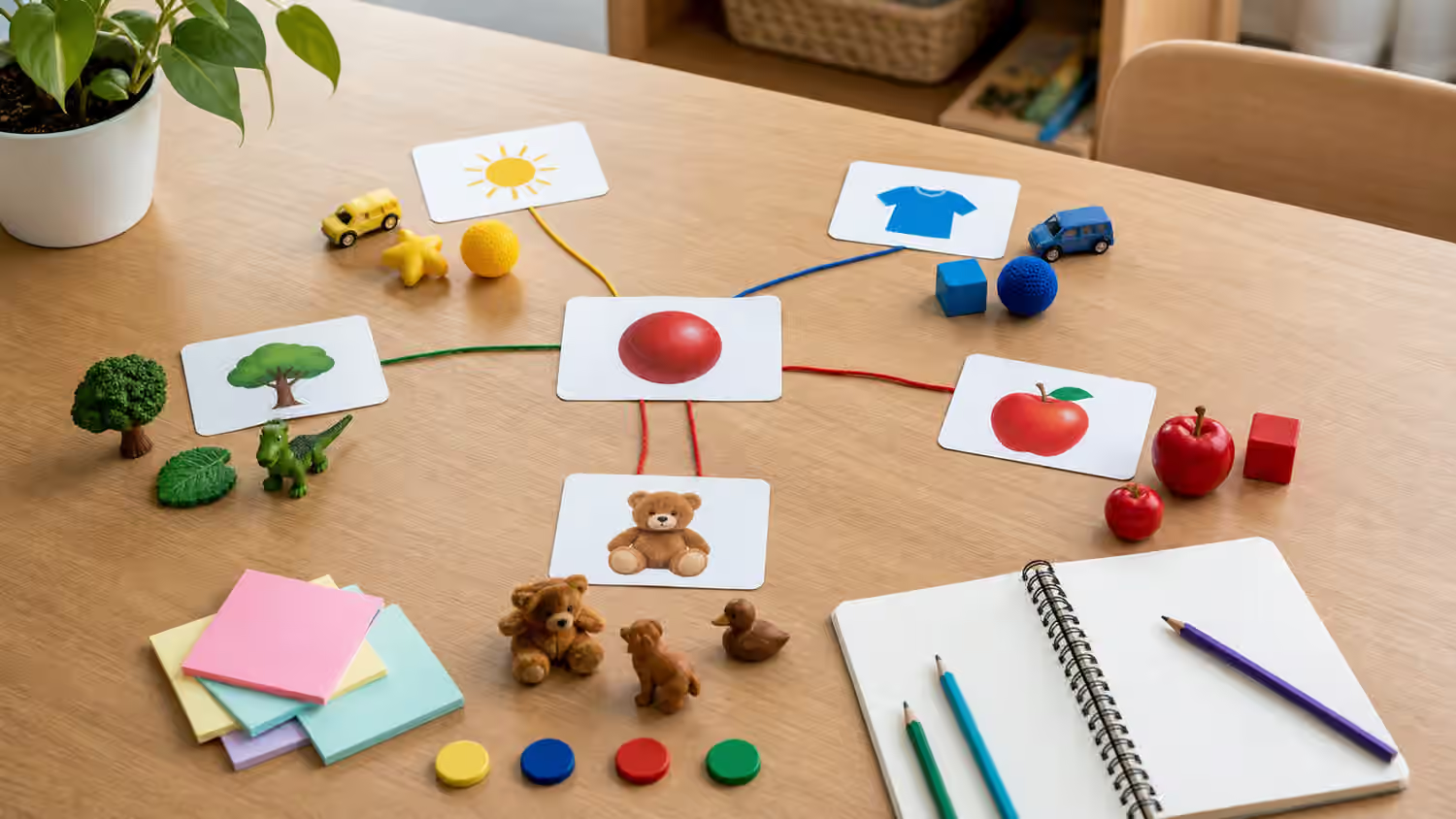
Strong vocabulary support builds networks. It connects category, function, parts, location, action, sound, size, texture, feeling, sequence, cause, contrast, and personal experience. A word like “thermometer” becomes more retrievable when the child knows it belongs with health, measures temperature, has numbers, may go under the tongue or on the forehead depending on type, and appears when someone is checking illness. The goal is not to make every word into a worksheet. The goal is to give the brain more routes back to meaning.
Cues should help the message, not trap the child
Cueing can be kind or cruel depending on how it is used. A child who is stuck may benefit from time, a first sound, a category cue, a choice, a gesture, a sentence starter, or a chance to describe the word. The same child may shut down if every pause becomes a public guessing game. Adults need to notice the emotional cost of cueing. If the child looks embarrassed, angry, silly in a forced way, or silent, the support may be too exposed.
A gentle cue protects communication first. Instead of saying, “Come on, you know it,” a partner might say, “Take your time. Is it an animal or a tool?” If the word still does not come, the partner can accept a description and keep the conversation moving. Sometimes the adult can model the word naturally after the child has made the meaning clear. “Right, the thermometer. You remembered it checks temperature.” That response honors the idea and strengthens the word without making the child lose the whole turn.
It also helps to separate practice from ordinary conversation. There may be times in speech-language therapy when the child works directly on naming, describing, categories, or word retrieval strategies. Family dinner, recess, and bedtime should not become constant retrieval drills. The Home Practice Without Pressure guide applies here because language grows in relationships. A child who feels hunted for the right word may talk less, which removes the very practice everyone wants.
Word finding and stories
Word retrieval affects stories in subtle ways. A child may know what happened but use pronouns without clear nouns, vague verbs, missing place words, or repeated phrases. “He did the thing and then they went there” may hold a full memory inside it, but the listener cannot follow. Adults sometimes respond by asking many questions, which can help briefly but may also fragment the story. The child answers each question and loses the thread.
Narrative support can make vocabulary easier to retrieve because stories provide structure. Who was there? Where did it happen? What was the problem? What did the person try? How did it end? The Narrative Language and Story Retell guide explains why stories matter for school and daily life. When word finding is part of the concern, narrative practice can include rich but natural recasts. If a child says, “The dog got the thing,” the adult might respond, “The dog grabbed the leash because it wanted a walk.” The model gives the missing word inside meaning, not as a scold.
Personal stories are especially useful because they already matter to the child. A child describing a game, a cousin, a favorite show, a playground argument, or a science project may be more willing to search for words because the message has a purpose. The adult can write down key words, draw quick pictures, or build a small word bank before the child retells. The support should make the story easier to share, not replace the child’s voice with adult sentences.
Classroom language raises the load
Word finding often becomes more visible at school because school adds speed, audience, memory, and new vocabulary. A student may need to retrieve a word while holding the teacher’s question in mind, remembering the page, worrying about classmates, and planning a sentence. That is a heavier task than naming a picture alone. A student who looks quiet during discussion may not lack ideas. The words may be slower than the room.
Teachers can support participation by allowing wait time, previewing vocabulary, using visuals, accepting rehearsal with a partner, and giving alternative ways to show knowledge when retrieval is the bottleneck. A student may answer better after pointing to a diagram, using a word bank, drawing first, or saying the idea privately before speaking to the group. Those supports are not shortcuts around learning. They give the student a route into the language demand.
Literacy is closely connected. Reading and writing ask children to understand, retrieve, and use words across contexts. The Speech-Language Support for Literacy guide is a useful next step when vocabulary concerns show up in comprehension, writing, spelling, or classroom explanations. A child who cannot retrieve a word aloud may also avoid writing it. A child who recognizes a printed word may still not understand its meaning well enough to use it in a sentence.
When to ask for help
Professional input is worth considering when word-finding difficulty affects school access, social participation, storytelling, frustration, reading, writing, or confidence. It is also worth asking for help when the child appears to lose words suddenly, regress in language, struggle with hearing access, show broader comprehension concerns, or have neurological, developmental, or medical history that makes the pattern more complex. Sudden language change belongs with urgent medical care.
Useful observations are concrete. Note when the child pauses, what kinds of words are hard, whether cues help, whether the child can describe the word, whether the problem changes with stress or speed, and whether it appears in one language or across languages. If the child is multilingual, the Bilingual Speech and Language guide can help frame questions without blaming home language exposure.
The goal is not to make every child speak quickly. Some children need more time, and some people communicate best with AAC, writing, gesture, or other supports. The goal is access to meaning. A child who can reach words, describe around hard moments, repair breakdowns, and keep participating has more room to show what they know. Word-finding support is strongest when it treats the child’s ideas as already worth waiting for.