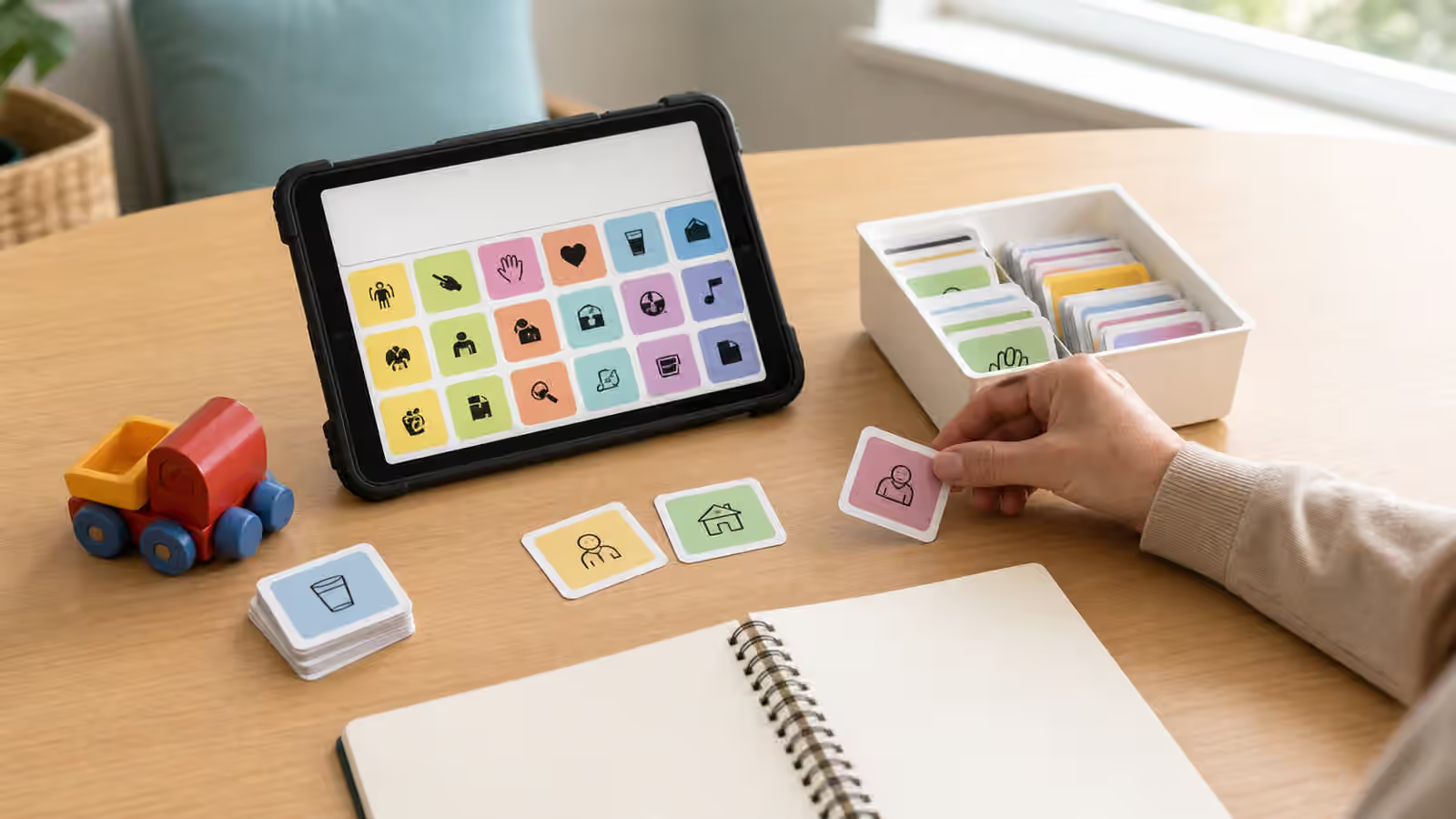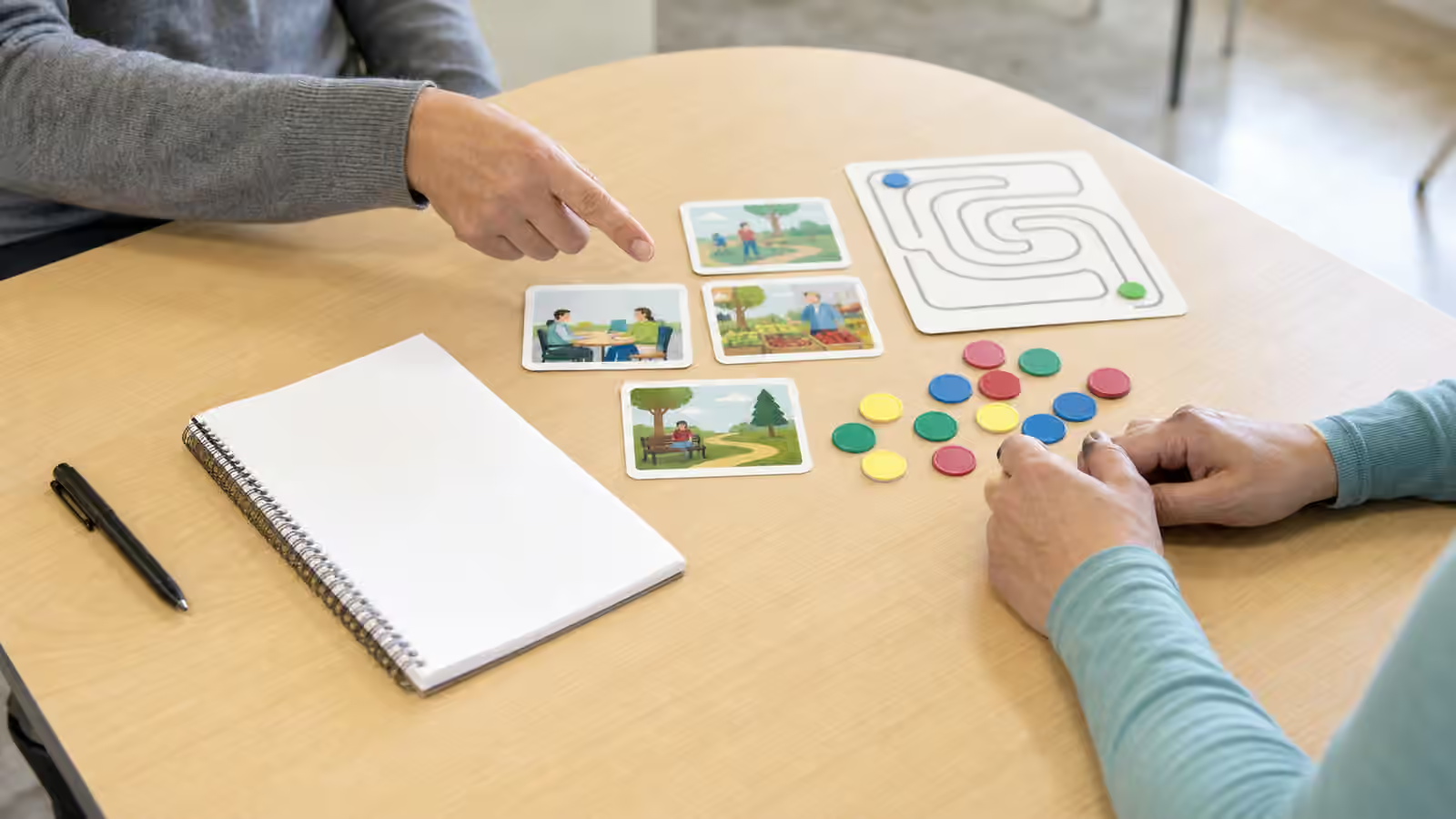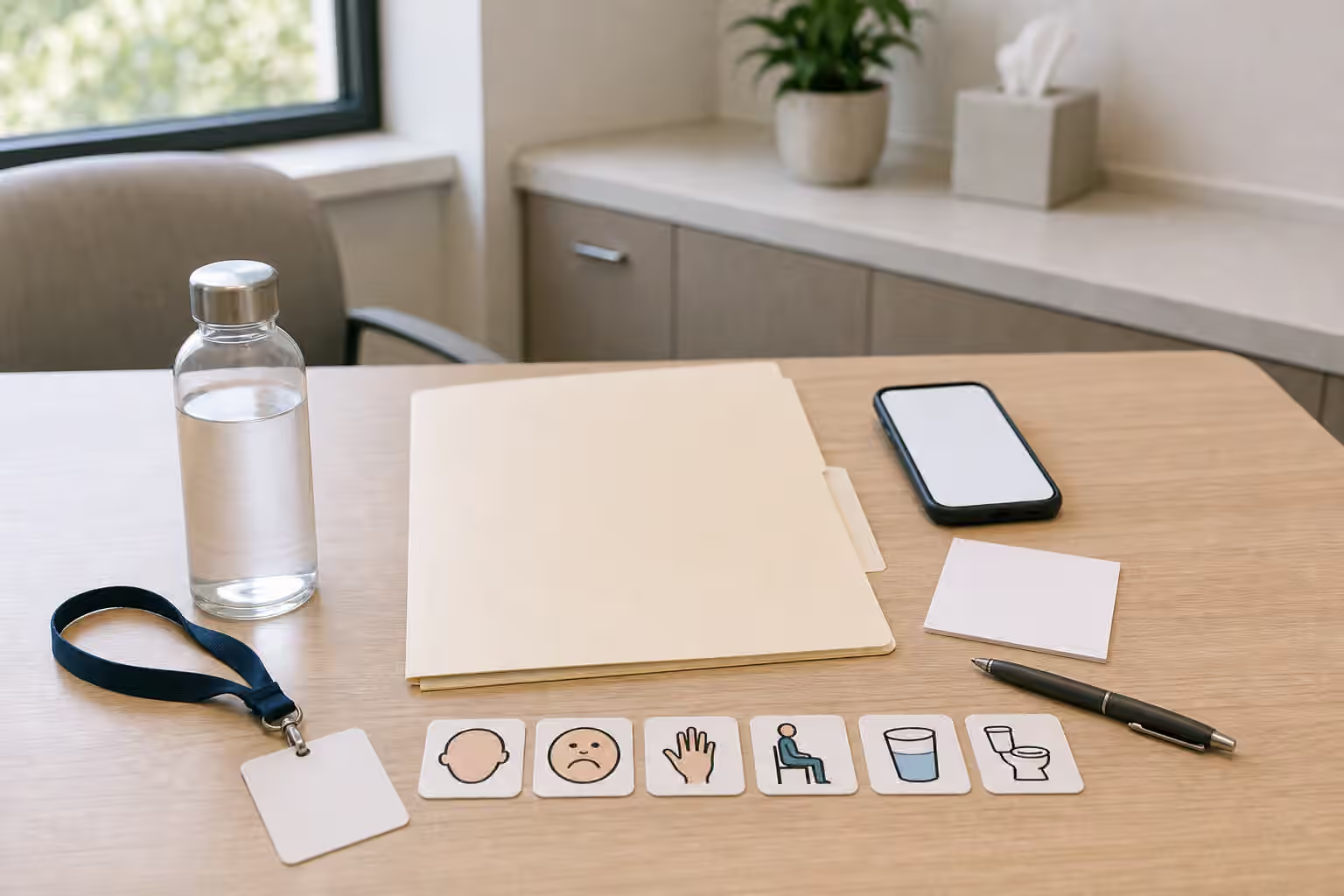
This guide helps you decide when a concern is worth bringing to a qualified professional instead of waiting, guessing, or relying on a browser tool. It is educational background, not a diagnostic assessment, treatment plan, or substitute for a licensed speech-language pathologist, physician, audiologist, school evaluation team, or other qualified professional. See ASHA — Who Are Speech-Language Pathologists? for the professional reference behind this topic.
What this can look like in real life
Asking for an evaluation can feel heavier than the question itself. Families may worry they are overreacting. Adults may worry a concern means something permanent. Teachers, partners, and caregivers may notice a pattern but hesitate because they do not want to label someone. Evaluation is not a sentence. It is a structured way to stop guessing when communication, feeding, swallowing, voice, fluency, hearing access, learning, work, safety, or participation keeps raising the same concern.
How to observe without over-reading
The strongest reason to ask is not one awkward moment. It is a pattern that affects life or keeps returning. A child is often misunderstood outside the family. A student cannot access classroom language. A person coughs or tires during meals. An adult has new word-finding trouble. A voice stays hoarse. A speaker avoids calls because of stuttering. A multilingual child struggles across languages, not just in a new school language. These are not diagnoses; they are reasons to gather better information.
A gentler support routine
Before the evaluation, prepare simple examples. Bring dates if the change was sudden, settings where the concern appears, what helps, what makes it worse, relevant languages, hearing or medical history, school or work impact, and any safety issues. For children, include what caregivers and teachers see. For adults, include what the person themselves wants to change. Avoid overwhelming the first appointment with hours of recordings or private details unless the clinician asks for a specific sample.
Where professional care fits
Ask what the evaluation will cover, what it cannot answer, who else should be involved, and what the next decision point will be. If the result is “monitor,” ask what would make you come back. If the result is therapy, ask what home support should look like and how progress will show up in real life. A useful evaluation does not only name a problem. It gives the family or adult a clearer path than worry could provide.
Plain-language map
- An evaluation is a structured professional process, not just a quick listen.
- For children, concerns can be discussed with a pediatrician, early intervention program, school team, audiologist, or SLP depending on age and setting.
- For adults, new or changing speech, language, voice, swallowing, or cognitive-communication issues often belong with medical care and rehabilitation services.
Common misconceptions
- Waiting is always harmless because many children catch up.
- A single online checklist can decide whether services are needed.
- A school evaluation and a medical evaluation answer exactly the same question.
What to observe or document
- Loss of skills, sudden change, choking or coughing with meals, persistent hoarseness, hearing concerns, frustration, or reduced participation.
- Examples from real settings: classroom directions, family meals, phone calls, reading aloud, play, work meetings, or conversation with unfamiliar listeners.
- The supports already tried and whether they helped.
A useful evaluation note might say: “We have watched this for six weeks. It affects school participation, family meals, and phone calls. Quiet rooms help, but the concern returns in groups.” That does not diagnose anything. It explains why the question deserves a real look and what settings the evaluator should ask about.
For children and minors, avoid storing names, birth dates, school names, diagnoses, recordings, or sensitive personal details in casual tools.
Before you ask for help
If you are preparing for an appointment, school meeting, or first conversation with a clinician, bring the smallest clear story you can. Name the concern, the settings where it appears, what has changed, what helps, and what would make daily life easier. That last part matters. Communication care should not only chase a score or a sound. It should help a person participate more comfortably in family, school, work, meals, friendships, and ordinary choices.
A good first conversation can also include limits. Ask what this guide cannot tell you, what should be ruled out, and which signs would make the situation urgent. That keeps the next step grounded: not alarm, not avoidance, but a clearer path from observation to support.
Questions to ask an SLP, school, or clinician
- What kind of evaluation fits this concern: speech-language, hearing, developmental, neurological, voice, swallowing, or school-based?
- What data should we bring: recordings, teacher notes, meal observations, writing samples, or milestone checklists?
- What should we do while waiting without creating pressure or shame?
Limits and professional care
Speech Genie and the pages in this section cannot determine whether someone has a disorder, cannot rule out hearing or medical concerns, and cannot replace a professional evaluation. For concerns about speech, language, voice, fluency, swallowing, development, hearing, regression, sudden change, choking, or safety, bring the concern to qualified local services.
For When to Ask for a Speech-Language Evaluation, use the Speech Therapy hub and Home Practice Without Pressure as next steps; treat Speech Genie transcript differences as practice notes, not clinical findings.