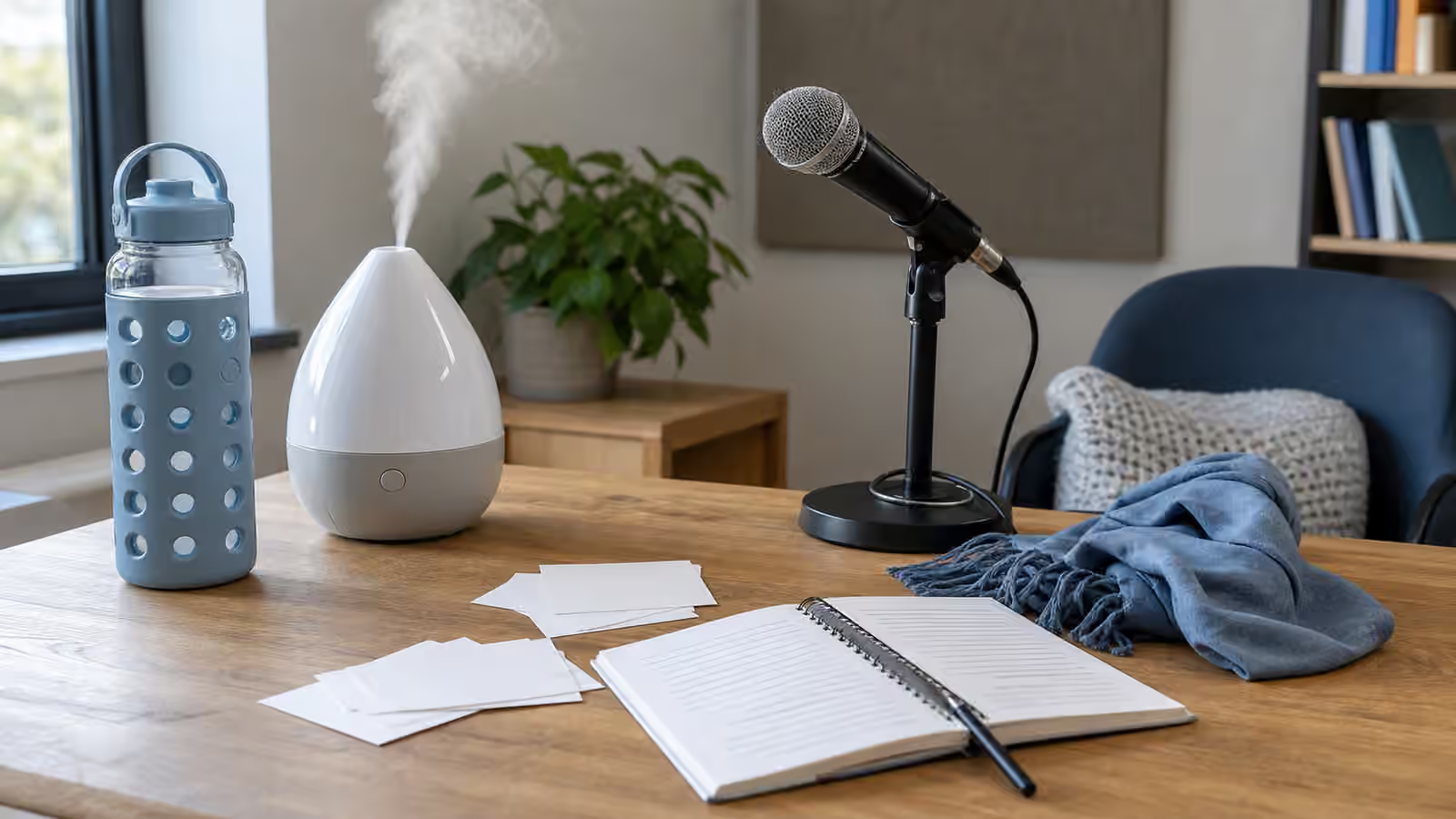
This guide explains everyday voice load for people who speak a lot, often, or under pressure. It is educational background, not a medical evaluation, voice therapy plan, singing plan, workplace safety plan, or substitute for a licensed speech-language pathologist, physician, otolaryngologist, singing voice specialist, employer process, or other qualified professional. See Voice Disorders for the professional reference behind this topic.
Speech recognition tools and home observations can be useful notes, but they can also be wrong, especially with voice changes, background noise, allergies, reflux, illness, medication effects, hearing differences, microphone quality, and fatigue.
Voice load is real work
Some jobs and roles use the voice the way others use their hands. Teachers project over rooms, presenters speak through long meetings, fitness instructors talk over music, call workers keep speaking through shift after shift, clinicians explain care all day, coaches give directions outside, performers rehearse, and community leaders speak in spaces that were not designed for listening. The voice may be expected to stay reliable no matter how loud the room is, how tired the person feels, or how little recovery time the schedule allows.
Voice care starts by treating that load as real. Hoarseness after a long day is not automatically a crisis, and occasional roughness can happen with ordinary illness or heavy use. But repeated strain, loss of range, pain, effortful speaking, voice breaks, chronic throat clearing, or voice change that does not resolve deserves attention from qualified care. The Voice, Resonance, and When Voice Changes Need Attention guide covers when voice changes should not be brushed aside. This page focuses on the everyday conditions that make heavy voice use harder or easier.
Loudness is not the only problem
People often think voice trouble comes from shouting. Shouting can matter, but voice load is broader. Long duration, poor room acoustics, background noise, dehydration, illness, stress, repeated throat clearing, speaking while tired, and speaking without amplification can all add demand. A teacher may not shout, yet still speak six hours a day in a noisy classroom. A presenter may use a microphone but keep talking through breaks. A call worker may speak at moderate volume while managing emotional conversations without much silence.
The voice also interacts with the rest of the person. Sleep, breathing, posture, stress, allergies, reflux symptoms, respiratory illness, medications, hydration, and hearing access can affect how speaking feels. This does not mean the speaker should self-diagnose. It means a useful voice history describes the whole setting instead of blaming the person for “using the voice wrong.”
Recovery time belongs in the plan
A practical voice plan includes recovery. If someone speaks heavily all morning, then talks through lunch, then teaches or presents again, the voice may never get a low-demand window. Quiet recovery does not have to mean silence for an entire day. It might mean using written directions for part of a routine, saving long phone calls for a lower-demand day, using amplification when available, reducing background noise before speaking, or building short pauses between speaking blocks.
Whispering is not always a rest strategy. Some people whisper in a pressed, effortful way that can feel harder than gentle speech. If the voice is strained, the safer general direction is to reduce demand and seek appropriate guidance rather than forcing whispering, pushing volume, or testing the voice repeatedly to see whether it is better.
High-demand speakers also need permission to change the room. Moving closer to listeners, facing the group before speaking, using a microphone, closing a door, turning down competing audio, posting visual instructions, and asking for attention before starting can reduce unnecessary load. These are communication design choices, not signs of weakness.
Microphones and rooms can be voice support
A microphone is not only for large audiences. It can protect consistency in a classroom, meeting room, studio, or community space. The goal is not to sound dramatic; it is to avoid pushing the voice past what the room requires. Amplification works best when the speaker learns the equipment, checks placement, and trusts it enough not to keep projecting over it. A microphone used reluctantly while the speaker still shouts may not reduce load.
Room acoustics matter too. Hard surfaces, open doors, fans, hallway noise, music, and poor speaker-listener distance can make everyone work harder. A speaker may compensate without noticing: louder voice, tighter throat, faster pace, fewer pauses. If listeners cannot hear, the solution may belong partly to the environment. That is why voice care sometimes looks like changing logistics rather than doing exercises.
Warning signs deserve respect
Voice changes should be taken seriously when they persist, recur, worsen, or come with pain, breathing difficulty, swallowing concerns, coughing, blood, sudden change, neurological symptoms, recent surgery, heavy professional voice demand, or other medical concerns. This guide cannot decide urgency. Local qualified medical care matters, especially for persistent hoarseness or significant change.
A voice-specialized SLP and an otolaryngologist may work together. Medical evaluation can look at vocal fold health and related factors. Voice therapy can address efficient voice use, pacing, behavior patterns, and role-specific demands when appropriate. For singers and performers, specialized care may include people who understand performance voice, but the same principle holds: persistent change should not be ignored because someone is skilled or experienced.
It is also worth avoiding blame. High-demand speakers often keep working because the schedule requires it, not because they are careless. A teacher with thirty students, a clinician with a packed day, or a worker measured by calls may have limited control. Voice care should include realistic system changes when possible, not only advice handed to the individual.
What to document before asking for help
A useful voice note describes when the change appears, how long it lasts, what the voice feels like, and what the job or role requires. Does the voice fade by afternoon? Is pitch range reduced? Does speaking feel effortful? Is there pain, dryness, coughing, throat clearing, or loss of volume? Does the voice improve after rest? Does it worsen after certain rooms, classes, rehearsals, calls, or outdoor sessions? Does amplification help? Does illness trigger a pattern that lingers?
These observations help a clinician understand the load. They also keep the speaker from arriving with only a vague complaint like “my voice is bad.” A clearer note might say that the voice is normal in the morning, becomes rough after two hours of teaching over fan noise, and improves during school breaks. That points toward both voice health and environment.
Privacy still matters. If the note involves students, patients, clients, or coworkers, avoid names and sensitive details. Describe the communication setting, not other people’s private information.
Voice care is not silence as punishment
People who rely on their voices may fear being told to stop speaking entirely. Sometimes medical or clinical guidance may include rest, restrictions, or temporary changes, but voice care should not be framed as punishment for using the voice. The better frame is load management. What must be spoken? What can be written, amplified, delegated, delayed, or shortened? Which parts of the day are highest risk? Where can recovery fit without removing the person from every role they value?
This is similar to other speech-language topics: support should show up in real life. The Home Practice Without Pressure guide is about respectful practice, and the same spirit applies here. A speaker should not spend every waking moment monitoring the throat. The plan should be simple enough to live with: reduce avoidable strain, respect warning signs, use tools that fit, and seek qualified care when changes persist or interfere with participation.
Keeping the voice connected to identity
Voice is personal. It carries authority, warmth, humor, age, gender expression, culture, teaching style, performance identity, and everyday presence. A high-demand speaker may worry not only about discomfort but about losing the sound that lets them do their work or feel like themselves. That fear deserves respect.
Good voice care does not treat the voice as a machine with one correct setting. It asks what the speaker needs to do, where the load comes from, what medical questions should be ruled out, and which supports preserve participation. The practical goal is a voice that can serve the person’s real life with less avoidable strain and clearer routes to help when something changes.