This guide explains voice banking and message banking as communication planning tools for people who may experience speech or voice changes. It is educational background, not medical advice, technology purchasing advice, diagnosis, treatment planning, insurance advice, or a substitute for a licensed speech-language pathologist, physician, neurologist, laryngologist, audiologist, assistive technology professional, or qualified local team. See Augmentative and Alternative Communication for the professional reference behind this topic.
When speech may change over time, people often hear about devices, apps, and synthetic voices before they have a chance to think about identity. The practical question is not only how a future system will speak. It is what parts of the person’s everyday language, relationships, humor, culture, and control should be protected while there is still time to record or plan them.
Banking Is About Identity, Not Only Sound
Voice banking usually means recording a set of phrases so a service can create a synthetic voice that resembles the person’s speech. Message banking usually means recording personally meaningful phrases as audio files that can later be played through AAC or another communication system. The two ideas overlap, but they are not the same. Voice banking tries to preserve a voice quality. Message banking preserves exact human messages.
That difference matters. A synthetic voice may help a person sound more personally recognizable than a generic device voice. A banked message may preserve the way someone says a child’s name, a family joke, a prayer, a pet phrase, a greeting, a teasing line, or a sentence that matters because of the exact delivery. A person may want both. They may also want neither, or may prefer a different voice that fits them better later. Planning should start with preference, not pressure.
The Progressive Neurologic Communication Planning guide explains why backup routes should be considered before speech becomes unreliable. Voice and message banking fit inside that broader planning. They are not emergency projects to begin only when speaking is already exhausting.
Timing Can Make The Work More Humane
Banking can be emotionally difficult. It asks a person to imagine future communication changes, sometimes soon after a diagnosis or during a period of uncertainty. It may also involve fatigue, voice strain, motor changes, breathing changes, or grief. Starting earlier can give the person more control, but early does not mean rushed. A team can help decide what is realistic and what should be prioritized.
Some people can complete a large voice banking script. Others may only have stamina for short recording sessions. Some may have speech that is already changing and need to focus on message banking instead of trying to create a synthetic voice. Some may prefer to record only a small set of personal phrases. The best plan respects energy, emotion, privacy, technology access, and the person’s own sense of what matters.
Families sometimes want to capture everything. That impulse is understandable, but it can make the task feel impossible. A more humane approach is to begin with the phrases that would hurt most to lose. A greeting to a partner. A goodnight message. A way to call a child by a nickname. A sentence used at work. A religious or cultural phrase. A joke that belongs to the person. The value of message banking is often concentrated in language that cannot be replaced by a polished generic sentence.
Personal Phrases Should Sound Like The Person
Banked messages do not need to sound formal. In fact, overly polished phrases may miss the point. A person might record “I love you,” but they might also record the exact way they normally say it. They might record “Give me a minute,” “That is not what I meant,” “Please ask me first,” “I am tired,” “Tell me the gossip,” or “Stop fussing over me.” Ordinary phrases can carry personality, boundaries, and humor.
Message choices should include control, not only sentiment. People need ways to refuse, ask for privacy, correct a partner, choose who helps, request a break, participate in medical decisions, and say that something is wrong. A banked laugh or affectionate phrase may be precious, but so is a clear “No” that sounds like the person. The Medical Appointment Communication Access guide connects here because healthcare conversations require ways to ask, refuse, repair, and confirm.
The person should guide what gets recorded whenever possible. Partners can suggest categories, but they should avoid turning banking into a family archive that ignores the user’s boundaries. Some messages are private. Some relationships are complicated. Some phrases should not be stored where others can play them without permission. Respect for privacy is part of communication access.
Technology Is Only One Layer
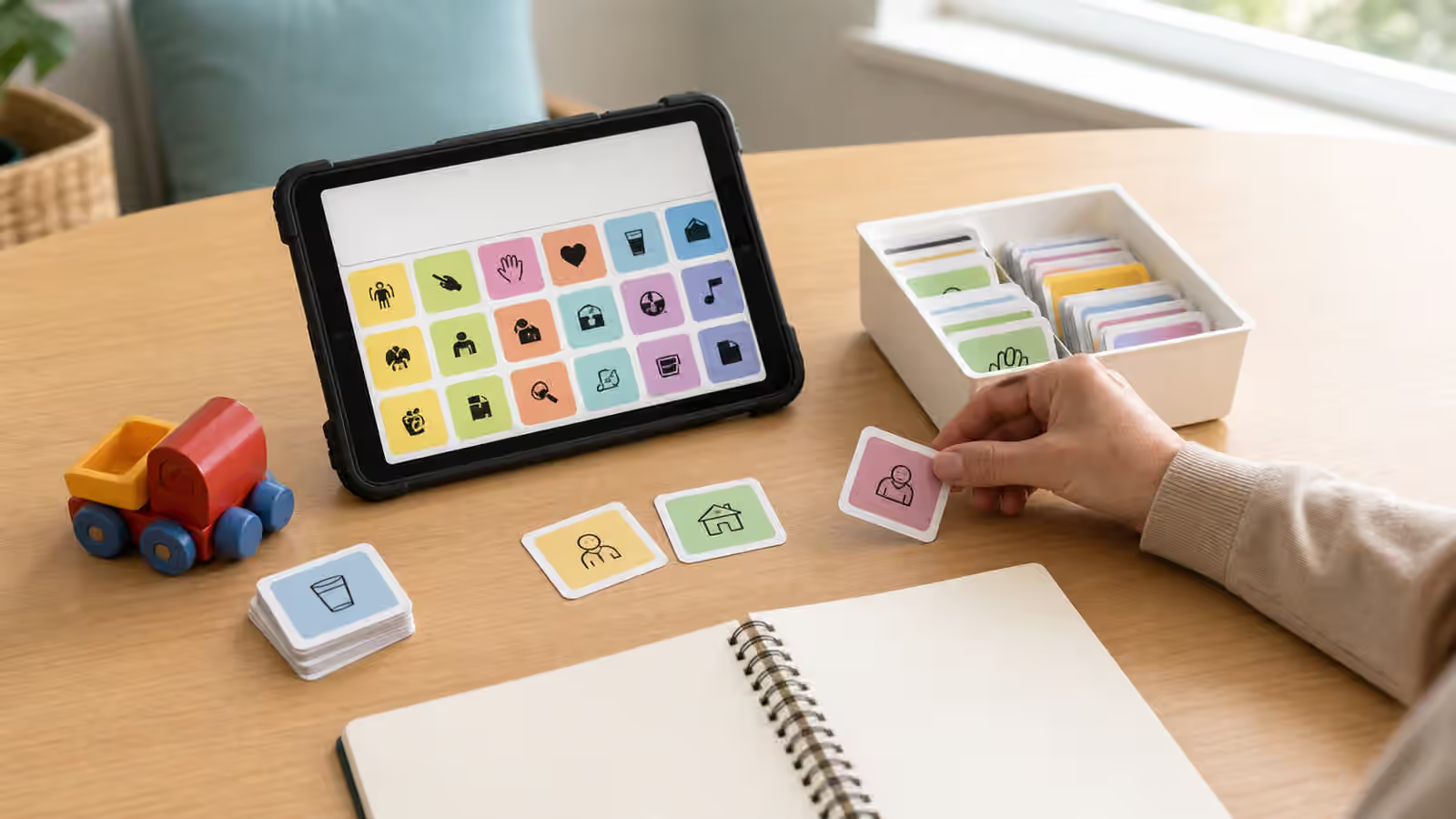
Voice banking and message banking require technology, but the technology is not the whole plan. Files need to be organized, backed up, named in a way the person or team can understand, and eventually connected to the communication system that will use them. A beautiful recording that no one can find later is not very helpful. A synthetic voice that cannot be used with the chosen AAC setup may create frustration.
Teams should also think about access. If speech changes are part of a condition that may affect hand movement, vision, fatigue, breathing, cognition, or posture, the future communication system may need more than a voice. It may need eye gaze, switch access, partner-assisted scanning, a mount, a printed backup, or a simpler emergency route. The AAC Access Methods guide gives a wider view of those choices.
Good planning includes low-tech backups. Batteries fail, devices break, apps change, and internet connections disappear. A person who has banked messages may still need a printed topic board, yes-no signal, alphabet board, or partner routine for urgent communication. Banking preserves voice and phrases. It does not replace access planning.
The Recording Setting Matters
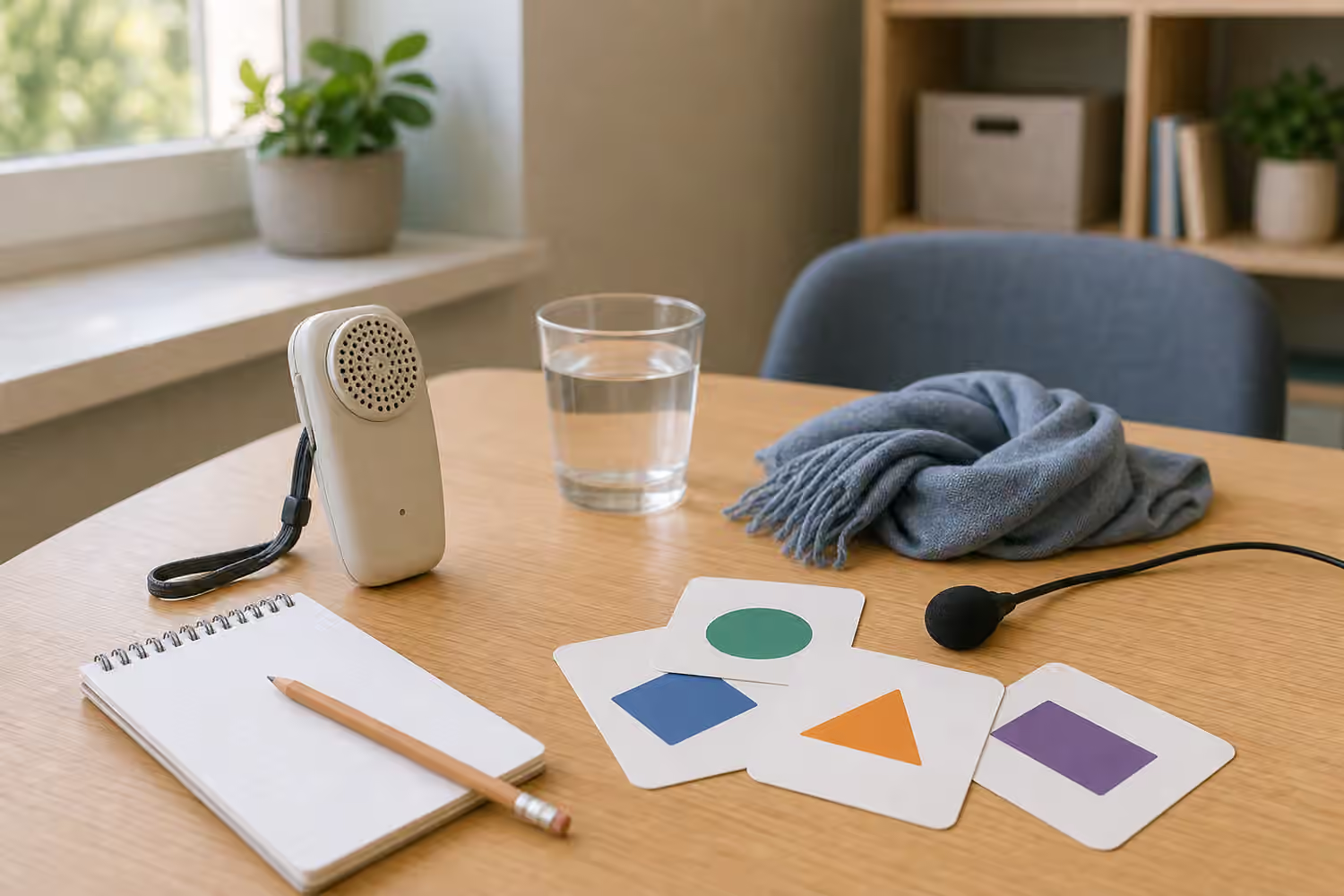
A quiet room, steady microphone position, comfortable posture, and short sessions can improve recording quality and reduce strain. But the goal is not studio perfection at the cost of the person’s wellbeing. A person who is fatigued, emotional, or uncomfortable may need to stop. A clinician or knowledgeable team member can help adapt the task when speech, breath support, voice quality, or endurance is changing.
Some systems ask for set scripts. Others allow more flexible message recording. If a script is required, the person may still want a separate folder of personal messages. If the person’s primary language, dialect, accent, or communication style is not well represented by a service, the team should discuss expectations honestly. Banking should not imply that a person must sound more standard, more fluent, or less like themselves.
The Accent, Dialect, and Difference guide is relevant because identity lives inside speech patterns. The goal is not to erase difference. The goal is to preserve or support communication in a way the person recognizes as acceptable, useful, and theirs.
Partners Need Guidance Too
A future communication system can be undermined by partners who rush, speak over the person, hide the device, or treat recorded messages as novelty. Partner training should begin before the system is needed. Family members, caregivers, coworkers, and clinicians may need to learn how to wait, how to offer choices without taking over, how to keep the device available, and how to respect messages that come through synthetic or recorded speech.
The Communication Partner Training guide explains that listeners are part of the system. With voice banking, this means partners should not treat the banked voice as proof that communication will be easy. A person may still need time to compose messages, help positioning equipment, support repairing misunderstandings, or permission to use writing, gesture, facial expression, and other routes.
Planning also needs emotional room. A banked message may comfort a family member and still feel painful to the person who recorded it. A synthetic voice may feel empowering one week and strange the next. Preferences can change. The communication plan should be revisited without blaming the person for needing something different.
A Practical Sign Of Success
Voice banking and message banking are successful when they preserve useful choices. The person has more ways to sound like themselves, say what matters, control help, and stay present in relationships and decisions. Success is not measured by how many files were recorded or whether the technology feels impressive.
For some people, the most valuable result will be a synthetic voice that makes everyday AAC feel more personal. For others, it will be a small set of recordings that family members recognize immediately. For others, the process will clarify what backup communication should include, even if the person chooses not to bank a voice. The plan should leave the person with more agency, not a heavier assignment.
Speech changes can be frightening because they threaten access to ordinary life. Banking cannot remove that uncertainty. It can, when done respectfully, protect pieces of identity and control before communication becomes harder. The point is not to capture a perfect version of a person. The point is to keep more of their voice, words, choices, and relationships available when they are needed most.