This guide explains communication access when a person has a tracheostomy, ventilator, or other medical equipment that affects speech. It is educational background, not medical advice, airway guidance, speaking valve instruction, hospital policy, treatment planning, or substitute for a physician, respiratory therapist, licensed speech-language pathologist, nurse, surgeon, audiologist, or qualified local medical team. See Tracheostomy and Ventilator Dependence for the professional reference behind this topic.
When speech is limited in medical care, communication can become urgent and fragile. A person may need to report pain, ask for suctioning, refuse a procedure, comfort family, make choices, ask what is happening, or simply say that they are scared. Communication access is not an extra comfort. It is part of dignity and participation in care.
Speech May Change Before Language Changes
A tracheostomy or ventilator can affect whether air passes through the vocal folds, how much breath is available for speech, how quickly a person tires, and what equipment is safe to use. The person may still understand, think, feel, decide, joke, and worry even when they cannot speak in their usual way. Listeners can make a harmful mistake when they equate quietness with lack of capacity or lack of preference.
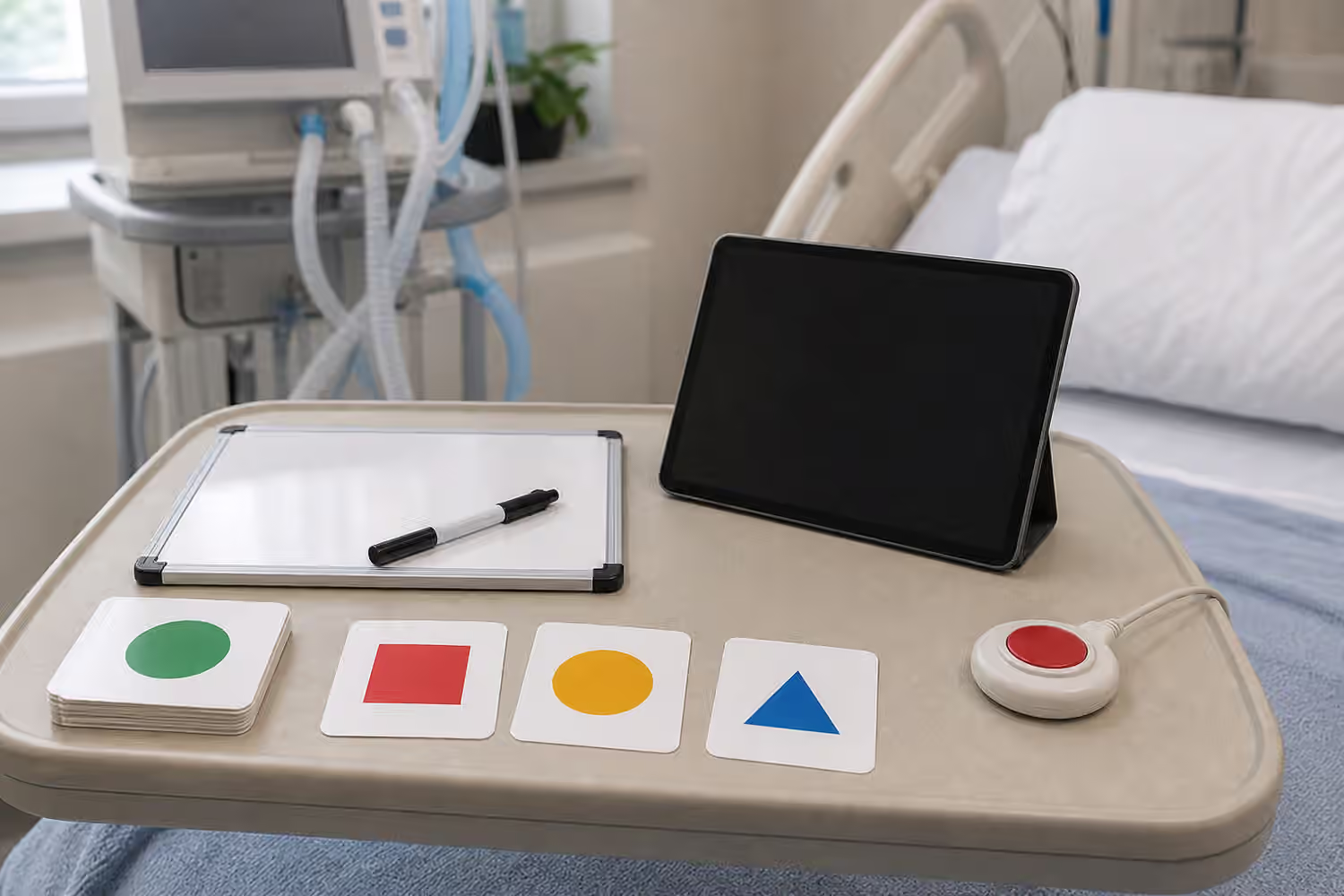
Some people can use speech in certain conditions with medical-team guidance. Others need writing, gestures, communication boards, partner-assisted scanning, eye gaze, mouthing, tablets, yes-no systems, or other AAC supports. The appropriate options depend on medical status, alertness, vision, hearing, movement, language, literacy, cognition, fatigue, infection control, and hospital equipment. Families should not improvise airway-related choices. They can, however, ask that communication be addressed.
The AAC Basics guide is a useful foundation because AAC is not a last resort. In medical settings, AAC may be temporary, intermittent, or part of a long-term plan.
The First System Must Work When The Person Is Tired
Medical communication often fails because the system is too hard for the moment. A tablet may be powerful, but it may not help if the person cannot reach it, hold attention, see the screen, or keep their hand steady. A dry-erase board may be simple, but it may not help if the person is too weak to write. Lip-reading may seem obvious, but many messages are hard to read from mouth movements alone. A yes-no system may be essential, but only if partners know how the person signals yes, no, unsure, stop, and help.
The first system should be reliable for basic control. The person needs a way to get attention, answer yes and no, indicate discomfort, refuse, request a break, ask for family, and repair when misunderstood. More complex communication can be added, but the minimum system should not depend on perfect energy. Fatigue, pain, medication, and noise can change access hour by hour.
The Communication Repair and Self-Advocacy guide applies strongly here. If a message breaks down, the person needs a way to show that the guess was wrong and try again.
Partners Need Clear Habits
In hospital rooms and home care routines, many partners may rotate through quickly. Nurses, therapists, physicians, family, interpreters, aides, and visitors may all communicate differently. A good plan is visible, respectful, and easy to learn. It explains how the person signals, what tools are available, where they are kept, and what partners should do before assuming the person cannot answer.
Good partner behavior often means slowing down. Ask one question at a time. Face the person. Confirm the signal. Offer choices when open-ended questions are too hard, but do not reduce every conversation to forced choices. Pause long enough for a response. If the person mouths words, repeat what you think you understood and let them confirm or reject it. If the person uses a board, position it where they can see and access it, not where it is convenient for the listener.
The Communication Partner Training guide can help families see that communication support is a shared responsibility. The person with the tracheostomy should not have to overcome every barrier alone.
Medical Decisions Need Communication Access
Healthcare choices can move quickly. A person may need to understand options, ask questions, express preferences, or participate in consent discussions. Communication access should be considered before important conversations, not after a misunderstanding has already happened. This may involve timing discussions when the person is most alert, making sure glasses and hearing aids are available, reducing noise, arranging interpreting services, and using the person’s preferred communication tools.
Families may need to advocate gently but firmly. “How will they communicate during this conversation?” is a reasonable question. So is “Can we make sure the board is within reach?” or “Please give them time to answer.” These are not demands for special treatment. They are practical steps toward being understood.
The Medical Appointment Communication Access guide offers a broader framework for being heard in care. Tracheostomy and ventilator situations raise the stakes because speech may be physically limited at the exact moment communication matters most.
Swallowing, Voice, And Breathing Questions Belong With The Team
Tracheostomy and ventilator care can intersect with swallowing, voice, secretion management, respiratory status, and fatigue. Speaking valves, capping, swallowing evaluations, diet changes, and airway decisions must be handled by qualified professionals under appropriate medical protocols. A guidebook cannot tell a family what is safe for a specific person.
Speech-language pathologists may be involved in communication, swallowing, voice, and cognitive-communication support, depending on the setting and training. Respiratory therapists, physicians, nurses, dietitians, occupational therapists, and physical therapists may also be part of the plan. The person and family should know who is responsible for each question so communication needs do not get lost between disciplines.
The Feeding and Swallowing guide explains why swallowing questions belong in professional care. Communication access can be supported at the same time without pretending that all medical issues are simple.
Dignity Shows Up In Small Details
A person who cannot speak easily may still want privacy, humor, comfort, control, and ordinary conversation. They may not want every visitor to ask medical questions. They may want to tell someone to move a pillow, stop touching their belongings, change the channel, call a friend, or leave the room. These messages can seem small to staff and enormous to the person in bed.
Communication tools should include more than symptoms. They should include personal phrases, emotional messages, names, preferred routines, and ways to say no. If the person has a known communication style, preserve it. If speech limitation may last, consider whether more robust AAC support, message banking, or a written communication profile would help.
Communication access during tracheostomy or ventilator care is not only a technical problem. It is a relational promise: the person remains a communicator, even when speech is difficult. The team around them has to make that truth usable.