This guide explains how to read speech-language therapy goals and progress notes without reducing therapy to a percentage on a page. It is educational background, not a treatment plan, school decision, insurance advice, diagnosis, or substitute for a licensed speech-language pathologist, qualified school team, physician, audiologist, or other local professional. See Documentation in Health Care for the professional reference behind this topic.
Goals can be useful when they describe meaningful communication change. They can also become confusing when they sound technical, detached from ordinary life, or too focused on a therapy-room task. A good goal is not just measurable. It is connected to participation.
A goal is a bridge, not a slogan
Speech-language therapy often begins with a concern that is easy to feel and hard to measure. A child is not understood by classmates. A teenager avoids presentations because stuttering feels exposed. An adult with aphasia cannot reliably order lunch alone. A person using AAC has a device but few chances to use it outside therapy. A teacher ends each day hoarse. A family knows life is harder than it should be, but the first goal has to turn that concern into a workable target.
That is why goals need both precision and humanity. A goal that only says “improve communication” is too broad to guide therapy. A goal that only says “produce a sound with 80 percent accuracy in structured trials” may be measurable but still leave families wondering how it helps at school, work, meals, or conversation. The best goals make a bridge between a specific skill and the setting where the skill matters.
If the evaluation report is hard to follow, start with Reading a Speech-Language Evaluation Report before judging the goals. The findings should explain why each goal exists.
What the pieces of a goal mean
Many goals include a target behavior, a context, a support level, and a way to measure progress. The target behavior names what the person is working on, such as using a clearer speech sound, answering story questions, repairing a communication breakdown, using a fluency strategy, following a direction, producing a healthier voice pattern, or selecting messages with AAC. The context explains where the skill is expected to happen, such as in structured practice, conversation, classroom activities, meals, work calls, shared reading, or community routines.
Support level matters because independence is not all-or-nothing. A person may succeed with a model, visual cue, written choice, extra time, partner prompt, AAC navigation support, or quieter environment. That does not make the success fake. It tells the team what helps. Over time, the support may change. The person may need fewer cues, use the skill in a harder setting, repair more independently, or communicate with less fatigue. Progress can be a change in the amount of support, not only a change in accuracy.
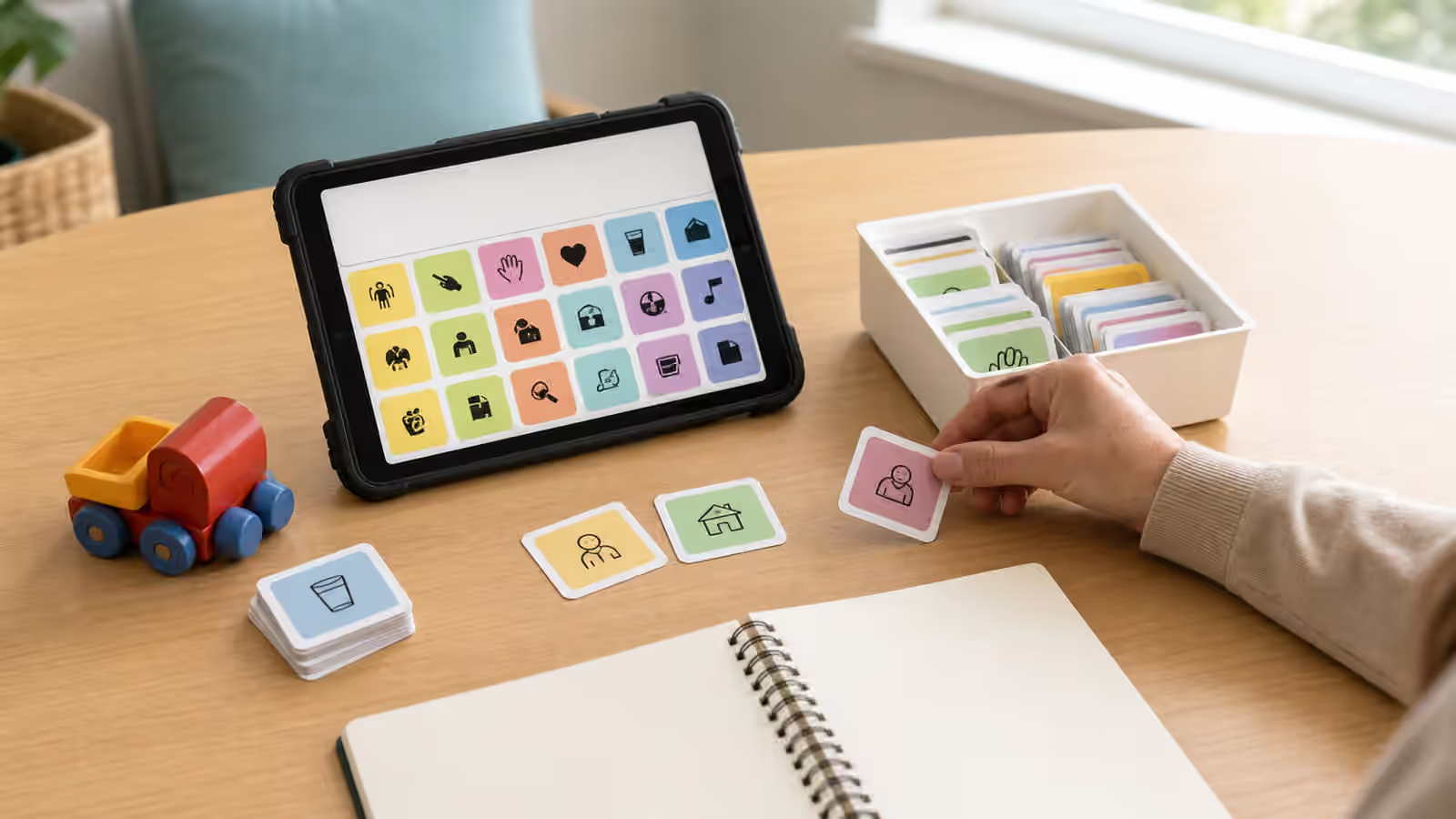
Measurement should fit the skill. Percentages can be useful for some tasks, especially discrete speech sound targets. They are less satisfying for participation goals unless they are tied to real opportunities. A note that says a child used AAC in four snack routines with a familiar adult may say more than a bare score. A note that says an adult used written keywords to repair two conversation breakdowns may matter more than a worksheet count. The measure should help the team make decisions, not merely decorate the record.
Progress notes should explain change
A progress note should answer a practical question: what is changing, under what conditions, and what still gets in the way? It may mention accuracy, cues, settings, materials, fatigue, attention, partner support, generalization, confidence, or breakdowns. It should help the next adult understand what to keep doing and what to adjust. If notes only repeat that the person “tolerated therapy well” or “made progress,” they may not be giving enough information for real carryover.
Good progress can be uneven. A child may use a sound well in words and lose it in fast conversation. A student may tell a story clearly with picture support and become disorganized during a personal narrative. An adult may manage a quiet conversation after brain injury but struggle in a busy restaurant. A voice client may feel better during guided practice and still get hoarse after a long teaching day. The unevenness is not failure. It is information about where the skill is fragile.
The Home Practice Without Pressure guide is relevant because carryover should not become a second full-time job. A progress note can help home practice stay brief and targeted. Instead of telling a family to practice everything, it can name one routine, one cue, and one realistic sign that the person is using the skill.
Real life is the test of fit
A goal may be well written and still miss the person’s priorities. A child who is embarrassed by pull-out sessions may need the team to consider where practice happens. A person with aphasia may care most about phone calls with one sibling, not naming pictures in isolation. A student who uses AAC may need classroom partners trained to wait and respond, not only a device goal for the student. A speaker with voice strain may need workload planning and medical input, not only reminders to drink water.
This is where families, adults, teachers, and communication partners bring essential knowledge. They know which routines are breaking down. They know when the person shuts down, works too hard, or avoids a task. They know what would make daily life better. Clinicians bring assessment skill and therapy planning. The goal should be built from both kinds of knowledge.
In school settings, goals also need to connect to educational access. The School Speech Services, IEPs, and Parent Questions guide can help families ask how a communication goal supports classroom participation, peer interaction, curriculum access, presentations, reading, writing, or self-advocacy. A goal that stays inside the therapy room may need a plan for how it travels.
When to ask for a goal to be clarified
It is reasonable to ask what a goal means in ordinary language. Ask what the person will be able to do more easily if the goal is met. Ask where the skill should show up. Ask what cues are allowed, how progress is measured, and how the team will know when the skill is ready for a harder setting. Ask what home or classroom partners should do and what they should avoid. A goal that cannot be explained plainly may need revision.
It is also reasonable to ask about maintenance and generalization. Maintenance means the skill holds over time. Generalization means the skill travels beyond the first practice task. A person who produces a sound in a clinic drill may still need support using it during conversation. A person who uses AAC to request in therapy may still need chances to comment, reject, ask, tell, joke, and repair at home and school. The AAC in Daily Routines guide expands that idea for communication systems.
Sometimes progress slows because the goal is too hard, too easy, too narrow, too disconnected from motivation, or blocked by another issue. Hearing access, fatigue, pain, anxiety, attention, motor planning, language load, medical changes, environment, or partner behavior may all affect progress. A slowdown is not always a sign that therapy is useless. It may be a sign that the plan needs a better question.
Keep dignity in the record
Progress notes are records about real people. They should be accurate, respectful, and private. For children and minors, avoid putting names, school names, dates of birth, recordings, diagnoses, or identifiable examples into casual tools. For adults, treat therapy notes and communication details as personal health information. When sharing examples informally, remove identifying details and keep the focus on the support question.
The most useful goal conversation is not “Did we hit the number?” It is “Is communication becoming easier, safer, more flexible, or more available in the settings that matter?” Numbers can help answer that question. They should not replace it. Speech-language therapy is strongest when the record points back to a person using communication in a real day, with supports that make participation more possible.