This guide explains stimulability and cueing in speech sound work. It is educational background, not a diagnosis, therapy plan, school recommendation, or substitute for a licensed speech-language pathologist, physician, audiologist, dentist, orthodontist, or qualified local professional. See Speech Sound Disorders: Articulation and Phonology for the professional reference behind this topic.
When a child or adult is working on a speech sound, the first useful question is not always whether the sound is right or wrong. A better early question is what helps the sound get closer. Stimulability is one way clinicians explore that question. It looks at whether a person can produce a target sound with support, even if the sound is not yet used independently in conversation.
Stimulability Is A Clue, Not A Verdict
Stimulability describes how a person responds when a sound is modeled, shaped, slowed down, placed in a different word, or supported with a cue. A child who cannot yet say a sound in everyday speech may be able to imitate it after watching a mouth model. Another child may get closer when the sound is paired with a vowel, placed at the end of a word, whispered, stretched, or practiced with a mirror. An adult with motor speech changes may need a different kind of support, such as slower pacing, contrast, rhythm, or feedback about loudness and clarity.
This does not mean a family should run a home test and decide what therapy should be. Stimulability is interpreted alongside age, speech sound patterns, hearing access, oral structure, language background, motor planning, intelligibility, frustration, and participation. It also changes. A sound that was not stimulable in one session may become available later when the person is rested, the cue is better matched, or another sound pattern has shifted.
The Articulation and Speech Sounds guide gives the broader foundation for sound development. Stimulability fits inside that map as a practical way to ask how much support a sound needs before it can become useful.
Cues Should Make The Task Clearer
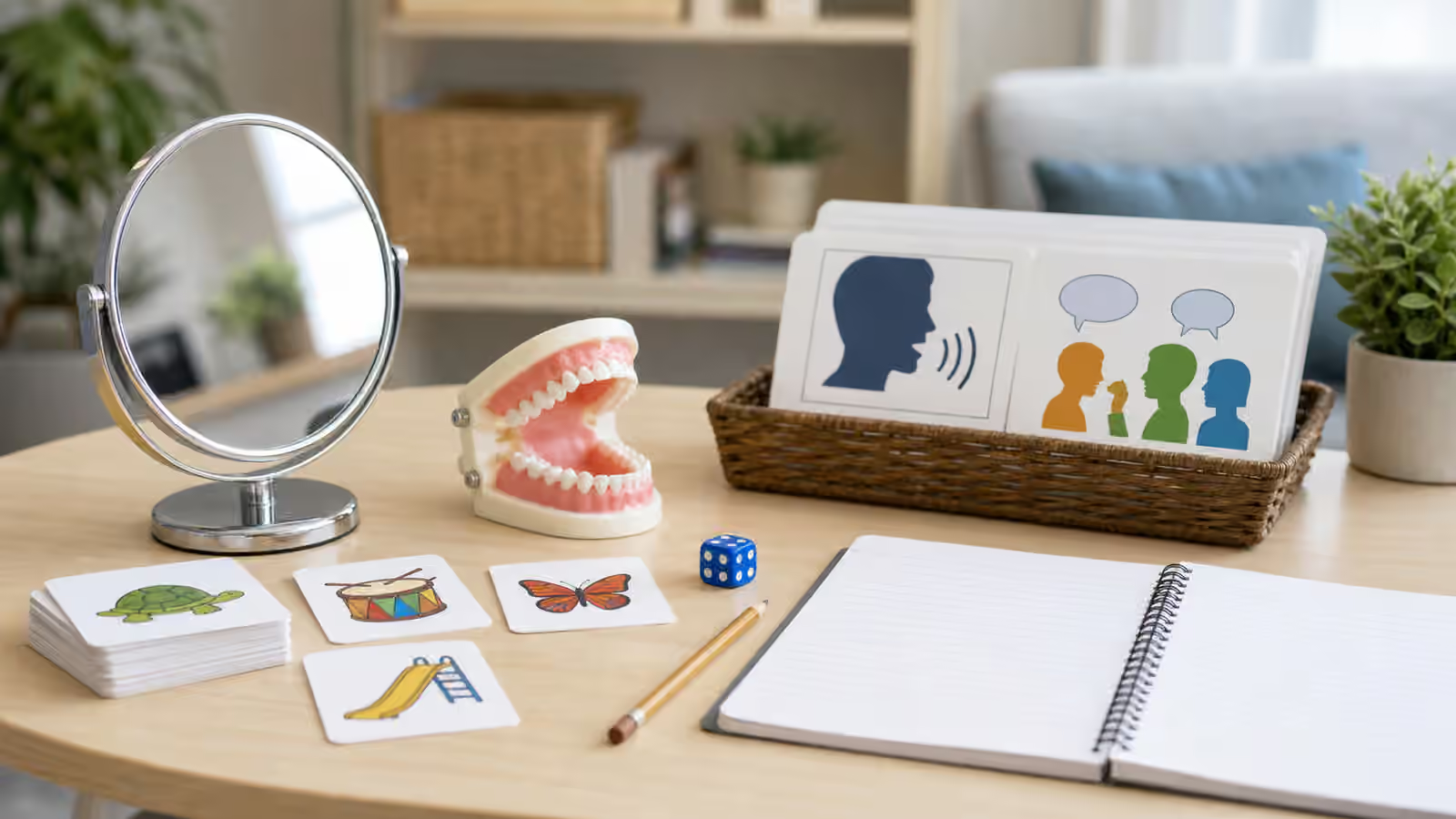
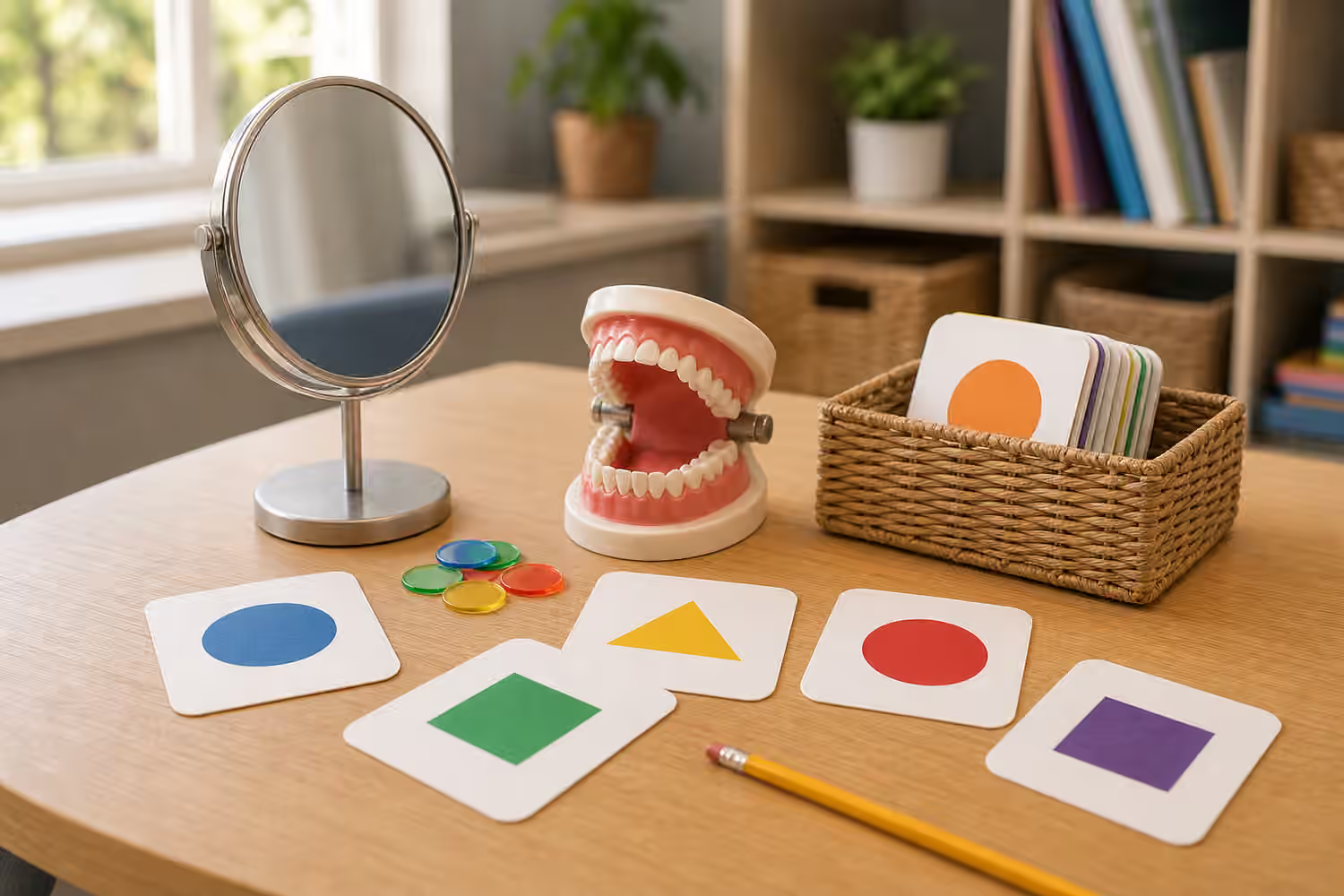
A cue is any support that helps the person understand, feel, hear, or organize the target. Some cues are auditory, such as hearing a clear model or comparing two words that differ by one sound. Some are visual, such as watching the speaker’s lips, tongue placement, jaw movement, or gesture. Some are tactile or movement-based, when provided by an appropriately trained clinician. Some cues are about context, such as starting with a sound in isolation, then syllables, words, phrases, sentences, and conversation.
The cue is not the goal. Communication is the goal. A cue is useful when it helps the person become more accurate, more aware, or more independent over time. A cue is less useful when it creates tension, guessing, shame, or a dependency that never fades. A child who can say a sound only when an adult points to their mouth may need help moving that sound into real words and routines. A speaker who needs constant correction may stop wanting to talk.
Good cueing often feels smaller than families expect. The adult may say the word naturally, pause, offer one clear model, and move on. The clinician may change the word, change the sound environment, or return to an easier level instead of repeating the same failed demand. This is different from asking a child to say a word twenty times in a row while everyone gets more frustrated.
Not Every Error Needs The Same Path
Speech sound work can involve articulation, phonological patterns, motor planning, hearing access, resonance, language background, and habit. A distorted sound may need different support than a missing sound. A pattern such as replacing many back sounds with front sounds may be approached differently from one stubborn sound. Childhood apraxia of speech, dysarthria, cleft palate history, hearing differences, and multilingual speech development all change the clinical question.
This is why stimulability should be interpreted carefully. If a child can imitate a sound once, that does not prove the sound is ready for conversation. If a child cannot imitate the sound, that does not prove the sound is impossible. It may mean the cue was not right, the task was too hard, the sound is not developmentally ready, the person needs hearing or medical follow-up, or a different treatment approach is needed.
The Phonological Patterns Without Panic guide can help families think about patterns rather than isolated mistakes. The Childhood Apraxia of Speech guide is relevant when speech is inconsistent, effortful, or hard to sequence, especially if a clinician has raised motor planning concerns.
Home Practice Should Protect Talking
Families often want to help between sessions. That is understandable, but speech sound practice can become too intense quickly. The child may start to feel that every conversation is being graded. The adult may start listening for errors instead of meaning. A small amount of well-matched practice can help; constant correction can make the communication environment feel unsafe.
A safer home routine usually starts with a clinician’s specific guidance. The family should know which sound, which word level, which cue, and which stopping point to use. If the child is not successful after a few tries, more pressure rarely fixes the problem. It may be better to model the word naturally, return to easier material, or save the question for the next session. The Home Practice Without Pressure guide expands this idea.
Practice also needs a bridge to real speech. A child may produce a sound during a game and lose it while telling a story. That is normal. Conversation is harder because the speaker has to think about ideas, grammar, timing, emotions, and the listener at the same time. The Speech Sound Carryover guide explains why accuracy in drills is only one part of the path.
What To Observe Before A Session
The most useful family notes are concrete and brief. Notice which words are easier, which positions are harder, whether the person can imitate the sound after a model, whether the sound appears during play or only in practice, and whether frustration rises. Notice whether the person hears the difference between two words, or whether they treat them as the same. Notice whether the sound changes with speed, fatigue, noise, missing teeth, illness, or excitement.
It also helps to record participation, not only accuracy. Can classmates understand the child? Does the speaker avoid certain words? Does the person get teased, withdraw, repeat patiently, or become angry? Does the listener understand better when the topic is known? Speech sound therapy should improve intelligibility and participation, not only produce a neat score.
For children and minors, avoid putting names, school names, birth dates, recordings, diagnoses, or identifiable details into casual tools. Bring observations to the professional team in a private, practical way.
The Best Cue Is The One That Fades
A sound is not truly functional if it only appears under heavy adult control. Over time, successful support should become lighter, more natural, and more connected to real communication. A cue may begin as a mirror, mouth model, gesture, or careful imitation. Later it may become a quiet reminder, a chance to self-correct, or a planned word in a meaningful sentence. Eventually the speaker should be able to use the sound without thinking about every movement.
That path is rarely perfectly straight. A sound may improve in therapy, disappear during a busy week, return in a favorite phrase, and then become stable in more settings. The practical question is whether the support is moving toward independence, clarity, and confidence. Stimulability gives the team a starting clue. Careful cueing turns that clue into a humane plan.