This guide helps you decide which words to use when describing a concern so an SLP, school team, physician, audiologist, or rehabilitation team can understand the question. It is educational background, not a diagnostic assessment, treatment plan, or substitute for a licensed speech-language pathologist, physician, audiologist, school evaluation team, or other qualified professional. See Stuttering, Cluttering, and Fluency for the professional reference behind this topic.
What this can look like in real life
Speech, language, voice, and fluency often get collapsed into one word: talking. That shortcut causes confusion. A person can know exactly what they want to say but have trouble producing sounds. They can speak clearly but struggle to find words. They can have a strong vocabulary but a strained voice. They can speak fluently alone and stutter when the room changes. Mapping the domain is not academic housekeeping; it prevents the wrong kind of help.
How to observe without over-reading
Start by describing the breakdown. Is the listener asking for repeats because sounds are unclear, because words are missing, because the voice is too quiet or strained, because speech flow is interrupted, or because the conversation itself is hard to organize? Does the concern change with fatigue, emotion, noise, illness, audience, language, or topic? Those clues tell you which lane to investigate first and which professionals may need to be involved.
A gentler support routine
A good home response is broad enough to be helpful and humble enough not to diagnose. Reduce background noise, give time, use written backup, keep examples, avoid shaming corrections, and notice when communication is easier. If the person is a child, keep language rich and relationships warm while you gather information. If the person is an adult, ask what support feels respectful. The same accommodation can feel helpful to one person and patronizing to another.
Where professional care fits
The map matters most when more than one domain is involved. Voice strain plus swallowing symptoms, speech sound changes plus hearing concerns, language trouble plus memory changes, or fluency changes plus anxiety may need coordinated care. Ask the first clinician, “What else should be ruled out?” That question keeps the plan from becoming too narrow. Speech-language pathology is a broad field because communication problems rarely arrive wearing one neat label.
Plain-language map
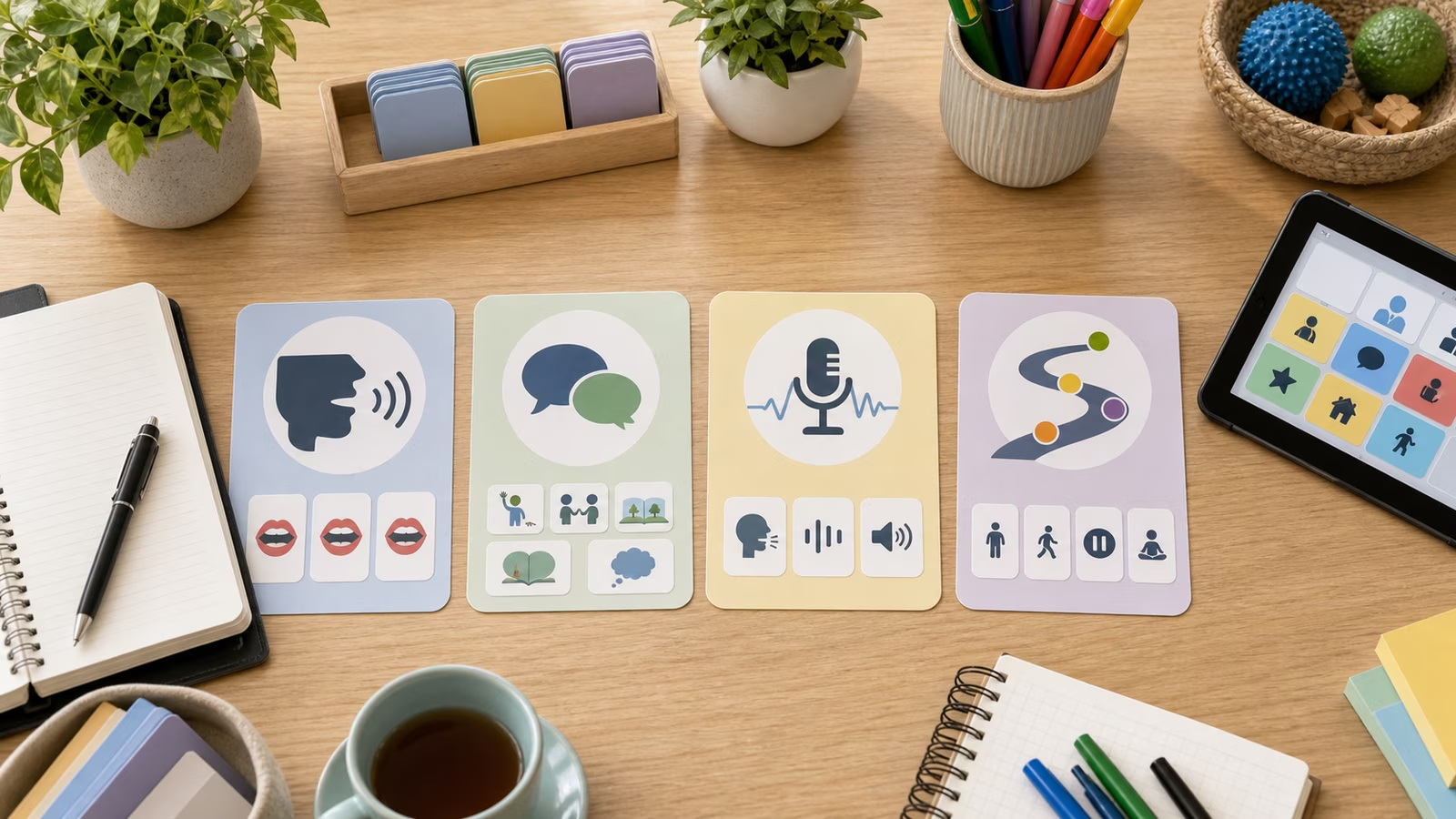
- Speech is the motor and sound side of talking: sounds, syllables, clarity, rate, and movement.
- Language is meaning: understanding, vocabulary, grammar, narrative, social use, reading, and written expression.
- Voice is sound source and quality; fluency is flow; AAC is communication support beyond speech; swallowing is a health and safety domain.
Common misconceptions
- Clear speech always means language is fine.
- Strong vocabulary always means speech and fluency are fine.
- AAC is a last resort instead of a valid communication support.
What to observe or document
- What the person understands compared with what they can express.
- Whether listeners struggle because of sound accuracy, volume, rate, word finding, grammar, voice quality, or turn-taking.
- Which communication modes already work: speech, gestures, signs, writing, pointing, devices, pictures, or partner interpretation.
A useful map note might say: “Listeners understand the words, but the voice is strained by afternoon,” or “Speech sounds are clear, but the story is hard to follow,” or “The person knows the answer but gets stuck starting the sentence.” Each version points to a different lane. That is why mapping the concern saves time.
For children and minors, avoid storing names, birth dates, school names, diagnoses, recordings, or sensitive personal details in casual tools.
Keep the goal visible
A practical plan for Speech vs Language vs Voice vs Fluency: The Big Map should survive an ordinary day. Choose one cue, access change, routine, or partner habit that can be repeated without turning every interaction into therapy, then decide how you will notice whether participation is easier.
Questions to ask an SLP, school, or clinician
- Are we describing a speech sound concern, a language concern, both, or something else?
- Could hearing, voice health, neurological change, or fatigue be part of the picture?
- What support improves participation right now?
Limits and professional care
Speech Genie and the pages in this section cannot determine whether someone has a disorder, cannot rule out hearing or medical concerns, and cannot replace a professional evaluation. For concerns about speech, language, voice, fluency, swallowing, development, hearing, regression, sudden change, choking, or safety, bring the concern to qualified local services.
For Speech vs Language vs Voice vs Fluency: The Big Map, use the Speech Therapy hub and Home Practice Without Pressure as next steps; treat Speech Genie transcript differences as practice notes, not clinical findings.