This guide explains selective mutism as a participation and speaking-demand concern that often needs coordinated support, not pressure to perform. It is educational background, not a diagnosis, mental health plan, school eligibility decision, treatment plan, or substitute for a licensed speech-language pathologist, mental health clinician, physician, school evaluation team, or other qualified professional. See Selective Mutism for the professional reference behind this topic.
Speech recognition tools and home observations can be useful notes, but they can also be wrong, especially with quiet children, multilingual speakers, accents, dialects, anxiety, unfamiliar settings, background noise, hearing differences, fatigue, and device limitations.
What this can look like in real life
Selective mutism can be confusing because speech may appear in one setting and disappear in another. A child may talk freely at home, laugh with siblings, sing in the car, and argue about pajamas, then become silent at school. Another child may whisper to one friend but not answer the teacher. A student may know the answer, understand the question, and still be unable to speak when everyone is waiting. Adults who do not understand the pattern may call it stubborn, rude, shy, defiant, or manipulative. Those labels usually make the situation worse.
The word “selective” can be misleading. It does not mean the child is casually choosing silence to control the room. The pattern is often tied to anxiety and specific speaking demands. Speech can feel possible with trusted people and impossible under public attention, novelty, pressure, or fear of being heard. The child’s communication system may still be active. They may gesture, point, nod, write, use facial expression, move toward a caregiver, or participate when speech is not required. The problem is not a lack of thoughts.
Speech-language pathologists may be involved because selective mutism affects communication participation, school access, pragmatics, language sampling, and sometimes speech or language evaluation. Mental health clinicians are often central because anxiety is commonly part of the picture. Teachers, caregivers, physicians, and school teams may also be involved. Good care is usually coordinated rather than owned by one profession.
Why pressure backfires
A common adult response is to make speech the doorway into everything. The child must say hello before entering, say please before receiving, answer out loud before moving on, or repeat a phrase so the adult knows they can do it. This may look reasonable from the outside, especially if the child speaks elsewhere. But for a child whose speech shuts down under demand, public pressure can teach the body that speaking is unsafe. The next attempt may become harder, not easier.
Pressure can be subtle. A room full of adults staring kindly can still be too much. A teacher saying “We will wait” can turn silence into a performance. A parent explaining “She talks all the time at home” may unintentionally raise the stakes. Even praise can feel intense if it spotlights speech before the child is ready. The Home Practice Without Pressure guide is relevant here because practice should protect willingness to communicate, not only chase an audible answer.
This does not mean adults should stop expecting participation. It means expectations need shaping. A child may first participate by pointing, choosing, showing, writing, recording at home, speaking to a peer, whispering to a trusted adult, or answering in a smaller setting. The path should be gradual enough that communication succeeds. The aim is not to keep the child silent. The aim is to reduce the speaking demand until speech can return without panic.
What to observe before deciding what helps
Observation should compare settings rather than judging personality. Where does the child speak comfortably? Who is present? Is speech easier during play than direct questioning? Does the child speak when no unfamiliar adult is listening? Do they use a normal voice, whisper, mouth words, gesture, or write? Are there differences across languages, classrooms, relatives, community places, or online settings? Does the child understand language and classroom routines when speech is not required? Are there hearing, speech sound, language, fluency, voice, sensory, or developmental concerns that also need attention?
The Language Development guide can help teams remember that quiet speech is not the same as a full language sample. A child who does not speak at school may be underestimated. They may also have a language difficulty hidden by silence. Both possibilities need care. A proper evaluation may need parent report, home language examples, observation, play-based interaction, alternative response modes, and collaboration with professionals who understand selective mutism.
The Social Communication and Pragmatics guide is also relevant, but selective mutism should not be collapsed into social skill weakness. A child may know how conversation works and still be unable to speak in certain settings. Another child may have both selective mutism and social communication differences. The evaluation should make room for both without assuming one explains everything.
School support needs a plan, not improvisation
School is often where selective mutism becomes most visible because speaking demands are everywhere. Attendance, greetings, roll call, reading aloud, asking for help, answering questions, group work, lunch, bathroom requests, performances, testing, and safety routines can all require speech. If the child cannot speak reliably in those moments, the team needs planned alternatives rather than daily surprise.
The School Speech Services, IEPs, and Parent Questions guide can help families frame the school conversation. The exact process varies by location and student need, but the communication question is stable: how will the child participate, show knowledge, ask for help, and stay safe while speech is still difficult? A plan might include nonverbal response options, a trusted communication partner, small-step speaking goals, permission to point or write, predictable routines, reduced public spotlight, and a careful path for expanding speech. Those details belong in team planning, not in one adult’s memory.
Teachers need language that does not shame the child. Instead of announcing that the child will speak today, a teacher can offer choices and keep moving. Instead of treating silence as refusal, the teacher can accept an alternate response and note what level of support worked. Instead of telling peers that the child “will not talk,” adults can protect privacy and model normal inclusion. The child should not become a classroom project.
How speech-language support may fit
An SLP may help evaluate whether speech sound, language, fluency, voice, hearing-related communication, or social communication concerns are present. They may help design communication access in the classroom. They may collaborate with mental health professionals on gradual exposure to speaking demands, making sure the steps are small, measurable, and respectful. They may coach adults to wait differently, prompt less publicly, and recognize communication that is already happening.
Speech-language support should not become a series of surprise speaking tests. It may begin with play, shared activities, gesture, choices, written responses, recorded speech, or communication through a caregiver. Over time, the plan may move speech across people, places, distances, volumes, and tasks. The exact steps belong to the child’s clinical team. The general principle is that speech grows best when the demand is challenging enough to move forward but not so large that the child shuts down.
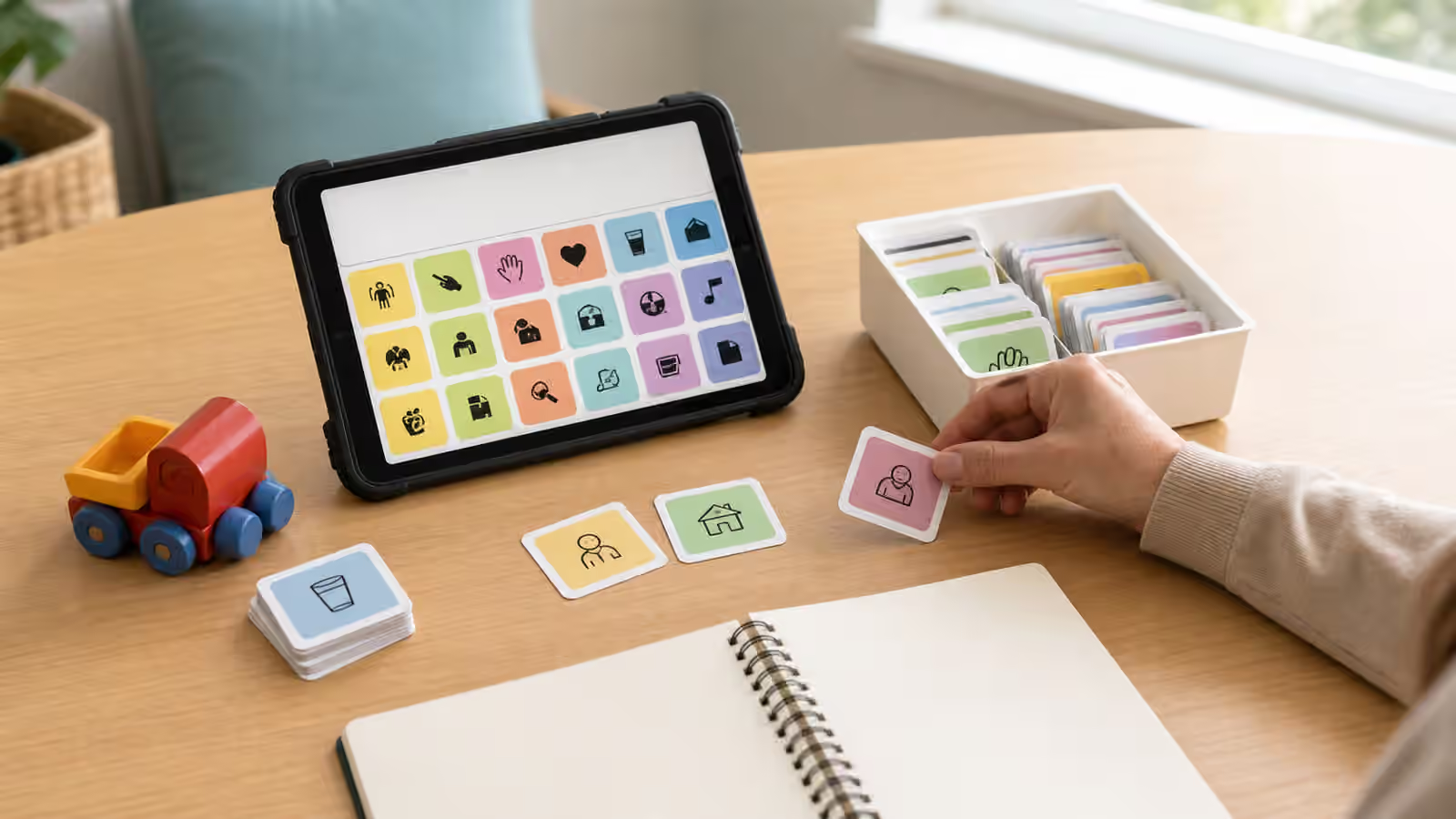
AAC and other supports can be useful for access, especially when the child needs to communicate needs or knowledge before speech is reliable. The AAC Basics guide explains communication support beyond speech. For selective mutism, a communication card, writing option, gesture, or device should not be used to avoid all speech forever. It can be a bridge that keeps the child safe and included while the team works on speech in carefully chosen steps.
What caregivers can do without forcing speech
Caregivers often feel trapped between protecting the child and fearing that accommodation will make silence permanent. A useful middle path is to lower panic while keeping communication open. At home, adults can talk about hard speaking situations without interrogation. They can notice what helped, practice tiny steps when the child is calm, and coordinate with the school so the child is not surprised. They can avoid making the child perform speech for relatives, strangers, or professionals without preparation.
It also helps to protect the child’s identity. A child with selective mutism is not “the one who does not talk.” They may be imaginative, observant, funny, athletic, artistic, stubborn, thoughtful, or full of opinions. Adults should keep seeing the whole child, especially when school communication is hard. Progress may begin quietly: entering the room with less distress, pointing to an answer, whispering to one trusted person, recording a message, or using a normal voice in a slightly wider setting.
If you are preparing for help, bring a map of speaking settings. Describe where speech is easy, where it is absent, who hears the child’s voice, what response modes work, and what school tasks are blocked. Ask which professionals should be involved, how anxiety will be addressed, how speech-language questions will be evaluated, and how the plan will protect communication access while speech is growing.
Speech Genie and the pages in this section cannot diagnose selective mutism, anxiety, language disorder, autism, hearing concerns, or any other profile. They can help organize observations and keep home practice gentle. Qualified local professionals should guide assessment and treatment, especially when silence affects school access, safety, daily participation, or emotional well-being. ASHA’s public materials on selective mutism are a useful starting point for families preparing questions for a coordinated care team.