This guide helps you decide how to prepare for school conversations without treating the school process as the same thing as a private medical plan. It is educational background, not a diagnostic assessment, treatment plan, or substitute for a licensed speech-language pathologist, physician, audiologist, school evaluation team, or other qualified professional. See ASHA — Who Are Speech-Language Pathologists? for the professional reference behind this topic.
What this can look like in real life
School speech services sit at the intersection of communication and education. A child may communicate well at home but struggle in the noise, pace, social rules, and academic language of school. Another child may have a medical or private-therapy concern that does not automatically create school eligibility. Families often feel caught between systems, each using different words. The child, meanwhile, just needs adults to understand what communication support looks like during a real school day.
How to observe without over-reading
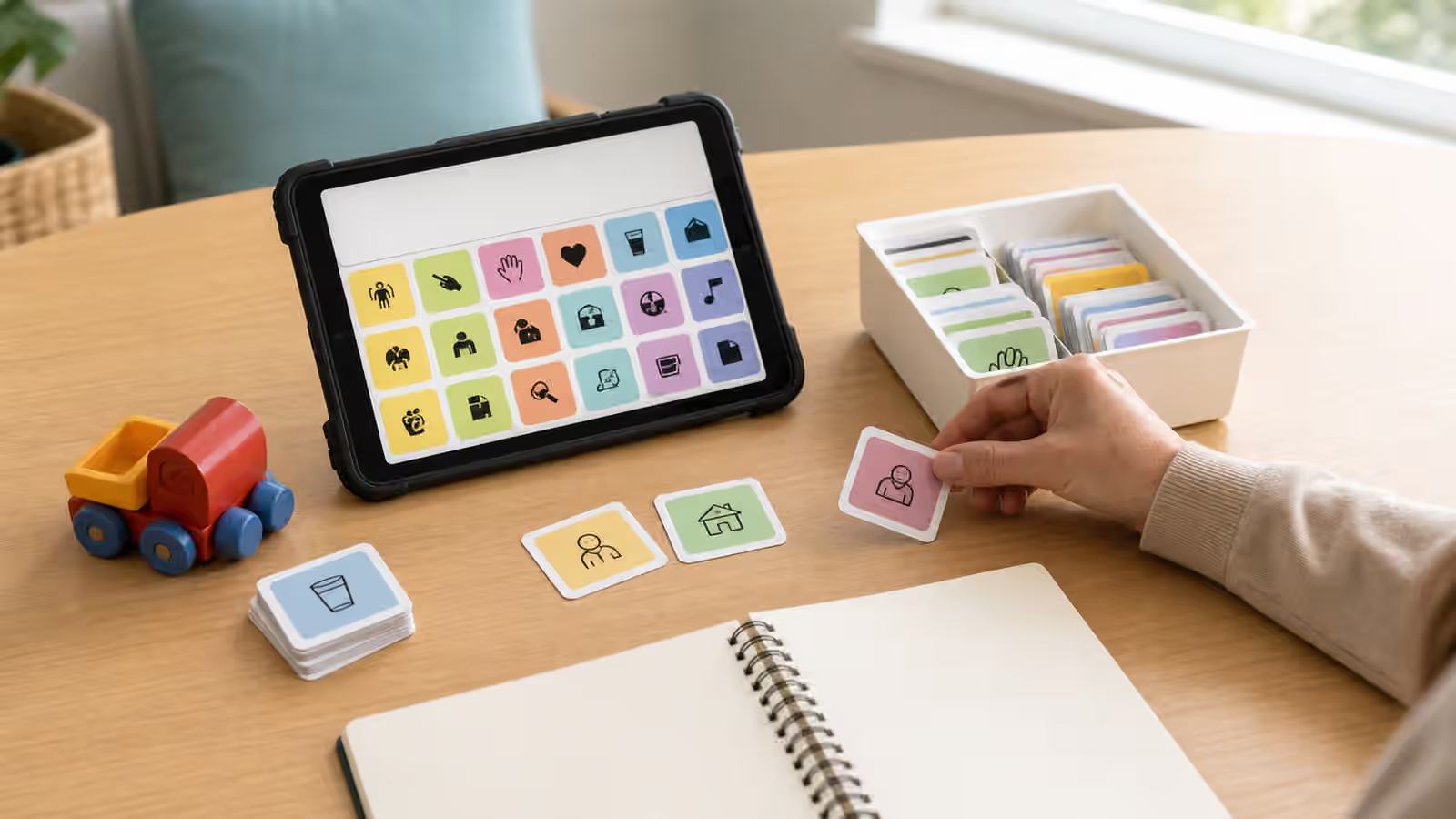
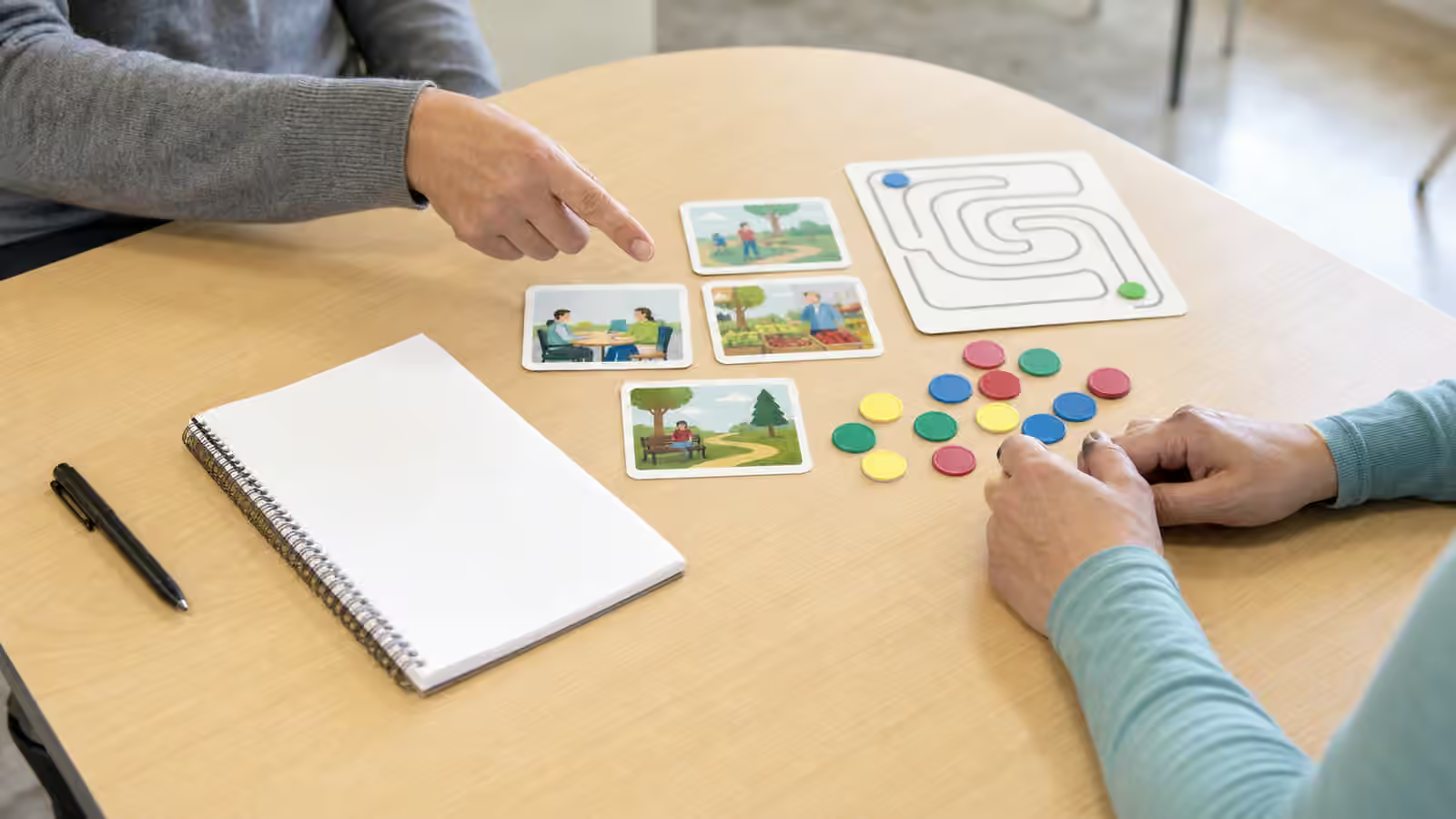
Useful school notes connect communication to access. Does the student miss directions, avoid reading aloud, lose stories in writing, get misunderstood by peers, struggle with speech sounds, need AAC support, have voice strain, stutter under participation pressure, or need help understanding social language? Which parts of the day are hardest: arrival, circle time, lunch, group work, presentations, testing, transitions, or playground conflict? Specific school examples make meetings more productive.
A gentler support routine
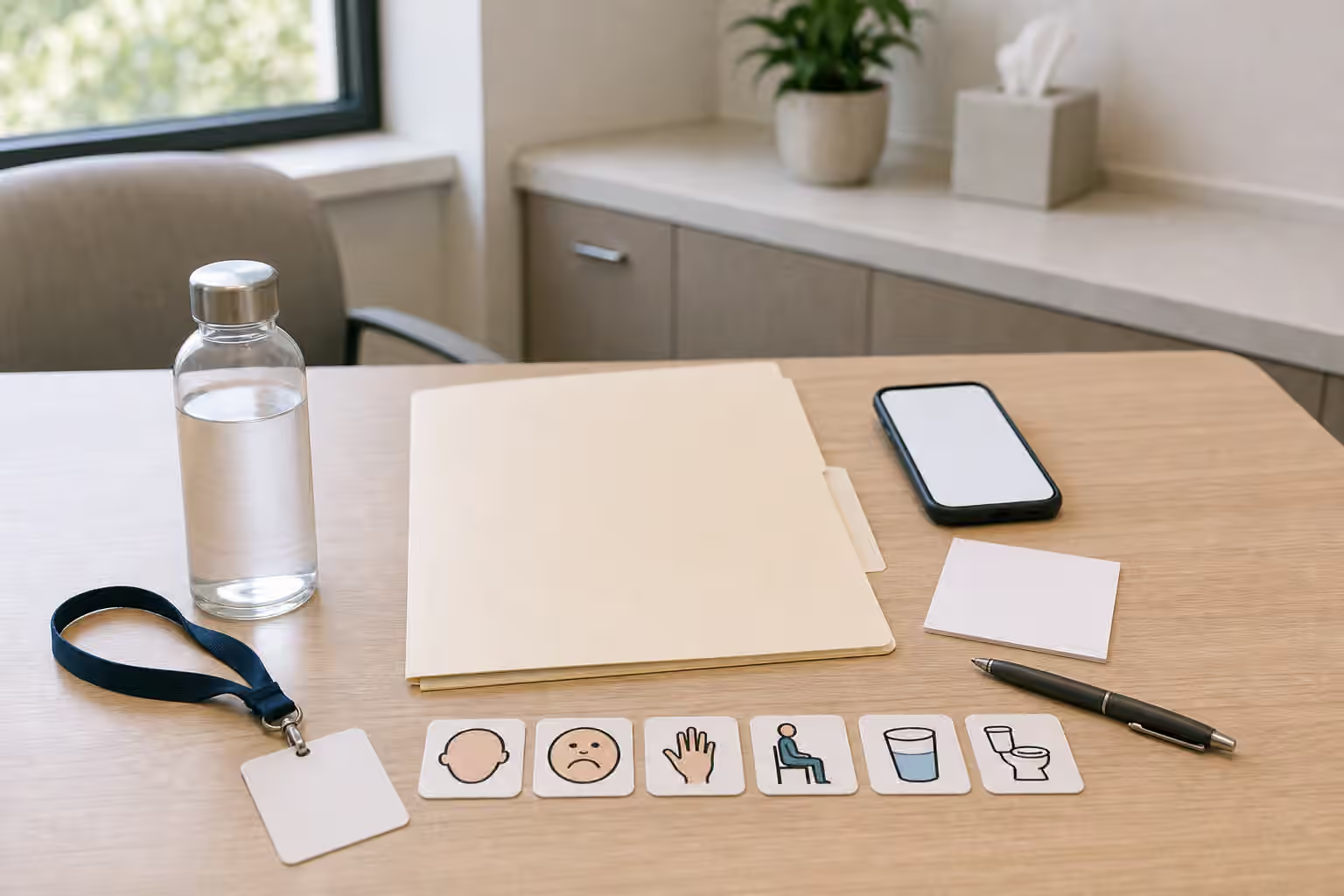
Families can prepare without turning themselves into lawyers overnight. Keep dated examples, teacher messages, work samples, and notes about what helps. Ask for plain explanations of evaluation areas, eligibility decisions, service minutes, classroom supports, and home carryover. If the child already has private therapy, ask how private goals and school goals differ. They may overlap, but school services are tied to educational impact and access within that setting.
Where professional care fits
A strong plan makes responsibilities visible. Who programs the AAC system? Who trains classroom staff? Where will speech practice happen so the student is not always pulled from the same subject? How will progress be measured in actual school participation, not only in a therapy room? If the student is embarrassed, exhausted, bilingual, medically complex, or using multiple services, the plan should respect that reality instead of treating speech as a detachable worksheet.
Plain-language map
- School services focus on educational access and are governed by school rules and special education processes.
- IDEA includes speech or language impairment as one disability category, but eligibility depends on evaluation and educational need.
- Parents can ask what data was used and how goals support school participation.
Common misconceptions
- A medical diagnosis automatically creates a school IEP.
- A school does not need to consider communication if grades are good.
- Parents should arrive with only a label instead of examples.
What to observe or document
- Classroom directions, peer interaction, writing, reading, oral presentations, participation, frustration, and teacher notes.
- How communication affects access to curriculum and school routines.
- Which supports help in real school settings.
A useful school note might say: “He answers in the therapy room but stays quiet during group science. The teacher understands him one-on-one, but peers often guess wrong during games.” That connects communication to educational participation. It gives the team a reason to discuss classroom supports, not only isolated speech accuracy.
For children and minors, avoid storing names, birth dates, school names, diagnoses, recordings, or sensitive personal details in casual tools.
Keep the goal visible
When working on School Speech Services, IEPs, and Parent Questions, avoid making one observation carry more certainty than it can support. Speech, language, voice, fluency, swallowing, hearing, fatigue, dialect, multilingual experience, and context can interact, so a qualified evaluation may need more than a home sample.
Questions to ask an SLP, school, or clinician
- What evaluations were completed and in which languages or modes?
- How does the concern affect educational performance or participation?
- What goals, accommodations, service model, and progress measures are proposed?
Limits and professional care
Speech Genie and the pages in this section cannot determine whether someone has a disorder, cannot rule out hearing or medical concerns, and cannot replace a professional evaluation. For concerns about speech, language, voice, fluency, swallowing, development, hearing, regression, sudden change, choking, or safety, bring the concern to qualified local services.
For School Speech Services, IEPs, and Parent Questions, use the Speech Therapy hub and Home Practice Without Pressure as next steps; treat Speech Genie transcript differences as practice notes, not clinical findings.