This guide explains communication support after right hemisphere stroke or brain injury. It is educational background, not neurological advice, diagnosis, treatment planning, rehabilitation supervision, safety advice, or substitute for a licensed speech-language pathologist, physician, neuropsychologist, occupational therapist, physical therapist, mental health professional, or qualified local team. See Right Hemisphere Disorder for the professional reference behind this topic.
Some communication changes after stroke or brain injury are easy for other people to notice. Words may be hard to find, speech may be slurred, or voice may be weak. Right hemisphere communication changes can be less obvious. A person may speak in full sentences and still miss the main point, overlook social cues, talk off topic, misunderstand humor, ignore information on one side, or seem unaware that the conversation has broken down.
Fluent Speech Can Hide Real Difficulty
Right hemisphere communication support can be confusing for families because the person may not sound impaired in the expected way. They may pronounce words clearly and use long sentences. They may remember familiar facts, tell stories, and insist that nothing is wrong. Then daily life reveals gaps. The person may miss the emotional tone of a conversation, fail to notice that a listener is confused, interpret a joke literally, repeat the same point, become disorganized in a story, or make decisions without seeing the full situation.
These changes are not character flaws, though they can feel personal to partners. A spouse may feel ignored when the person interrupts or misses a facial expression. A coworker may think the person is being careless when they overlook details on the left side of a document. A family member may feel dismissed when the person denies a difficulty that is obvious to everyone else. Speech-language pathology support can help translate those moments into communication questions that can be observed and addressed.
The Adult Speech-Language Support After Stroke or Brain Injury guide gives a broader map of adult rehabilitation. This page focuses on the communication patterns that can appear when attention, inference, social meaning, organization, and self-monitoring are affected.
Attention Shapes The Conversation
Communication depends on attention. A person has to notice the speaker, the topic, the environment, their own message, and the listener’s response. After right hemisphere injury, attention may be uneven. Some people have left neglect, meaning they may miss information on the left side of space or the left side of a page, plate, screen, or room. Others may struggle to shift attention, sustain focus, or filter distractions.
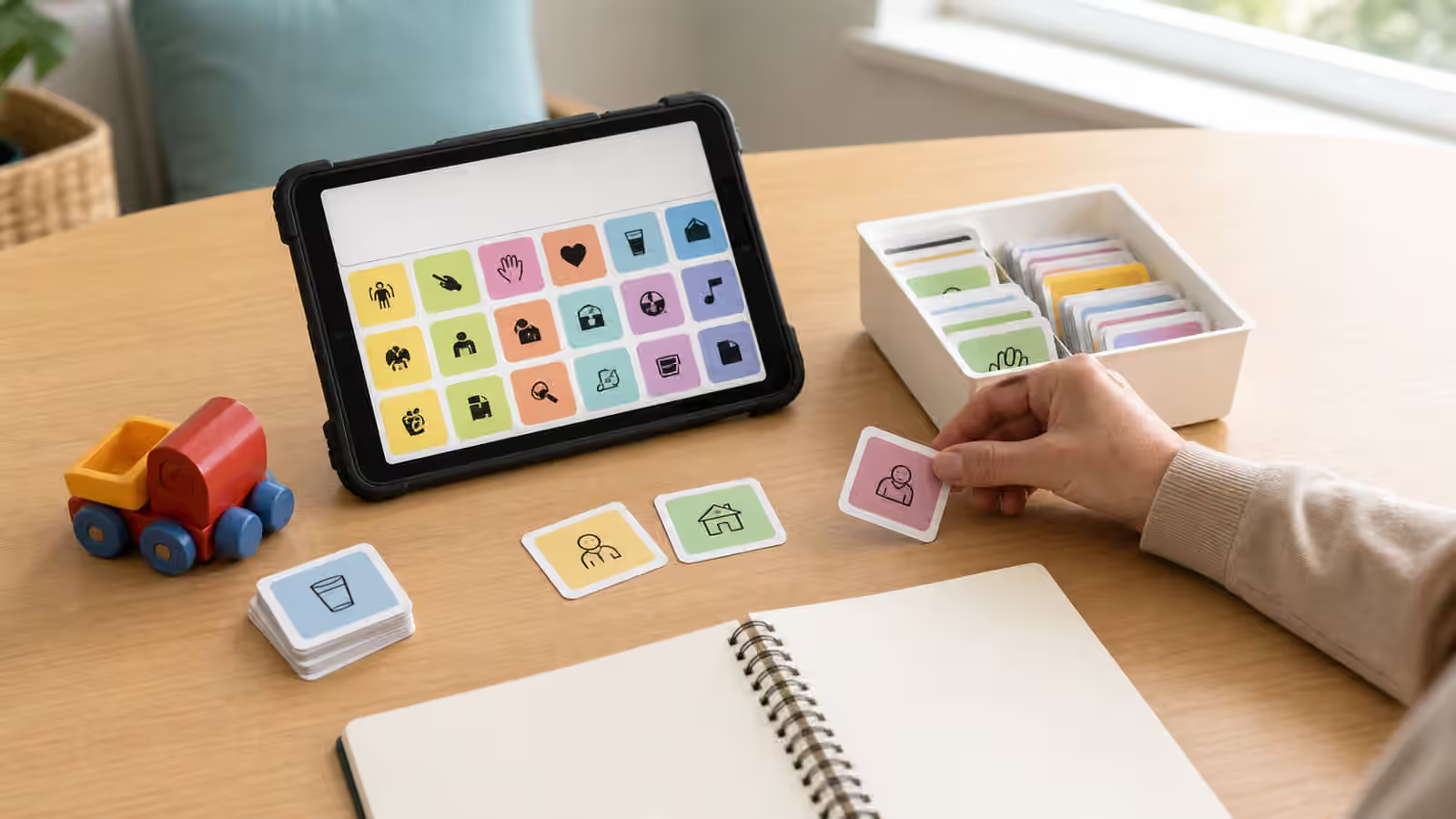
In conversation, attention changes can look like poor listening. The person may miss a key word, respond to only part of a question, lose track in a group, or become overwhelmed in noisy places. If visual neglect is present, written supports may need careful placement and occupational therapy input. A note placed on the left side of the table may not be useful if the person does not attend there. A calendar, medication sheet, menu, or AAC support may need layout changes, scanning routines, or partner cueing.
The Classroom Listening and Following Directions guide is written for school contexts, but the principle is useful for adults too: listening is not only hearing words. It is managing language, noise, memory, attention, and environment at the same time.
Inference And Tone Can Become Unreliable
Right hemisphere communication changes often affect how a person reads meaning beyond the literal words. Sarcasm, humor, hints, indirect requests, facial expression, emotional tone, and body language may become harder to interpret. The person may understand the sentence but miss the social message. They may not realize someone is worried, bored, joking, offended, or asking for a turn.
This can create painful misunderstandings. A family member may say, “It is getting late,” expecting the person to infer that the visit should end. The person may answer, “Yes, it is,” and keep talking. A friend may use sarcasm, and the person may treat it as a fact. A clinician may give a gentle warning, and the person may not grasp the seriousness. Partners may need to say more directly what they mean without shaming the person for missing the cue.
The Inference and Figurative Language guide focuses mainly on language learning, but many of the same ideas matter after neurological change. Inference is not a decorative skill. It helps people understand what others mean, not only what they say.
Organization Matters For Stories And Decisions
Some people after right hemisphere injury can produce plenty of language but have trouble organizing it. A story may include too many details, leave out the main point, jump in time, or circle back repeatedly. A plan may sound confident but miss steps. A person may have difficulty comparing options, predicting consequences, or keeping the listener oriented. This can affect family conversations, medical visits, work tasks, finances, and community safety.
Support does not always mean correcting every sentence. Partners can help by anchoring the topic, writing key words, asking for the main point, summarizing what they heard, and slowing complex decisions. A clinician may work on discourse organization, problem solving, attention to listener needs, and strategies for checking whether the message landed. The goal is not to make the person sound scripted. The goal is to make communication more accurate, efficient, and useful.
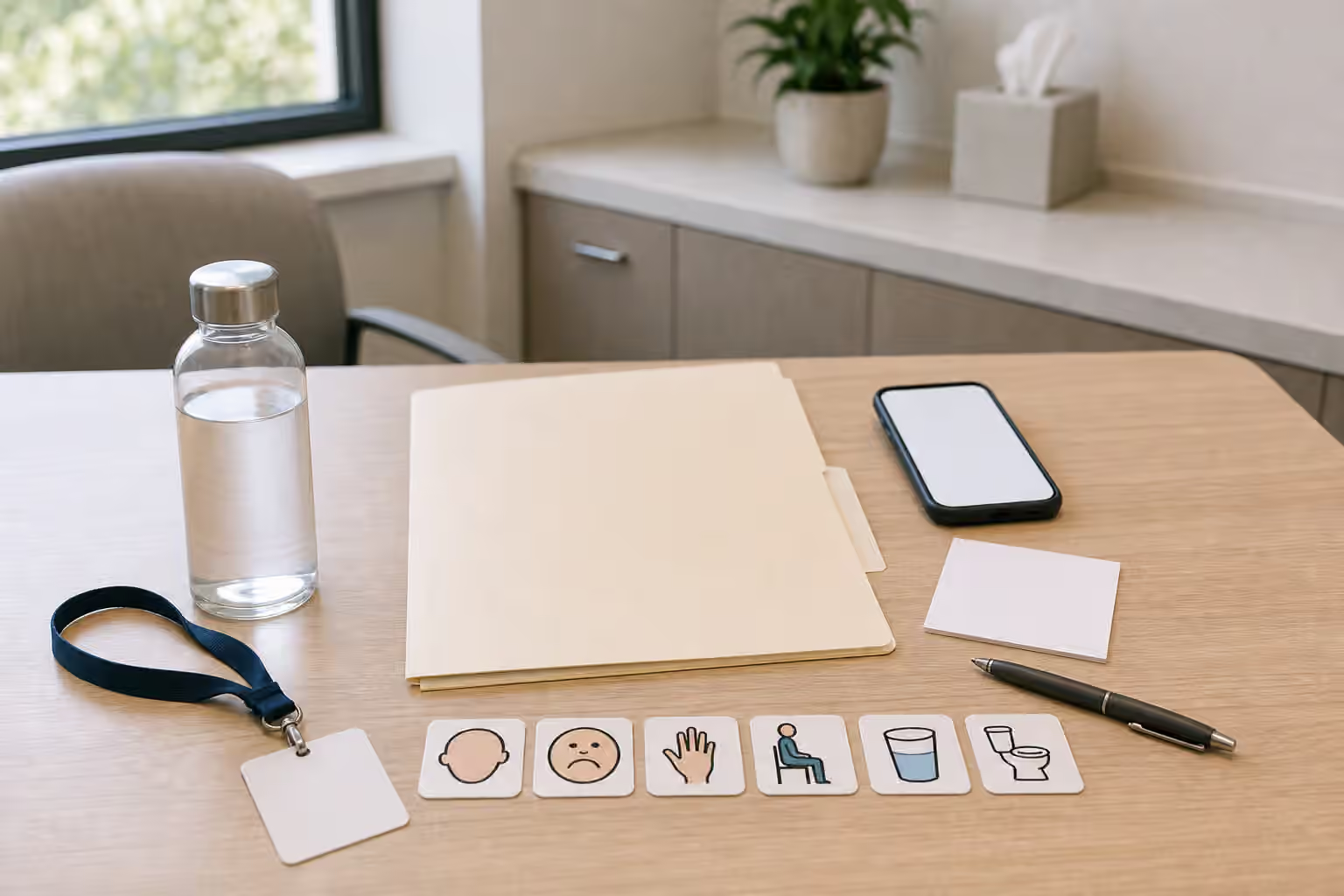
The Medical Appointment Communication Access guide is relevant because appointments are dense with decisions and instructions. If organization or inference is affected, leaving with a written summary, a confirmed next step, and a partner who understands the communication changes may be essential.
Self-Awareness Can Be Part Of The Injury
One of the hardest patterns is reduced awareness. The person may not recognize communication changes, attention problems, safety risks, or the effect their behavior has on others. Families may describe this as denial, stubbornness, or personality change. Sometimes emotion and grief are part of the picture. Sometimes the injury itself affects self-monitoring.
Reduced awareness changes how support should be offered. A lecture may not help. Arguing over whether the person has a problem can make the conversation more combative. A team may use real-life feedback, video review when appropriate, written comparisons, structured routines, or gentle partner cues. Mental health support may also matter because injury, identity, frustration, and family stress are tightly connected.
Partners need support too. They may be managing grief, fear, role changes, and conflict while trying to communicate respectfully. The Communication Partner Training guide can help families think about listener behavior, repair, and dignity. Right hemisphere changes do not remove the person’s adulthood or preferences. They do mean the communication environment may need to become more explicit, structured, and patient.
Social Participation Deserves Attention
Right hemisphere communication changes can isolate people. Friends may drift away because conversation feels different. Family gatherings may become tiring. Work relationships may suffer if humor, tone, timing, or topic control changes. The person may not notice the problem, or may notice only that others are frustrated. Participation goals should be part of rehabilitation, not an afterthought.
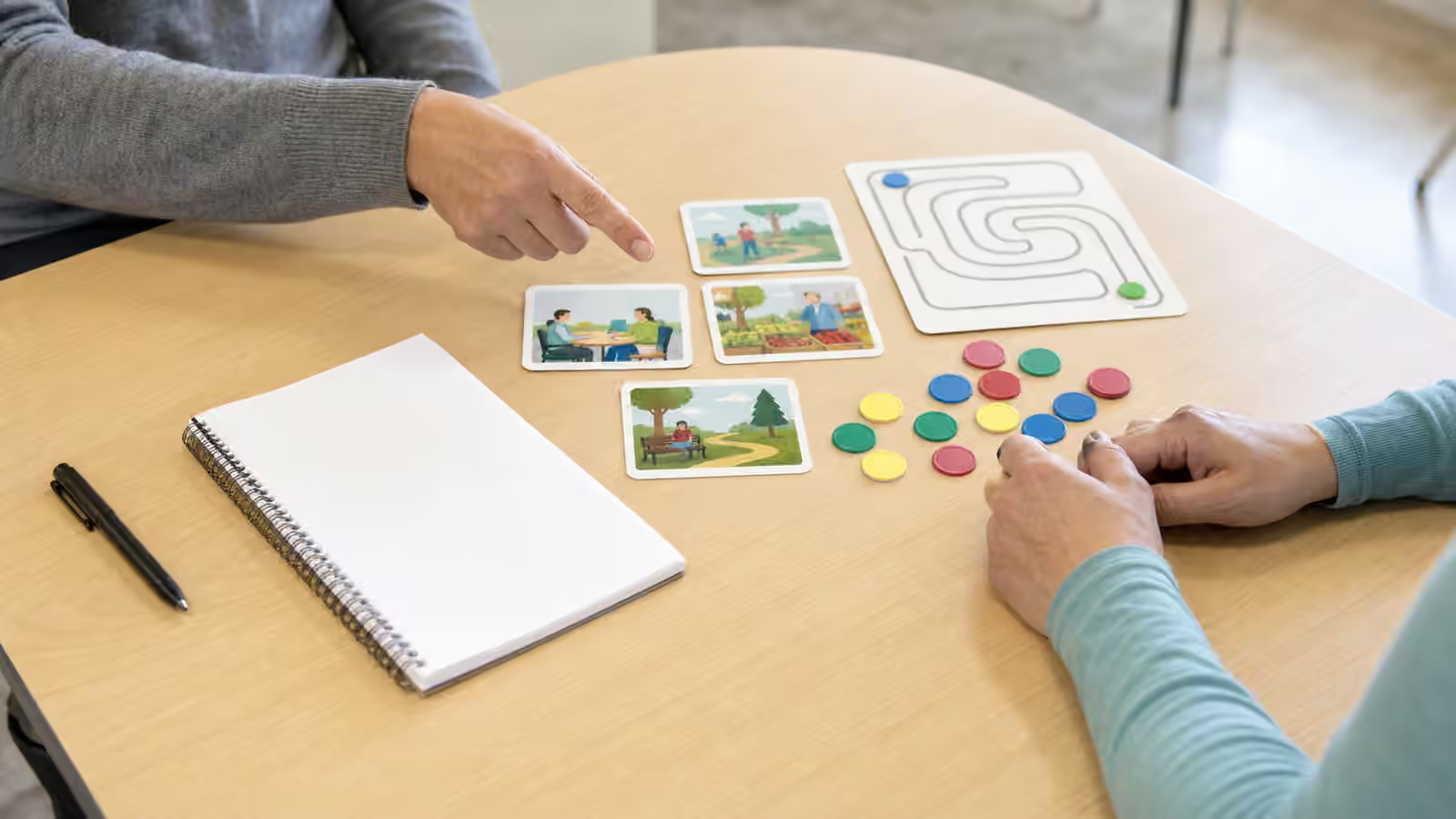
A speech-language pathologist may look at conversation samples, storytelling, inference, attention, emotion recognition, problem solving, and partner interaction. The team may also consider hearing, vision, fatigue, mood, medications, sleep, pain, and other rehabilitation needs. Communication is rarely affected by one factor alone. The Cognitive-Communication After Concussion and Brain Injury guide offers a broader view of cognition and daily communication.
Progress may look like a person noticing a listener’s confusion sooner, using a written topic anchor, checking the left side of a page, asking for a quieter setting, accepting a partner summary, or pausing before a risky decision. These are not small gains. They can change how safe, connected, and respected daily life feels.
Right hemisphere communication support works best when everyone stops asking only whether the person can talk. The more useful question is whether communication is accurate, organized, socially connected, and flexible enough for the situations that matter. Fluent speech is valuable, but it is not the whole conversation.