This guide helps you decide what belongs in speech-language pathology, what belongs somewhere else, and how to ask for help without turning one observation into a diagnosis. It is educational background, not a diagnostic assessment, treatment plan, or substitute for a licensed speech-language pathologist, physician, audiologist, school evaluation team, or other qualified professional. See ASHA — Who Are Speech-Language Pathologists? for the professional reference behind this topic.
What this can look like in real life
A speech-language concern often begins as a small unease: a child is hard to understand outside the family, a grandparent coughs through dinner, a teenager avoids speaking in class, an adult loses words after a medical event, or a person clearly wants to communicate more than their current tools allow. The field is broad because communication is broad. It touches safety, learning, work, identity, meals, relationships, and the simple relief of being understood.
How to observe without over-reading
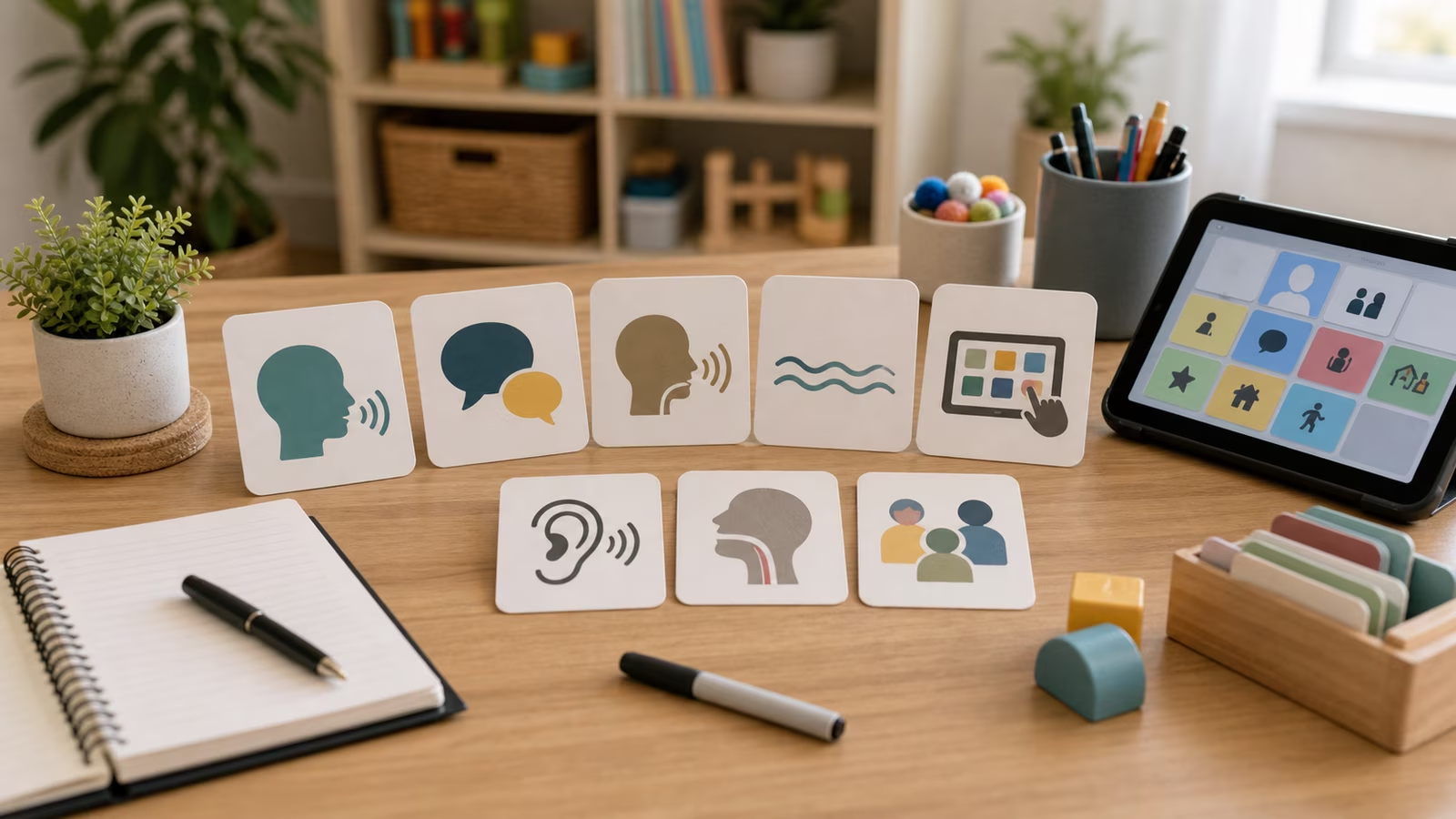
The practical starting point is to name the kind of difficulty without pretending to diagnose it. Is the issue speech sound clarity, language understanding, expressive language, voice, fluency, social communication, cognition, hearing access, AAC, feeding, or swallowing? More than one domain can be involved. A good note says what happens, where it happens, who notices, and what helps. It does not need to decide the clinical label before anyone has evaluated the person.
A gentler support routine
Before an appointment, support should make life easier rather than narrower. Slow down important conversations. Use visuals, writing, choices, or gestures when they help. Protect quiet moments for listening. Keep meals safe and calm. Read and talk with children in the languages the family actually uses. Give adults time to answer without being rescued too quickly. These moves do not replace care, but they reduce the daily pressure around the concern.
Where professional care fits
Professional care is worth considering when the concern affects safety, learning, relationships, work, feeding, swallowing, confidence, or participation; when skills regress; when the change is sudden; or when people keep compensating without knowing why. The most useful first appointment question is simple: “Which domains should we evaluate, and who else should be involved?” That question respects the complexity without turning the first conversation into a verdict.
Plain-language map
- Speech-language pathologists, often called SLPs, work with communication and swallowing across the lifespan.
- Speech, language, voice, fluency, cognitive-communication, literacy, AAC, feeding, and swallowing are related domains, but they are not the same problem.
- A guidebook can organize observations. It cannot decide whether a disorder exists or replace an evaluation.
Common misconceptions
- Speech pathology is only about how sounds are pronounced.
- A child or adult must be unable to talk before an SLP is relevant.
- Home practice should begin with drills before anyone understands the target.
What to observe or document
- Which situations are easy or hard: family conversation, school, phone calls, meals, reading, storytelling, or unfamiliar listeners.
- Whether the concern is new, longstanding, changing, or connected to hearing, illness, injury, fatigue, stress, or environment.
- What helps: slower pace, visual choices, quiet rooms, repetition, AAC, written support, or partner patience.
A useful first note might say: “The concern is not one event. Across the last month, teachers ask for repeats, meals take longer, and phone calls are harder when the room is noisy.” That kind of note helps sort domains. It also keeps the first conversation practical: what changed, where it shows up, what helps, and who else may need to be involved.
For children and minors, avoid storing names, birth dates, school names, diagnoses, recordings, or sensitive personal details in casual tools.
Keep the goal visible
Keep Speech Pathology Quickstart: What SLPs Help With grounded in the person’s own priorities. The most important outcome may be being understood at breakfast, joining a classroom, managing a phone call, refusing safely, telling a story, or asking for help; the measure should follow that lived purpose.
Questions to ask an SLP, school, or clinician
- Which communication or swallowing domains should be evaluated first?
- Should hearing, medical, school, or developmental evaluation happen alongside speech-language evaluation?
- What should home practice look like before a formal plan exists?
Limits and professional care
Speech Genie and the pages in this section cannot determine whether someone has a disorder, cannot rule out hearing or medical concerns, and cannot replace a professional evaluation. For concerns about speech, language, voice, fluency, swallowing, development, hearing, regression, sudden change, choking, or safety, bring the concern to qualified local services.
For Speech Pathology Quickstart: What SLPs Help With, use the Speech Therapy hub and Home Practice Without Pressure as next steps; treat Speech Genie transcript differences as practice notes, not clinical findings.