This guide explains preschool stuttering support for families who are noticing repetitions, prolongations, blocks, tension, avoidance, or worry in a young child’s speech. It is educational background, not a diagnosis, treatment plan, prognosis, school recommendation, or substitute for a licensed speech-language pathologist, pediatrician, psychologist, or qualified local professional. See Stuttering, Cluttering, and Fluency for the professional reference behind this topic.
Many preschool children go through periods when speech sounds bumpy. Some repeat words or phrases while language is growing quickly. Some repeat sounds, stretch sounds, get stuck, blink, push, or avoid words. The first task is not to panic or ignore everything. It is to observe carefully, protect the child’s desire to communicate, and ask for professional guidance when the pattern raises concern.
Stuttering Is More Than A Bumpy Sound
Preschool stuttering can look different from child to child. One child may repeat whole words with no visible tension and keep talking happily. Another may repeat the first sound of a word many times, squeeze their face, or stop speaking when a word feels hard. Another may begin to swap words, whisper, ask someone else to talk, or avoid a favorite activity that requires speaking. The sound pattern matters, but so does the child’s reaction.
Families often hear conflicting advice. Some people say to ignore it completely. Others urge constant reminders to slow down, breathe, or start over. Neither extreme fits every child. Ignoring stuttering may miss a child who is struggling. Constant correction may make speaking feel watched. A speech-language pathologist can help determine whether monitoring, parent guidance, direct therapy, or another plan is appropriate.
The Stuttering and Fluency Basics guide gives a broader foundation for fluency. Preschool support adds a developmental question: how can adults respond while the child is still building language, confidence, and identity as a communicator?
The Listener’s Face Teaches The Child
Young children study adult reactions. If a parent looks frightened every time a repetition happens, the child may learn that something is wrong with talking. If adults interrupt, finish words, or ask for repeated corrections, the child may learn that smooth speech matters more than the message. If adults stay calm, listen to the idea, and give enough time, the child is more likely to experience communication as safe.
This does not mean pretending stuttering does not exist. A child who notices their own speech may need simple, warm language. An adult might acknowledge that talking felt sticky or bumpy and then keep the focus on the child’s message. The wording should fit the family, the child’s age, and professional guidance. The important point is that the child should not feel alone with the experience or blamed for it.
The Communication Partner Training guide applies here because the listener is part of the communication environment. A preschool child cannot control the pace, interruptions, questions, and emotional temperature of a whole household. Adults can make those conditions kinder.
Slower Days Help More Than Constant Reminders
Many adults respond to stuttering by telling the child to slow down. The intention is usually loving. The effect can be mixed. A child may not know how to slow speech on command, and the reminder can feel like criticism. It may be more useful for adults to slow their own pace. A parent can pause before answering, use shorter turns during busy moments, reduce rapid questions, and allow more silence without jumping in.
This is different from making the day unnaturally quiet. Children need lively conversation, play, silliness, stories, and chances to talk. The goal is to reduce unnecessary pressure. A rushed morning with many questions can be harder than a calm play routine where the adult comments and waits. A family dinner where everyone talks over each other may be harder than a turn-taking game that gives the child room.
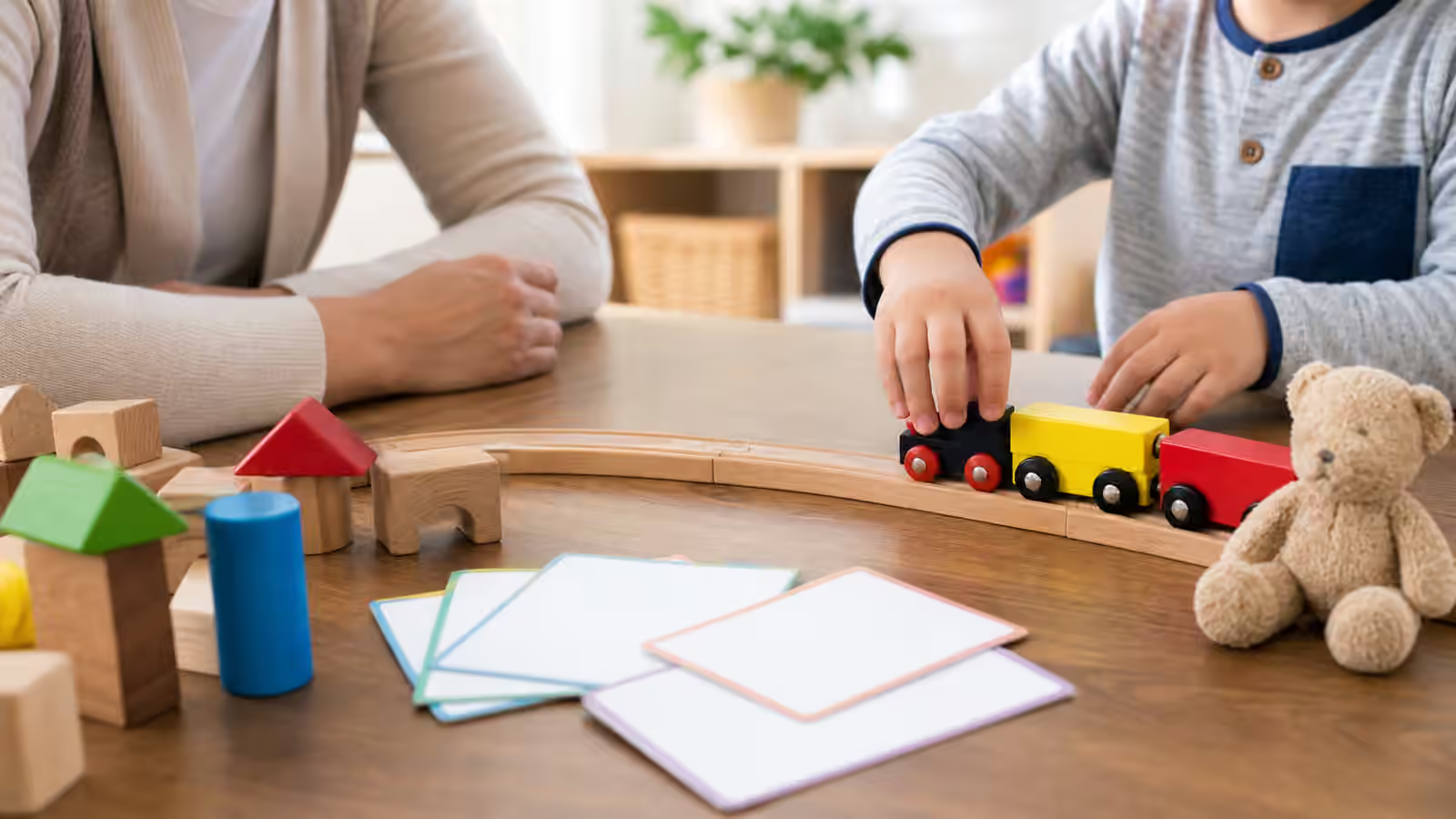
Play can be especially useful because it lets adults follow the child’s lead. Instead of quizzing the child about colors, names, and facts, the adult can join the play, describe what is happening, and respond to what the child chooses to say. The Play-Based Language Support guide explains how talk can belong inside the moment rather than hovering over it as a test.
What Families Can Observe
Observation helps professionals. Families do not need to diagnose the type of stuttering. They can notice when it happens, how it sounds, how often it appears, whether tension is visible, whether the child reacts, and what settings make speech easier or harder. They can notice whether stuttering increases with fatigue, excitement, competition for turns, long stories, questions, new people, or fast routines. They can also notice when the child communicates freely.
The child’s feelings matter. Some preschoolers show no concern. Some become frustrated, embarrassed, angry, quiet, or avoidant. A child who says they cannot talk, asks why words get stuck, or stops saying certain words deserves careful attention. So does a child whose body appears to struggle during speech. These signs do not predict a single outcome by themselves, but they are worth bringing to a speech-language pathologist.
Family history, other speech-language concerns, and the length and pattern of stuttering may also matter. Rather than relying on online rules, families can ask for an evaluation or consultation when they are worried. The When to Ask for a Speech-Language Evaluation guide can help frame that decision without turning it into a panic checklist.
Support Should Protect Communication Joy
A preschool child who stutters still needs rich language experiences. They need stories, pretend play, songs, choices, jokes, arguments, questions, and chances to be listened to. Adults sometimes become so focused on fluency that they shrink conversation. They ask fewer questions, avoid certain topics, or become tense every time the child starts a sentence. That can make the child feel watched even when no one says anything negative.
Professional support may include parent coaching, changes to the communication environment, direct work with the child, or a combination. The details depend on the child and family. What should remain steady is the child’s dignity. Therapy should not teach that stuttering is shameful. It should help the child communicate with less struggle, more confidence, and appropriate support.
The Home Practice Without Pressure guide is relevant because families often want something useful to do between sessions. Practice should not turn every conversation into fluency work. A short routine recommended by a clinician is different from monitoring every sentence all day.
Siblings And Other Adults Need The Same Tone
Preschoolers do not talk only to parents. Siblings, grandparents, babysitters, teachers, neighbors, and other adults may react in ways that help or hurt. A sibling may laugh because the repetition sounds unusual. A grandparent may tell the child to slow down. A teacher may finish words to keep the class moving. These responses can be addressed calmly without blaming anyone.
Families can give simple guidance: let the child finish, listen to the message, do not imitate the stutter, do not rush the answer, and ask adults to bring concerns privately rather than correcting the child publicly. In preschool settings, the team may need to think about circle time, show-and-tell, transitions, peer comments, and whether the child is avoiding speaking roles.
The Stuttering Support at School and Work guide covers older settings, but the participation principle begins early. Children should not have to earn the right to speak by being fluent first.
Calm Attention Is Not Waiting Too Long
Some families delay asking for help because they do not want to overreact. Others feel guilty for waiting. A more useful stance is calm attention. If the child is struggling, worried, avoiding, showing tension, or if the family is concerned, professional input can be a responsible next step. Seeking guidance does not label the child as broken. It gives the family better information.
Preschool stuttering support is strongest when adults keep two truths together. Speech may need skilled attention, and the child is already a capable communicator with ideas worth hearing. The goal is not a silent house where nobody triggers a bump, and it is not a house where every bump becomes a lesson. The goal is a child who can keep talking, keep playing, keep asking, and keep trusting that listeners care about the message.