This guide explains how play can support early communication when it is used as real interaction, not as a disguised test. It is educational background, not a developmental diagnosis, therapy plan, parenting rulebook, or substitute for a licensed speech-language pathologist, early intervention team, physician, audiologist, psychologist, occupational therapist, or other qualified professional. See Spoken Language Disorders for the professional reference behind this topic.
Play is often where early language becomes visible. A child reaches, protests, laughs, imitates, hides, pretends, watches, takes a turn, brings an object, points, vocalizes, signs, or says a word because something in the play matters. The adult does not have to manufacture communication from nothing. The work is to notice what the child is already trying to do and make the moment a little easier to share.
Play is not the reward after language
Many adults accidentally make language the price of admission. The bubbles stay closed until the child says “open.” The truck stays out of reach until the child names it. The snack is held hostage for a clearer request. These moments may produce a word, but they can also teach that communication is a performance adults control. A child may comply, melt down, grab, leave, or stop trusting the routine.
A more supportive stance treats play as the place where communication belongs. The adult can still pause, model, and create opportunities, but the child is not forced to earn every bit of joy. If the child reaches for bubbles, the adult might hold the bottle, wait warmly, say “open,” and then open it. If the child looks back after the bubbles pop, the adult might say “more bubbles” and blow again. The model is connected to the action. The child hears language that fits the moment without being trapped in a demand.
This approach pairs well with Late Talkers and Early Intervention . A child with few spoken words may still communicate through gesture, gaze, sound, movement, imitation, and shared routines. Those signals matter. Spoken words are one part of a larger communication system.
Following the child’s lead is active work
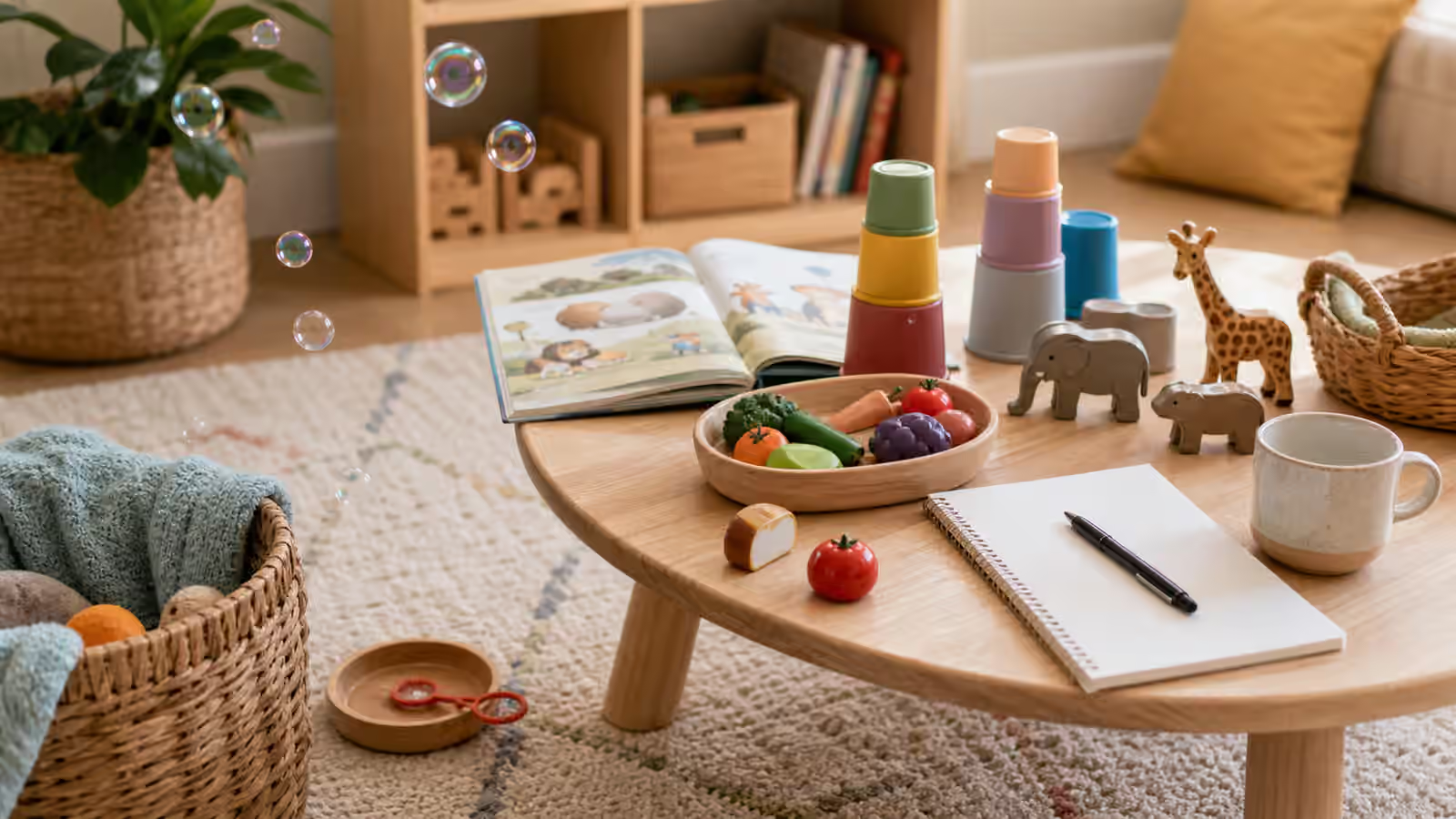
Following the child’s lead does not mean sitting silently while the child does whatever happens next. It means joining the child’s focus before redirecting it. If the child is lining up animals, the adult can sit nearby, copy the line, add a sound effect, put one animal slightly out of place, or narrate the action in short phrases. If the child is opening and closing a box, the adult can make the routine social by saying “open,” “close,” “my turn,” “your turn,” or “it is stuck,” depending on what fits.
The adult’s language should be close to the child’s current level but not frozen there. A child using single words may benefit from two-word models. A child using gestures may benefit from one-word and sound-effect models. A child using phrases may benefit from expansions that add grammar, feeling, location, or reason. If the child says “truck,” the adult might say “big truck,” “truck go,” or “truck stuck.” The child does not need to repeat the model for the model to count.
Play also gives adults a chance to reduce questions. Questions can be useful, but too many can turn play into an interview. “What color is it? What animal is this? What sound does it make?” may leave the child with no real role except answering. Comments often carry more language. “The cow is hiding.” “That tower is wobbly.” “You found the tiny spoon.” “I am making soup.” Comments give the child something to respond to without requiring a correct answer.
Routines make language easier to predict
Children often communicate more when they know the shape of a routine. Peekaboo, rolling a ball, building a tower, feeding a toy animal, washing pretend dishes, reading a familiar book, or putting cars down a ramp all create predictable moments. Predictability lowers the language load. The child can anticipate what comes next and may use a sound, gesture, word, sign, or look to keep the routine going.
Repetition is not boring when it gives the child power. If the same block tower falls five times, the child may laugh, look at the adult, say “boom,” cover ears, or ask for more. That is communication practice inside delight. The adult can add small variations: a longer pause, a silly mistake, a missing piece, a choice between two animals, or a turn for the child to direct. The variation invites communication without overwhelming the routine.
Books can work the same way. Shared reading does not have to mean finishing every page or asking the child to label every picture. The adult can pause on a page the child likes, imitate an action, use a sound effect, connect the picture to the child’s life, or let the child turn back to a favorite part. The Speech-Language Support for Literacy guide explains how oral language, sound awareness, and stories connect later with reading and writing.
Play should respect sensory and motor needs
Not every child plays in the same way. Some children watch before joining. Some prefer movement, water, spinning objects, tiny details, rough-and-tumble play, lining up, sorting, pretending, music, or quiet observation. Some children are overwhelmed by messy textures, loud toys, bright rooms, or adults who sit too close. Some have motor differences that make pointing, manipulating toys, or producing speech harder than listeners realize.
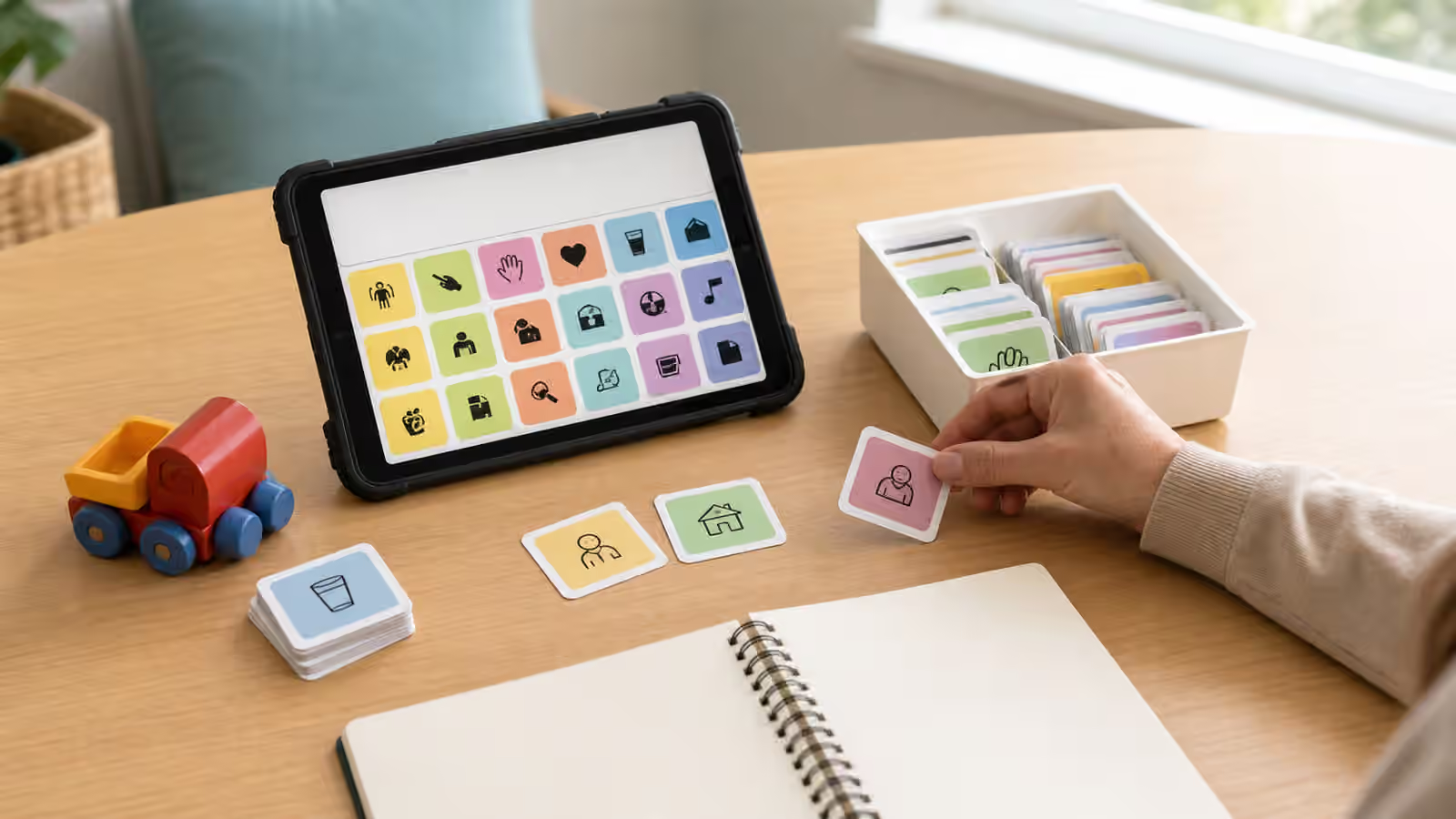
Respectful play-based support adapts the environment instead of blaming the child for not performing. A quieter room, fewer toys, a stable seating position, larger objects, visual choices, or a slower pace may create more communication than a bigger pile of materials. If a child uses AAC, signs, gestures, or pictures, those tools should be part of play. Communication access should not disappear just because the activity looks informal.
This is where collaboration matters. An SLP may work with an occupational therapist, early intervention provider, teacher, audiologist, physician, or developmental specialist depending on the child. The question is not only “How many words?” It is also “What helps this child join, understand, initiate, repair, and enjoy communication?”
When to ask for help
Families do not need to wait until play feels impossible before asking questions. Professional input may be useful when a child rarely communicates needs, rarely shares attention, loses skills, does not seem to understand familiar routines, has hearing concerns, has feeding or motor concerns, becomes very distressed during interaction, or communicates much less than expected for age and daily demands. The When to Ask for a Speech-Language Evaluation guide can help organize those observations.
A useful note might say: “During bubbles, she reaches and smiles but does not look back when the bubbles stop. During animal play, she puts every animal in a line and pushes my hand away if I move one. She follows ‘give me’ with familiar toys but not new directions. She says ‘go’ during the car ramp when we pause.” That note is more useful than a bare word count because it shows routines, understanding, initiation, repair, and regulation.
For children and minors, avoid storing names, birth dates, school names, diagnoses, videos, or identifiable details in casual tools. Play examples can be personal, especially when they reveal developmental or medical concerns.
The best play-based language support feels like shared life. The adult brings attention, patience, language, and a little planning. The child brings preferences, movement, sound, curiosity, refusal, joy, and their own way of joining. When those meet, language has somewhere real to grow.