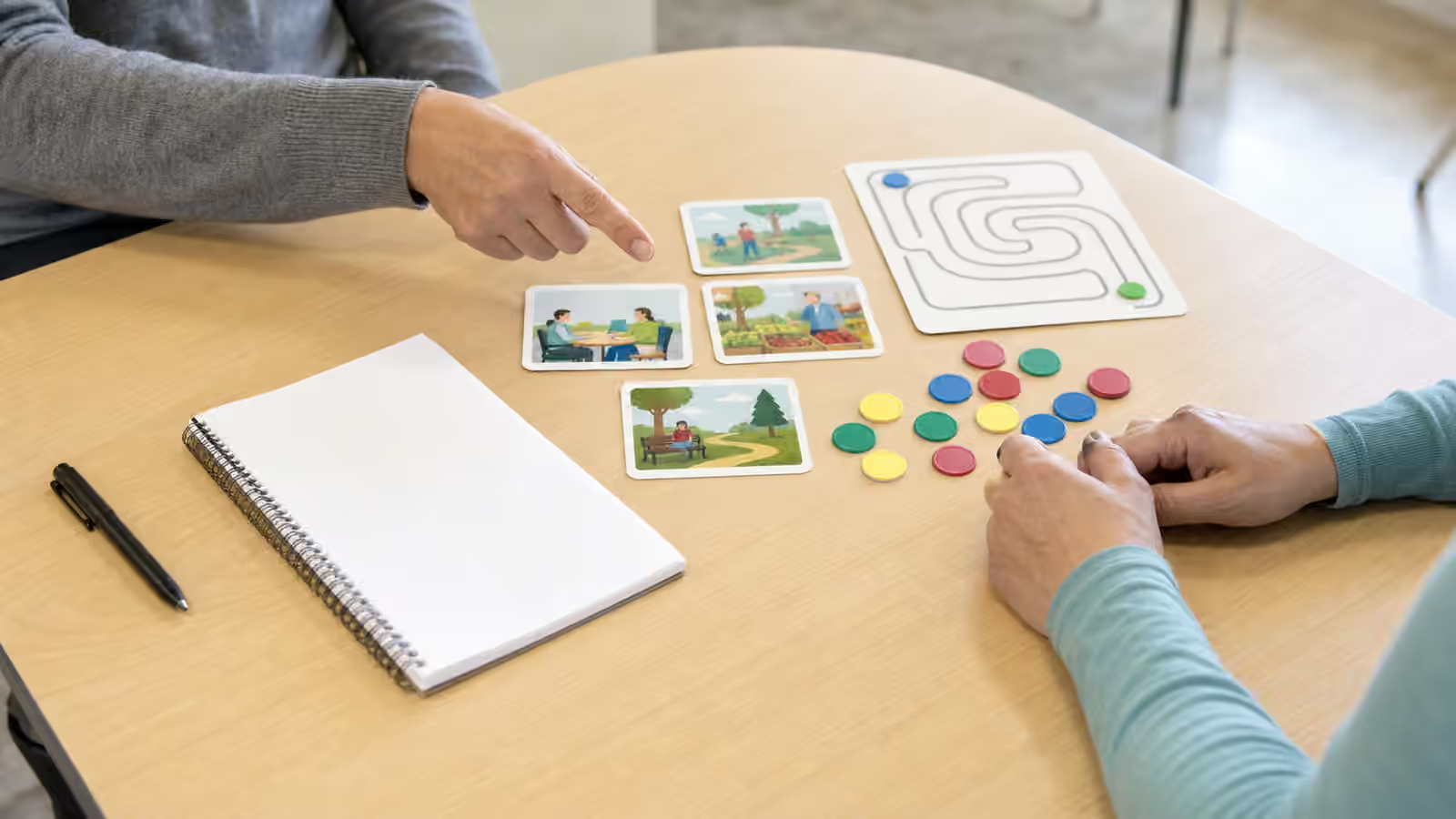
This guide helps you decide how to notice repeatable speech patterns while avoiding labels that sound scarier than the observation itself. It is educational background, not a diagnostic assessment, treatment plan, or substitute for a licensed speech-language pathologist, physician, audiologist, school evaluation team, or other qualified professional. See ASHA — Who Are Speech-Language Pathologists? for the professional reference behind this topic.
What this can look like in real life
Phonological patterns can sound dramatic because they affect many words at once. A child may leave off final sounds, replace back sounds with front sounds, simplify clusters, or use one easier sound in place of several harder ones. To an unfamiliar listener, that can make speech hard to follow. To a clinician, the pattern may offer a useful map: the child is not missing random sounds so much as using a system that needs to mature or be taught.
How to observe without over-reading
The first move is to write down examples exactly as they happen. Which sounds change? Does the pattern appear at the beginning, middle, or end of words? Is the child easier to understand in familiar phrases than in new stories? Does frustration rise when listeners guess wrong? Avoid turning every word into a correction. A pattern is easiest to understand when the child is allowed to talk naturally enough for the pattern to show itself.
A gentler support routine
Home support can stay light while evaluation questions are sorted out. Repeat the child’s message back with a clear model: “You want the cup,” not “Say cup.” Read rhyming books, play with sound awareness, and celebrate successful repair when the child tries another way to be understood. If a professional gives a target, practice it in short, playful bursts. Long correction sessions can make speech feel like a trap instead of a tool.
Where professional care fits
An SLP can tell whether the pattern is expected for age, influenced by dialect or language background, connected to hearing, or part of a speech sound disorder needing therapy. Treatment usually works by choosing patterns strategically, not by chasing every mispronounced word. That is why a careful evaluation matters. The right target can unlock many words; the wrong pressure can make a child talk less.
Plain-language map
- A phonological pattern is a regular way a speaker simplifies a sound system, such as leaving off final sounds or reducing clusters.
- Patterns are interpreted relative to age, language, dialect, intelligibility, and broader communication.
- An SLP looks for patterns across many words, not one funny example.
Common misconceptions
- One repeated pattern always means a disorder.
- Correcting every word in daily conversation is good practice.
- A written word list is enough to choose therapy targets.
What to observe or document
- Several examples of the same pattern across familiar and unfamiliar words.
- Whether the pattern affects intelligibility or participation.
- What happens when the speaker hears a model slowly and calmly.
A useful note might say: “She says “tea” for key, “do” for go, and “pane” for plane, but she can say /k/ in a silly cough sound.” That tells the SLP about pattern, position, and stimulability. It is much better than a long list of corrected words because it shows how the child’s speech system is organized.
For children and minors, avoid storing names, birth dates, school names, diagnoses, recordings, or sensitive personal details in casual tools.
Keep the goal visible
When working on Phonological Patterns Without Panic, avoid making one observation carry more certainty than it can support. Speech, language, voice, fluency, swallowing, hearing, fatigue, dialect, multilingual experience, and context can interact, so a qualified evaluation may need more than a home sample.
Questions to ask an SLP, school, or clinician
- Which pattern has the biggest communication impact?
- Should the target be sounds, patterns, phonological awareness, or a broader language goal?
- How can caregivers cue the target without interrupting every conversation?
Limits and professional care
Speech Genie and the pages in this section cannot determine whether someone has a disorder, cannot rule out hearing or medical concerns, and cannot replace a professional evaluation. For concerns about speech, language, voice, fluency, swallowing, development, hearing, regression, sudden change, choking, or safety, bring the concern to qualified local services.
For Phonological Patterns Without Panic, use the Speech Therapy hub and Home Practice Without Pressure as next steps; treat Speech Genie transcript differences as practice notes, not clinical findings.