This guide explains pediatric feeding support as a team topic, not as a set of tricks for making a child eat. It is educational background, not a feeding evaluation, swallowing assessment, nutrition plan, allergy advice, therapy plan, or substitute for a physician, licensed speech-language pathologist, occupational therapist, dietitian, psychologist, dentist, lactation professional, or other qualified local professional. See Pediatric Feeding and Swallowing for the professional reference behind this topic.
Feeding concerns can involve swallowing safety, oral motor skill, sensory load, appetite, growth, reflux, allergy, pain, breathing, medical history, behavior, anxiety, caregiver stress, and family routines. A guidebook cannot sort those causes. It can help families describe what they are seeing and avoid turning mealtimes into pressure before the right team is involved.
Feeding is communication before it is compliance
Mealtimes are full of communication. A child turns away, reaches, opens their mouth, clamps their lips, cries, laughs, points, signs more, pushes a cup, watches a sibling, asks for a cracker, or leaves the table. Adults may read these signals as cooperation or refusal, but the signals often carry more information. The child may be tired, uncomfortable, curious, overwhelmed, in pain, unsure how to manage a texture, seeking predictability, or trying to control a situation that feels too hard.
When feeding is framed only as compliance, everyone loses information. The adult watches for bites. The child learns that signals are ignored until they become louder. The meal becomes a contest rather than a shared routine. Speech-language pathologists and occupational therapists who work in pediatric feeding often pay close attention to communication because a child’s body and behavior are telling part of the story. The goal is not to let every meal become chaotic. The goal is to understand what the child can manage and what support is needed for safer, calmer participation.
The broader Feeding and Swallowing guide explains why coughing, choking, wet voice, weight change, dehydration, and sudden swallowing concerns require qualified care. This page focuses on pediatric participation around meals while keeping that safety boundary in place. If there are signs of choking, breathing trouble, aspiration concern, dehydration, weight loss, pain, or sudden change, the next step belongs with qualified local professionals.
Selective eating is not one single pattern
Many children go through picky phases. Some prefer familiar foods, reject mixed textures, avoid strong smells, or eat differently when tired. That ordinary range can be frustrating, but it is not the same as a feeding disorder. Other children have patterns that are more restrictive, distressing, medically complicated, or disruptive to growth and family life. They may eat only a very small range of foods, gag with certain textures, panic around new foods, avoid entire food groups, take a very long time to eat, pocket food, cough, vomit, or depend on specific brands and presentations.
The important point is not to diagnose the pattern at home. The important point is to describe it clearly. What foods are accepted? What textures are avoided? Does the child drink safely? Are meals long, stressful, or short? Does the child chew effectively? Is there coughing or wet breathing? Does the child seem hungry? Are growth, hydration, constipation, reflux, allergies, dental pain, sleep, or medication part of the story? Are there developmental, sensory, motor, or anxiety concerns? These details help a team decide what to evaluate.
Pressure usually makes the picture harder to read. If a child is forced, tricked, bribed, shamed, or held at the table long after distress begins, the meal may show fear rather than feeding skill. Some families use pressure because they are worried, exhausted, and trying to keep the child nourished. That worry is real. Still, the professional question should become: what support reduces risk and stress while protecting nutrition and development? It should not become: how do we win the next bite?
Sensory load and motor skill can overlap
Food is sensory. It has smell, color, temperature, sound, texture, shape, and unpredictability. A cracker is not just a cracker. It can crumble, stick, scratch, make noise, dry out the mouth, or change from brand to brand. Yogurt may be smooth until a fruit piece appears. Soup may combine smell, heat, mixed texture, and a spoon. For some children, these features are interesting. For others, they are too much.
Food is also motor. The child has to sit, breathe, organize the lips, move the tongue, chew, manage saliva, form a bolus, swallow, and coordinate pace. A child who avoids texture may be protecting themselves from a motor challenge, a sensory challenge, a pain association, a memory of gagging, or several of these at once. A child who stuffs the mouth may be seeking more sensory feedback, rushing before a demand changes, or struggling to grade bite size. A child who holds food in the cheek may not know how to move it efficiently.
Because sensory and motor patterns can look similar, home interpretation should stay cautious. A caregiver can notice that crunchy foods are easier than soft mixed foods, or that the child handles thin liquids differently from smoothies, or that fatigue changes chewing near the end of dinner. Those observations matter. They do not replace professional assessment. They help the team choose where to look.
Family routines need protection
Feeding concerns can take over a household. Parents may cook multiple meals, track every calorie, negotiate every bite, dread restaurants, avoid family gatherings, or feel judged by relatives who think the solution is stricter discipline. Siblings may learn that dinner is the tense part of the day. The child may learn that food is where adults stop listening. By the time a family asks for help, the feeding problem may include not only food but also exhaustion, fear, and broken trust around the table.
Good support protects relationships. A plan may include predictable routines, seating changes, medical follow-up, texture guidance, exposure without pressure, communication supports, caregiver coaching, nutrition monitoring, or therapy targets. The specific plan depends on evaluation. What should stay constant is respect. Children need to know that their signals matter. Caregivers need support that is realistic for the kitchen they actually have, not an ideal clinic routine that collapses at home.
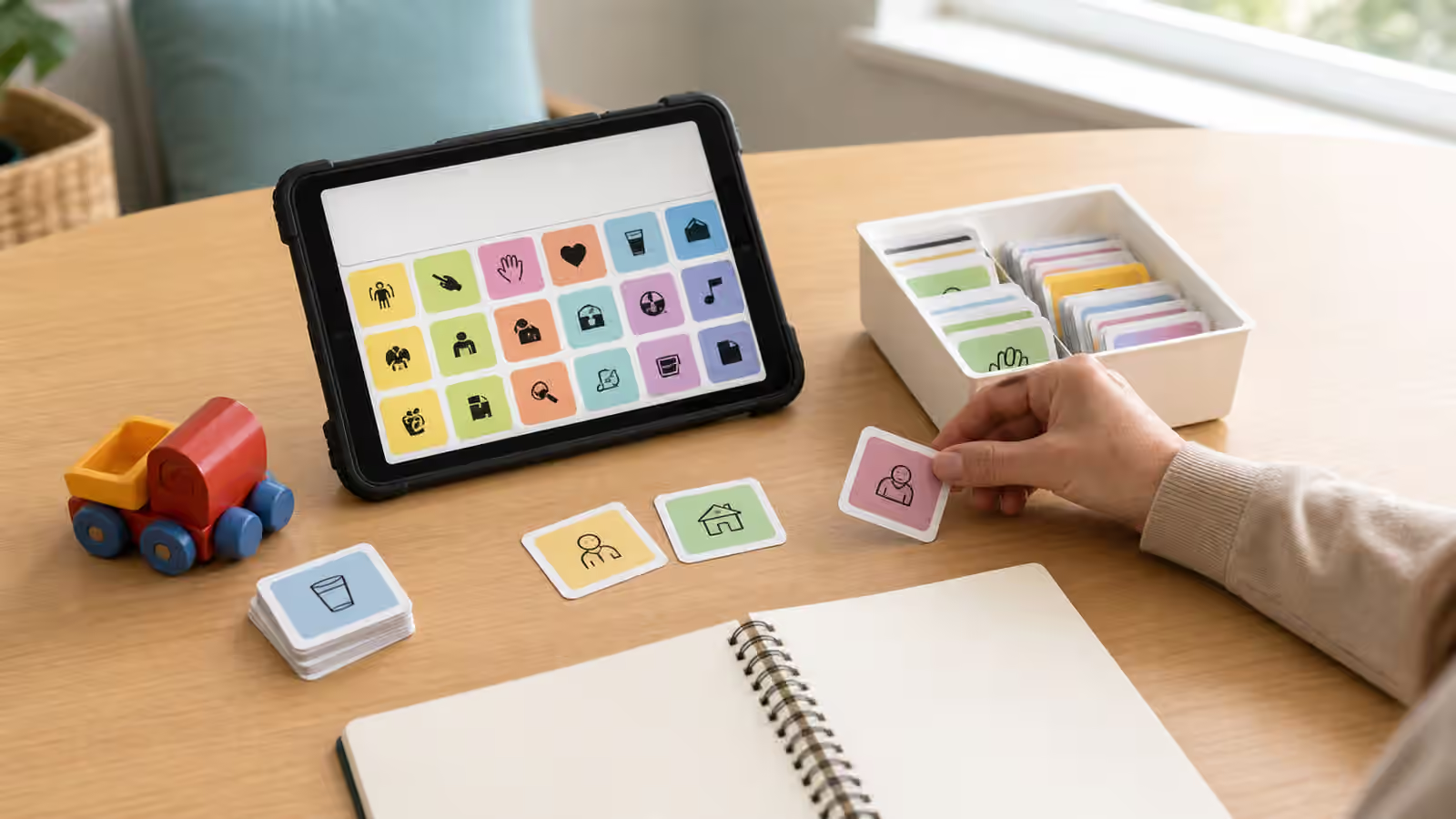
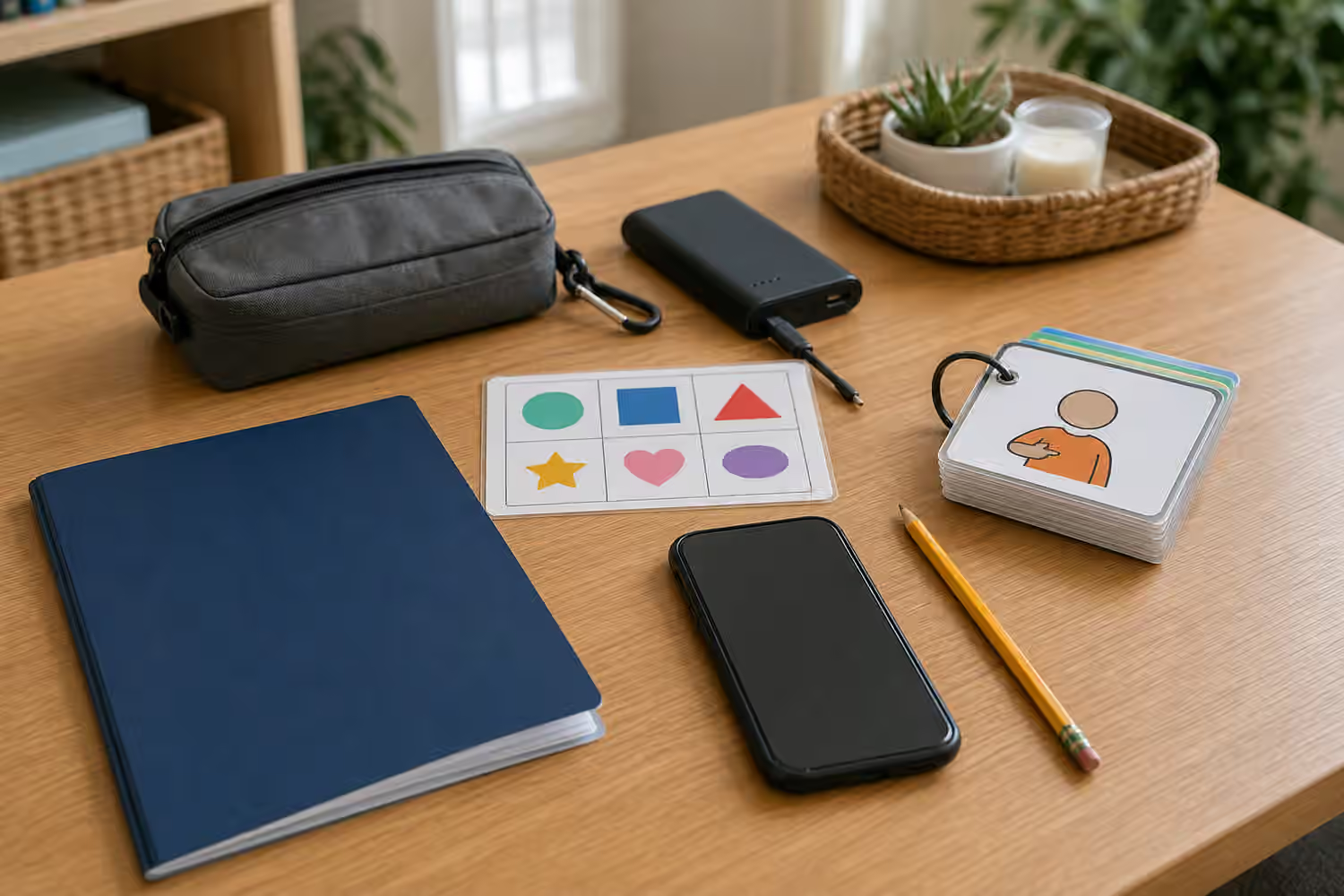
Communication tools can help when mealtimes are stressful. A child may need a way to say all done, help, too hot, too hard, drink, wait, more, different, or my turn without escalating. Children who use AAC should have access to their systems at meals, not only during language practice. The AAC in Daily Routines guide connects here because meals are real communication routines. Feeding support should not silence the child in order to get through the meal.
What careful observation looks like
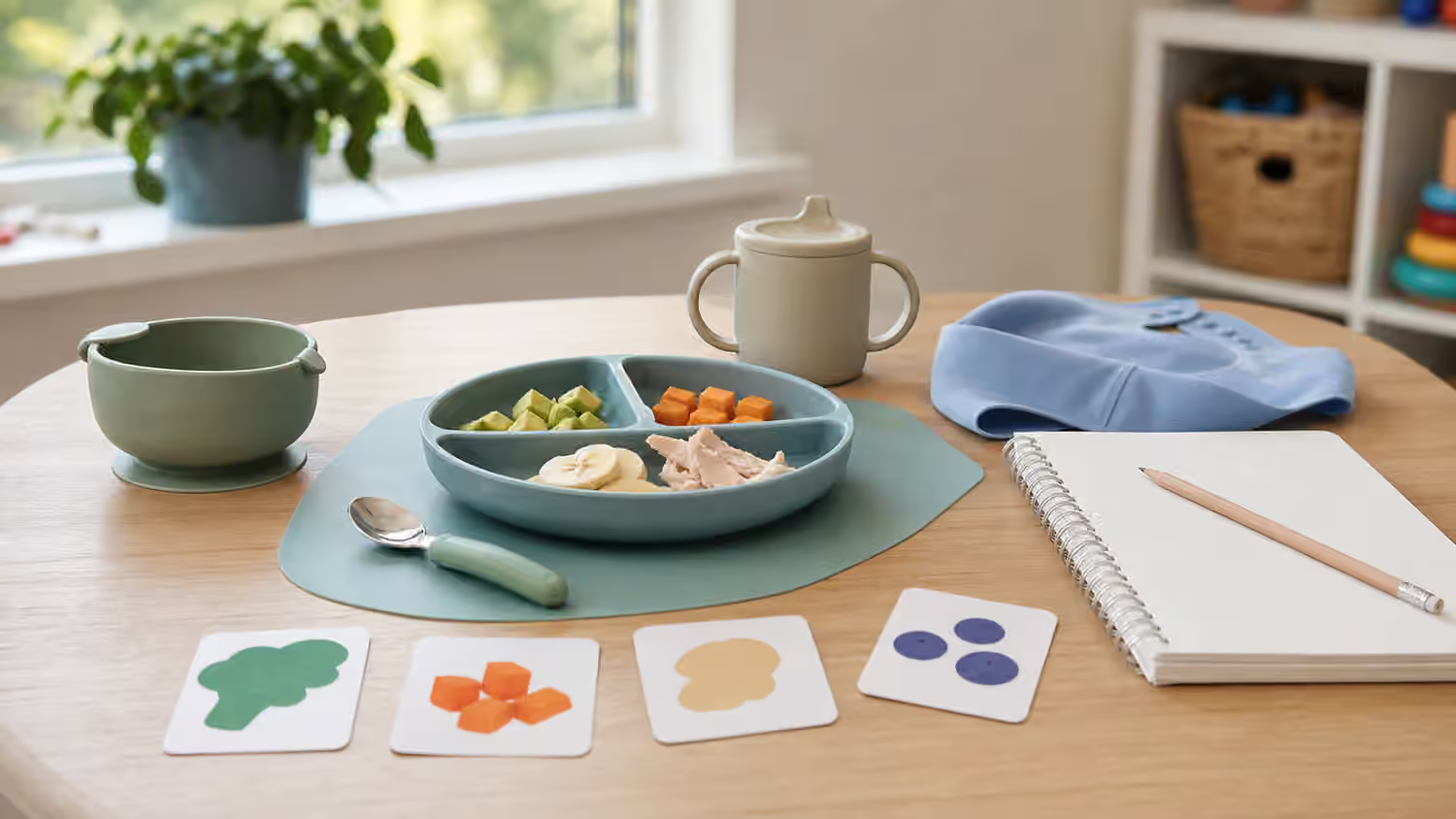
A useful feeding note is concrete and restrained. It might describe that breakfast is calm with dry cereal and milk from a familiar cup, but dinner becomes hard when foods touch. It might say that the child chews crackers but swallows noodles whole. It might note coughing with water, gagging with mixed textures, refusal after a reflux flare, distress when a new food is placed on the plate, or meals that take nearly an hour. It should include what helps, such as a footrest, smaller portions, a quieter table, a predictable seat, or letting the child touch food before tasting.
The note should not become an experiment log where adults repeatedly test risky textures or push the child to prove the pattern. If safety signs appear, stop treating the home table as the evaluation site and contact qualified care. If the concern is mainly variety and distress, a professional can still help the family reduce pressure and build a plan. The Home Practice Without Pressure guide is useful because carryover should not turn every family moment into a treatment demand.
Privacy matters too. Avoid storing identifying photos, videos, names, medical details, school information, or recordings in casual tools. If a clinician asks for a mealtime video, follow their privacy guidance and record only what is needed. Feeding can feel vulnerable. Documentation should serve care, not turn the child into a spectacle.
Asking for the right team
Pediatric feeding care may involve several professionals. A physician may look at medical history, growth, reflux, allergy, airway, medication, pain, or referrals. An SLP may evaluate swallowing, oral motor patterns, communication, and feeding skills. An occupational therapist may address sensory processing, positioning, self-feeding, and motor participation. A dietitian may help with nutrition and growth. A psychologist or mental health professional may help when anxiety, trauma, or family stress is part of the pattern. Dental, lactation, gastroenterology, ENT, pulmonology, or other specialists may matter depending on the child.
Families do not need to know the whole team before asking for help. They can start with the safest concern: “Meals are stressful and we are worried about swallowing, nutrition, texture, or growth.” From there, the right professionals can help sort what belongs where. The key is to avoid reducing feeding to willpower. Children eat with bodies, histories, senses, relationships, and environments. Support has to be broad enough to see all of that.
Progress may look quieter than people expect. A child tolerates sitting at the table without panic. A caregiver stops chasing bites and starts noticing signals. A new cup becomes less stressful. A child touches a food, smells it, watches someone else eat it, or says no with less distress. Another child gets medical care that explains why meals were hard. These moments do not promise a straight path, but they show the right direction: more safety, more trust, better information, and mealtimes that belong to family life again.