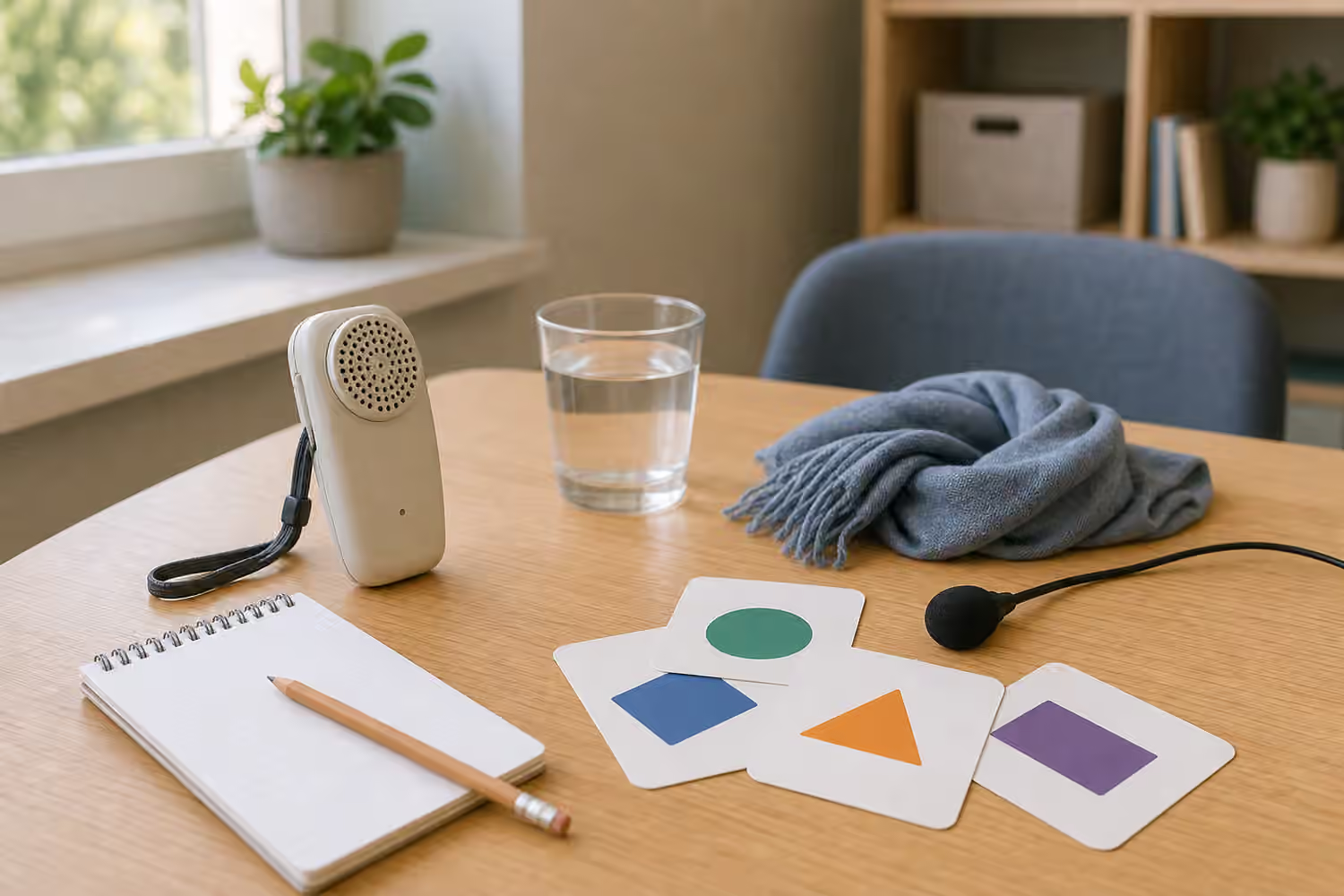
This guide explains speech and voice support for people with Parkinson’s disease and related movement conditions. It is educational background, not medical advice, diagnosis, treatment selection, exercise prescription, medication guidance, or substitute for a neurologist, physician, licensed speech-language pathologist, physical therapist, occupational therapist, audiologist, mental health professional, or qualified local team. See Dysarthria (Adult) for the professional reference behind this topic.
Parkinson’s can affect communication long before a person stops having words. The voice may become quieter, speech may become less precise, rate may change, facial expression may be reduced, and the speaker may not realize how soft or fast they sound to listeners. Support is not only about volume. It is about being heard, understood, and included without making every conversation feel like a test.
Quiet Speech Can Be Misread
A person with Parkinson’s may speak with a voice that is softer than they intend. Listeners may ask for repetition, lean in, or assume the person is tired, uninterested, depressed, or unsure. The speaker may feel that they are talking normally and that everyone else is mumbling or not paying attention. This mismatch can create frustration on both sides.
The change is often connected to motor control, sensory feedback, breath support, vocal effort, articulation, and timing. The person may need to recalibrate what an adequate voice feels like. A louder or clearer voice may feel exaggerated to the speaker even when it sounds normal to others. That is one reason skilled speech-language therapy can be useful. The clinician can help connect effort, sound, listener response, and real communication tasks.
The Dysarthria and Motor Speech Clarity guide gives a broader foundation for motor speech changes. Parkinson’s often falls within that conversation, but it has its own patterns and emotional load.
Practice Needs A Purpose Outside The Clinic
Voice and speech programs for Parkinson’s may include structured practice, intensity, feedback, and carryover tasks. The details should be guided by a qualified clinician who understands the person’s medical status, stamina, cognition, hearing, swallowing, and goals. Families should be careful with generic online exercises because a task that is useful for one person may be inappropriate, exhausting, or discouraging for another.
The most meaningful target is not a perfect practice voice. It is a voice that works in the places the person cares about. That might mean greeting a neighbor, ordering food, speaking with a grandchild, participating in a faith community, joining a meeting, using the phone, or telling a doctor what changed. A clinician may ask the person to bring real phrases and real situations into therapy so practice does not stay abstract.
The Therapy Goals and Progress Notes guide is relevant because measurable goals should connect to participation. A note that the person used a clearer voice during three phone calls may matter more than a number that never leaves the treatment room.
Listeners Are Part Of The Plan
Communication partners can help without taking over. A partner can reduce background noise, face the speaker, confirm the message instead of pretending, and avoid shouting from another room. They can ask for repetition respectfully and give the speaker time. They can also learn when to offer a cue and when to stop cueing because the conversation has become too monitored.
Many families fall into a painful pattern. The listener repeatedly says “speak up,” the speaker feels criticized, and both people become tense. A better plan uses agreed-upon cues. The person with Parkinson’s may choose a phrase, gesture, or environmental reminder that feels respectful. The cue should be used sparingly and in the settings where the person has agreed it helps.
The Communication Partner Training guide offers a useful frame. Partner behavior can either lower or raise the work of communication.
Voice, Swallowing, And Health Questions May Overlap
Parkinson’s can affect more than speech. Some people experience swallowing changes, drooling, coughing during meals, weight changes, or medication timing effects. Voice changes may also overlap with reflux, respiratory health, vocal fold issues, hearing changes, fatigue, or other medical concerns. Families should not assume that every change is simply part of Parkinson’s or try to solve it without medical input.
Speech-language pathologists often work with physicians and other rehabilitation professionals. Depending on the concern, the person may need voice assessment, motor speech evaluation, swallowing evaluation, hearing support, cognitive-communication support, or assistive communication planning. Urgent or sudden changes should be brought to appropriate medical care rather than treated as a therapy problem alone.
The Voice, Resonance, and When Voice Changes Need Attention and Feeding and Swallowing guides provide broader safety-minded context.
Cognitive And Emotional Load Matter
Parkinson’s communication support should respect cognition, mood, fatigue, and identity. A person may know exactly what they want to say but need more time to start, organize, or project the message. Another person may have word-finding, attention, or executive function changes that make conversation harder. Depression, anxiety, apathy, embarrassment, and social withdrawal can also affect communication.
A quiet voice can change how others treat the person. They may be interrupted, spoken over, or left out of fast group conversation. Reduced facial expression may be misread as anger or boredom. Slower response time may be mistaken for lack of understanding. These social effects deserve attention because they shape participation as much as the speech pattern itself.
The Group Conversation Participation guide can help families think about timing, turn-taking, repair, and inclusion. Group settings often reveal barriers that one-on-one practice misses.
Planning Ahead Can Reduce Pressure Later
Parkinson’s changes differently for different people. Some people benefit from periodic therapy refreshers. Some need partner training, environmental changes, phone strategies, amplification, or written backup. Some may eventually want AAC support, voice banking, or message banking. Planning ahead does not mean assuming the worst. It means protecting communication choices before fatigue or speech changes make planning harder.
The Progressive Neurologic Communication Planning guide addresses that wider planning process. A person can use natural speech, writing, gestures, devices, recorded messages, and partner routines in combination. The best system is the one the person will accept and the people around them will respect.
Communication support for Parkinson’s should never reduce a person to loudness drills. A stronger voice matters because it carries ordinary life: opinions, humor, needs, refusals, stories, affection, work, faith, privacy, and disagreement. Therapy is most humane when it helps those messages reach listeners with less strain.