This guide explains narrative language as a practical communication skill, not a performance trick or a school-only task. It is educational background, not a diagnostic assessment, treatment plan, tutoring plan, or substitute for a licensed speech-language pathologist, teacher, school evaluation team, reading specialist, psychologist, or other qualified professional. See Spoken Language Disorders for the professional reference behind this topic.
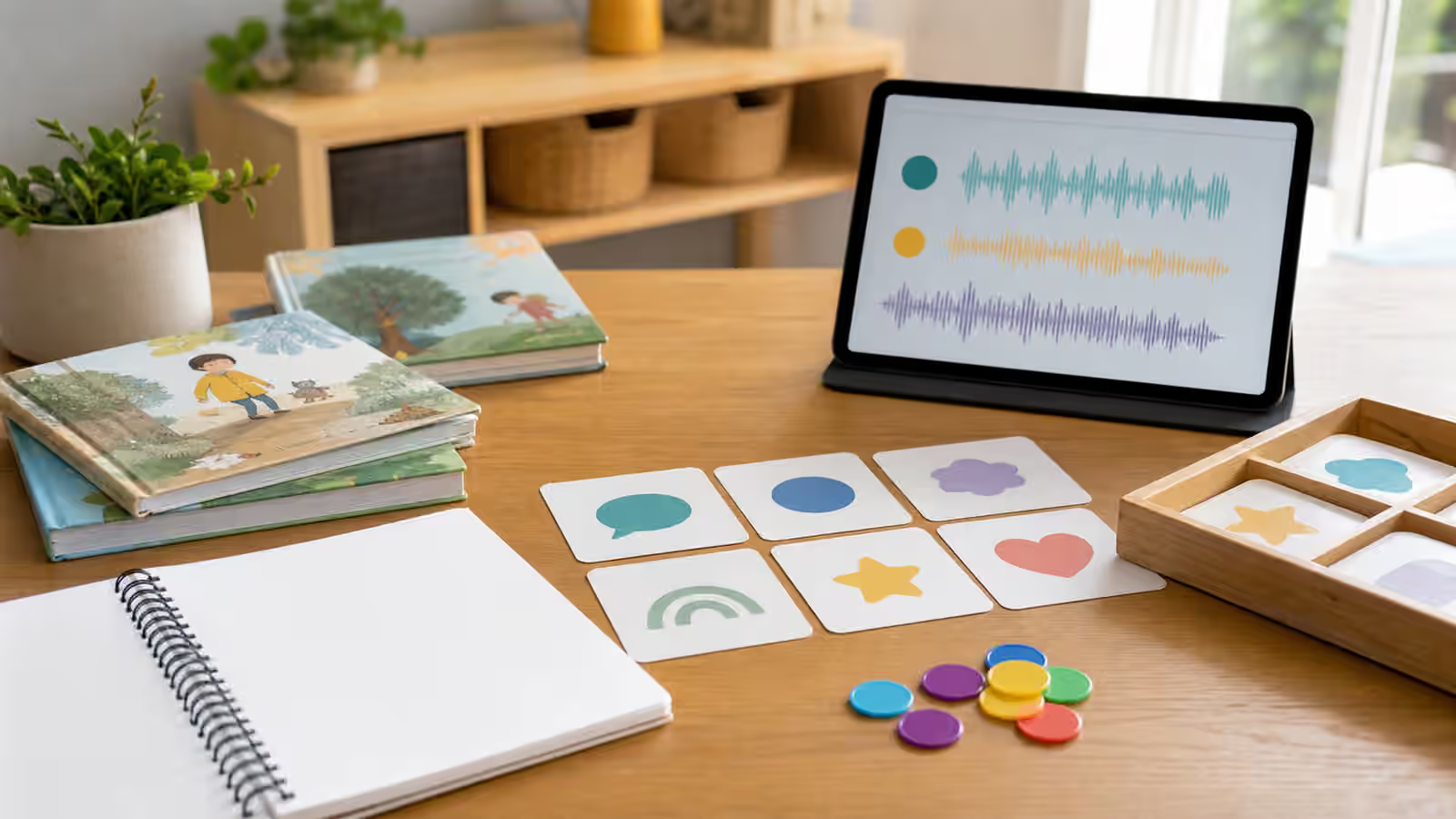
Speech recognition tools and home observations can be useful notes, but they can also be wrong, especially with children, multilingual speakers, dialect differences, hearing differences, attention, anxiety, background noise, unfamiliar story topics, and device limitations.
Stories carry more than plot
Narrative language is the ability to understand, organize, and tell stories. It includes who was involved, where and when something happened, what the problem or goal was, how events unfolded, how characters felt, and how the situation resolved or changed. Children use narrative language when they tell a parent what happened at recess, explain a conflict, retell a book, describe a science process, write a personal narrative, or answer a teacher’s question about a passage.
Because stories are ordinary, adults may not notice how much language work they require. A child must choose relevant details, put events in order, make pronouns clear, connect causes and effects, include enough background for the listener, and adjust when the listener looks confused. A story can break down even when a child knows many words. The pieces may be present but scattered. The child may jump to the ending, leave out the problem, repeat one detail, or assume the listener already knows the setting.
Why narrative language belongs near speech pathology
Speech-language pathologists often work with language beyond single words and short sentences. Narrative language sits close to classroom participation, literacy, social problem solving, and self-advocacy. A child who cannot explain what happened may be misunderstood during playground conflict. A student who has ideas but cannot organize them may produce short written work that looks careless. A child who does not follow story grammar may struggle with reading comprehension because the structure of the text is hard to hold.
This does not mean every messy story is a disorder. Young children ramble. Excited children skip steps. Multilingual children may tell stories differently across languages or use structures shaped by home culture. Dialect differences are not errors. The Accent, Dialect, and Difference guide is important here because language variation must not be mistaken for impairment. The useful question is whether the child can make meaning clear enough for their age, languages, community, and setting, and whether support helps them participate more fully.
Retell is not memorization
Story retell is sometimes treated like a memory test: read a story, ask the child to say it back, count what was missing. Memory matters, but retell is richer than that. A strong retell shows that the child understood the main events, recognized what was important, and could rebuild the story for a listener. It may use different words from the original. That can be a sign of understanding, not a problem, as long as the meaning and structure remain clear.
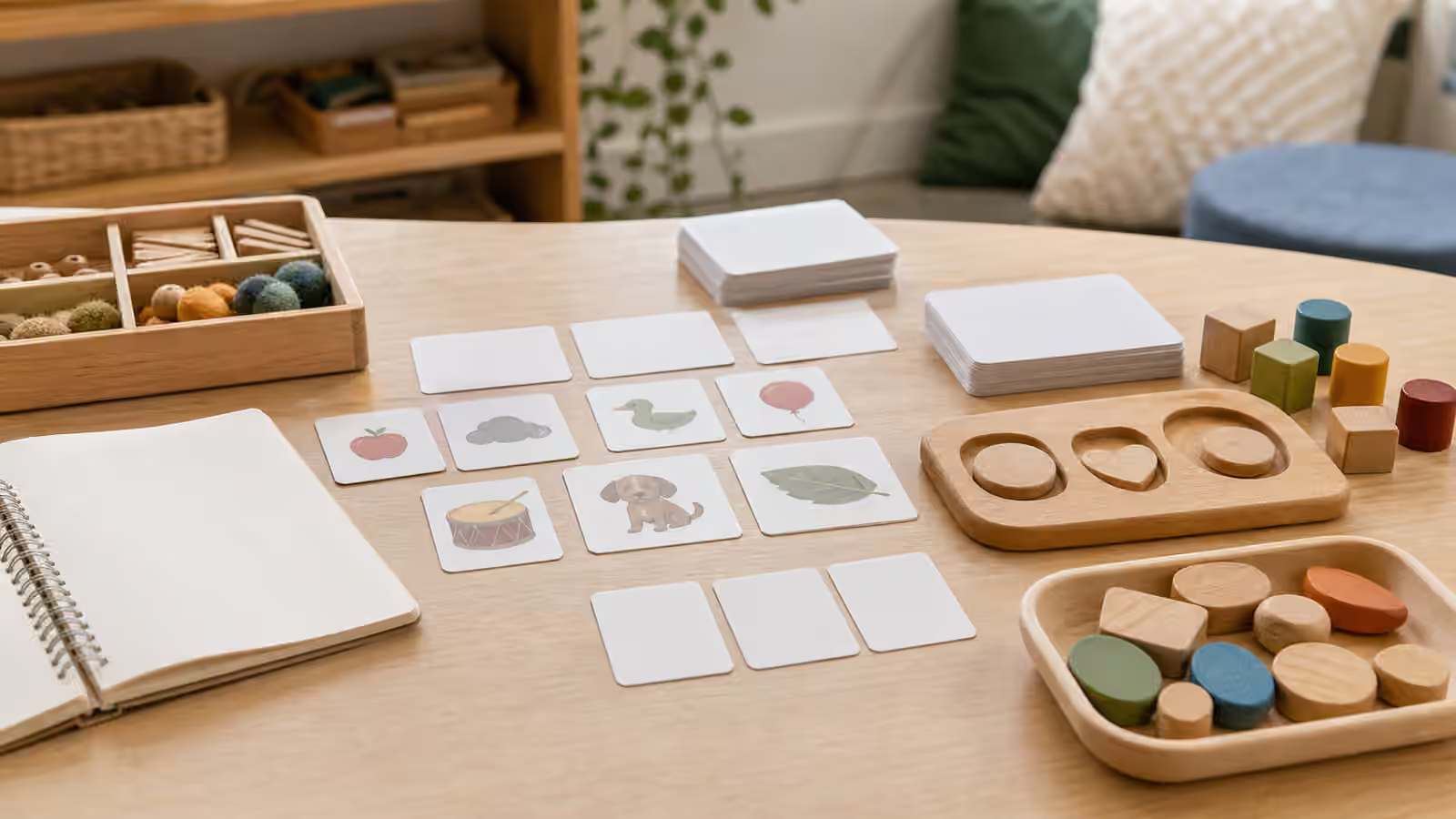
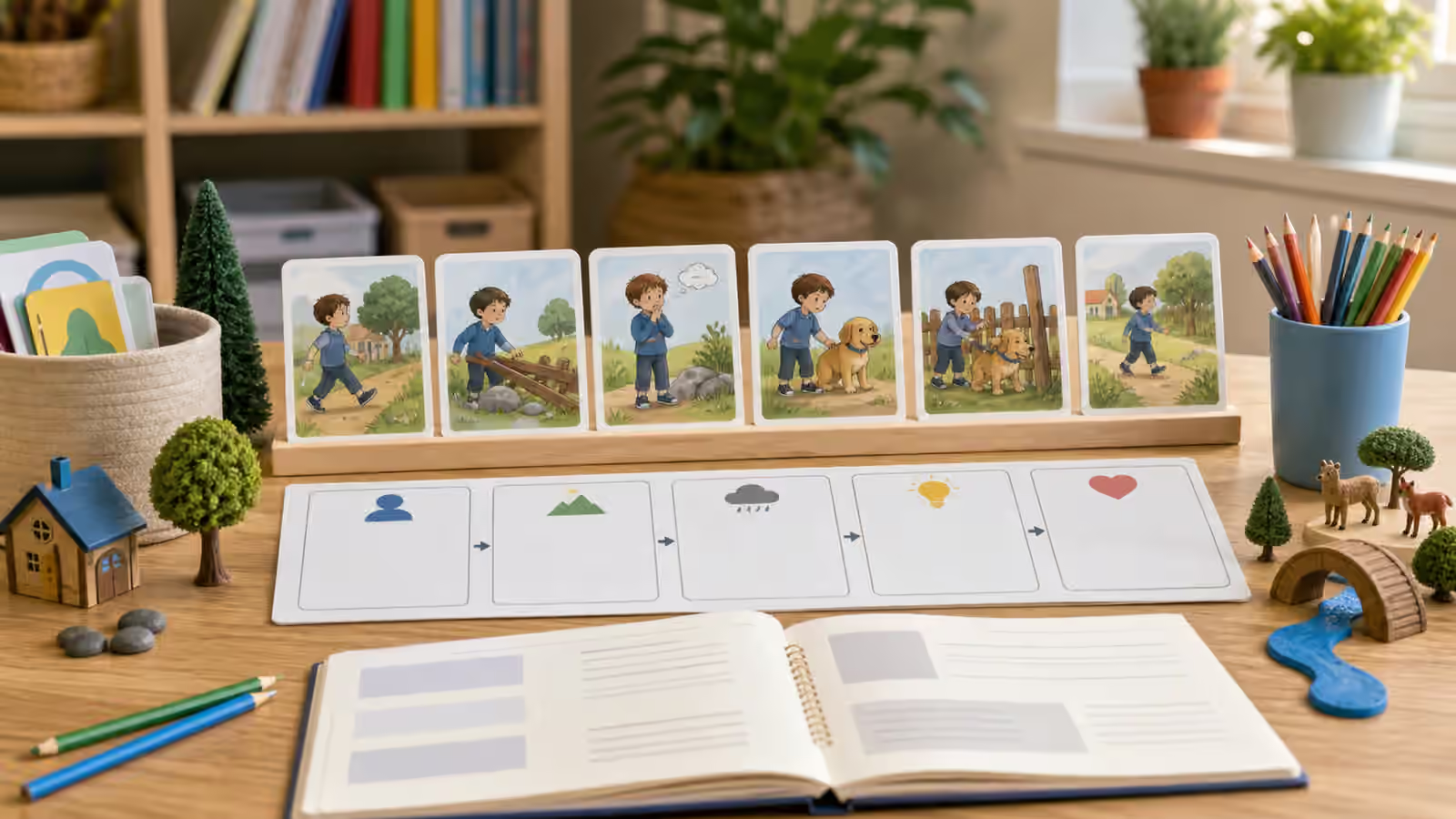
When retell is hard, adults can support the shape of the story without taking over the language. A picture sequence, a blank story map, or a few open prompts can help the child notice characters, setting, problem, actions, feelings, and ending. The support should fade as the child becomes more independent. The goal is not to train one perfect script. It is to help the child carry the logic of stories into books, classroom talk, writing, and daily life.
Personal stories need special patience
Personal narratives are often harder than book retells because the child has to choose the frame. If a child says, “He took it and then she yelled and I got in trouble,” the adult may not know who “he” is, what was taken, where the event happened, or why the child was blamed. Under stress, children may give even less context. A speech-language concern, attention difference, anxiety, or language-learning pattern can make the story harder to organize at the exact moment when adults most need clarity.
A calm response makes a difference. Instead of rapid questioning, the adult can slow the scene down and help the child rebuild it. “Start with where you were” may be easier than “What happened?” “Show me who was there” may be easier than demanding a full explanation. Some children benefit from drawing the scene first, then talking. Others need choices, gestures, or home-language support. The goal is not to win an interrogation. The goal is to understand the child’s message and teach a more reliable way to tell it next time.
Narrative support and literacy
Stories connect oral language to reading and writing. A child who understands story structure has a better path into predicting, summarizing, explaining character motivation, and writing organized paragraphs. A student who can tell a clear oral story may still need explicit support to put that story on paper, but the oral structure gives writing somewhere to begin. The Speech-Language Support for Literacy guide covers the wider connection between sounds, language, stories, and school access.
Narrative support should not be reduced to decorating worksheets. A good story activity has a reason to communicate. The child might tell a family member how a science experiment worked, explain a recipe, retell a book to a younger sibling, describe a field trip, or prepare to share weekend news at school. Real audience matters. Children learn why clarity matters when someone is actually trying to understand them.
What adults can observe
Useful observations describe the story, not only the child’s score. Does the child include who and where? Do events come in a clear order? Are pronouns easy to follow? Does the child explain why something happened? Can they retell a familiar story better than a new one? Do pictures help? Does the child tell richer stories in a home language than in the school language? Does stress make the story fall apart? These details help an SLP, teacher, or evaluation team ask better questions.
It is also useful to notice strengths. A child may use vivid gestures, strong emotion words, humor, sound effects, or detailed knowledge about a favorite topic. Those strengths can become entry points. A child who loves building, cooking, sports, music, or pretend play can tell stories inside those interests. Support works better when it begins with something the child actually wants to explain.
For children and minors, avoid storing names, school names, recordings, diagnoses, or sensitive personal details in casual tools. A short written observation can protect privacy while still helping: the child retold the beginning clearly but skipped the problem and ending; pictures helped; the story was stronger in a quieter room.
When professional support fits
Professional help is worth considering when story difficulties affect school participation, reading comprehension, writing, peer conflict, self-advocacy, or the child’s ability to explain ordinary events. An SLP may look at vocabulary, sentence structure, grammar, sequencing, inferencing, social use of language, attention to listener needs, and the language or languages used at home and school. A teacher or reading specialist may also be part of the picture, especially when written language is affected.
Families can prepare by bringing natural examples. A retell after a favorite show, a story about recess, a sample of writing, or a teacher note about comprehension can be more useful than a general statement that the child “does not explain things.” If the child is multilingual, examples from more than one language can be important. The Bilingual Speech and Language guide explains why home languages should not be blamed for language concerns.
Keeping practice humane
Narrative practice should sound like conversation, not constant correction. A parent might ask for the beginning before the ending, model a clearer version, or invite the child to add who was there. A teacher might preview story structure before reading and revisit it afterward. A clinician might use pictures, acting, drawing, or personal topics to build independence. The child should still get to enjoy stories. If every book becomes a test, the work loses the curiosity that makes stories worth telling.
The practical aim is simple: the child has more ways to make experience understandable. They can tell what happened, follow what someone else tells, and use stories to join school, family, and friendship. That is why narrative language deserves its own place on the speech-language map.