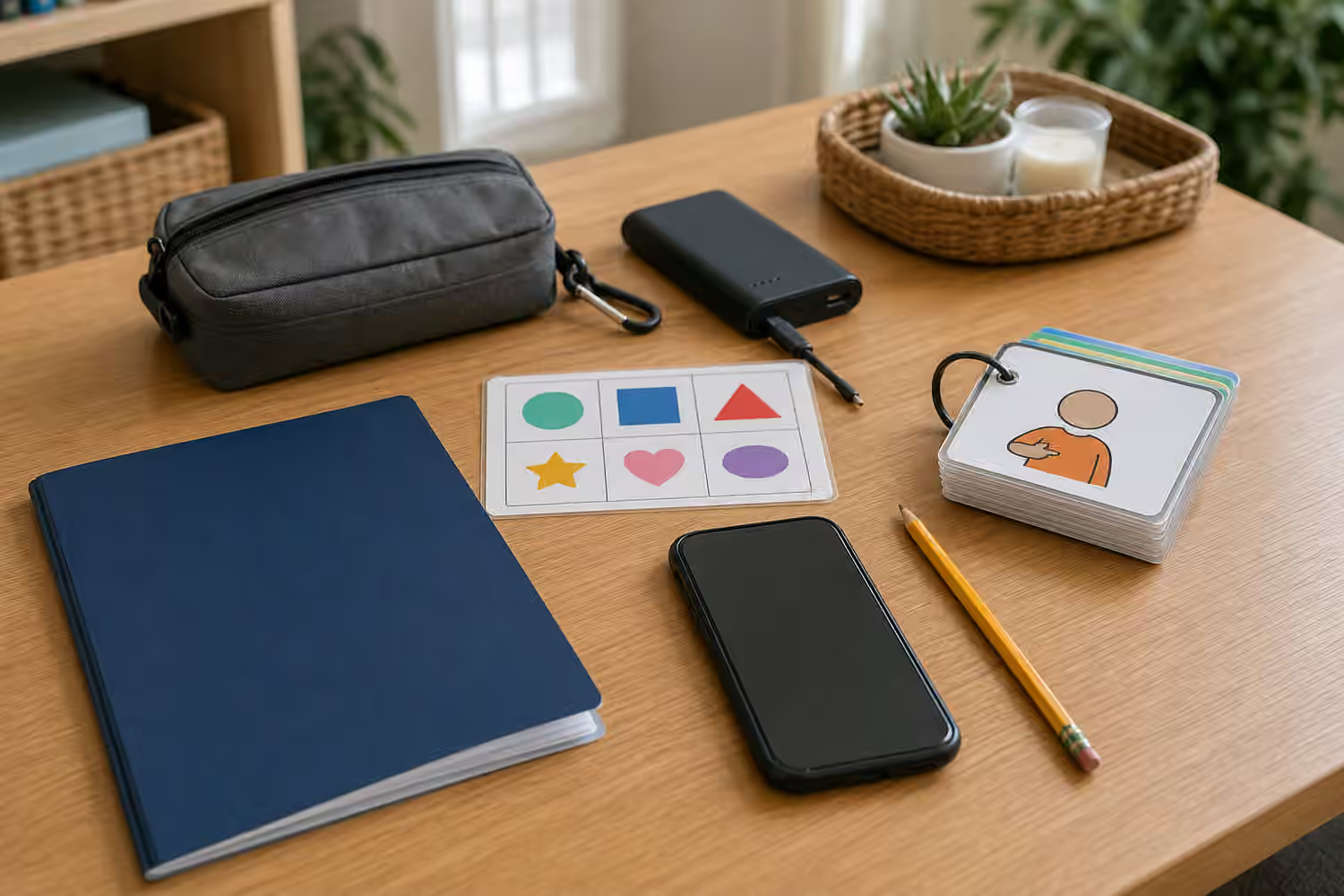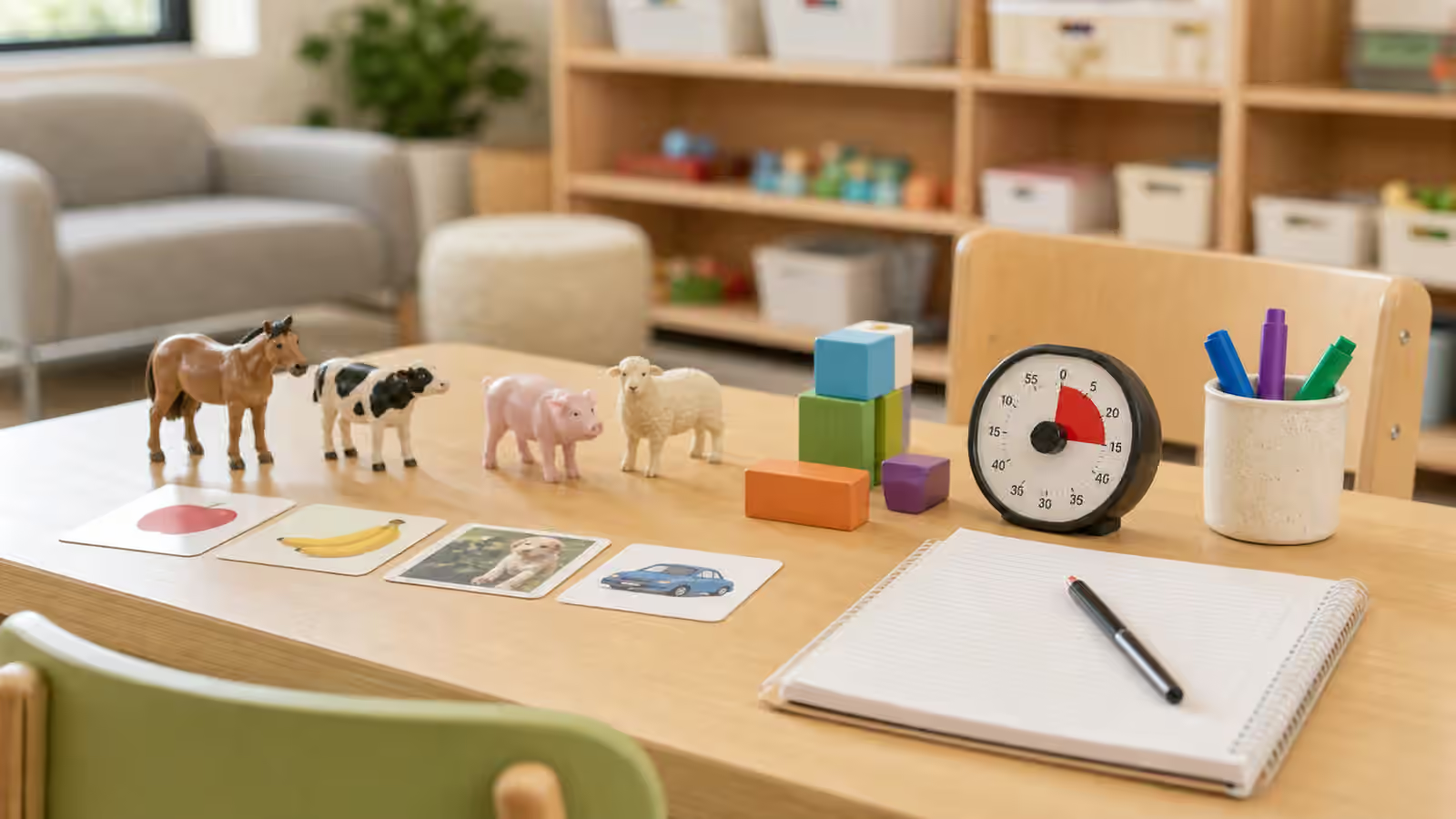
This guide helps families think about late talking without turning every quiet toddler into a crisis or every reassuring story into a reason to wait forever. It is educational background, not a diagnosis, treatment plan, developmental evaluation, hearing assessment, or substitute for a licensed speech-language pathologist, physician, audiologist, early intervention team, or qualified local professional. See Late Language Emergence for the professional reference behind this topic.
Speech recognition tools, milestone charts, and home observations can be useful notes, but they can also be wrong, especially with toddlers, multilingual families, background noise, hearing differences, motor differences, fatigue, shyness, and the uneven pace of early development.
What this can look like at home
A late-talking concern often begins in a small comparison. A cousin has many words, a child at the playground names colors, or a daycare note says that a toddler points and smiles but does not use many spoken words. Families may hear competing advice in the same week. One person says not to worry because a relative talked late and is fine. Another person says to call someone immediately. The child may be cheerful, curious, affectionate, and still hard to understand or slow to use words.
The useful middle ground is neither panic nor dismissal. Early communication is bigger than a word count, but word count is not meaningless. A toddler communicates through eye gaze, gestures, sounds, facial expression, play, imitation, pointing, leading an adult by the hand, showing objects, protesting, requesting, and sharing interest. When spoken words are limited, those other signals help professionals understand the child’s communication system. They also show families where support can begin before anyone has a final label.
First words are not the whole story
Adults often ask whether a child has enough words, and that question can matter. Still, early language is not only a list of labels. A child who says a handful of words but rarely uses gestures, rarely responds to familiar routines, and does not seem to understand much may raise different questions than a child with few words who points, imitates, follows familiar directions, plays flexibly, and clearly tries to repair misunderstandings. A child may also know words in one setting and not use them in another, especially when tired, overwhelmed, uncertain, or communicating with unfamiliar people.
Understanding belongs in the picture. Families can notice whether the child turns toward their name, responds to simple everyday phrases, recognizes favorite objects, follows a familiar direction inside a routine, and anticipates what comes next. Those observations do not prove that hearing or language is fine. They simply give the next conversation more shape. The Language Development guide is useful here because it separates receptive language, expressive language, social communication, play, and early literacy instead of treating all language as one skill.
Hearing also deserves early respect. A toddler can hear many sounds and still miss speech details, especially in noise or during periods of fluctuating hearing access. Families should not assume that a child hears clearly just because the child responds to a loud toy, music, or a parent’s footsteps. If speech and language are slow, inconsistent, or changing, hearing questions are worth bringing to qualified local care. The Hearing, Listening, and Speech-Language Development guide gives a broader frame for that conversation.
Observation before labels
Good observation stays close to real routines. At breakfast, does the child request more, refuse, point, reach, imitate a sound, choose between two foods, or watch the adult’s face? During play, does the child copy an action, pretend with a toy, bring an object to share, or repeat a favorite sound effect? During book time, does the child look, turn pages, point to pictures, fill in a familiar sound, or leave quickly? During transitions, does the child understand what is happening, protest with a clear signal, or melt down because no one understands the message?
Those details are more useful than a broad claim that the child is lazy, stubborn, advanced in other ways, or simply not ready. They let a professional ask better questions. Is the concern mainly expressive language? Is understanding also involved? Are gestures limited? Is play narrow or flexible? Are there feeding, motor, hearing, social communication, medical, or family-language factors that should be considered? A guidebook cannot answer those questions, but it can help families bring examples instead of guesses.
Privacy matters even when notes feel harmless. Families should avoid putting names, birth dates, daycare names, recordings, diagnoses, or identifying videos into casual tools. A simple private note can say that the child used two sounds to request help with a toy, pointed to the door when a sibling arrived, or became frustrated when the adult did not understand the snack request. The point is to preserve the pattern, not to create a permanent file of sensitive details.
Where early intervention fits
Early intervention is not a punishment for being behind, and it is not a guarantee that a child has a lifelong disorder. It is a way to look carefully at development while the family still has time to adjust daily communication routines. Depending on the child’s age and local system, evaluation may involve speech-language pathology, hearing checks, developmental assessment, medical input, or family coaching. The process varies by location, but the practical question is stable: what support would help this child communicate more successfully in ordinary life?
Families sometimes worry that asking for help will create a label too soon. Careful evaluation should do the opposite. It should separate concern from assumption. It may show that the child needs direct speech-language support, caregiver coaching, hearing follow-up, broader developmental evaluation, or monitoring with clear next steps. It may also show strengths that adults were missing. Waiting can be reasonable when a qualified team explains what to watch and when to return. Waiting is less useful when everyone is simply hoping the concern will disappear while frustration grows.
The Speech and Language Milestones guide can help families use milestone resources as conversation starters rather than verdicts. A milestone chart should not become a courtroom document, but it can help a family notice that the same concern appears across weeks, settings, and partners. A pattern that affects participation deserves a real conversation.
Support that does not become pressure
Home support for a late talker should feel like communication, not a daily test. Adults can slow down, leave a little space, model short phrases, repeat the child’s message in clearer language, offer choices, and build predictable routines where communication has a purpose. If the child reaches for bubbles, the adult might hold the bottle, wait warmly, and say “open” while opening it. If the child points to a truck, the adult might say “big truck” and roll it back. The goal is not to demand a perfect word before the child receives care. The goal is to make communication easier to notice, attempt, and repair.
It is easy for families to overcorrect when they are worried. Constant requests to say a word can make a child quieter. Turning every meal into a naming drill can make ordinary routines tense. A child who is already communicating with gestures, sounds, or AAC should not have those methods ignored while adults wait for speech. The Home Practice Without Pressure guide is a useful companion because early communication grows best inside routines the child can tolerate and enjoy.
When the next step should be clearer
Professional input is worth considering when a child has few words, limited gestures, limited understanding, loss of skills, frequent frustration because messages are not understood, limited response to sound or name, feeding concerns, motor or medical concerns, or communication differences that affect family routines, daycare, safety, or connection. Sudden regression, loss of skills, choking, breathing trouble, seizures, significant illness, or other urgent medical signs belong with qualified medical care rather than a wait-and-see plan.
A first question can be calm and practical: “What should we evaluate, what should we watch, and what can we do at home without adding pressure?” That question keeps the child at the center. Late talking is not a character flaw, a parenting failure, or a reason to treat a toddler as a project. It is a signal worth understanding with enough care that support can begin where the child actually communicates.
For a broader starting map, read When to Ask for a Speech-Language Evaluation . If speech sounds are the main concern as words emerge, continue with Articulation and Speech Sounds . If the child uses more than one language, read Bilingual Speech and Language before assuming that one language sample tells the whole story.