This guide helps you decide when a hearing check should be part of the communication evidence path. It is educational background, not a diagnostic assessment, treatment plan, or substitute for a licensed speech-language pathologist, physician, audiologist, school evaluation team, or other qualified professional. See Hearing Loss in Children for the professional reference behind this topic.
What this can look like in real life
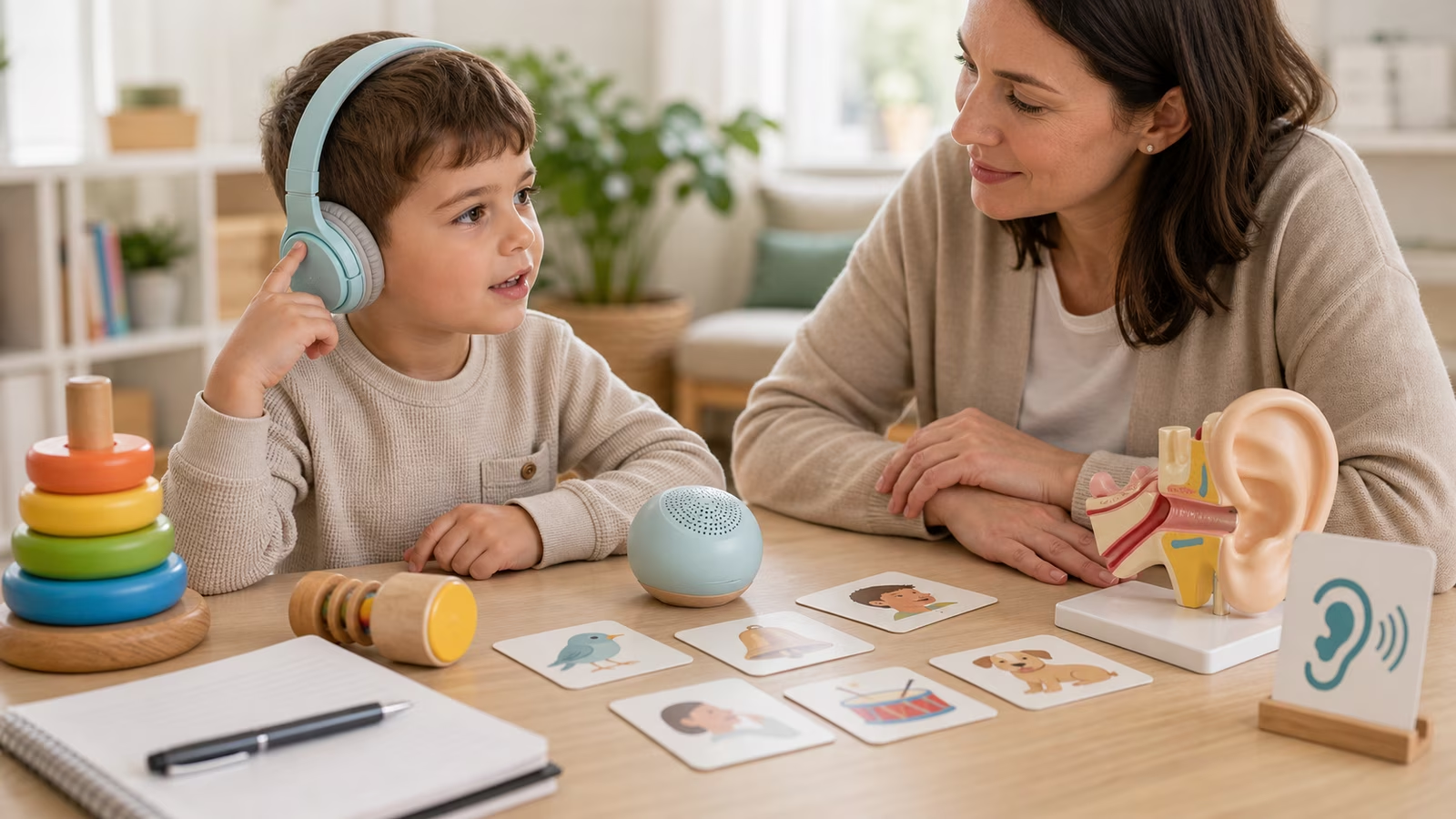
Listening is the quiet foundation under a lot of speech and language behavior. A child who misses parts of speech may seem inattentive, unclear, delayed, defiant, or tired. An adult with hearing change may withdraw from conversation, answer the wrong question, avoid noisy places, or rely more heavily on context than anyone realizes. Because people adapt, hearing concerns can hide inside everyday routines for a long time.
How to observe without over-reading
Useful notes connect listening to situations. Does the person respond differently in quiet rooms, cars, classrooms, restaurants, phone calls, group conversation, or when the speaker is behind them? Do they watch faces closely, ask for repeats, turn one ear forward, raise volume, miss high-frequency sounds, or seem exhausted after listening? These details are stronger than a general statement like “doesn’t listen,” because they point toward access, not character.
A gentler support routine
The home can support listening without pretending to diagnose it. Reduce background noise during important conversations. Get the person’s attention before giving instructions. Face them. Break multi-step directions into smaller pieces. For children, keep reading, singing, and conversation rich while hearing questions are being checked. For adults, treat repeats and written backup as normal access tools, not as proof that someone is failing.
Where professional care fits
Hearing screening or audiology evaluation belongs early when listening concerns are part of the picture. Speech and language support cannot fully compensate for sound the person cannot access. Ear infections, sudden hearing change, tinnitus, pain, dizziness, or one-sided changes should be handled through appropriate medical and hearing professionals. A good SLP wants hearing information because it keeps the communication plan honest.
Plain-language map
- Hearing access affects speech sound learning, language exposure, classroom access, attention, and fatigue.
- Listening is more than hearing a sound; it includes attention, environment, processing, and communication context.
- SLPs and audiologists often need to coordinate.
Common misconceptions
- If a child responds sometimes, hearing is definitely fine.
- Ear infections are only a medical issue and never affect communication.
- Hearing devices remove the need for communication supports.
What to observe or document
- Responses to soft speech, background noise, distance, group conversation, phone/audio, and unfamiliar voices.
- History of ear infections, hearing screening, hearing devices, or listening fatigue.
- Whether visual cues or quiet rooms improve understanding.
A useful note might say: “He follows directions when facing me in the kitchen, misses them from the hallway, raises tablet volume, and asks for repeats after school.” That does not accuse him of ignoring people. It shows access changing with distance, noise, and fatigue. Those details can support a hearing check, classroom accommodations, or a better communication plan.
For children and minors, avoid storing names, birth dates, school names, diagnoses, recordings, or sensitive personal details in casual tools.
Keep the goal visible
For Hearing, Listening, and Speech-Language Development, define progress in the setting where communication matters most: speech pathology, school, work, meals, appointments, or friendships. A change is useful when it gives the person more access, choice, repair, or comfort there—not only when a practice task looks polished.
Write down the listening setting as carefully as the words: distance, lighting, background sound, speaker position, and fatigue can change what is possible. A small environmental adjustment may reveal more than asking someone to repeat the same task louder.
Questions to ask an SLP, school, or clinician
- Should an audiologist evaluate hearing before or alongside speech-language testing?
- What classroom or home listening supports are already in place?
- How should practice be adjusted for hearing access?
Limits and professional care
Speech Genie and the pages in this section cannot determine whether someone has a disorder, cannot rule out hearing or medical concerns, and cannot replace a professional evaluation. For concerns about speech, language, voice, fluency, swallowing, development, hearing, regression, sudden change, choking, or safety, bring the concern to qualified local services.
For Hearing, Listening, and Speech-Language Development, use the Speech Therapy hub and Home Practice Without Pressure as next steps; treat Speech Genie transcript differences as practice notes, not clinical findings.