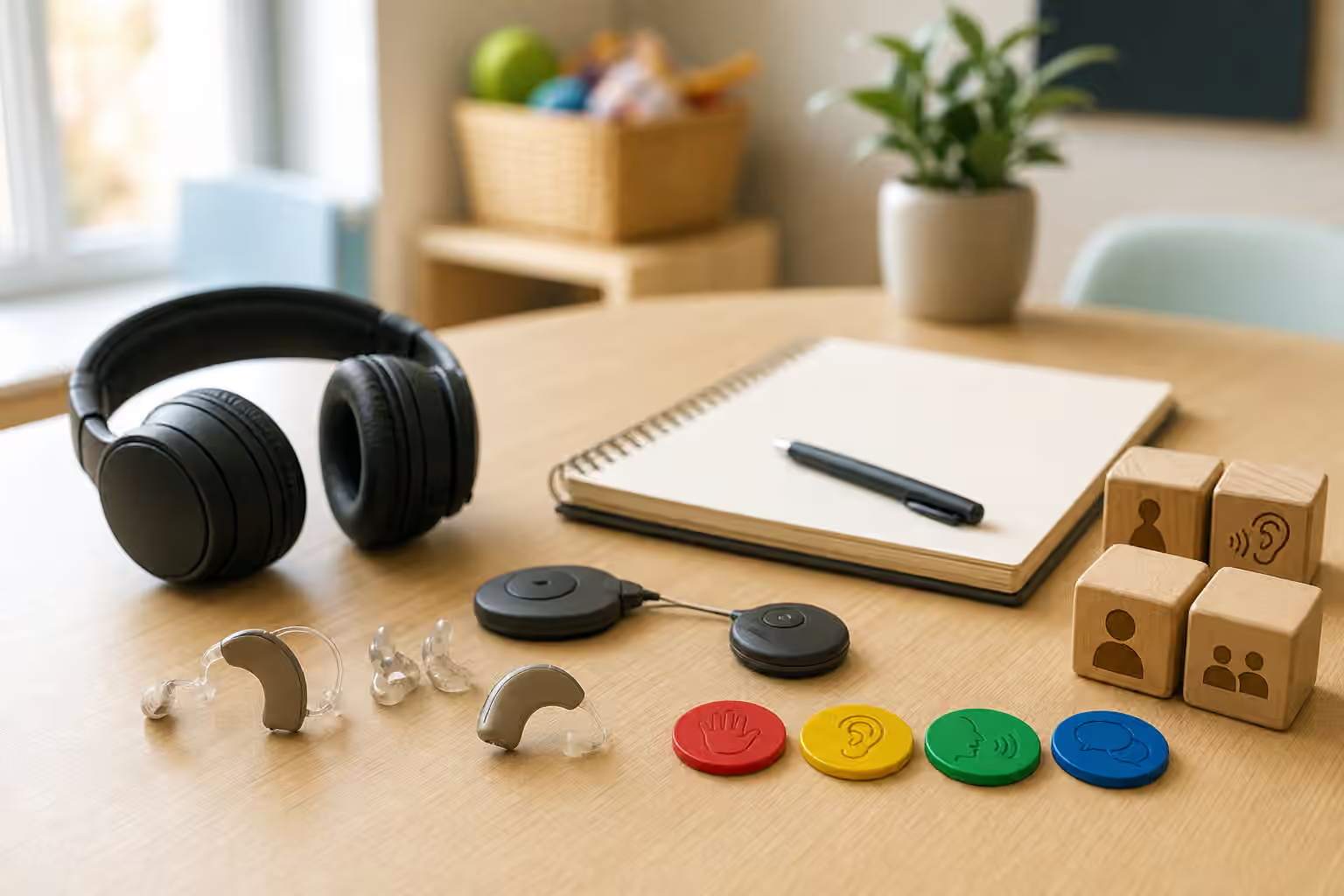
This guide helps families, adults, teachers, and care partners think about listening access after a hearing aid, cochlear implant, classroom microphone, or other hearing support enters the picture. It is educational background, not a hearing test, device recommendation, therapy plan, or substitute for a licensed audiologist, speech-language pathologist, physician, school evaluation team, or other qualified professional. See Hearing Aids (Adult) for the professional reference behind this topic.
Hearing technology can make speech more available, but it does not automatically make every room easy, every conversation clear, or every listener less tired. Speech recognition tools and casual home observations can also be wrong, especially with accents, dialects, multilingual speakers, atypical speech, background noise, distance, fatigue, device settings, and changing hearing access.
What this can look like in real life
A child may wear hearing aids all day and still miss the first word of directions when the class is packing up. An adult may understand a spouse across the kitchen table but struggle at a medical appointment where masks, hallway noise, and unfamiliar vocabulary all arrive at once. A teenager with cochlear implants may hear the teacher but lose track during fast peer conversation. Someone may seem inconsistent, not because they are ignoring people, but because listening access changes with distance, noise, attention, fatigue, language load, and the speaker’s habits.
That difference matters. A device can be working and the listening situation can still be unfair. A person can detect sound and still miss meaning. They may hear a voice without catching the small grammar words, final sounds, names, jokes, or repair cues that keep a conversation moving. In speech-language support, the question is often not “Can they hear?” as a yes-or-no matter. The better question is “What parts of communication are available in this setting, and what extra supports make the message usable?”
Devices are only one part of access
Audiologists are central when questions involve hearing levels, device fit, mapping, verification, troubleshooting, and hearing health. Speech-language pathologists may become involved when listening access affects language growth, speech sound learning, classroom participation, literacy, social communication, AAC use, or adult communication after illness or injury. Those roles should work together instead of competing. The device may make spoken language easier to receive, while the communication plan makes sure the person can use that input in real routines.
For children, listening access is tied to learning. A child who misses high-frequency speech sounds may miss plural markers, verb endings, or quiet consonants that later matter for grammar, reading, and spelling. A child who hears well in a booth may still struggle during lunch, gym, assemblies, small-group projects, or bus rides. The Classroom Listening and Following Directions guide is useful when the concern appears mostly in school noise or multi-step oral directions.
For adults, the issue may be participation and identity. A person may avoid phone calls because repair takes too much effort. They may nod through appointments and later realize they missed medication instructions. They may stop joining family meals because every overlapping voice demands concentration. Listening fatigue can look like withdrawal, irritability, confusion, or disinterest when the real story is effort.
Observing without turning the person into the problem
Helpful observation names the situation rather than blaming the listener. Instead of writing that a child “does not listen,” describe where speech breaks down. Notice the distance from the speaker, background noise, lighting, visual access to the face, topic familiarity, number of speakers, pace, and whether the person had time to repair the message. Notice whether written keywords, gestures, repetition, rephrasing, captioning, a remote microphone, seating changes, or quieter timing help.
A useful note might say that a student answers accurately when the teacher stands nearby but misses directions shouted from across the room during cleanup. Another might say that an adult follows one speaker well but loses the thread when two relatives talk at once. Another might say that a child understands story time on the rug but struggles when the same words are given over classroom noise. Those notes do not diagnose. They show a pattern that an audiologist, SLP, teacher, or medical team can interpret with better context.
The person with hearing technology should also have a voice in the notes whenever possible. Some people know exactly which rooms are hardest, which speakers are easiest, and which “helpful” behaviors are not helpful at all. A child might say the microphone helps in math but not on the playground. An adult might prefer written visit summaries rather than repeated loud speech. Respecting those preferences keeps support practical.
Partner habits that make listening less fragile
Communication partners often make the biggest daily difference. Facing the listener, getting attention before important information, reducing background noise when possible, speaking at a natural but unhurried pace, and checking understanding without quizzing can all reduce strain. Shouting is rarely the best repair. It can distort speech, add pressure, and miss the real problem, which may be noise, distance, unfamiliar vocabulary, or too many speakers.
Repair should preserve dignity. A listener may need to ask for repetition, but partners can also offer a useful repair: repeat the exact phrase once, then rephrase if needed; add a written keyword; point to the object or location; pause overlapping conversation; or confirm the topic before giving details. The Communication Repair and Self-Advocacy guide can help when the person needs reliable ways to say, “I missed that,” without being treated as difficult.
At school, support may involve seating, remote microphone routines, captioned media, visual schedules, written directions, vocabulary previews, quiet check-ins, and staff training. At work or in community settings, support may involve agendas, follow-up notes, quieter meeting spaces, captioning, or permission to move closer to the speaker. The exact support depends on the person, the environment, and professional guidance. The principle stays stable: access belongs in the setting where communication actually happens.
Where speech-language support fits
An SLP may look at how hearing access interacts with speech sound development, language comprehension, storytelling, classroom learning, social participation, literacy, or communication confidence. Therapy might involve listening for speech contrasts, building vocabulary tied to classroom content, practicing repair strategies, supporting auditory memory with visual anchors, or helping partners create better communication conditions. It should not turn every missed word into a correction. The goal is usable communication, not constant surveillance.
For multilingual families, the plan should respect the languages used at home and in the community. Hearing access concerns can appear differently across languages because sound patterns, vocabulary, grammar, and listening environments differ. The Bilingual Speech and Language and Interpreters in Speech-Language Evaluations guides are helpful when professionals need a clearer picture of the person’s real language life.
Progress should show up beyond the quiet room
Listening progress is not only a score from a quiet test. It may be a child asking for a repeat before copying the wrong homework, a student catching more of a group project, an adult leaving an appointment with the main instructions understood, or a family meal where one speaker at a time becomes normal. Progress may also mean the person has better language for their own access needs: “Please face me,” “Can you write the name?”, “Too much noise,” or “Say it another way.”
Bring concerns back to qualified professionals when listening access changes, devices seem uncomfortable, speech or language progress stalls, fatigue increases, school participation suffers, or the person avoids communication they used to enjoy. A good plan does not pretend technology alone solves communication. It treats hearing devices, partner behavior, visual support, language support, and self-advocacy as parts of the same access system.
For a broader starting point, pair this page with Hearing, Listening, and Speech-Language Development and Speech-Language Support for Literacy . If home practice is involved, keep it short, respectful, and connected to real listening moments rather than turning the day into a hearing test.